



Published : 13 Feb 2013, 04:06 PM
Updated : 09 Aug 2022, 10:13 AM


Earlier, a draft of the amended law, with the provision of giving any aggrieved person the right to appeal against the ICT verdict, along with the prosecution and defence, was placed in the Parliament by Law Minister Shafique Ahmed.
After vetting the International Crimes (Tribunals) Act (Amendment) Bill, 2013, on Wednesday, the committee recommended keeping the right to appeal only for the plaintiff, state and the defence, Ahmed told reporters after a meeting of the standing committee.
“There is a chance of complications arising if everybody is given the right to appeal. That’s why the provision giving any aggrieved person the right to appeal has been cancelled to avoid any complications.”
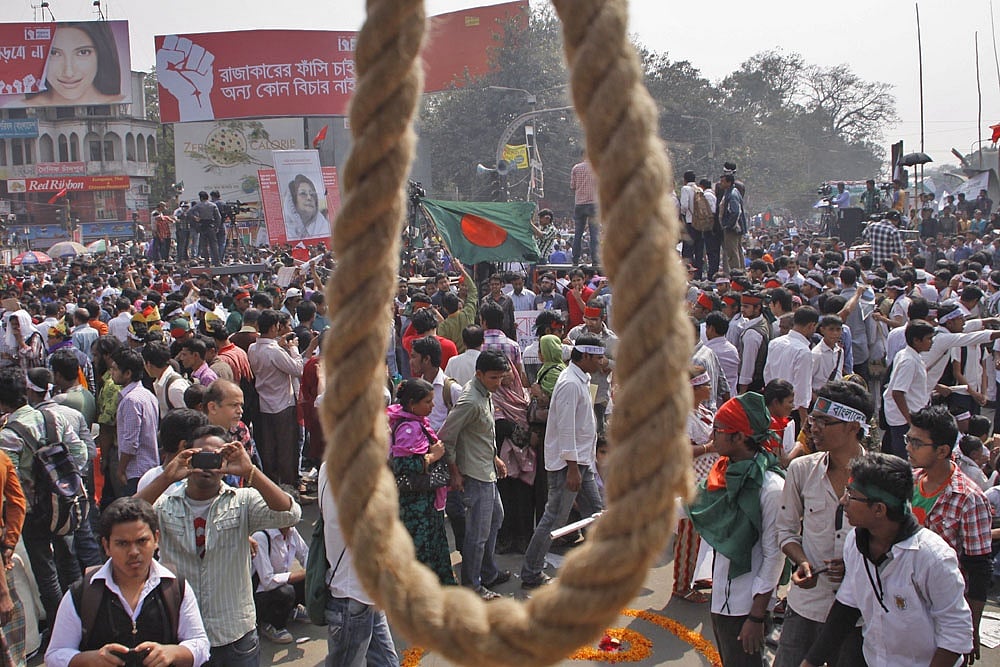
After the bill was tabled in Parliament on Wednesday, it was sent to the standing committee for scrutiny and they were given one day to submit its report.
But the committee sat on Wednesday over the issue and reached the recommendations.
It also suggested keeping a provision for disposal of an appeal within 60 days instead of 45 preliminary days and 15 extra days.
The proposed amendment had suggested a 45-day time-frame instead of an indefinite period for disposal of an appeal at the Appellate Division of the Supreme Court with the provision of extending the time by another 15 days for reasonable causes.
When the Law Minister tabled the bill, the MPs welcomed it by thumping desks. Deputy Speaker Shawkat Ali said, “This is the voice of Parliament.”
Talking to reporters, Speaker Abdul Hamid said, “If the standing committee submits the report by Thursday, the bill will be passed on Sunday.”
Shafique Ahmed also confirmed that the report would be placed in Parliament on Thursday and the bill on Sunday.
Explaining the reasons behind the amendment, the Law Minister said though Article 27 of the Constitution provided that all citizens were equal before law and were entitled to equal protection of law, the equality is not reflected in the existing provision for appeal against a tribunal verdict.
“The bill included a provision which will allow the state and also any ‘aggrieved’ person besides the convicted individuals to file an appeal against a discharge or a verdict to ensure deliverance of justice for both sides of a trial,” he said.
But, the minister said, the provision for appeal by ‘any aggrieved person’ has been dropped following Parliamentary Standing Committee’s recommendation to avoid complicacy.
Moreover, two other sub-sections have been added to Section 21 of the bill.
The proposed 21(4) sub-section states that the appeal has to be resolved within 45 days of submission. If it cannot be resolved within the stipulated time, the timeframe may be extended by 15 more days assigning the reasons for the delay.
The proposed sub-section 21 (5) says the documents which the appellant wants to depend on have to be attached to the application.
The much-awaited trials of the war crimes, committed during the Liberation War, started during the present government’s tenure after amendments to the International Crimes (Tribunal) Act of 1973.
In the 1973 law, there was no provision that authorised the government to appeal. The 2009 amendment gives the government the right to appeal only in the case of an accused getting discharged.
The proposed amendment will allow equal rights for both sides to appeal, the minister said.







