Published : 01 Jan 2026, 06:21 AM
Updated : 21 Aug 2026, 02:57 PM


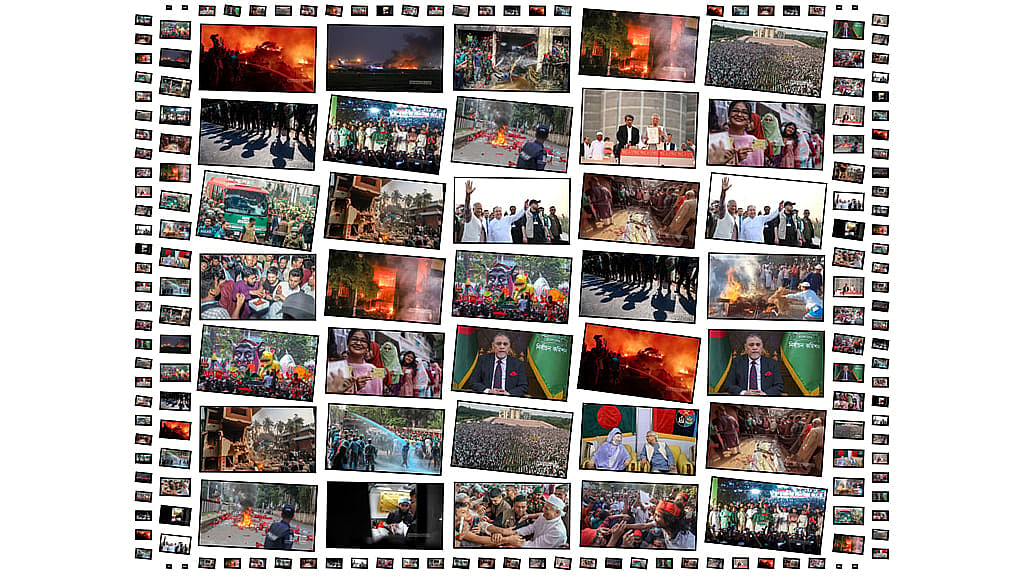
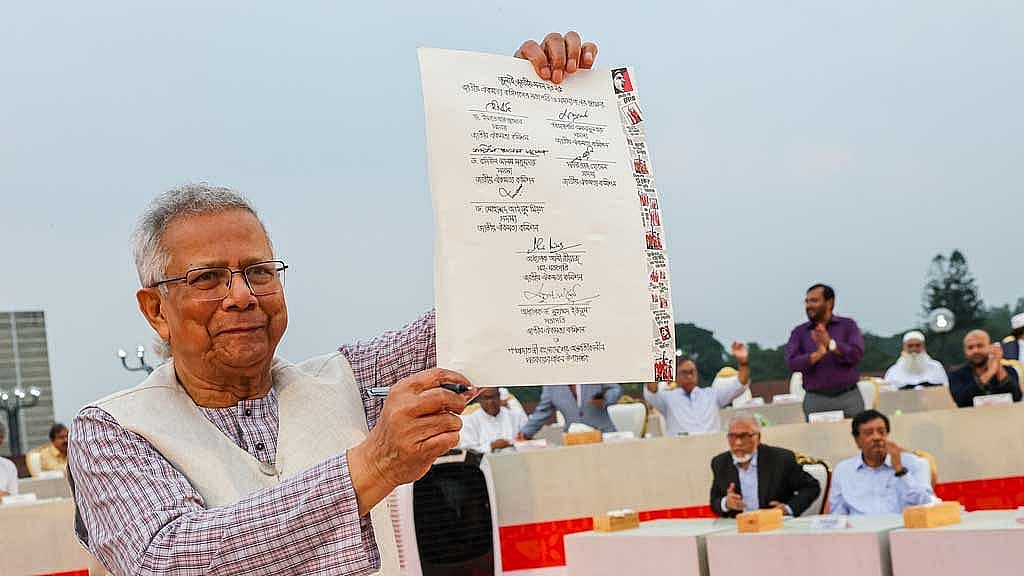
In a Bangladesh reshaped by the 2024 mass uprising, 2025 arrived with the promise of a full rebuild -- but that promise has been only partly met. The July Charter, born out of talks under the National Consensus Commission, remains a document whose implementation will still be awaited in 2026.
Over the past year, the country has seen a fresh political polarisation. The Awami League, which ruled for 15 straight years, has had its activities banned and its registration suspended, meaning the “boat” symbol will be missing from the approaching general election. The Jatiya Party, which acted as the official parliamentary opposition in the last two terms, has been branded an “accomplice of fascism” and is now largely isolated.
The BNP, squeezed under Awami League rule, is now intoxicated by the prospect of power. And its former ally the Jamaat-e-Islami has re-emerged as a major party, challenging for supremacy at the ballot box.
The possibility that the student leaders of the July Uprising could form a new political force has, for now, faded into the reality of an alliance with Jamaat.
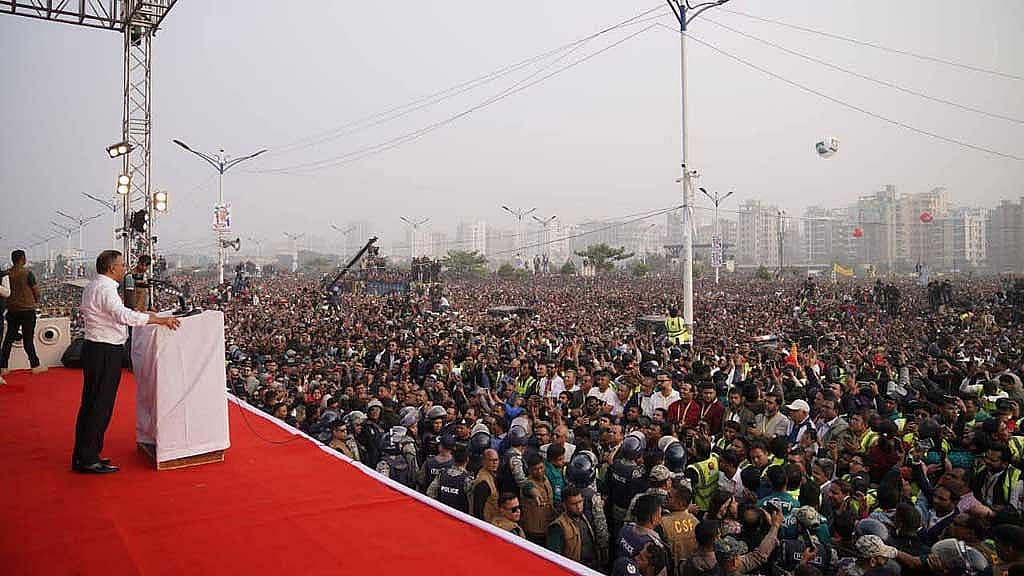
The killing of Inqilab Moncho’s Sharif Osman bin Hadi has fuelled fresh anxiety over the election climate. The BNP, meanwhile, signalled its street strength by drawing huge crowds to mark Tarique Rahman’s return from exile.
As the year closed, former prime minister and BNP chief Khaleda Zia’s death marked the end of an era in Bangladeshi politics. On the other side of the ledger, another former prime minister Sheikh Hasina, ousted in the July Uprising, now has a death sentence hanging over her head, even as no pathway has emerged to bring her back from India.
Tensions with India have persisted. Visas have not become easier. There have been several episodes of tit-for-tat summons.
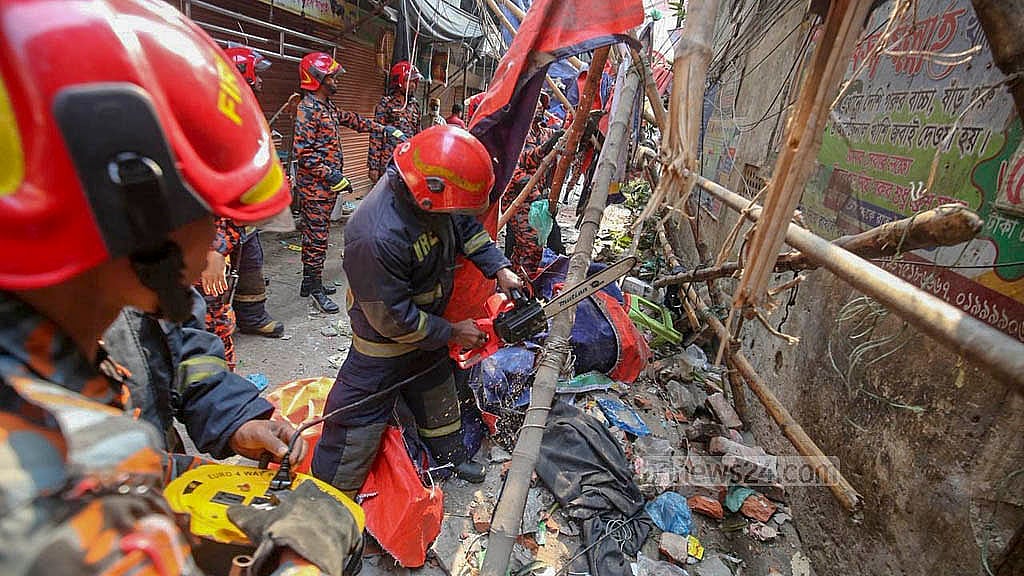
The rise of “mob” violence seen in 2024 has grown sharper in 2025. News organisations and cultural groups have not been spared attacks, vandalism, and arson. The historic house of Bangabandhu Sheikh Mujibur Rahman at Dhanmondi 32 has been razed.
Movements by professional groups ran through the year, and police action on the streets has hardened. The movement against the split of the National Board of Revenue (NBR) triggered turmoil on a scale few expected.
A moderate earthquake this year served as a warning of bigger danger ahead. The Milestone School and College jet crash tragedy left the country in tears. And, as in every year, disasters and misfortune again brought death.
Bangladesh is heading into 2026 on the election train, and people still hope it will pull into the station called democracy.
FROM PEAK OF POWER TO DEATH ROW
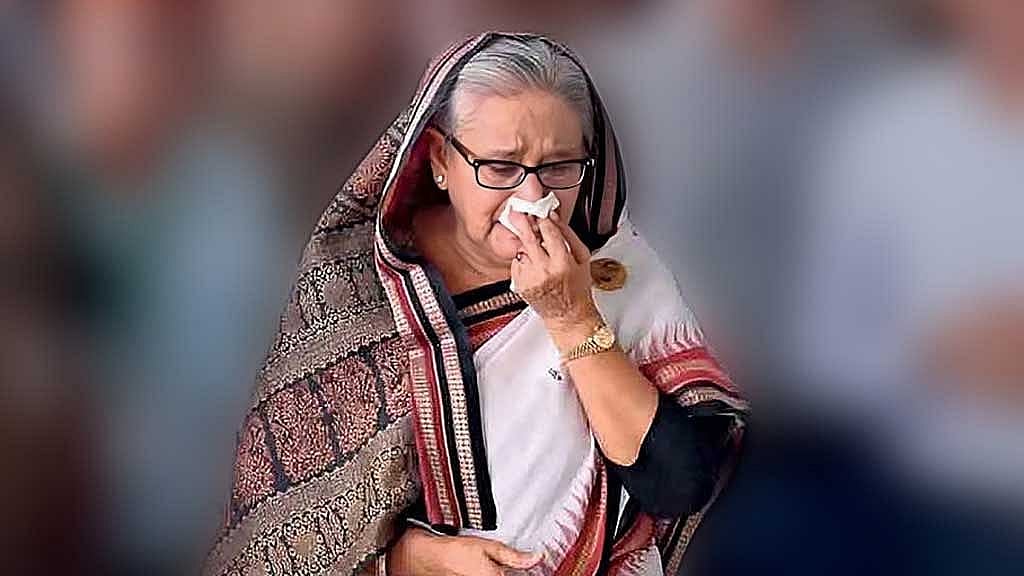
The July Uprising drove Bangladesh’s longest-serving leader Hasina into exile. In 2025, she acquired a new label: "a fugitive on death row".
On Nov 17, the International Crimes Tribunal sentenced the ousted prime minister to death after convicting her of crimes against humanity over attempts to crush the July Uprising. It was the first time a former head of government in Bangladesh has had a death sentence hanging over them.
Her home minister Asaduzzaman Khan Kamal received the same punishment. Chowdhury Abdullah Al-Mamun, who led police during the Uprising, was handed a “lenient” five-year term after admitting responsibility and turning state witness.
Hasina fled to India after losing power on Aug 5, 2024. Bangladesh sent New Delhi two formal letters, in two rounds, seeking her return, but received no response. Analysts say Delhi’s stance makes enforcement of the verdict against the Awami League president highly unlikely.
After the ruling, Hasina told Indian media she rejected all allegations, saying neither she nor her party had been given a “fair chance” to defend themselves.
Alongside killings linked to the Uprising, the interim government has also launched prosecutions over allegations of corruption and irregularities during Hasina’s 15 years in power.
Six cases were filed over RAJUK plot corruption in Purbachal against Hasina, her sister Sheikh Rehana and other family members.
Verdicts have been delivered in four of the cases, sentencing Hasina to a combined 26 years in prison. Her son Sajeeb Wazed Joy and daughter Saima Wazed Putul were each sentenced to five years. Rehana received seven years, and her daughter, British MP Tulip Siddiq, was sentenced to two years.
Calling the verdict “revenge” by Chief Advisor Muhammad Yunus, Tulip said the entire process was “chaotic, ridiculous and farcical”.
FAREWELL TO THE ‘UNCOMPROMISING LEADER’
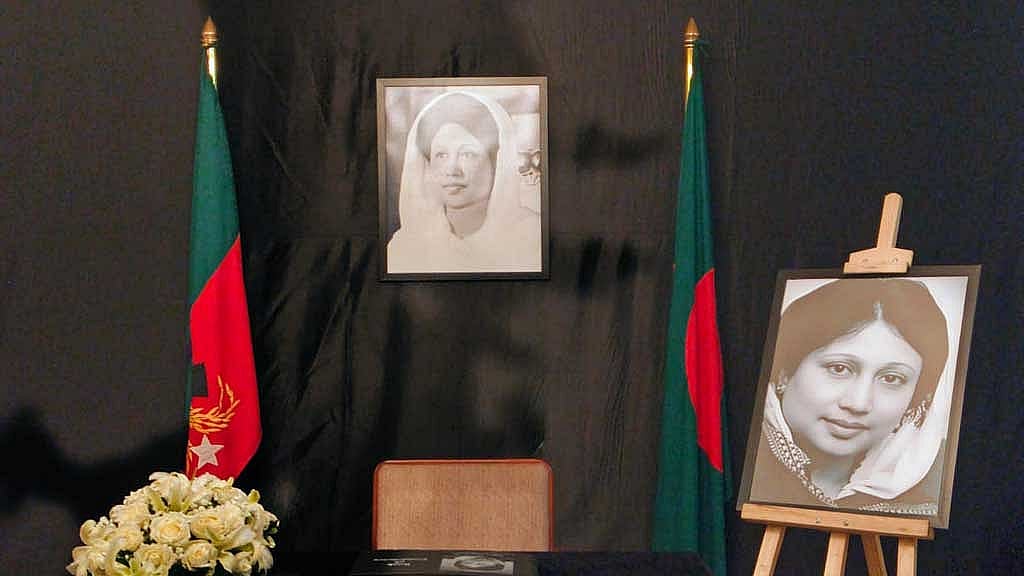
One of the two women who most shaped post-1975 Bangladesh died this year.
Khaleda, who emerged as the “uncompromising leader” during the anti-autocracy movement of the 1990s, spent much of her political life in agitation after agitation. She was arrested and jailed, but never fled the country. She never lost an election either.
For more than four decades, she led the BNP and built it into one of the country’s largest political forces. She governed the nation for more than a decade as prime minister across three terms. She entered parliament five times as an MP.
Under the Awami League rule, Khaleda was convicted in corruption cases and sent to prison. In 2020, amid the pandemic, the then prime minister Hasina granted her temporary release.
The Uprising brought what her party called “real freedom”. Courts cleared her of all cases.
But prolonged illness denied her a return to frontline politics. By year’s end, her death shook BNP leaders, activists and supporters.
Early this year, Khaleda travelled to London for treatment and returned. After coming back in May, she seemed better than before. But fragile health kept her at home, behind four walls.
She was seen in public only once all year — on Nov 21 at the Armed Forces Day programme at Senakunja, seated beside Yunus.
Two days later she was admitted to Evercare Hospital. On Nov 27, after a lung infection was detected, she was moved from a cabin to the Critical Care Unit.
Plans were made to take the 79-year-old to the UK for advanced treatment, but it did not happen. She was treated in Dhaka under the supervision of local and foreign doctors. The interim government declared her a “Very Very Important Person” and arranged SSF security.
Her son Tarique returned home on Dec 25, ending 17 years in self-exile, and went to Evercare the same day to see his mother.
On Dec 29, as her condition deteriorated, Tarique and other family members rushed to the hospital. At dawn on Dec 30, doctors declared Khaleda dead.
On the last day of the year, hundreds of thousands joined her funeral prayers on the grounds of the parliament complex, bidding her a final farewell.
‘I HAVE A PLAN’
The fall of Sheikh Hasina in the student-led Uprising also opened the road home for Khaleda’s elder son, the BNP’s Acting Chairman Tarique Rahman. Courts cleared him of the allegations in the cases that had led to his convictions.
Tarique, exiled in London since 2008, was the year’s unanswered question: when would he return?
In June, Chief Advisor Muhammad Yunus visited London. With the BNP and the interim government at odds over election timing, Yunus met Tarique on Jun 13.
A joint statement afterwards said the election would be held in February 2026, before Ramadan. Following that declaration, the Election Commission has since announced the schedule, setting polling day for Feb 12.
Before that, the BNP published a partial list of candidates. It said Tarique would contest Bogura-6 for the first time, a move that sharpened expectations of his return.
Then Khaleda fell ill again and was admitted to hospital on Nov 23. The question returned: why wasn’t Tarique coming home?
A statement by Tarique on Nov 29 further muddied the waters. In a Facebook post, he said: “In such a time of crisis, the intense desire to feel a mother’s affectionate touch, like any child, is in me as well. But, unlike other matters, the opportunity to make a decision to realise this is not open-ended, nor under my sole control.”
After that, the government said it had no objection to his return. Several advisors publicly promised cooperation if he wished to come back.
In the end, Tarique returned on Dec 25, Christmas Day, with his wife and daughter. In front of a huge reception by party leaders and activists who had travelled from across the country, he said: “I have a plan.”
HADI: A FLASH, THEN GONE
The day after the election schedule was announced, Sharif Osman bin Hadi, a prospective independent candidate in Dhaka-8, was fatally shot while campaigning on Dec 12.
Hadi was on a moving rickshaw when an attacker sitting on the back of a moving motorcycle fired his gun. The bullet hit him in the head.
Severely wounded, he was rushed to Dhaka Medical College Hospital, where surgeons operated. That night he was admitted to Evercare Hospital. After three days there, he was flown by air ambulance to Singapore.
Hadi died in Singapore on Dec 19 while under treatment. The state observed national mourning the following day.
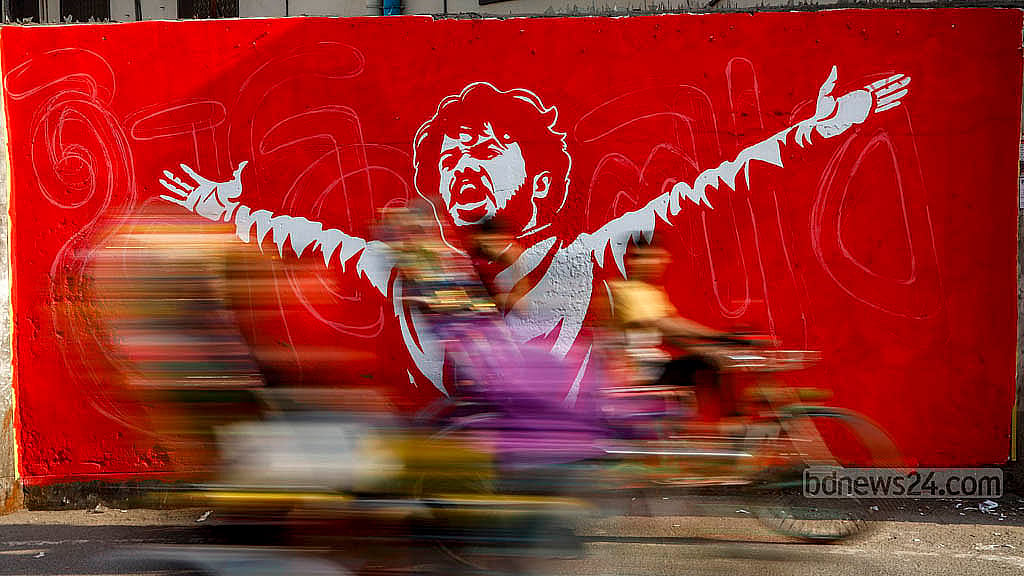
His funeral prayer at the parliament’s South Plaza that day turned into a sea of people. He was buried on the Dhaka University campus beside the mausoleum of the National Poet Kazi Nazrul Islam.
Hadi had played an active role in the student–public uprising of July-August 2024. Inspired by that movement, he built a cultural platform called Inqilab Mancho.
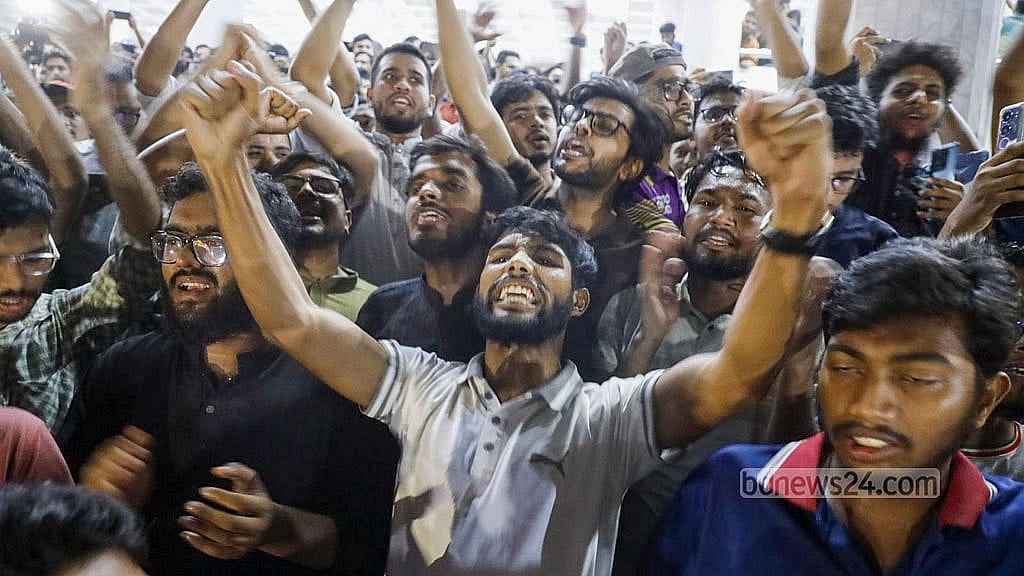
After he was shot, protests spread across Dhaka and other parts of the country. A week later, after his death in Singapore, the protests erupted nationwide.
That night, amid a large protest at Shahbagh, attackers vandalised, looted and set fire to the offices of Prothom Alo and The Daily Star newspapers. The iconic Bengali cultural organisation Chhayanaut cultural complex in Dhanmondi was later ransacked as well.
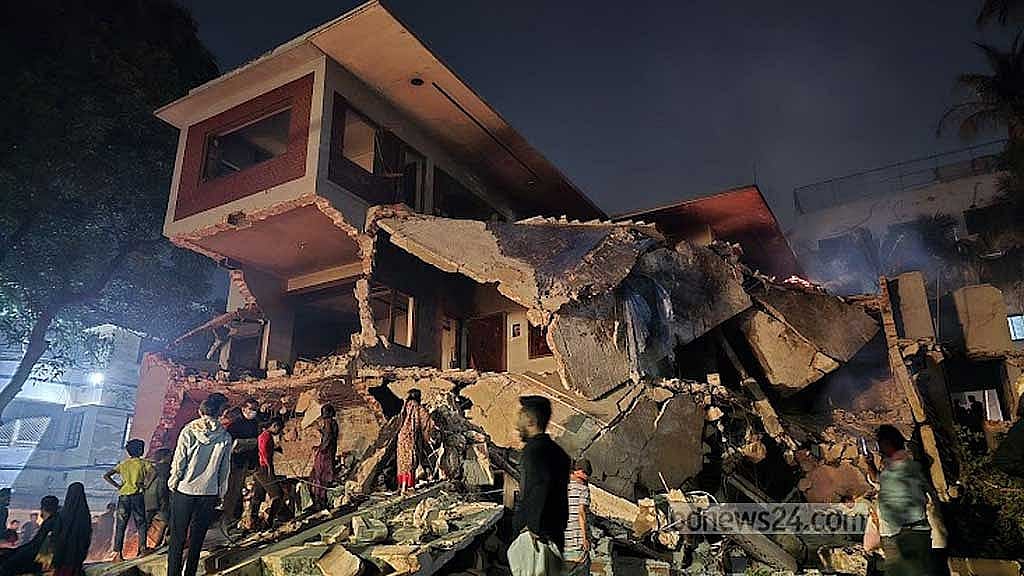
BULLDOZERS AT NO 32: A WITNESS TO HISTORY
After the Awami League government fell on Aug 5, 2024, a crowd attacked, looted and set fire to the house at Dhanmondi’s No 32, a property associated with the nation's independence architect Bangabandhu Sheikh Mujib.
On the six-month anniversary of that attack, on Feb 5 this year, the house was demolished under a “bulldozer procession” programme. Organisers said they were reacting to what they called Hasina’s “provocative” remarks from India.
Amid protests by around 3,000 people, a crane arrived at about 10:45pm and, to cheers, turned off the main road into Road 32. Many climbed onto the crane and chanted slogans. An excavator followed.
At about 11:15pm, the crane and excavator began tearing the building down. Within roughly an hour, part of the three-storey structure had been brought down.
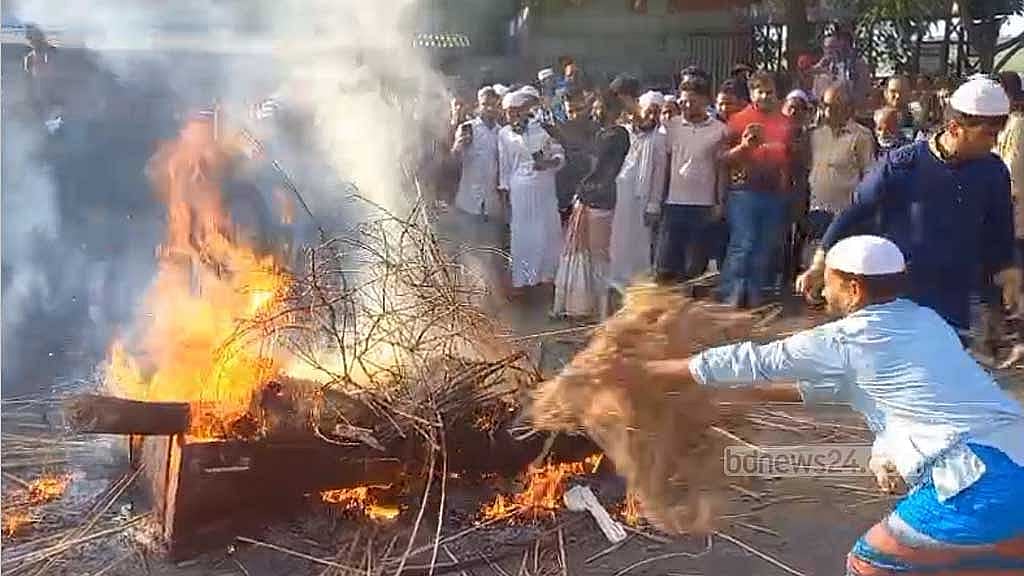
Around midnight, when army personnel moved towards the front of the house on Road 32, student protesters chanted “bhua bhua” (“fake, fake”). The army withdrew shortly afterwards.
Deep into the night, music blared over loudspeakers and some were seen dancing. By morning, more than half the house had been reduced to rubble.
On Nov 17, the day Hasina’s death sentence was announced, bulldozers were again brought to demolish what remained. Law enforcers, however, removed the protesters.
After Hadi’s death, on Dec 18, another group of protesters returned to the already-damaged site, vandalising it again and setting fire to parts of it.
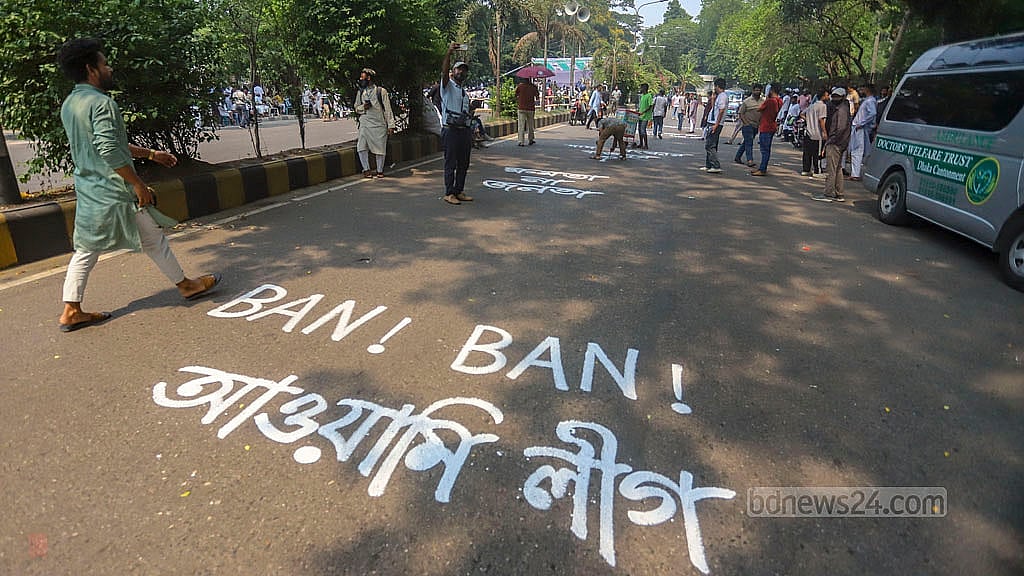
AWAMI LEAGUE BANNED, JATIYA PARTY ISOLATED
After the Awami League was pushed from power, leaders of the Students against Discrimination, who had been at the forefront of the uprising, demanded that the party be banned.
After a powerful, sustained campaign on that demand, the government issued a gazette notification on May 12 banning all activities of the Awami League and its affiliate organisations.
The ban was imposed under the amended Anti-Terrorism (Amendment) Ordinance and Section 18(1) of the Anti-Terrorism Act 2009, pending completion of International Crimes Tribunal trials over allegations linked to the crackdown on the uprising — including enforced disappearance, killings, burning people to death, “genocide”, illegal detention, inhuman torture, looting, arson, “terrorist activities” and crimes against humanity.
In effect, the party that led Bangladesh’s independence movement is barred, for now, from any political programme or campaigning.
Under the Representation of the People Order (RPO), once a political party is declared banned, its registration is cancelled. That has shut the Awami League out of the general election.
Since the fall of the Awami League, its allies have been off the field. And the Jatiya Party, too, has been cornered after serving as the opposition in what critics called “one-sided and controversial” elections. The party founded by former military ruler Hussain Muhammad Ershad has split again.
One faction remains under Ershad’s brother GM Quader. Another Jatiya Party has formed under Anisul Islam Mahmud.
Mahmud’s camp has formed a National Democratic Front with 18 parties and entered the election race. Quader’s Jatiya Party is also trying to contest separately.
Politically, however, they have become largely isolated. Neither the National Consensus Commission nor the Election Commission has invited them to any meetings. Even an iftar programme drew obstruction.
On Sept 5, activists of Gono Odhikar Parishad vandalised and set fire to the Jatiya Party’s central office in Kakrail. The lower two floors of the party’s five-storey headquarters were largely burned.
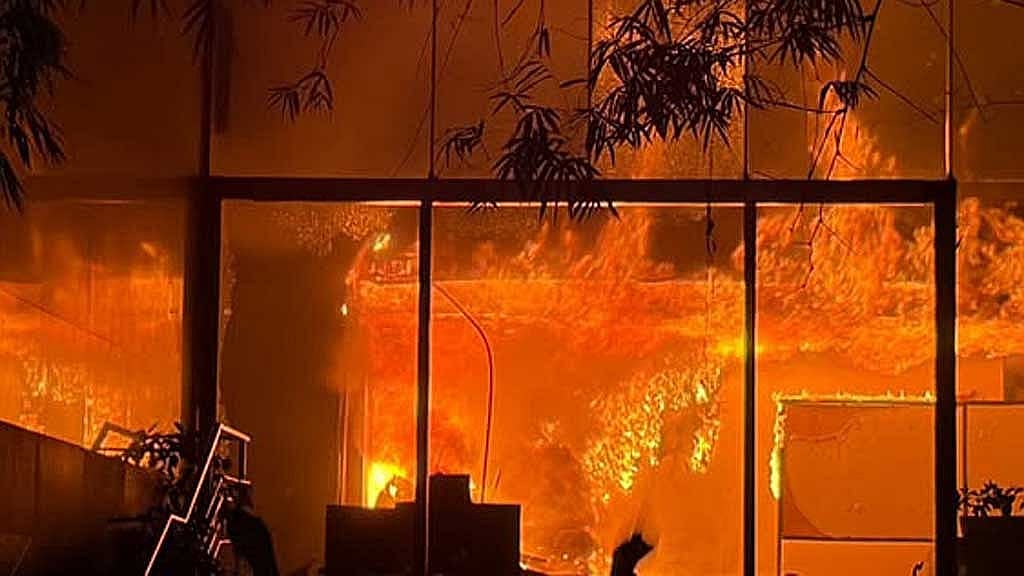
CHHAYANAUT ATTACKED, FIRE AT UDICHI
Amid anger and protests after Hadi’s death, attackers stormed the Chhayanaut building late on Dec 18, carrying out widespread vandalism and setting it on fire.
Witnesses said a group of 50 to 60 arrived in a procession. They first set fire near the parking area, then broke down doors and forced their way inside.
As they attacked, they shouted slogans including “India’s agents”, “fake”, “Naraye Takbir”, “Inquilab Zindabad” and “Break it”. While cutting and destroying a portrait of the late Sanjida Khatun, they reportedly called her an “atheist”.
Inside the auditorium, they smashed whatever they could find. Musical instruments, from tablas, harmoniums and tanpuras to others, were broken and burned. Books and papers were also burned and ransacked.
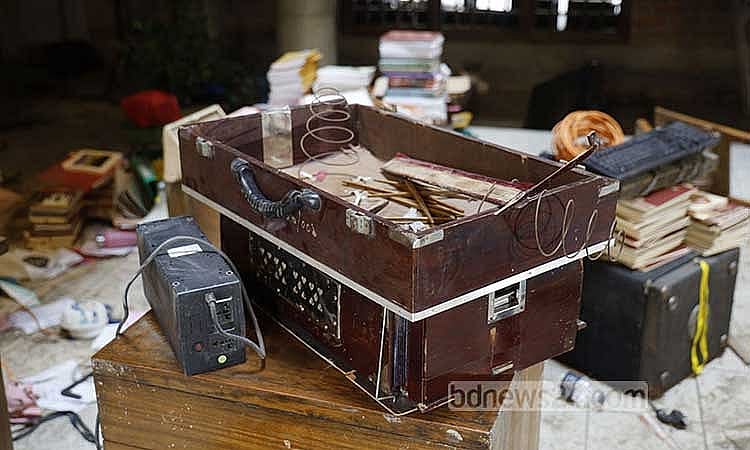
The entire monitoring system was destroyed: CCTV cameras, speakers, lights and fans were smashed. Clay artworks and other art pieces were damaged and most furniture in rooms and offices was broken.
The president’s and general secretary’s rooms were not spared either. Glass panels on cupboards were shattered; chairs and tables were smashed and overturned. The Ramesh Chandra Smriti auditorium, the main auditorium, and even toilets were rampaged. The attackers also looted items, including musical instruments.
The following evening, there was a separate incident of arson at the central office of Udichi Shilpigoshthi on Topkhana Road. Udichi and other organisations staged protest programmes in response.
CLASHES IN GOPALGANJ
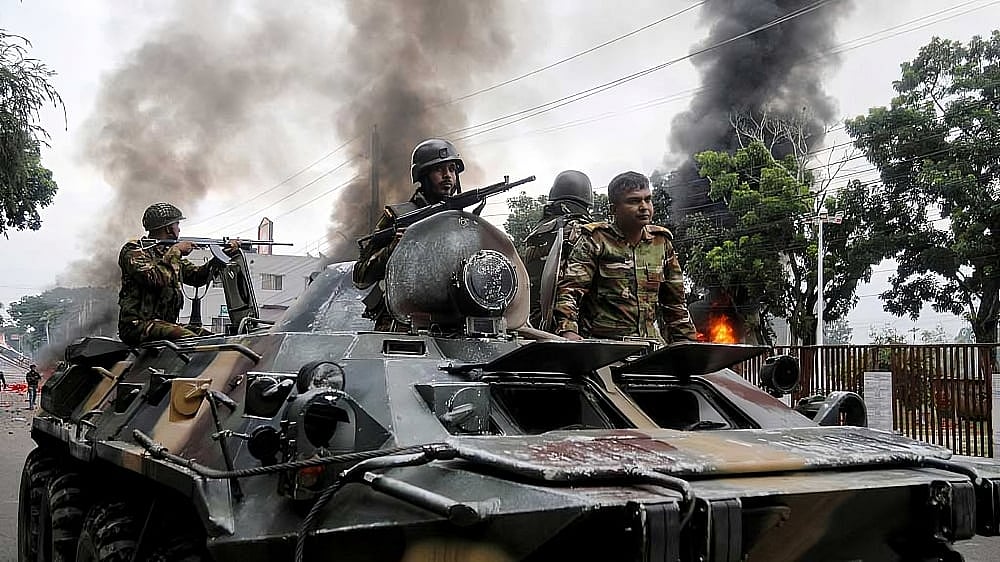
Violence erupted around an National Citizen Party (NCP) programme in Gopalganj, Hasina’s home district, on Jul 16, leaving four people dead after a day of attacks, pitched battles, clashes with police and gunfire.
During the NCP’s July march across the country, party leaders called a “March to Gopalganj” and alleged that “fascist Mujibists” attacked them.
That day, before the NCP could begin its programme at the municipal park ground, a road blockade led to a police vehicle being set on fire and an attack on the Upazila administrator’s (UNO) vehicle.
After NCP leaders entered the town, the army was deployed with an armoured vehicle to control the situation, alongside four platoons of Border Guard Bangladesh (BGB).
Following attacks, vandalism and arson in the morning in Ulpur and Tekerhat, the rally stage at the municipal park was attacked around 1:30pm.
The programme resumed briefly, then was cut short. Under police and Army escort, NCP leaders set off towards Madaripur, but near the launch terminal they came under attack again, sparking clashes between police and attackers.
With repeated attacks, clashes, arson and gunshots, Gopalganj town turned into a battlefield.
Amid explosions of crude bombs, sound grenades, tear gas, and running battles in the streets fear shut most shops and sharply limited public movement.
To regain control, authorities imposed Section 144 in the afternoon banning public gathering. When that failed, a curfew was declared after evening.
After the clashes, reports said at least four bodies were brought to the Gopalganj 250-bed General Hospital. Another 15 people were taken in injured and three of them in serious condition had to be transferred to Dhaka.
[Reporting by Masum Billah]