Published : 25 Jul 2026, 05:56 PM
Updated : 08 Sep 2026, 09:27 AM


Shield of the State
Calls for prosecution: NCP and opposition groups demand Shahabuddin’s arrest following his exit
Constitutional immunity: Experts cite Article 51, securing legal protection for his official duties
Ex-president speaks: Shahabuddin dismisses arrest demands, urging critics to read the law
When Mohammed Shahabuddin resigned as Bangladesh's president on Friday, the political battle over his legacy swiftly shifted into a legal one.
Within hours, the National Citizen Party (NCP), Bangladesh Khelafat Majlis and Inqilab Moncho demanded that the country's 22nd president be arrested and brought to trial.
Shahabuddin, however, brushed aside those calls, pointing instead to Article 51 of the Constitution, which grants the head of state broad legal protection.
The constitutional provision, legal experts say, offers two distinct safeguards.
First, a president cannot be held accountable in any court for acts done -- or omitted -- in the exercise of presidential duties.
Second, while in office, no criminal proceedings can be initiated or continued against the president, nor can a court issue a warrant for arrest or imprisonment.
With Shahabuddin's resignation, the second protection no longer applies. The first, however, survives his departure from office.
Supreme Court lawyer Habibur Rahman said the immunity attached to presidential functions remains effective even after a president steps down.
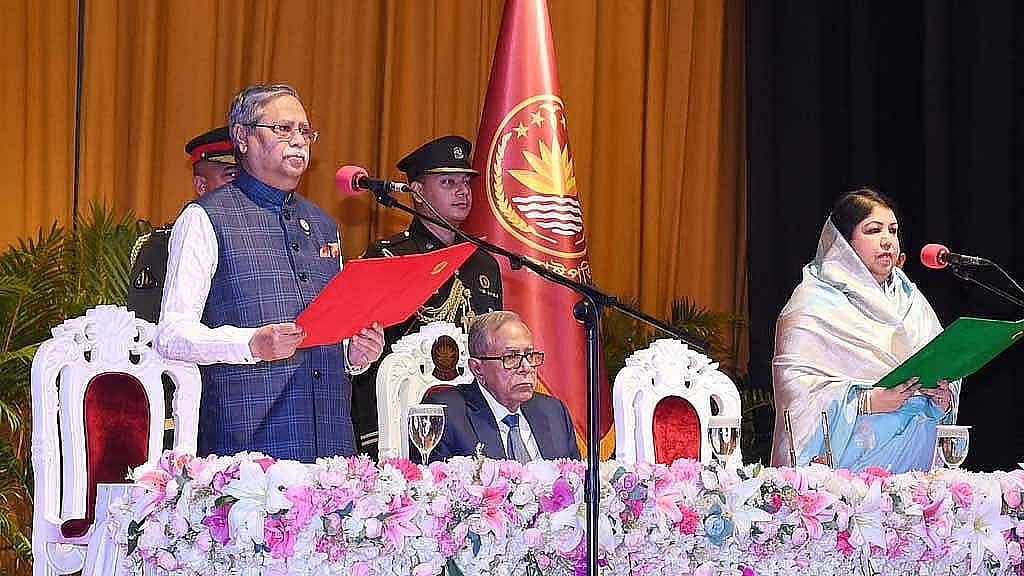
What Article 51 Protects
Article 51(1) states that the president cannot be answerable to any court for anything done, or omitted, in the exercise or purported exercise of presidential functions.
It also makes clear that while the president is protected, legal proceedings against the government arising from those actions may still be pursued.
Unlike Article 51(2), this immunity is not limited to the president's tenure.
Article 51(2), by contrast, bars criminal proceedings, arrest warrants or imprisonment only during the president's term in office.
Explaining the distinction, Habibur told bdnews24.com: "Under Article 51 of the Constitution, no legal action can be taken against a president for acts performed in the discharge of presidential duties. That immunity continues even after resignation. Therefore, no legal proceedings can be initiated against a former president for actions taken in that capacity."
The protection, he stressed, is not absolute.
"Acts unrelated to the constitutional responsibilities of the presidency are not covered by this immunity. Likewise, if someone was involved in a criminal offence before becoming president, criminal proceedings can still be brought."
As for the calls to arrest Shahabuddin, the lawyer said no arrest could lawfully be made without a specific cognisable criminal allegation.
"So long as no one files a case alleging a specific cognisable criminal offence, there is no legal basis for an arrest. We have not heard anyone make such a specific allegation."
'What Trial?'
After resigning on health grounds, Shahabuddin dismissed allegations surrounding his recent trip to London in interviews with private television channels, calling them "baseless" and "imaginary".
"The world is so small now that you can connect from anywhere. Can't people speak from Bangladesh to Delhi? So why would I need to go to London? Absurd, absurd, absurd!"
He insisted the controversy had nothing to do with his resignation, saying he had been considering stepping down for seven or eight days because of ill health, not political pressure.
Asked about his future plans, he said: "Treatment -- better treatment, at home and abroad. That's the priority."
He said he hoped to travel overseas within 10 to 12 days if his condition improved.
Responding to the NCP's demand for his prosecution, Shahabuddin said: "Oh, forget all that. I don't pay any attention to it."
Pointing out that advisors to the interim government had themselves been sworn in by him, he added: "What trial? For what? Let them read Article 51 of the Constitution."
In a separate interview with DBC News, he denied receiving any phone calls or pressure before resigning.
"No, no, no... That's nonsense. False."
Describing reports of coercion as "misinformation, baseless, fabricated and imaginary", he said: "I am not a criminal. I served with my head held high as president. I managed the crisis in 2024 after Aug 5."
He also said he was "proud" of his role in preserving the Constitution, overseeing the formation of the interim government and eventually handing power to an elected administration.
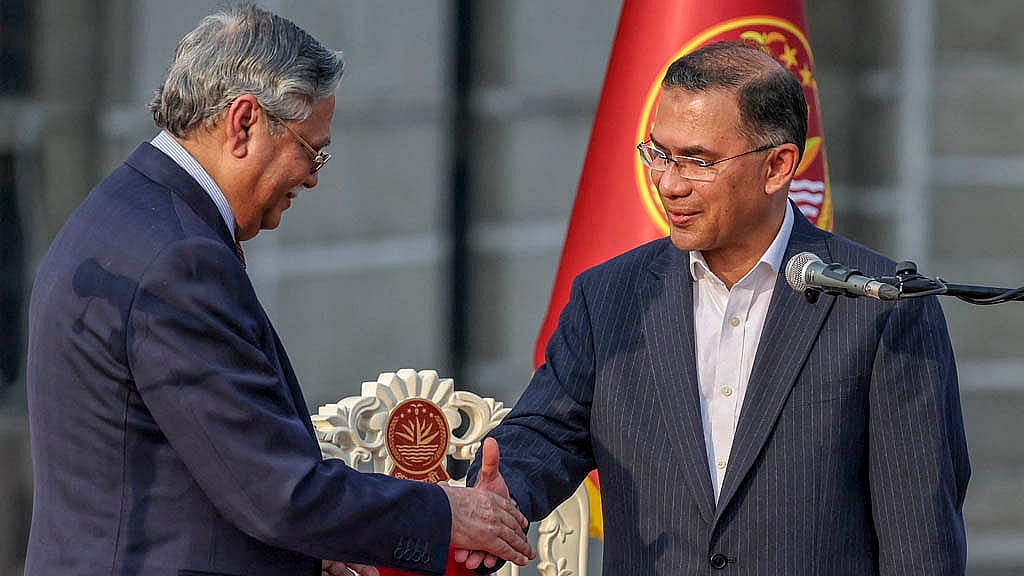
Political Demands Intensify
At a press conference in Banglamotor, NCP Member Secretary Akhter Hossen demanded Shahabuddin's immediate arrest.
"We demand that Shahabuddin Chuppu be arrested immediately and brought to justice."
Akhter argued that the former president had tried to create a "safe exit" for himself through the narrative set out in his resignation letter.
"Although he cited illness, he framed his resignation in a way that could create a safe exit for himself. But there is no question of giving Shahabuddin Chuppu a safe exit. He must face justice for whatever crimes he has committed."
The previous night, NCP Convenor Nahid Islam had made a similar demand at a rally in Jamalpur.
In Dhaka, Inqilab Moncho staged a procession after the resignation.
Acting spokesperson Abdullah Jaber alleged that Shahabuddin had legitimised enforced disappearances and killings under Sheikh Hasina's government.
"We want him tried as an accomplice to genocide. Otherwise, a tougher movement will be launched."
Bangladesh Khelafat Majlis also called for his arrest.
In a joint statement, its chief Mamunul Haque and Secretary General Jalaluddin Ahmad said Shahabuddin had lost the moral and political legitimacy to remain president after the July Uprising.
"Whatever the reason for his resignation, the people of the country feel relieved. But resignation alone does not end his responsibility."
They demanded an impartial investigation into all allegations against him and a trial under existing laws.
Constitutional Contradiction?
Prime Minister's Political Assistant Rashed Khan criticised those now demanding Shahabuddin's prosecution.
Writing on Facebook, he argued that the interim government had effectively legitimised the president by taking the oath of office from him.
"If Nahid Islam and others had formed a revolutionary government instead of taking the oath from the president under the Constitution, the question of immunity would not have arisen."
"You cannot first legitimise someone and then demand his trial. They should instead admit their own mistake before the nation."
He questioned why no such action had been pursued while the interim government remained in office.
No Comment from Acting President
Speaker Hafiz Uddin Ahmad, who assumed the role of acting president under Article 54 after receiving Shahabuddin's resignation letter, declined to comment when asked about demands for the former president's arrest.
"I have no comment on that."
Opposition leader and Jamaat-e-Islami chief Shafiqur Rahman, meanwhile, welcomed Shahabuddin's departure.
"A dark shadow of autocracy has gone. For that, we thank Almighty Allah."
He said his party had long believed Shahabuddin was unfit to remain president.
Asked about corruption allegations, Shafiqur said: "If credible evidence exists, no one is above the law."
He also criticised Shahabuddin's silence during the Uprising.
"He never spoke out against the killings. He bears responsibility. He never said, 'Stop this, this is oppression'."
Shahabuddin took office on Apr 24, 2023, for a five-year term under the then Awami League government.
He resigned with nearly two years of that term still remaining.
In his resignation letter, he cited heart disease, hypertension, diabetes, kidney complications and autonomic neuropathy, saying deteriorating physical and mental health had left him unable to continue in office.
His presidency had already been overshadowed by controversy after he said in an Aug 5, 2024 address to the nation that Hasina had submitted her resignation, only to later say in an October interview that he possessed no documentary proof of it.
The remarks triggered sustained political criticism and renewed calls for his resignation.
At the time, the BNP opposed removing him, warning that doing so could trigger a constitutional crisis.
By December 2025, however, Shahabuddin himself had publicly expressed his desire to step down after the parliamentary election.