Published : 18 Nov 2025, 09:43 AM
Updated : 21 Aug 2026, 02:45 PM


No other political leader in Bangladesh has stayed in power for as long. And no other head of state or government in Bangladesh has ever had the shadow of a death sentence hanging over them.
Riding on the legacy of her father, she rose to the top post of the country’s leading political party and, buoyed by the popularity of the anti-autocracy movement, eventually reached the pinnacle of state power.
The same Sheikh Hasina who was once a symbol of democratic struggle was overthrown in a bloody mass uprising, branded as an autocrat.
After ruling the country continuously for 15 and a half years, she lost power in the July Uprising and fled to India.
Now, having been found guilty as the person who “ordered” the killing of nearly 1,400 people in the effort to crush that movement, Hasina is a fugitive convict sentenced to death for crimes against humanity.
On Monday, after four months of proceedings, the International Crimes Tribunal, the court that was originally set up by her own government to try the war crimes of 1971, delivered its verdict in this case.
In his observations, Justice Md Golam Mortuza Mozumder, chair of the three-member International Crimes Tribunal-1, said it was “clear” that Hasina had made “inciteful” remarks and had “instructed” her party’s activists to “kill and eliminate” the protesters.
Among those who have served as head of state or government in Bangladesh, the late dictator Hussain Muhammad Ershad and former prime minister Khaleda Zia both had to go to jail in corruption cases. But no one had ever been sentenced to death by a court order. No one had ever fled abroad carrying the burden of a murder conviction.
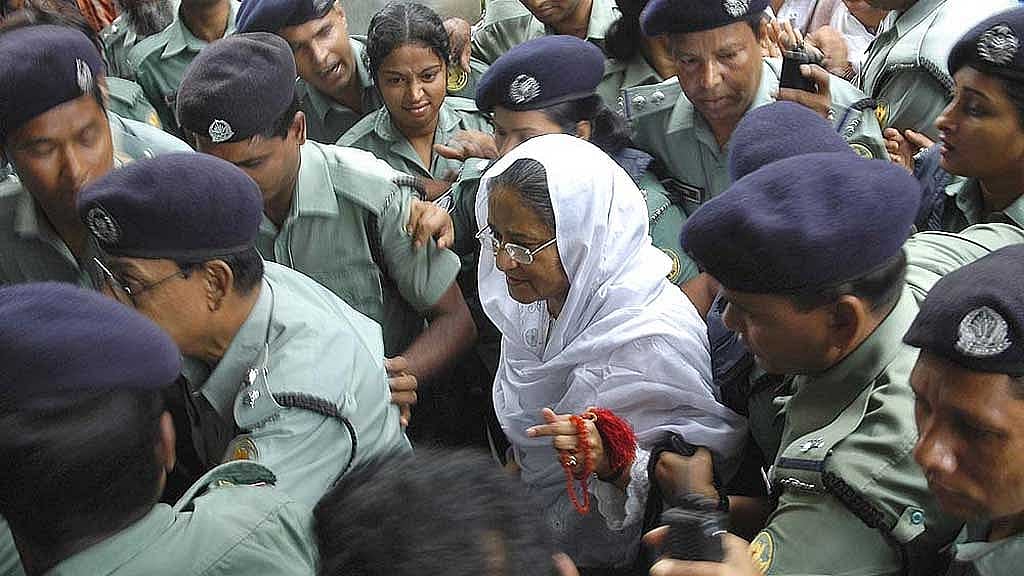
In her long political career, Hasina had been arrested and jailed only once before, in 2007, when the Army-installed caretaker government was in power. In the early hours of Jul 16 that year, she was arrested in her Dhanmondi residence, “Sudha Sadan”, in an extortion case.
She was taken straight from there to court, and from court to a specially designated sub-jail in the parliament complex. After almost 11 months in detention, she was released on bail on Jun 11, 2008 and travelled abroad for medical treatment.
Almost two months after Hasina’s arrest, BNP Chairperson Khaleda was also sent to jail in a corruption case. She too was held in another sub-jail within the same complex. Later she was released on bail.
Both of them took part in the 2008 election, the poll that ushered in the Awami League’s decade-and-a-half-long rule. That rule ended in 2024 with an Uprising.
To put the 78-year-old politician on trial, the interim government wrote to India in October last year. New Delhi did not respond to that letter.
FROM STUDENT LEADER TO PRIME MINISTER
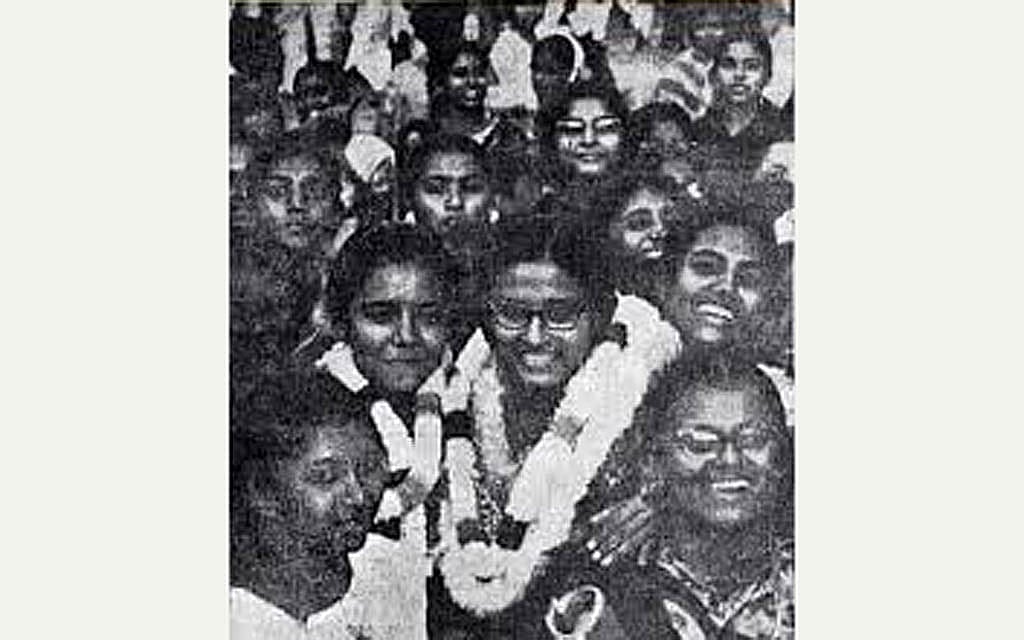
Hasina, daughter of the leader of Bangladesh’s independence movement Bangabandhu Sheikh Mujibur Rahman, began her political life in the 1960s as an activist in the Bangladesh Chhatra League at Eden College.
In 1966–67, she was elected vice-president of the Eden College students’ union from the Chhatra League. Later, as a student at Dhaka University, she served as general secretary of the Chhatra League’s Rokeya Hall unit.
Throughout the War of Independence against Pakistan, Hasina remained confined in Dhaka with her mother Sheikh Fazilatunnesa Mujib, her sister Sheikh Rehana and her younger brother Sheikh Russel.
On Aug 15, 1975, when a group of Army officers assassinated the founding president Bangabandhu Sheikh Mujib along with most of his family, Hasina was in Belgium with her husband nuclear scientist MA Wazed Miah, who had been posted to Germany. Rehana was with her.
Hasina could not got back home for a long time after that. In February 1981, in her absence, the Awami League elected her party chief at its council. She returned to Bangladesh on May 17 that year and formally took the reins of the party.
Under Hasina’s leadership, the Awami League, alongside the BNP under Khaleda and other opposition parties and alliances, led the anti-autocracy movement against military ruler Ershad that restored democracy in 1990.
She also spearheaded the movement to introduce a non-partisan caretaker government to oversee elections. That struggle succeeded in 1996, clearing the way for the Awami League to return to power after 21 years in an election overseen by a caretaker administration.
But, in October 2001, the Awami League-led Grand Alliance lost the eighth parliamentary election to the BNP-led four-party alliance.
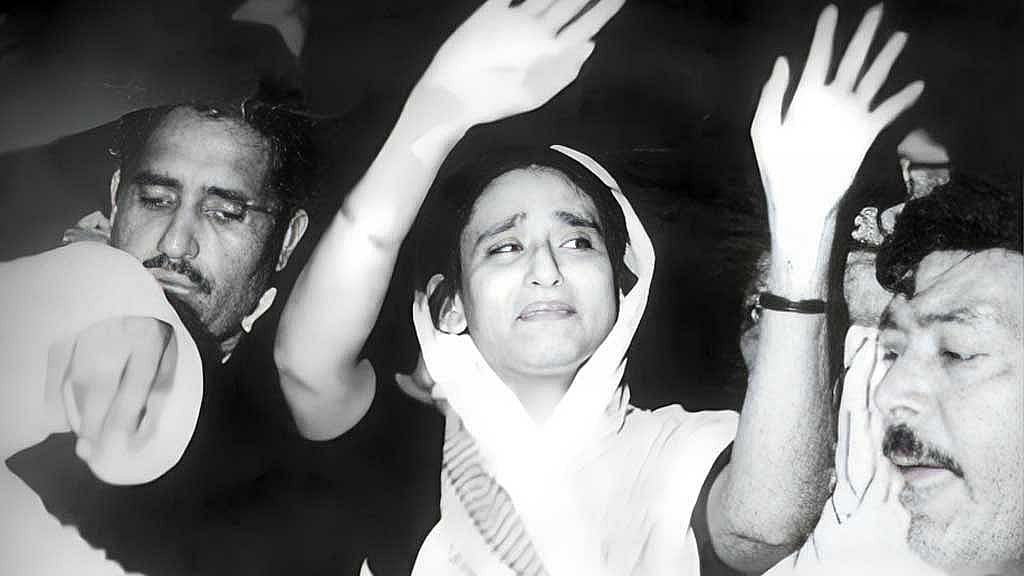
Over her long political life, Hasina survived multiple assassination attempts. The deadliest of them came on Aug 21, 2004. At a peace rally in front of the Awami League’s central office on Bangabandhu Avenue in Gulistan, grenades were hurled into the crowd, killing 24 people. She survived, but her hearing was permanently damaged.
BACK IN POWER FOR LONG RULE
Towards the end of the BNP-Jamaat coalition’s term in 2006, a fierce political conflict erupted over the formation of the caretaker government.
At the time, the law stipulated that the caretaker government head would be the most recently retired chief justice. The BNP government had extended the retirement age of judges by two years, which put Justice KM Hasan in line for the position.
Justice Hasan had once served as the BNP’s international affairs secretary. Citing that as evidence of partisanship, the Awami League refused to accept him and launched a movement. At the last moment, the former top judge declined to take the job.
Skipping over other steps laid down in the constitution, the then president Iajuddin Ahmed assumed the role of chief advisor to the caretaker government himself.
On Oct 28, the day the BNP government formally handed over power, clashes erupted on the streets amid the Awami League-led alliance’s “logi-boitha”, or poles-and-oars, protests.
The election date was eventually set for Jan 22, 2007 after one postponement. The Awami League-led alliance continued its programmes, declaring it would not take part in the polls.
Eleven days before the election, the situation changed dramatically. The military intervened, Iajuddin stepped down as chief advisor, and a new caretaker government under Fakhruddin Ahmed was sworn in. Instead of holding elections within 90 days, it stayed nearly two years.
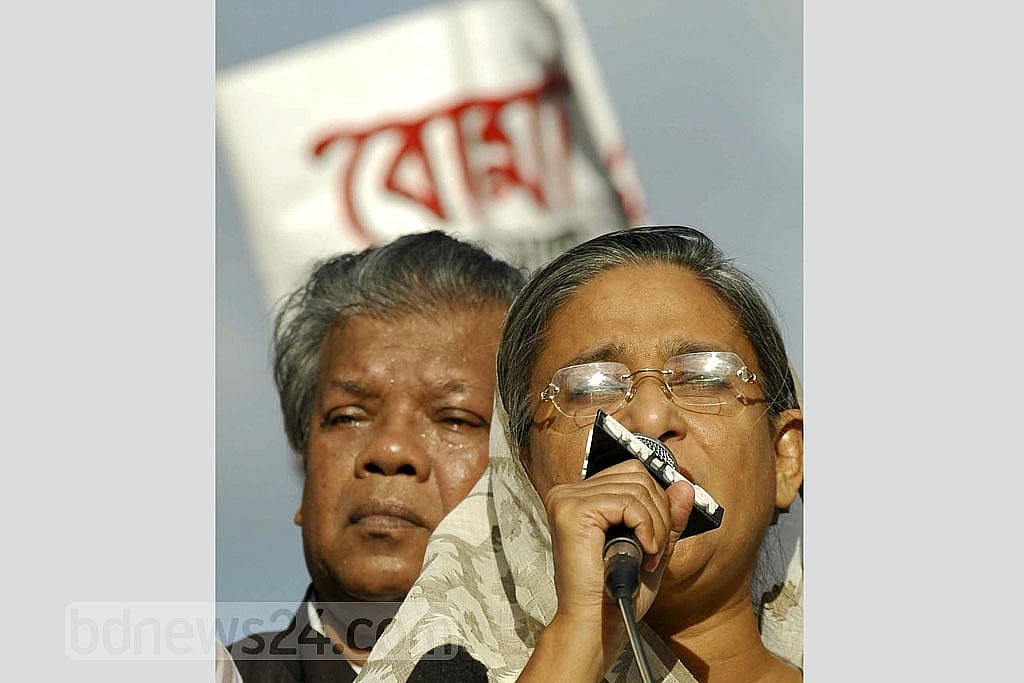
In the 2008 election that followed, Hasina’s Awami League won, and she embarked on a second term as prime minister. During her 15-and-a-half-year rule, Bangladesh made notable progress on economic and social indicators, but the opposition repeatedly accused her government of squeezing democracy and undermining human rights.
After coming to power through an election under a caretaker government, the Awami League government amended the Constitution in 2011 to abolish that system. The 10th, 11th and 12th parliamentary elections in 2014, 2018, and 2024 were all held while the Awami League was in office.
In the 10th and 12th elections, most opposition parties including the BNP boycotted the polls because their demand for a non-party caretaker administration was not met.
As a result of that boycott, Awami League candidates were returned unopposed in 153 of the 300 seats in the 10th parliament. The BNP, which sat out the poll, dubbed that legislature the “vote-less parliament”.
In 2018, some opposition parties, including the BNP, formed the Jatiya Oikya Front (National Unity Front) and took part in the 11th election. Allegations of widespread rigging immediately surfaced, with opponents claiming that most ballots had been cast the night before polling. The opposition won only seven seats. That election became known as the “midnight election”.
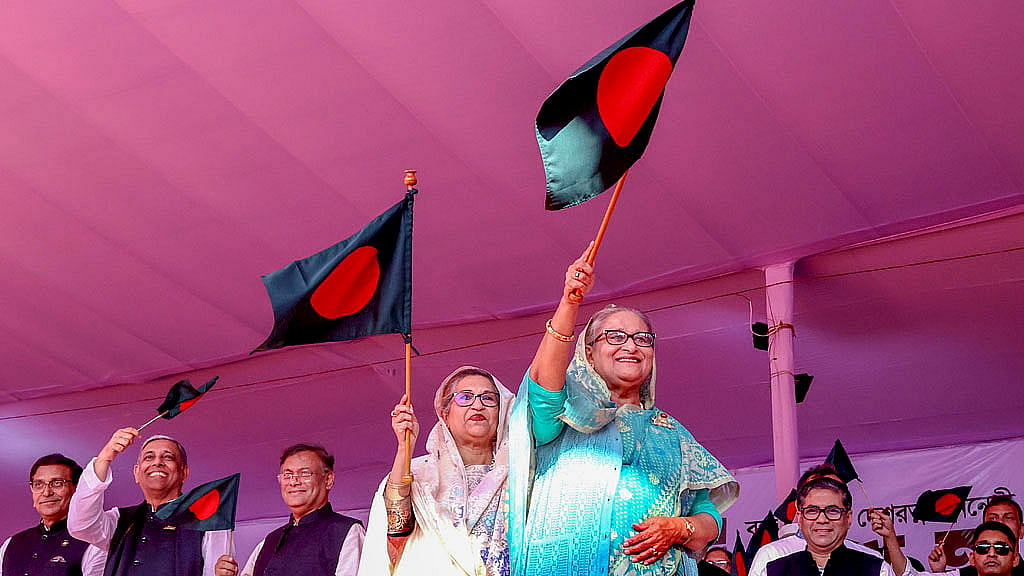
Ahead of the 12th parliamentary election in January 2024, the BNP and like-minded parties again boycotted the polls. To lend the election an appearance of participation, the Awami League left some seats for its allies and for the opposition Jatiya Party. In many constituencies, Awami League nominees faced challenges from party “rebels”, giving rise to the nickname “me and my dummy” election.
In all three questionable elections, the Awami League emerged victorious and remained in office, ruling uninterrupted for more than 15 years. In the end, on Aug 5, 2024, Hasina’s government fell to a student-led popular uprising.
In December last year, a High Court bench partially struck down the 15th Amendment to the Constitution, opening the door for the return of the caretaker government system.
In its observations, the court said that by failing to “ensure free and impartial elections”, the three general elections held under the Awami League government had “destroyed public confidence”.
In June this year, the BNP filed a case alleging that those parliamentary elections had been held “without the people’s vote”. The lawsuit names as accused Hasina along with all the officeholders of the Election Commissions that conducted those three polls.
Time magazine described Sheikh Hasina’s leadership over four consecutive terms as “hard power”, while the BBC called it a “one-woman show”.
Under her long rule, the Awami League government claimed to have pushed Bangladesh’s GDP growth to 8 percent, but later allegations surfaced that the figures had been inflated.
One after another, allegations of corruption, money laundering, and looting in the banking sector by those close to the government began to emerge even while Hasina was in power, often linked to large infrastructure projects.
Towards the end of her tenure, Hasina herself remarked at a press conference that even one of her peons had somehow become the owner of Tk 4 billion.
A taskforce set up by the interim government has reported that at least $16 billion were siphoned abroad every year during her rule. A corruption case is ongoing over the allocation of plots in Purbachal against Hasina and members of her family.
JULY UPRISING AND THE FALL
Heavy-handed police action against students and youth who took to the streets demanding quota reform sparked a nationwide wave of anger. On Aug 5, 2024, Hasina resigned and fled the country. She is now in India, in exile for the second time.
The student movement began after the High Court struck down a 2018 government circular that had abolished quotas in public service recruitment.
On Jul 1, the Anti-discrimination Student Movement took to the streets. As they continued their programmes, the government appealed against the High Court ruling, and its effect was stayed.
Everything changed on Jul 14. At a press conference on her China visit that day, asked about the quota issue, the prime minister said: “If the grandchildren of freedom fighters don’t get quotas, should the grandchildren of Razakars (collaborators of Pakistan Army in 1971) get them?”
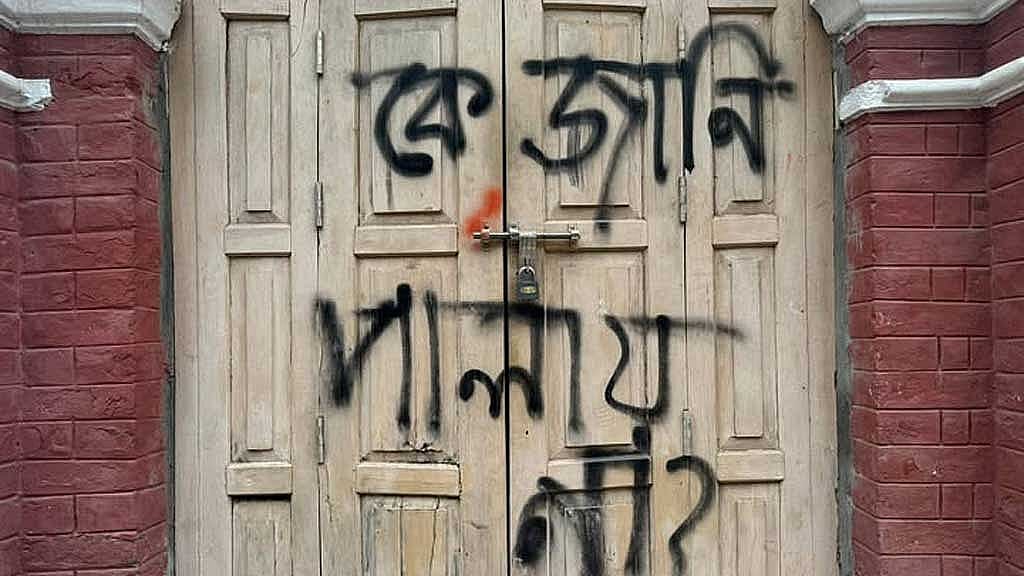
Later, at marches on the Dhaka University campus, protesters chanted: “Who are you, who am I? Razakar, Razakar.”
That night, the Chhatra League took out a counter-procession, chanting: "Who are you, who am I? Bangali, Bangali.”
The next morning, Awami League General Secretary Obaidul Quader said in a speech: “The Chhatra League will respond to the arrogance at Dhaka University.*”
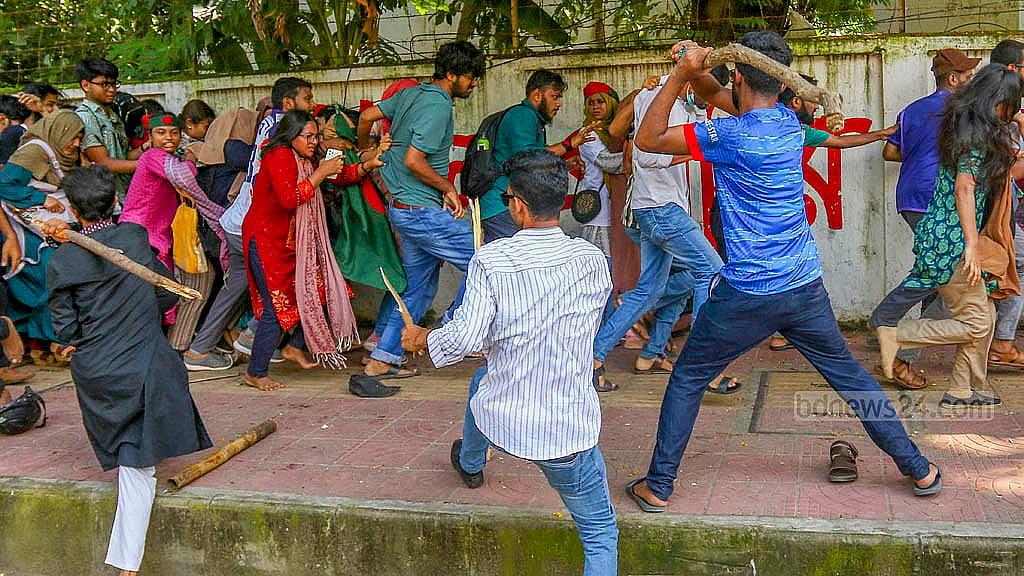
That same day, Chhatra League activists beat up quota reform protesters on the Dhaka University campus. In protest, a nationwide demonstration was called in educational institutions for Jul 16.
On Jul 15, clashes broke out between protesters and Chhatra League members at Dhaka University.
That day, three people including a Jatiyatabadi Chhatra Dal leader were killed in clashes in Muradpur in Chattogram. A Bangladesh Chhatra League activist and a hawker were killed at Dhaka’s Science Laboratory area, and a student was shot dead at Begum Rokeya University in Rangpur. The image of Abu Sayed standing with his chest bared and arms spread wide before a police gun in Rangpur spread like wildfire, fanning the flames of rebellion.
On Jul 17, in a televised address to the nation, prime minister Hasina called on students to remain calm, saying she believed they would get justice from the courts.
But the following day, students called a “complete shutdown”. Clashes in Badda and Uttara in Dhaka that day left several students dead, and the situation rapidly deteriorated.
By midday, government installations began to come under attack. Over the next three days, clashes continued and more than 200 people were killed.
Student leaders’ demands kept shifting, from eight points to nine, and eventually, from a rally of the Anti-discrimination Student Movement, a one-point demand emerged: the fall of the government.
In clashes with protesters across the country, about a hundred people, including police personnel, were killed. An indefinite curfew was imposed. In response, the Anti-discrimination Student Movement announced a “Long March to Dhaka” for Aug 5.
From around 11am that day, hundreds of thousands of people began breaking the curfew and entering different parts of Dhaka. In the midst of this, Army chief General Waker-Uz-Zaman announced that Hasina had resigned.
The UN Human Rights Commission reported that around 1,400 people were killed and several thousand injured in the movement that began with protests for quota reform in public jobs and culminated in the anti-government uprising. The report said force had been used against protesters on orders from “the highest levels of government”.
TRIAL FOR ‘KILLINGS’ AND LIFE AS A FUGITIVE
After Hasina’s fall, the interim government led by Muhammad Yunus moved to prosecute the killings during the July Uprising. Treating those killings as “crimes against humanity”, the cases were tried at the International Crimes Tribunal.
Of the 450-plus complaints submitted to the prosecution, four cases were filed at the tribunal naming the former prime minister as an accused.
In the first of those to reach judgment, Hasina was charged alongside former home minister Asaduzzaman Khan Kamal and former inspector general of police Chowdhury Abdullah Al-Mamun.
Chowdhury Abdullah Al-Mamun admitted his role and turned state witness. Of the three, he was the only one in custody while the other two were shown as absconding, and the trial proceeded in their absence.
The three were charged with five counts: incitement, instigation, and orders to kill 1,400 people in suppressing the movement, along with “superior command responsibility” and “joint criminal enterprise”.
Alongside reconstituting the tribunal to try the July killings, the interim government also restructured the prosecution team. Tajul Islam, who had once defended Jamaat-e-Islami leaders convicted of 1971 war crimes in the same tribunal, was appointed chief prosecutor.
Because Hasina and Kamal were being tried as absconders, the state, under the law, appointed a defence lawyer, Amir Hossain, to represent them in court.
In addition to the testimony of state witness Mamun, the prosecution presented before the tribunal the evidence of 54 witnesses, including wounded protesters, families of the dead and frontline movement leaders. During the hearings, several audio recordings of alleged conversations in which Hasina “issued orders” for the use of force were played in court.
On Nov 13, the tribunal announced that the verdict in Hasina’s case would be delivered on Nov 17. From that moment, sporadic bombings and arson attacks on vehicles began in Dhaka and other parts of the country. The banned Awami League called a “complete shutdown” for Sunday and Monday around the verdict.
On Monday, under tight security, the three-member International Crimes Tribunal-1 headed by Justice Golam Mortuza delivered its judgment. For the first time in Bangladesh’s history, the pronouncement of a verdict was broadcast live from the courtroom.
For her “inciteful” remarks, and for incitement, instigation, assistance, involvement and failure to prevent the killing of students and citizens, Hasina was sentenced to life imprisonment.
For “ordering killings to eliminate” protesters through the use of helicopters, drones and lethal weapons; for six murders in Chankharpul; and for the killing and burning of six people in Ashulia, Hasina was found guilty and sentenced to death.
For the six murders in Chankharpul and the killing and burning of six people in Ashulia, ex-home minister Kamal and former IGP Mamun were also found guilty.
Kamal received the maximum sentence, death. Mamun, having assisted in proving the charges, was given a reduced sentence of five years in prison.
Alongside imposing the capital punishment penalty on Hasina and Kamal, the tribunal ordered the confiscation of their assets in favour of the state. It also directed the government to arrange compensation for the families of those killed and for the injured in the July movement.
The death sentence for Hasina came on her wedding anniversary. She married Wazed Miah on Nov 17, 1967.
Shortly after the verdict in Dhaka, Hasina, now a death-row fugitive in India, issued a statement from there. Indian media outlets published her remarks.
Describing the verdict as “biased and politically motivated”, Hasina said: “The verdict revealed the brazen and murderous intent of extremist figures in an unelected government. Their purpose was to scapegoat the Awami League (by not prosecuting individuals from other political parties or those currently in power) and distract the world from the failings of Yunus."