Published : 12 Apr 2023, 02:48 PM
Updated : 12 Apr 2023, 02:48 PM


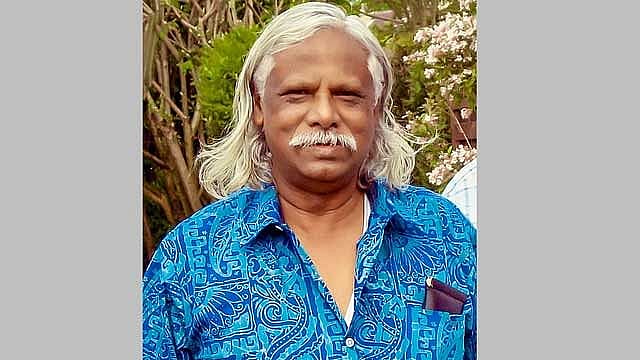
The last remains of Dr Zafrullah Chowdhury, the founder of Gonoshasthaya Kendra, will be taken to the Central Shaheed Minar in Dhaka on Thursday for people to pay their final respects, according to a trustee board member of Gonoshasthaya.
His family will decide whether to bury or donate the body soon, said Professor Altafunnessa Maya, one of the members of the Gonoshasthaya Trustee Board, at a media briefing on Wednesday.
Zafrullah’s body will be kept at the Central Shaheed Minar from 10 am to 1 pm. His first funeral prayers will be held at the Suhrawardy Udyan around 2 pm, she added.
His body will be taken to Gonoshasthaya Kendra in Savar at 10 am on Friday. His second funeral prayer service will be held there after Jummah prayers following an event to pay tribute to the freedom fighter.
Zafrullah’s family will decide about his last rites on Wednesday, according to Ganasanghati Andolan's Chief Coordinator Zonayed Saki.
“He had 10 siblings, along with his wife and children. Almost all of them are in Dhaka. The decision about his body's donation will depend on them. We hope to disclose the decision after the first funeral prayers tomorrow.”
“As far as I know, most of our family members support his decision to donate the body. He told us several times to donate his body. We would like to respect his wishes,” said Zafrullah’s younger sister Aleya Chowdhury.
Zafrullah died at the Gonoshasthaya Nagar Hospital in Dhaka around 10:40 pm on Tuesday at the age of 82. His body has been kept in the freezer at BIRDEM Hospital.
Prime Minister Sheikh Hasina has expressed her deep shock over the death of Zafrullah, recalling his contributions to the country’s Liberation War, pharmaceuticals and public health sectors.
Born at Raozan in Chattogram on Dec 27, 1941, Zafrullah passed intermediate from Dhaka College after matriculating from Nabakumar School in Bakshibazar. After doing his MBBS from Dhaka Medical College in 1964, he travelled to the UK to pursue higher studies.
As the war started in 1971, Zafrullah along with Dr MA Mobin and some other Bangladeshis, burnt their Pakistani passports at Hyde Park in London during a protest against Pakistan.
Zafrullah and Mobin then collected Indian travel permits and boarded a plane to Delhi just a week before their final exams, abandoning their hope of getting the degree for which they studied for four years.
The late Jahanara Imam, widely revered as 'Shaheed Janani’ (martyr's mother) who started the movement for war crimes trials in the 1990s, described in her autobiography ‘Ekattorer Dinguli’ how Zafrullah and Mobin tricked a Pakistani colonel in Damascus to evade arrest.
They reached the battlefield in Bangladesh via India. Zafrullah took guerrilla training at Melaghar in Agartala, where he founded a field hospital to treat injured freedom fighters.
After independence, Zafrullah built a health centre in Dhaka’s Eskaton and relocated it to Savar with an aim to make rural Bangladesh the centre of development and other activities. Half of the workers of the centre, named Gonoshasthaya Kendra, were women as part of the organisation’s efforts to ensure women’s empowerment.
Dr Zafrullah became a member of the national committees on education and women in 1979. He played a role in making Bangladesh’s National Drug Policy in 1982.
During the COVID-19 pandemic, Dr Zafrullah helped Bangladesh tackle the fallout. Gonoshasthaya Pharmaceuticals took an initiative to mass produce a coronavirus testing kit, but the attempt failed.
He won the Independence Award in 1977 and the Ramon Magsaysay Award, known as the Nobel Award of Asia, in 1985.
The Ramon Magsaysay Award Foundation said it recognised his engineering of Bangladesh's new drug policy, eliminating unnecessary pharmaceuticals, and making comprehensive medical care more available to ordinary citizens.
The University of California, Berkeley honoured him with the International Health Hero award in 2002.
Zafrullah was not directly involved with any political party, but was known as a critic of the Awami League government.
Before the 2018 general election, he played a role in bringing the Awami League’s political opponents together under the banner of the BNP-led Jatiya Oikya Front.