Published : 27 Dec 2025, 08:31 AM
Updated : 28 Aug 2026, 01:31 AM


Nearly one and a half years after the July Uprising, questions remain over why “mob violence” has not been contained and how, despite prior indications, mobs were able to vandalise media outlets and cultural organisations on the night of Dec 18.
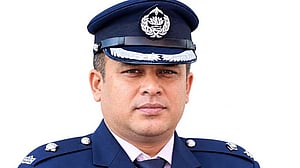
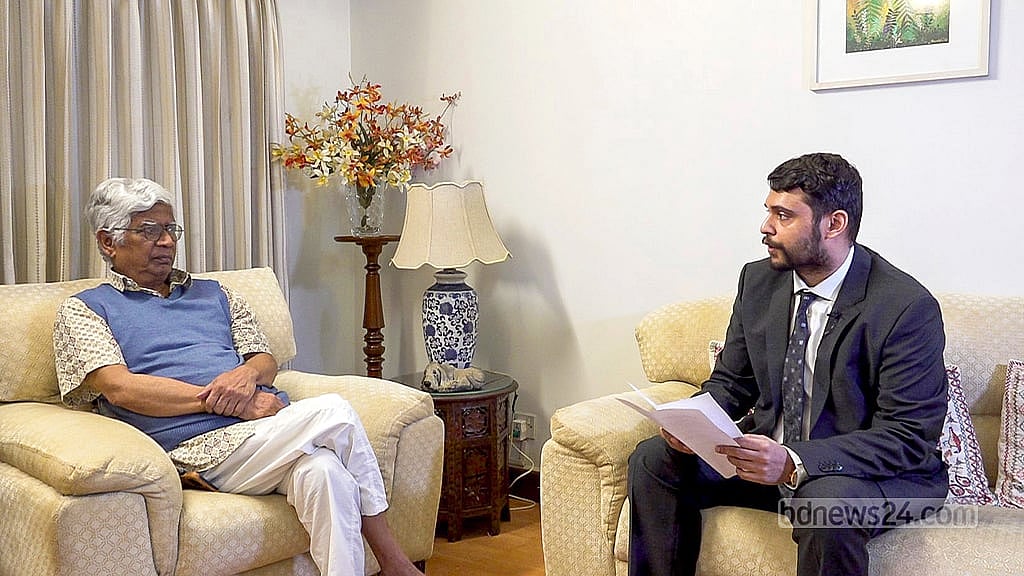
Former inspector general of police (IGP) Mohammad Nurul Huda believes law-enforcing agencies have shown “a certain degree of laxity” in responding to mob violence.
In an interview with bdnews24.com's talk show Inside Out, Huda dismissed as a “poor excuse” the argument frequently made by police that intervening to control mobs could lead to casualties.
Drawing on more than three decades of service in the police force, he offered a candid assessment of law enforcement practices, as well as reflections on recent high-profile incidents.
Huda also spoke about the killing of Sharif Osman Hadi, a leader of Inqilab Moncho, and the developments that followed.
The episode aired on Friday on bdnews24.com’s YouTube channel and Facebook page.
Huda joined the Bangladesh police in 1970 and served as inspector general from Jun 7, 2000, to Nov 6, 2001. He later became secretary of the Ministry of Youth and Sports before retiring in 2003.
In 1994, he worked as a national consultant under the United Nations Drug Control Programme, and between 1995 and 1997 played a key role in developing strategic plans for the police. He is now retired and engaged in writing.
ON THE KILLING OF HADI
The former police chief said he believed the perpetrators of Hadi’s killing would be arrested, provided they were still in Bangladesh.
“We have seen in many other cases that suspects are arrested later. So I don’t think this will be very difficult and that is what is important. Only then will it become clear who was behind it: whether it was part of a conspiracy, whether it was driven by personal enmity, or whether there was some other form of group rivalry. It is still too early to say. It hasn’t even been a month yet.”
'PEACEFUL ELECTION IS POSSIBLE'
On whether a peaceful election could be held given the current law and order situation, Huda said he believed it could.
“I think a peaceful election is possible, because elections take place nationwide. Those who are creating trouble in certain places today cannot spread themselves across the entire country.
“And if they do have the capacity to create disorder nationwide, then the authorities would certainly have that information and would act accordingly.”
Huda said existing laws allow preventive action to be taken if necessary.
“If required, 500 to 1,000 people would need to be arrested and kept in custody until voting is completed. Our laws support this. So I do not think the situation is that dire.”
He added that the election campaign period itself would likely ease tensions in the capital.
“When campaigning begins, people will return to their respective areas. They will not all remain concentrated in one place in Dhaka. Once they go back to their own areas, some of this tension will naturally subside.”
'GUNMEN A PARTIAL SOLUTION'
Following the killing of Hadi, rumours have circulated about a “hit list” of 50 people, including politicians. The government has said appointing gunmen could be a solution.
Asked whether this would address the problem, Huda said it would offer only limited relief.
“This will not fully solve the problem, but it will certainly offer a partial solution. There is precedent for this. When an individual faces security risks, the state provides protection.
“Providing gunmen is a temporary arrangement. If permanent protection is required, the person can apply for a firearms licence. Firearms licences are issued for two or three reasons, one of which is personal security, either of the individual or their property. From that perspective, this is reasonable.”
At a time when weapons are expected to be tightly controlled ahead of elections, the government has instead made it easier to obtain firearms licences.
However, the former police chief said he did not see this as a security risk.
“If someone needs round-the-clock security, that decision is taken after careful consideration. With elections approaching, issuing firearms licences for security purposes does not, in itself, create a risk,” he said.
ATTACKS ON NEWSPAPERS, CULTURAL INSTITUTIONS
The discussion also turned to the attacks on various institutions on the night of Dec 18.
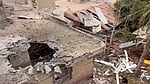
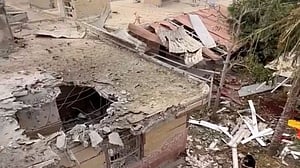
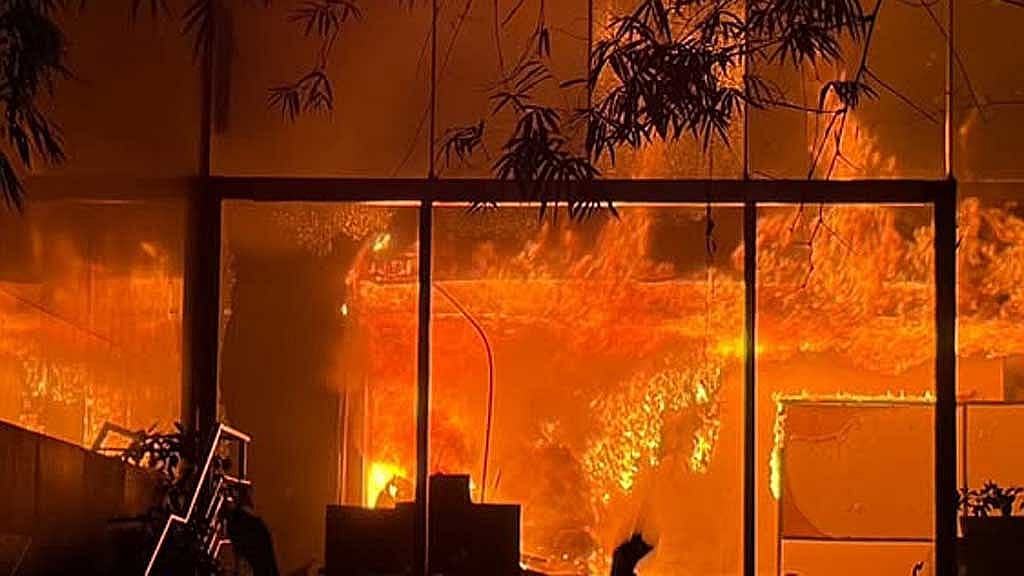
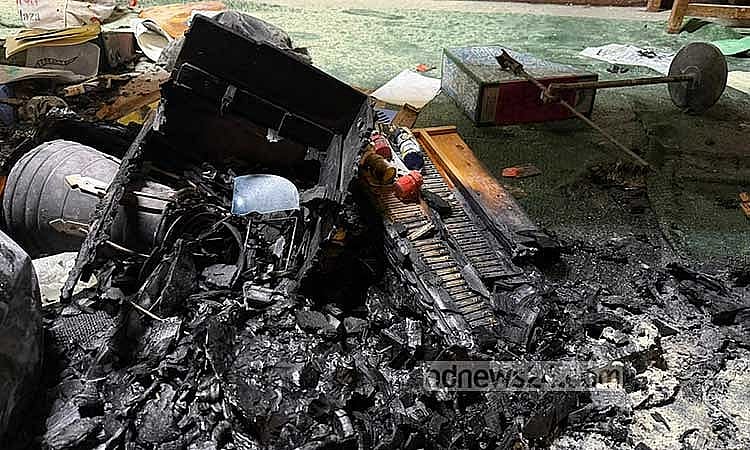
After news of Hadi’s death broke, the offices of leading national dailies Prothom Alo and The Daily Star, as well as preeminent cultural institution Chhayanaut, were attacked that night.
Commenting on the incidents, Huda said there had been “a degree of laxity” on the part of law enforcement.
“There was a lack of timely action. But we must also remember the broader context. The events of the 5th of August [2024, when the Awami League government fell], and the way repression was carried out before that, meant the government treated people as enemies. In response, sections of the public also came to view the police as enemies, and behaved accordingly.
“The attacks on police, the burning of police stations, police personnel being hung from ropes and displayed in public --all of this indicates a major shift, one that many of us still do not fully understand.”
He added that it was unrealistic to expect a swift return to normalcy after large-scale violence.
“When 1,000 to 1,200 people are killed and three to four thousand are injured, it is difficult to expect everything to suddenly become normal,” he said.
“Such events are often described as revolutionary change, after which revolutionary governments emerge. They do not operate within extensive rules. They act quickly to achieve what they need.
He continued, “That did not happen here. Given the scale of deaths, the kind of response that might have been expected did not take place. As a result, it is now difficult to expect the police force to function at full capacity. That may be why intelligence is not arriving on time, or why swift action is not taken even when it does. These are precisely the areas that need attention. If reliable intelligence is gathered quickly and action is taken on that basis, controlling the situation is not particularly difficult.”
The Dhaka Metropolitan Police (DMP) has said it refrained from intervening at the time because police action could have led to casualties.
Describing this as a “poor argument”, Huda said: “Casualties will occur -- that cannot be an excuse. If there was prior information, preventive measures should have been taken. And even while the attacks were under way, those responsible could have been restrained. That is not especially difficult.”
The DMP has also cited the “trauma” experienced by police officers over the past year, arguing that further casualties, combined with low morale, would make it difficult for the force to function effectively.
Responding to this, the former IGP said the issue applied only to a limited number of officers.
“The morale of some police officers may have been affected — those who committed wrongdoing, followed unlawful orders, or were involved in killings. But most of the force should not be going through this trauma.
“If you join the police, you need to be mentally resilient and prepared to face such situations. Those who are physically and mentally strong are the ones who should be doing this job. There is no room for weakness here. It has now been almost a year and a half. This excuse can no longer be used. That period has passed, in my view.”
Huda said he did not believe the violence and vandalism following Hadi’s death could be dismissed as the actions of an irrational mob.
“No, this was not simply a frenzied crowd acting for a brief period. A mob is, by definition, irrational. If that were the case, I do not think they would have selectively targeted social and cultural organisations with similar political ideologies.
“They are being used. There may be some active individuals among them who ideologically believe in such destructive acts — people who think others with different beliefs or religions should not be allowed to practise them here. There will always be individuals with such tendencies.”
'NO ROOM FOR LAXITY'
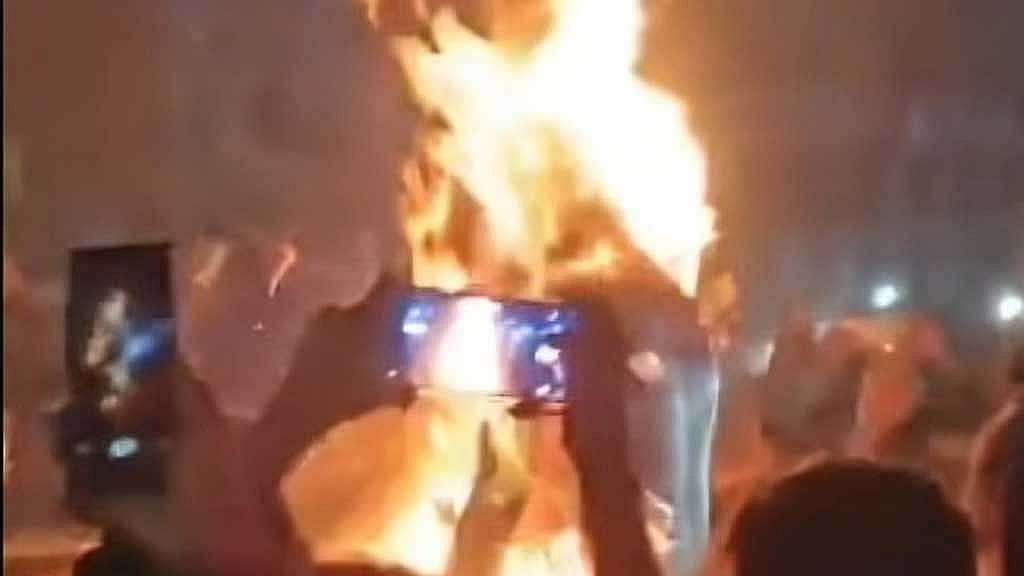
The discussion also addressed the killing of a man in Mymensingh following allegations of blasphemy.
“This mob mentality -- there is still a latent desire for violence among many people. When they lack opportunity, it remains hidden. When opportunity arises, it surfaces. This frenzy in the name of religion is undoubtedly the work of certain groups. Otherwise, such incidents would not occur in this way," said Huda.
“It is extremely condemnable and has damaged our international standing.”
He said past incidents showed the pattern clearly.
“If you look at previous cases -- Brahmanbaria, Cumilla, Ramu -- you see that when violence occurred, people from all political parties were involved. Even during the Awami League’s time, it was seen that emerging Chhatra League leaders or local strongmen took part.”
According to Huda, controlling communal animosity requires sustained effort.
“This ‘communal attitude’ -- the hatred and hostility -- the more it can be suppressed, the longer stability can be maintained,” he said.
“But this is a gradual process. It will not happen overnight. It is happening in neighbouring countries, across the subcontinent, and even globally, including in the United States. That is why it must be prevented. Preventive measures are essential, and education is crucial. These are ultimately political issues. Political decisions must be taken firmly. There is absolutely no scope for showing any laxity here.”