Published : 28 Sep 2026, 01:32 AM
Updated : 28 Sep 2026, 01:36 AM


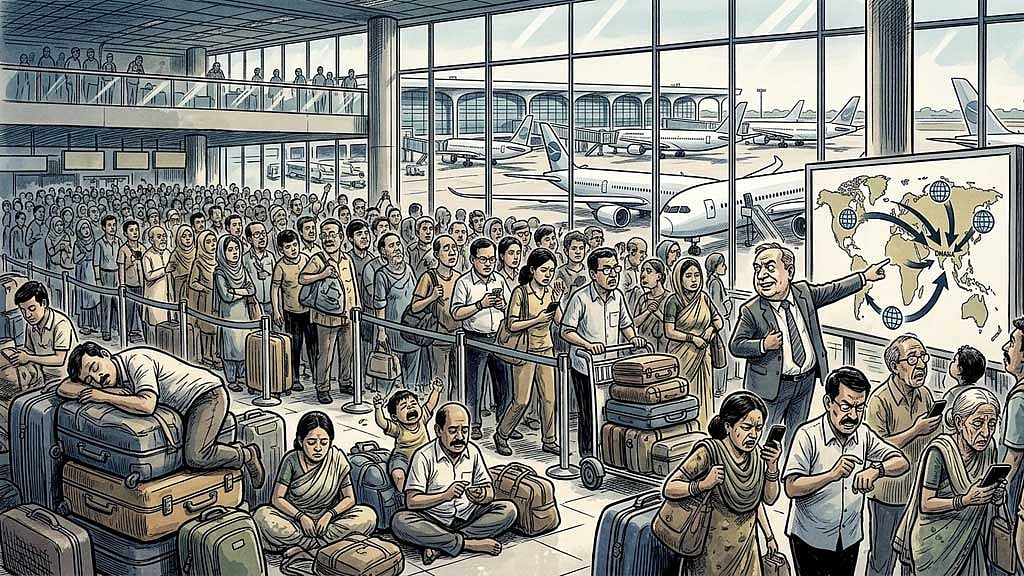
It is difficult for aviation industry stakeholders to pinpoint exactly when Bangladeshi politicians began using the phrase “aviation hub” in their speeches.
But the term was frequently heard from the prime minister, ministers and lawmakers during the previous Awami League government. The pledge has also found a place in the BNP government’s election manifesto.
Whenever foreign ambassadors or company representatives meet ministers or officials seeking business in Bangladesh’s aviation sector, government press releases routinely highlight the commitment to building an “aviation hub”.
Industry insiders, however, say airlines are the driving force behind hubs, as seen in Dubai, Qatar and Singapore, built around carriers such as Emirates, Qatar Airways and Singapore Airlines.
Those hubs take passengers from Dhaka to Singapore or Qatar and connect them onwards to Europe, the US or another destination.
Bangladesh’s reality is starkly different. In 55 years, local airlines have barely established themselves on international routes. Despite the huge number of Bangladeshis living abroad, foreign carriers still carry 75-80 percent of international passengers.
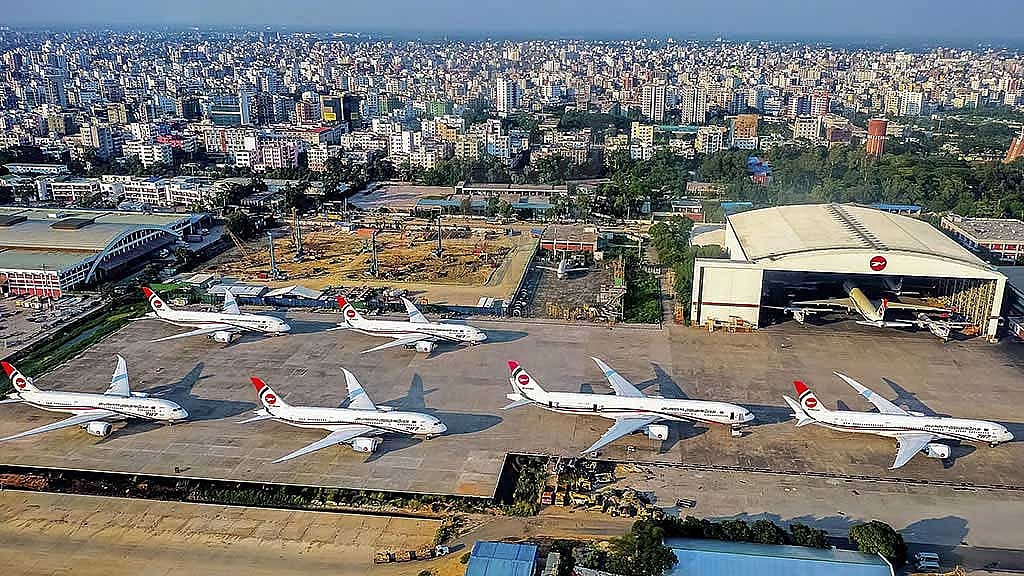
Industry stakeholders see little prospect of Bangladeshi airlines bringing passengers from another country to Bangladesh and flying them onwards to a third country. Nor do they see any clear preparation for an aviation hub.
Some therefore regard the pledge as political rhetoric. Others believe Bangladesh genuinely has the geography and market potential to become a hub.
US and UK ambassadors recently met Civil Aviation and Tourism Minister M Rashiduzzaman Millat, with the government’s statement again mentioning the hub commitment.
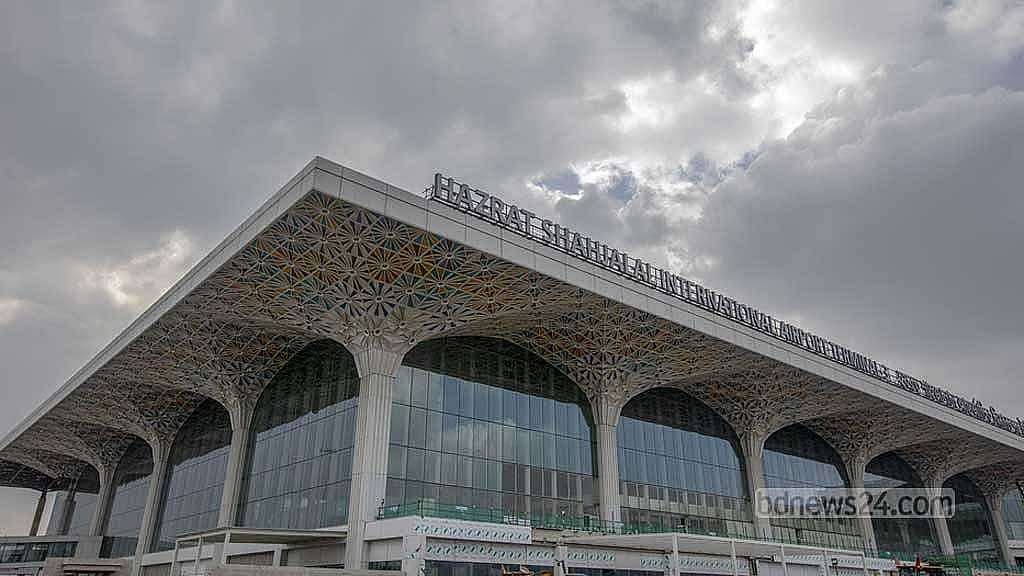
Discussions are also under way over new aircraft for flag carrier Biman Bangladesh Airlines and appointing a company to operate the third terminal.
Foreign envoys are lobbying government offices for business for companies from their countries, while also publicly pledging support for Bangladesh’s hub ambitions.
Retired wing commander ATM Nazrul Islam, who has worked in aviation for nearly three decades, said the government could provide infrastructure, but airlines would have to do the main work.
“What has our state airline Biman or US-Bangla said about becoming a hub? Have they made any such preparations? Is there anything visible? They have not even adopted the marketing strategy needed for a hub. They are now carrying passengers from destination to destination.”
Of Bangladesh’s four local airlines, only Biman and US-Bangla currently operate international passenger flights. Novoair and Air Astra operate only domestic routes.
Nazrul, who worked for more than a decade at now-defunct local carriers GMG and United, said: “The policy adopted in our country means local airlines cannot survive. One after another has died. Airport charges here are very high, and private airlines simply could not survive.
“Who will create a hub here? Before building a hub, we have to see where the civil aviation regulations are holding things back.”
He added, “Those who are supposed to create the hub are themselves nowhere in sight. It is like the person getting married does not know about the wedding. First decide who the bride and groom are. Then decorate the car. There is no bride or groom, yet we are making elaborate arrangements for the wedding car.”
Nazrul said a hub collects passengers from different destinations at a home or hub airport before taking them to distant destinations.
Such airports need facilities allowing passengers to spend transit time comfortably, including good food, places to sleep or rest during six- or eight-hour layovers, easy transfers between terminals, clear access to boarding points, and passenger-friendly customs and immigration.
Is the ‘Hub’ Talk Ill-Considered?
Kazi Wahedul Alam, an aviation expert and former director of Biman, said talk of an aviation hub began when the third terminal project was first discussed.
“A terminal is an important component of a hub. But having a beautiful terminal alone does not make a hub. To become an aviation hub, local airlines must be strong. This sick Biman and US-Bangla cannot create a hub.”
He pointed to Singapore and Dubai, where local airlines command 60-70 percent of the market. In Hong Kong and London too, he said, a hub cannot function without strong local airlines. Biman and US-Bangla together may have only 27-28 percent of Bangladesh’s market, he said.
He also cited visa barriers and high ground-handling costs.
“If a passenger comes from Tokyo to Dhaka and then goes to Dubai, we have to make that process easy. Visas have to be made easier. Getting a Bangladeshi visa is one of the most complicated things. You cannot get one online. In many places, you submit it online and get it within an hour. Without these things, we should not even imagine a hub.”
Wahedul said a plane landing in Dhaka pays Tk 300,000 to Tk 500,000 in ground-handling charges, compared with less than Tk 100,000 in Malaysia.
Asked whether “aviation hub” was merely a political buzzword, he said: “I would not agree that it is merely a political buzzword. I would call it an ill-considered statement. Perhaps they are saying it without knowing the whole issue. What we keep calling a ‘hub’ has no substance. It is like a fantasy.”
US-Bangla Managing Director Abdullah Al Mamun also said local airlines would have to play the central role.
“This is a very simple matter. But unfortunately, as Bangladesh’s largest private airline, we have not been properly consulted about an aviation hub at any level.”
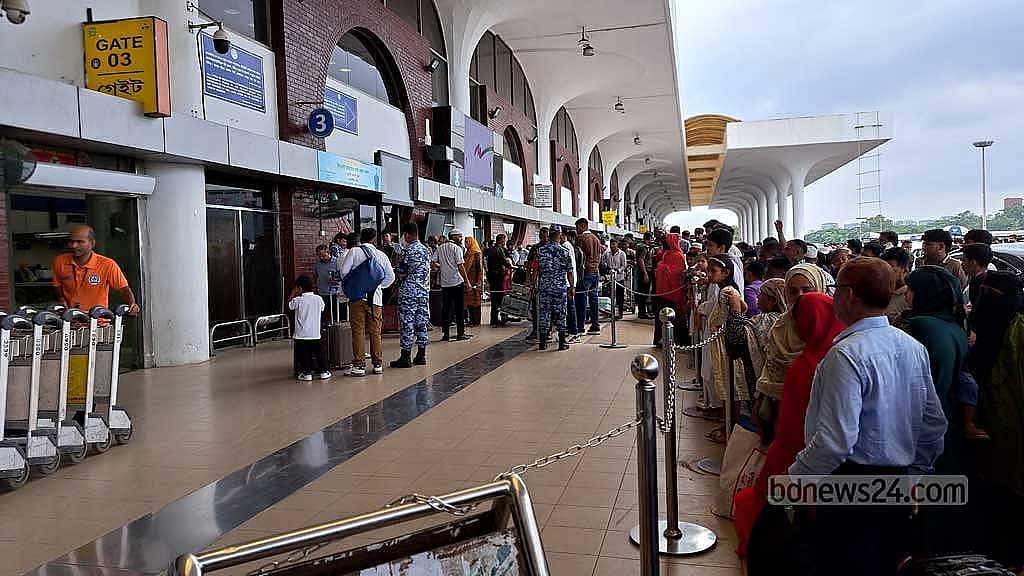
Speaking at an aviation-sector discussion organised by Daily Bonik Barta on Sept 12, Mamun said a hub meant more than a large terminal.
“If a passenger has to spend two to six hours at an airport, there must be enough facilities to spend that time. If they have to walk five kilometres, the airport should provide a good walking experience.
“But Bangladesh has no McDonald’s, no Dunkin’ Donuts, no major international brands. So after building such a large airport, what will we offer passengers? Infrastructure alone cannot create an aviation hub. The commercial and passenger-service ecosystem needed for a hub must also be built.”
A Hub Is Possible, but...
Journalist Tanjim Anwar, who has covered aviation for nearly two decades, believes an aviation hub is not merely political rhetoric.
Bangladesh’s geography and large passenger base could provide the foundations, but the country still lacks the necessary infrastructure and a fully commercial national airline, both of which he considers essential.
Tanjim, president of the Aviation and Tourism Journalists’ Forum of Bangladesh, said politicians began talking about an aviation hub when the Awami League government moved to build an airport at Arial Beel on Dhaka’s outskirts.
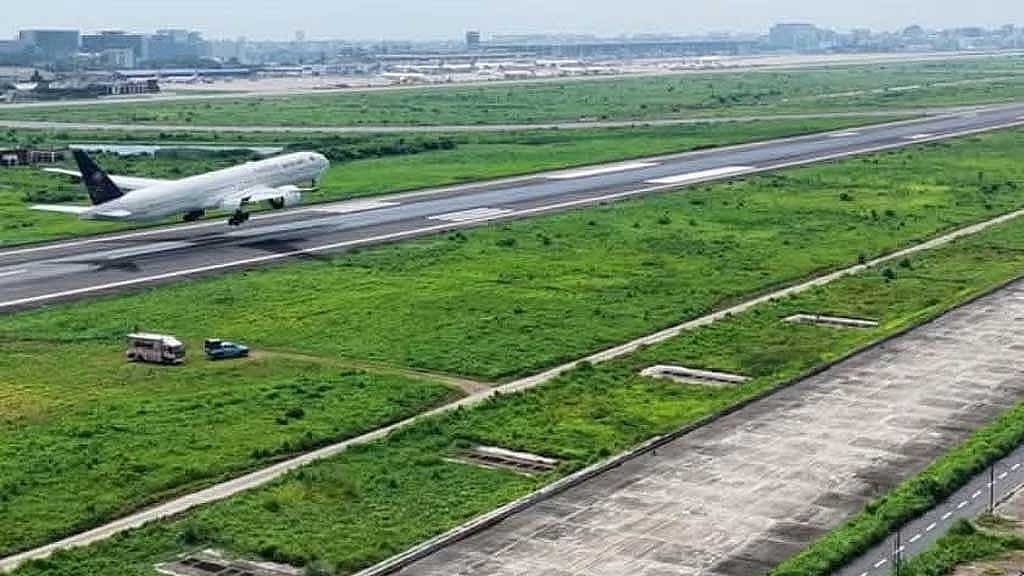
The plan called for two runways but was never implemented. Later, the focus shifted to making Shahjalal International Airport a hub, despite questions over the logic of doing so with a single runway.
Still, Tanjim believes Bangladesh has the geographical position and market for a hub. A two-hour flight from Dhaka covers much of South Asia; four hours covers South and Central Asia; six hours reaches Japan, West Asia and all of China; and eight hours covers Europe, Africa and even Australia.
Around 15 million Bangladeshis now live abroad, he said, with the number higher if irregular migrants are included.
Bangladesh also has around 10 million outbound passengers of its own each year, most of whom are carried by foreign airlines.
“With good infrastructure and a good airline, it would be possible to capture these passengers as well as passengers from other countries as a hub. And it is possible to build both a good airport and a good airline.”
The Hub Dream, from Awami League to BNP
During the Awami League government’s final five years, then-prime minister Sheikh Hasina and her ministers repeatedly spoke at government events about building an aviation hub.
At an aviation summit on Mar 22, 2023, Hasina said: “We need to prepare a roadmap for how we can leverage our geographical and strategic advantages to turn our country into an aviation hub.”
She also said Bangabandhu Sheikh Mujibur Rahman had moved to make Bangladesh an aviation hub connecting East and West after the country joined ICAO in 1973, but that initiative was halted after his assassination in 1975.
The idea has continued under the post-Hasina administration. The BNP’s election manifesto in February pledged to create a national air connectivity grid and transform Bangladesh into one of South and Southeast Asia’s major aviation hubs by 2034.
The manifesto said small airports and airstrips would initially connect divisional cities and eventually district towns.
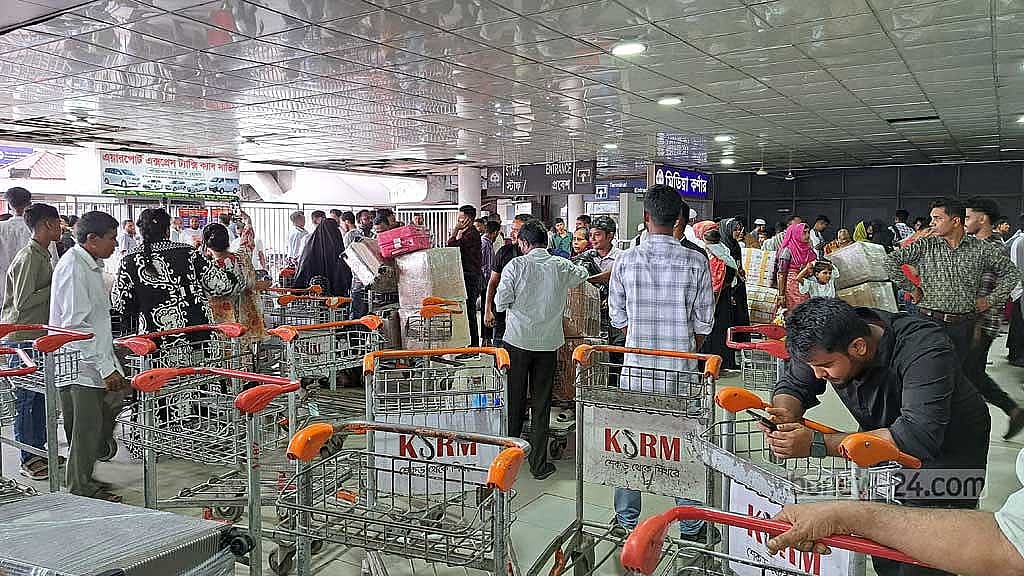
The BNP government has since announced plans to develop airports at Bogura, Lalmonirhat, Thakurgaon, Ishwardi in Pabna, Shamshernagar in Moulvibazar, Khan Jahan Ali in Bagerhat, Cumilla and Stalport in Patuakhali as domestic airports.
Bogura airport is currently receiving particular attention, although aviation stakeholders see little commercial viability in these airports.
Bangladesh may have the geography to become an aviation hub, but geography alone cannot put it on the global flight map.
The real test will be whether the country can build the airlines, connections, services and business environment needed to make passengers choose Dhaka as a gateway rather than merely a place to change planes.