Published : 22 Sep 2026, 05:11 PM
Updated : 22 Sep 2026, 05:11 PM


US President Donald Trump's decision to ban several news outlets from the White House over coverage he has criticised is likely to face significant legal challenges, four legal experts told Reuters.
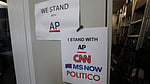
Trump announced on Friday that CNN, MS NOW and Politico would be banned after accusing them of publishing what he called "Fake News". He said on Saturday that other outlets could also face restrictions.
Legal experts said the stated reason for the ban could undermine the administration's position in court because US courts have held that the government cannot condition press access on favourable coverage once it has opened a space to the media.
"They don't have to allow anyone in, but once they do, they cannot decide who gets in based on viewpoint or content," said Lucy Dalglish, a journalism professor at the University of Maryland.
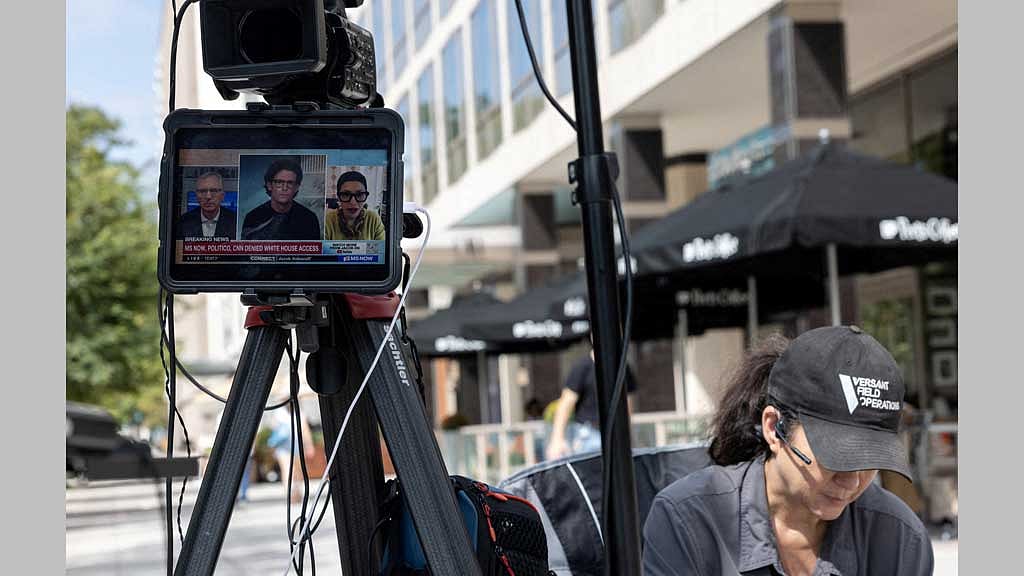
The White House said the outlets could continue reporting from outside the White House.
"The Fake News has no place demanding a spot in the President's Oval Office," the White House said in a statement, accusing the outlets of spreading lies and harming the American public.
CNN, MS NOW and Politico filed a lawsuit in federal court in Washington, DC, on Monday, arguing that the ban was unlawful retaliation for constitutionally protected speech and violated their due process rights under the First Amendment.
"This ban could not be a more direct assault on the First Amendment nor a more blatant violation of our most fundamental constitutional principles," the outlets said.
US District Judge Timothy Kelly, who previously blocked Trump from banning a CNN reporter during his first presidency, has scheduled a hearing for Wednesday on the outlets' request for a temporary restraining order blocking the ban.
Press Access Has Limits
The White House does not provide unrestricted access to the press, and presidents have greater discretion over tightly controlled spaces such as the Oval Office and Air Force One.
The White House also routinely selects pool reporters who travel with the president and share coverage with other media organisations. CNN is a member of the television pool, which suspended its coverage on Monday.
In June 2025, a Washington, DC, appeals court ruled that Trump likely had the authority to bar the Associated Press from certain spaces, including the Oval Office, but not from White House press facilities more broadly. The case involved Trump's decision to exclude the AP from the presidential press pool after it declined to use his preferred name, "Gulf of America", for the Gulf of Mexico. A final ruling remains pending.
Press Passes Deactivated
CNN, MS NOW and Politico said in their lawsuit that their reporters were denied access to the White House grounds on Saturday and told that their hard passes had been deactivated.
The outlets said they received no advance notice or opportunity to challenge the decision, arguing that this also violated their due process rights under the Fifth Amendment.
First Amendment lawyer Douglas Mirell said the government could restrict reporters who posed security risks but would need a clear basis and established procedures allowing journalists to challenge such a designation.
"There has to be a non-arbitrary and compelling reason to restrict access, and to say that you disagree with someone's opinion has never been a compelling reason under the First Amendment," Mirell said.
In March, a federal judge blocked the US Defense Department from enforcing rules that would have allowed officials to revoke Pentagon press credentials from reporters seeking information that had not been authorised for public release.
The Pentagon said the rules were intended to protect national security. The New York Times argued in a lawsuit that they could allow the department to bar outlets over coverage it considered unfavourable.
US District Judge Paul Friedman granted the newspaper's request for an initial order blocking the policy, saying it violated the First and Fifth Amendments because it was vague and overly broad.
The Trump administration is appealing that ruling.