Published : 13 Sep 2026, 06:12 AM
Updated : 16 Sep 2026, 11:50 AM


The map of Yemen’s war is changing quickly.
The Houthis have seized Yemen’s entire Red Sea coastline, including the port city of Mocha and territory reaching the strategically vital Bab al-Mandeb Strait, in a rapid offensive that could have wider implications for the war involving Iran.
The gains mark a major setback for Yemen’s internationally recognised government, which is backed by Saudi Arabia.
Analysts cited by Al Jazeera describe the Houthi advance as the most significant regional development since the US and Israel declared war on Iran in February.
But the biggest consequences could stretch well beyond Yemen.
The Houthis now have a stronger position over one of the world’s most important shipping routes. Their control of the Bab al-Mandeb could put further pressure on Saudi Arabia, which has increasingly relied on the Red Sea to move its oil after Iran’s closure of the Strait of Hormuz.
The question is whether the Houthis can turn their battlefield success into sustained control of the waterway.
How Did Yemen Reach This Point?
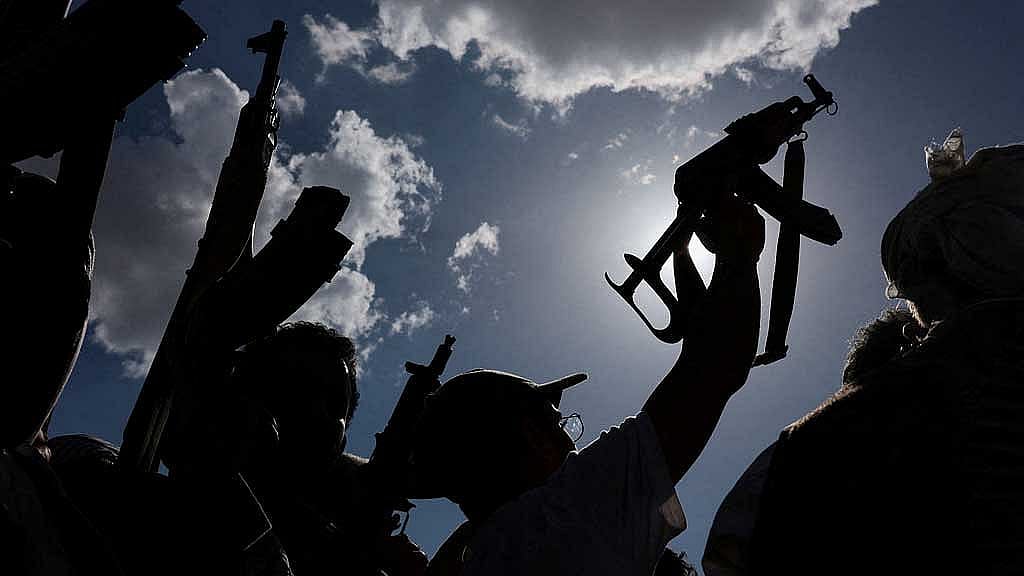
Yemen has been at war since 2014, when Houthi rebels captured the capital Sanaa and the port city of Hodeidah, forcing the government to step aside.
Backed by Iran, the Houthis have since fought a Saudi-led military coalition supporting Yemen’s internationally recognised government, based in Aden.
Saudi Arabia entered the war in 2015 to restore the government and counter Iran’s growing influence.
A UN-brokered truce in 2022 halted the main fighting, but clashes continued intermittently. A new and particularly intense round of fighting began last week, with the Houthis launching attacks aimed at capturing the Red Sea coast and Yemeni government forces fighting back.
The Houthis then expanded their maritime campaign.
In July, amid the US-Israel war on Iran, they announced a complete maritime blockade of Saudi Arabia and began attacking Saudi-linked ships passing through Bab al-Mandeb.
The narrow strait connects the Red Sea and the Suez Canal with the Gulf of Aden. Roughly 12 percent of global trade passes through it each day.
Its importance has grown further since Iran closed the Strait of Hormuz, through which about 20 percent of the world’s energy supplies passed annually before the war began in February.
Why Does the Coast Matter to Saudi Arabia?
The Houthi takeover could pose a serious problem for Saudi oil exports.
Saudi Arabia has been looking for ways to keep its oil flowing without relying on the Gulf route since the Strait of Hormuz was blocked. One answer has been the East-West Crude Oil Pipeline, which carries oil from the Abqaiq oil field across the Arabian Peninsula to Yanbu on the Red Sea.
The pipeline has operated since the 1980s and was specifically built to reduce Saudi Arabia’s vulnerability to disruption at Hormuz. It was temporarily shut down after Houthi drone attacks in 2019.
Since the February war, Riyadh has increased the pipeline’s capacity to seven million barrels per day, up from five million barrels previously.
That shift has increased the amount of Saudi oil moving through Bab al-Mandeb by 21 percent compared with before the US-Israeli war began.
The Houthis have already targeted Saudi oil tankers in the Red Sea, as well as energy installations and cities in southern Saudi Arabia.
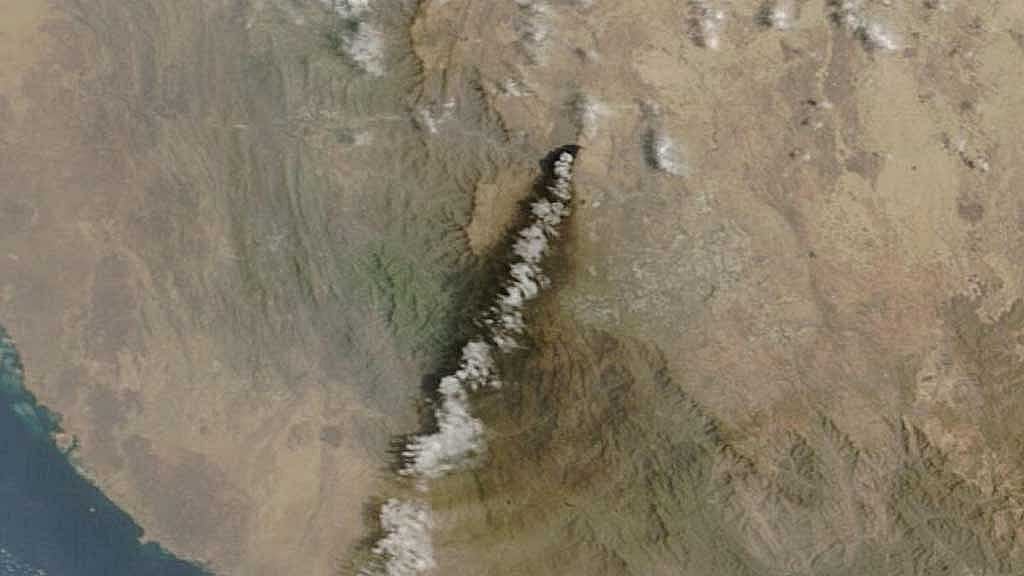
Images appearing on Friday showed smoke rising from the area of the East-West pipeline, although Saudi Arabia has not confirmed that the pipeline was hit.
With the Houthis now holding the entire Yemeni coast and the approaches to Bab al-Mandeb, the risks to Saudi exports could grow.
What Does It Mean for Iran?
For Tehran, the Houthi advance could provide another powerful card in its confrontation with Washington.
Analysts say the Houthis appear intent on opening a major new front in the US-Iran war. Control of Bab al-Mandeb would also complement Iran’s position around the Strait of Hormuz.
Both Tehran and Washington claim to control Hormuz, although sharply reduced shipping through the waterway suggests Iran currently has the upper hand, according to observers.
“Proxy control of the Bab al-Mandeb only strengthens that hand,” Alam Saleh, a professor of international relations at the Australian National University, told Al Jazeera.
“It essentially means Iran now controls the Strait of Hormuz and the Strait of Hormuz plus,” he said.
The development also puts additional pressure on Washington at a politically difficult moment.
Rising petrol and food prices have already made the war unpopular, with voters expected to express their anger towards Republicans in the November midterm elections.
US President Donald Trump acknowledged this week that the conflict is unlikely to end before then.
Saleh said Washington was running short of time as its strategy of military strikes and economic pressure sought to force Tehran to change course.
The Houthi gains, he argued, shift the balance further towards Iran and send a message to powers such as China and Russia that US military influence in West Asia is weakening.
“Iran has now played the card of global oil prices and energy security. So the Houthis controlling Bab al-Mandeb benefits Iran dramatically,” Saleh said.
Can the Houthis Actually Hold the Waterway?
The speed of the Houthi advance does not necessarily mean the group can maintain its gains indefinitely.
Yemeni government forces are estimated to number about 300,000, compared with roughly 250,000 Houthi fighters. Yet divisions within the government-aligned military, combined with pressure from Saudi Arabia, have produced a fragmented fighting force.
That fragmentation has made it difficult to counter an adversary known for its speed and adaptability.
“This is a fighting force that is probably more advanced than the force that the Saudis were fighting against about a decade ago,” Mohamad Elmasry, a professor at the Doha Institute for Graduate Studies, was quoted as saying by Al Jazeera.
Iranian weapons supplied to the Houthis over the past several years, including missiles, drones and air defence systems, have also helped the group build a significant stockpile, Elmasry said.
Yet the Houthis face a different challenge once battlefield gains have to be converted into lasting control.
Andreas Krieg, an associate professor at King’s College London, told Al Jazeera that the group is “terrible” at governance and is unlikely to sustain a blockade of Bab al-Mandeb.
The Houthi advance, he argued, has succeeded not because the group was underestimated, but because the Saudi-backed coalition was overestimated.
Still, the Houthis may not need to physically control every part of the strait to achieve their aims.
Saleh points out that even a credible threat could be enough to make shipping companies and insurers regard Bab al-Mandeb as too dangerous to use.
That leaves Riyadh facing a difficult question: can its air power stop the Houthis?
Saudi forces have fired dozens of missiles at Houthi-controlled areas, including Mocha, over the past 24 hours. So far, the strikes do not appear to have halted the advance.
A recent defence pact involving Saudi Arabia, Pakistan and Turkey is also unlikely to come into play, experts say, as the countries seek to avoid escalating the wider US-Israel conflict with Iran.
Washington may not intervene either.
According to US news site Axios, Saudi Crown Prince Mohammed bin Salman called Trump twice on Thursday to request American air strikes against the Houthis. Trump declined.
For now, the key question is whether Saudi Arabia can halt the Houthi advance with air power. The group’s gains have not been stopped by recent Saudi missile strikes, while experts say a Saudi-Pakistan-Turkey defence pact is unlikely to be activated and Washington has declined Riyadh’s request for US air strikes.