Published : 16 Sep 2026, 01:48 PM
Updated : 16 Sep 2026, 01:48 PM


Saudi Arabia says its air defences destroyed a Houthi drone south of Makkah before it entered prohibited airspace over Islam’s holiest city.
The Houthis deny they were targeting Makkah.
That dispute matters. But so does the location.
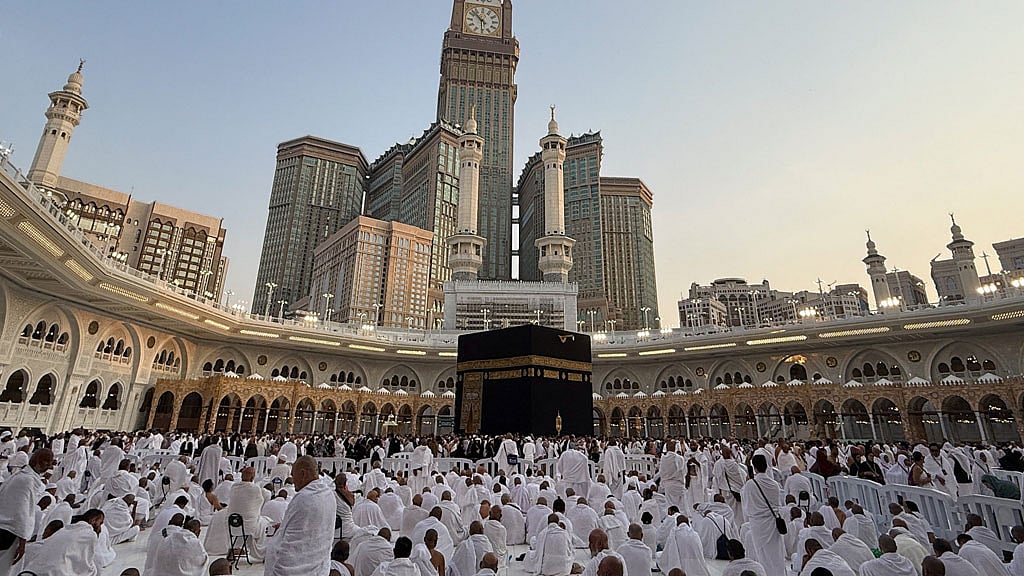
Makkah is home to the Grand Mosque and the Kaaba and is the focal point of the annual Hajj pilgrimage. Saudi-led coalition spokesman Turki al-Malki called the security of the city, its visitors and pilgrims a “red line”.
The incident comes after a week of Houthi attacks on Saudi Arabia that Reuters says has already drawn Riyadh deeper into the widening Middle East conflict.
So what happened near Makkah, why is the city different from other Saudi targets, and how much further could the confrontation go?
What Happened?
Saudi Arabia says the drone was intercepted on Tuesday evening south of Makkah before entering the city’s prohibited airspace.
Al-Malki said it was the second Houthi attempt to target the city, after what Saudi Arabia described as a ballistic-missile launch towards Makkah in July 2017.
No damage to Makkah’s holy sites was reported.
But the Houthis reject the Saudi version of events.
Houthi political bureau member Mohammed al-Farah told the group’s SABA news agency that the claim it had targeted Makkah was “an outright lie”. The group has, however, claimed several other attacks on Saudi territory in recent days, including a strike on an air base that it said was retaliation for Saudi airstrikes in Yemen. Saudi officials said that attack wounded 13 civilians.
So the safest description is that Saudi Arabia says a Houthi drone was intercepted before reaching Makkah’s restricted airspace, while the Houthis deny the city was their target.
Why Is Makkah Such a Sensitive Flashpoint?
Makkah’s significance extends far beyond Saudi Arabia.
It contains Islam’s holiest sites and draws Muslim pilgrims from around the world. Any perceived threat to the city therefore carries religious and political consequences well beyond an ordinary attack on a military base or oil facility.
That helps explain Riyadh’s unusually strong “red line” language.
It also raises the political cost of restraint. If Saudi leaders believe the Houthis are deliberately threatening Makkah, domestic and international pressure for a stronger response could increase.
But because the Houthis deny that was their intention, any conclusion about the target still rests on the Saudi account.
Why Are Saudi Arabia and the Houthis Fighting Again?
Saudi Arabia has led a coalition fighting the Iran-aligned Houthis since 2015, after the group seized Yemen’s capital Sanaa and drove out the internationally recognised government.
The conflict largely quietened following a UN-brokered truce in 2022, even after the formal ceasefire expired.
That relative calm has now broken down.
The Houthis have renewed missile and drone attacks on Saudi territory while advancing south along Yemen’s Red Sea coast. Reuters reported that Houthi fighters reached Perim Island, in the middle of the Bab el-Mandeb Strait, putting them in a stronger position to threaten one of the world’s most important shipping routes.
The renewed fighting has displaced more than 100,000 people inside Yemen, according to the UN refugee agency.
Could Saudi Arabia Now Become More Deeply Involved?
That is the central question.
Crown Prince Mohammed bin Salman asked US President Donald Trump for military help against the Houthis last week, three sources told Reuters. Washington has so far limited its assistance largely to intelligence sharing and has resisted direct intervention.
The US faces its own dilemma.
Taking on the Houthis directly would open another military front while American forces are already heavily committed in the war with Iran. Reuters reported that a new campaign could also consume naval, air and air-defence resources at a time when US munitions stocks are already under pressure.
Saudi Arabia therefore has to weigh the risks of escalating against a group that has repeatedly demonstrated an ability to strike deep inside the kingdom.
The Makkah incident could add to that pressure, but it does not by itself mean Riyadh has decided on a larger military campaign.
Why Does the Rest of the World Care?
Because the Saudi-Houthi confrontation is colliding with an already severe energy and shipping crisis.
The Iran war has sharply disrupted traffic through the Strait of Hormuz, historically one of the world’s most important oil routes.
Saudi Arabia has partly compensated by moving crude west through its 1,200-km East-West Pipeline to Red Sea export terminals.
That alternative has now also been hit.
Saudi Arabia blamed a separate Iran-aligned group based in Iraq for a drone attack that forced the pipeline to shut. Before the disruption, it had been carrying roughly 4 million to 5 million barrels a day — about 4–5 percent of global oil supply.
Saudi Arabia subsequently suspended some loadings at the Red Sea port of Yanbu and cancelled some cargoes to European customers, forcing buyers to seek alternative supplies.
At the same time, the Houthis’ advance towards Bab el-Mandeb is putting pressure on the other end of the Red Sea.
Reuters estimates that about 7 percent of global petroleum supplies and 12 percent of global trade normally move through Bab el-Mandeb.
That leaves Saudi Arabia exposed on both sides of the Arabian Peninsula: Hormuz to the east, and Bab el-Mandeb and the Red Sea to the west.
The market consequences are already visible. Some physical crude cargoes in Europe traded above $130 a barrel on Tuesday as buyers scrambled for alternatives to disrupted Middle Eastern supply.
What Now?
Saudi Arabia now faces a difficult combination of pressures: renewed attacks at home, fighting in Yemen, disruption to its east-west oil route and Houthi gains near Bab el-Mandeb.
The drone intercepted near Makkah adds a particularly sensitive dimension because of the city’s religious importance. But the larger test for Riyadh is how to contain the Houthi threat without opening another costly phase of the Yemen war.
For now, that choice remains unresolved. Reuters reports that Washington has resisted direct military intervention, while Gulf-Iran talks aimed at easing regional tensions have already been postponed as the fighting intensifies.