Published : 08 Jun 2023, 06:14 PM
Updated : 08 Jun 2023, 06:14 PM


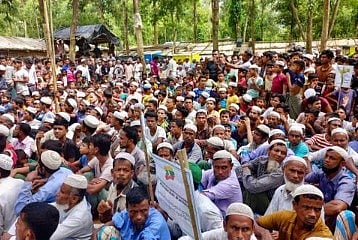
Tens of thousands of Rohingya refugees in Bangladesh protested on Thursday, demanding to be repatriated to Myanmar so that they could leave the squalid camps they have lived in since fleeing a brutal military crackdown in their homeland in 2017.
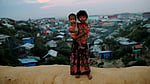
More than a million Rohingya have been crammed into the camps in southeastern Bangladesh, the world's largest refugee settlement. Most fled the crackdown by Myanmar's military almost six years ago, although some have been there for longer.
During Thursday's demonstrations across the sprawling camps, refugees, young and old, waved placards and chanted slogans.
"No more refugee life. No verification. No scrutiny. No interview. We want quick repatriation through UNHCR data card. We want to go back to our motherland," the placards read. "Let's go back to Myanmar. Don't try to stop repatriation."
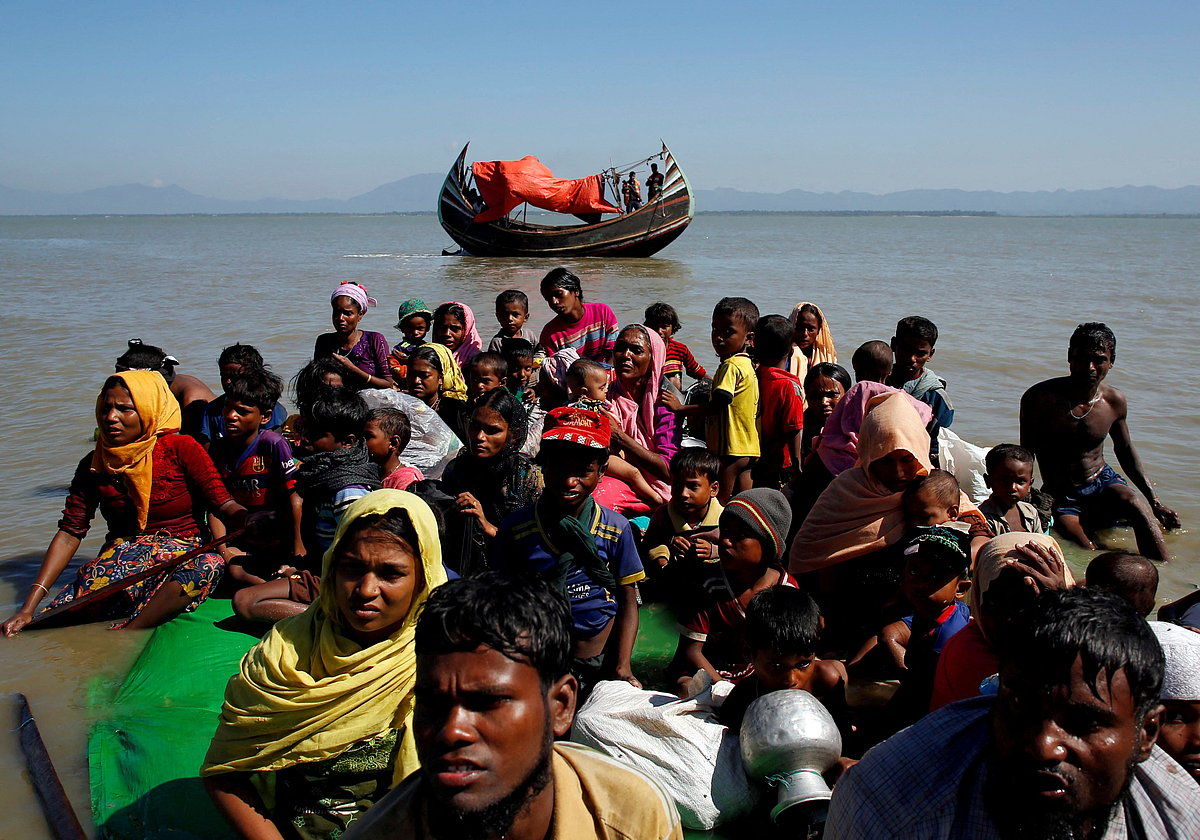
Surging crime, harsh living conditions and bleak prospects for returning to Myanmar are driving more Rohingya refugees to leave Bangladesh by boat for countries such as Malaysia and Indonesia, putting their lives at risk. UN data shows 348 Rohingya are thought to have died at sea last year.
Rohingya community leader Mohammad Jashim said he was keen to return to Myanmar but wanted his citizenship rights guaranteed.
“We are the citizens of Myanmar by birth. We want to go back home with all our rights, including citizenship, free movement, livelihood, safety, and security," he told Reuters, saying the refugees hoped for United Nations' help in this regard.
Myanmar's military had until recently shown little inclination to take back any Rohingya, who have for years been regarded as foreign interlopers in Myanmar and denied citizenship and subjected to abuse.
Attempts to begin repatriation in 2018 and 2019 failed as the refugees, fearing prosecution, refused to go back.
A group of 20 Rohingya Muslims told Reuters they would not return to Myanmar to "be confined in camps" after visiting their homeland as part of a pilot scheme aimed at encouraging voluntary repatriation. A Bangladesh official said the pilot scheme envisaged about 1,100 refugees returning to Myanmar, but no date had been set.
Densely populated Bangladesh says refugees' repatriation to Myanmar is the only solution to the crisis. Local communities have been increasingly hostile towards the Rohingya as international aid agencies' funding for the refugees has dwindled.
The World Food Programme recently cut the monthly food allocation to $8 per person from $10 earlier.
"Our situation is only deteriorating. What future do we have here?" asked refugee Mohammed Taher, as he stood with other protesters.
"In the name of verification and scrutiny, they (Myanmar) are only killing time."