


Published : 18 Apr 2016, 02:07 AM
Updated : 19 Oct 2022, 05:13 PM


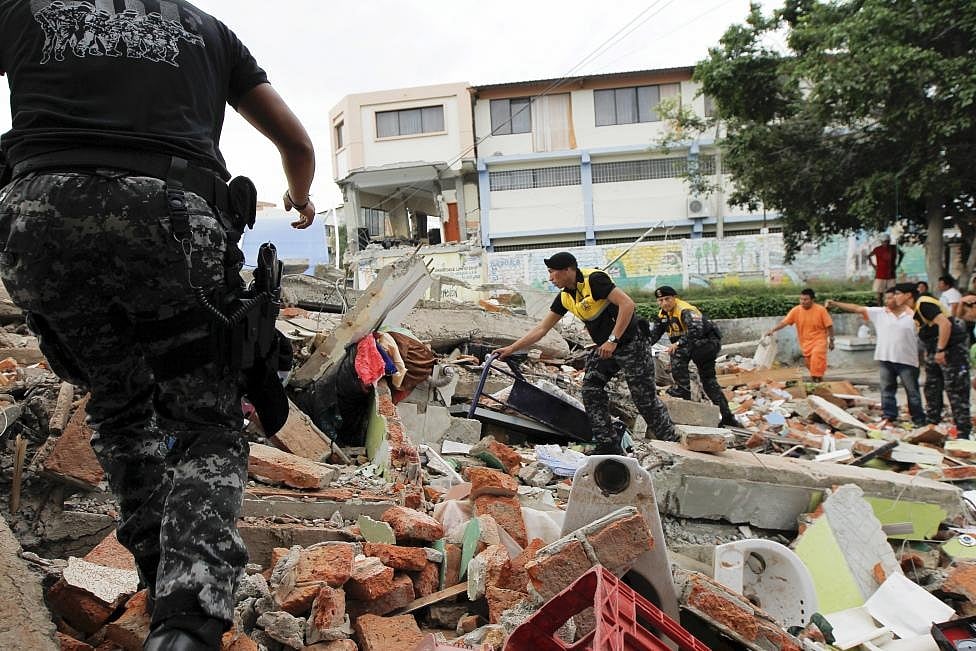
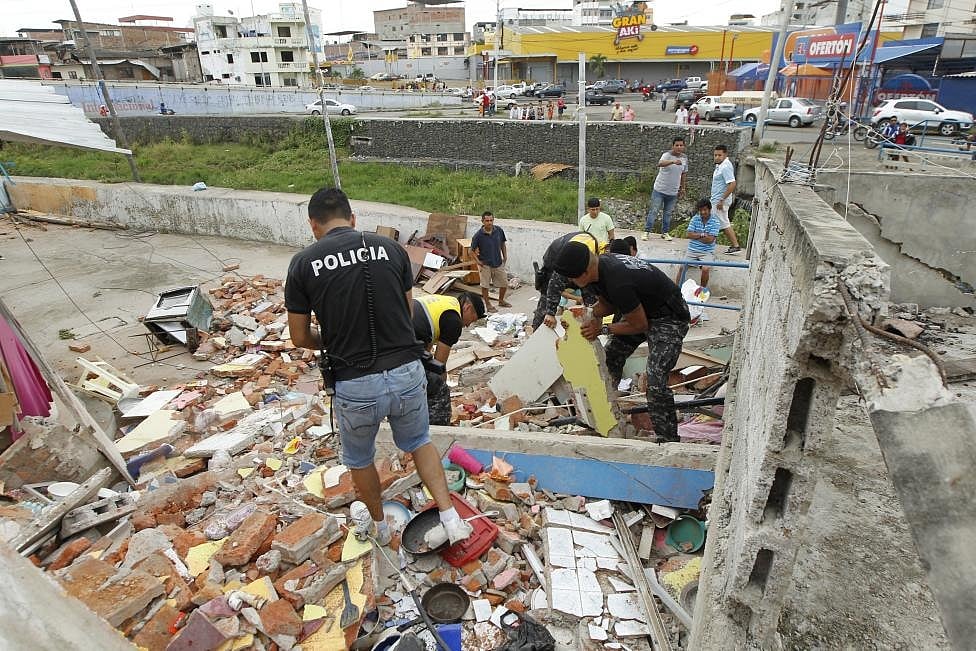
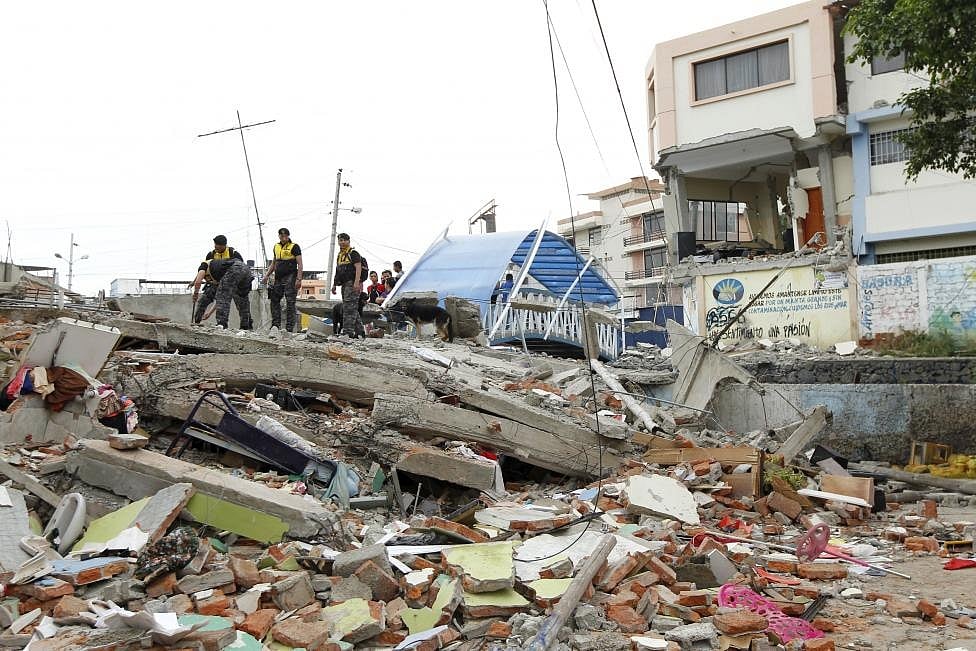
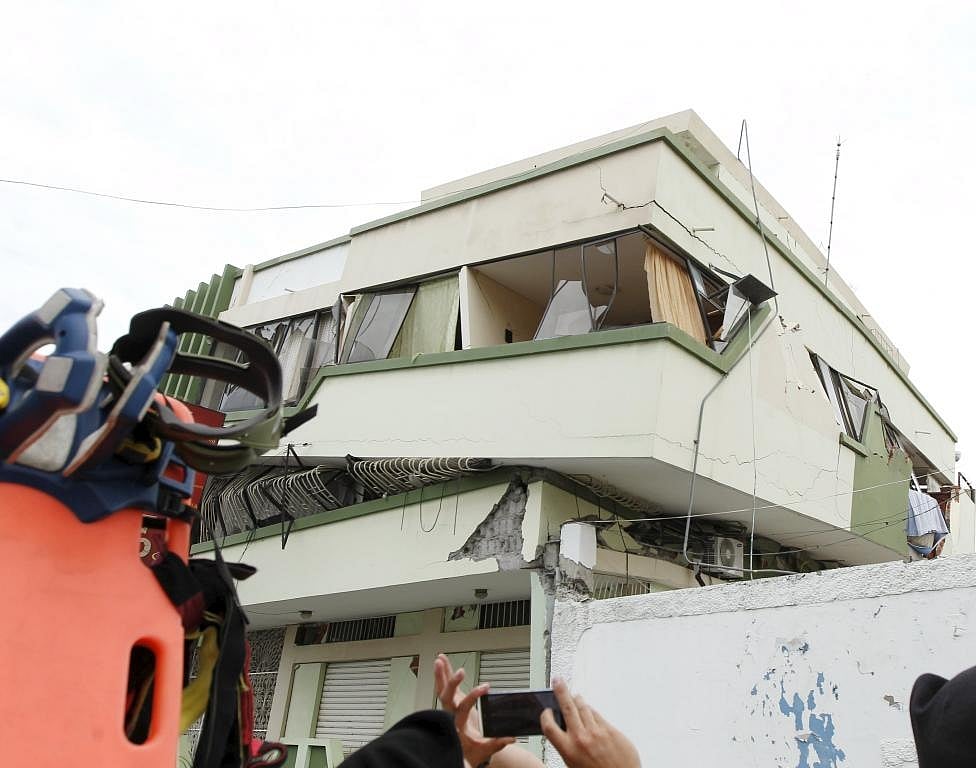
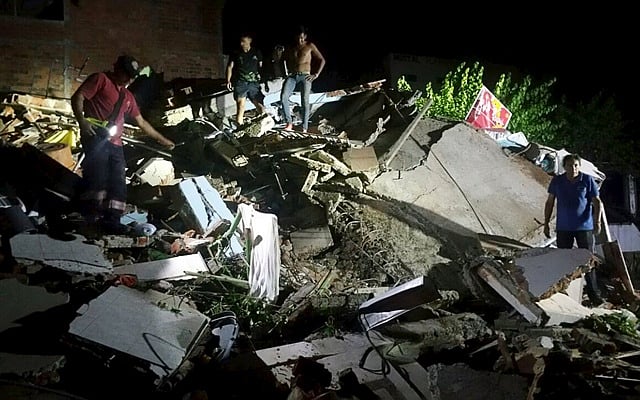
The 7.8 magnitude quake struck off the Pacific coast on Saturday and was felt around the Andean nation of 16 million people, causing panic as far away as the highland capital Quito and collapsing buildings and roads in a swath of western towns.
President Rafael Correa rushed home from a trip to Italy to supervise the emergency. "The immediate priority is to rescue people in the rubble," he said on Sunday.
"Everything can be rebuilt, but lives cannot be recovered, and that's what hurts the most."
Visiting the quake zone, Vice President Jorge Glas said 235 had died and more than 1,500 people were injured.
"There are people trapped in various places, and we are starting rescue operations," Glas said.
Authorities said there were 163 aftershocks, mainly in the Pedernales area. A state of emergency was declared in six provinces.
The quake has piled pain on the economy of OPEC's smallest member, already reeling from low oil prices, with economic growth this year projected at near-zero. It has also propelled Glas - a possible candidate in Ecuador's February 2017 presidential election - into the limelight.
About 13,500 security force personnel were mobilized to keep order around Ecuador, and $600 million in credit from multilateral lenders was immediately activated for the emergency, the government said.
Parts of Quito were without power or phone service for several hours, but the city government said those services had been restored and there were no reports of casualties in the city.
The government called it the worst quake in the country since 1979. In that disaster, 600 people were killed and 20,000 injured, according to the U.S. Geological Survey.
In international aid, Venezuela, Chile and Mexico were sending personnel and supplies, the left-leaning Correa government said. US Secretary of State John Kerry tweeted his nation's solidarity and offered assistance.
Though tsunami warnings were lifted, coastal residents were still urged to seek higher ground in case tides rise.
The Ecuadorean quake followed two large and deadly quakes that struck Japan since Thursday. Both countries are located on the seismically active "Ring of Fire" that circles the Pacific, but according to the US Geological Survey large quakes separated by such long distances would probably not be related.







