Published : 12 Sep 2026, 08:37 PM
Updated : 16 Sep 2026, 11:49 AM


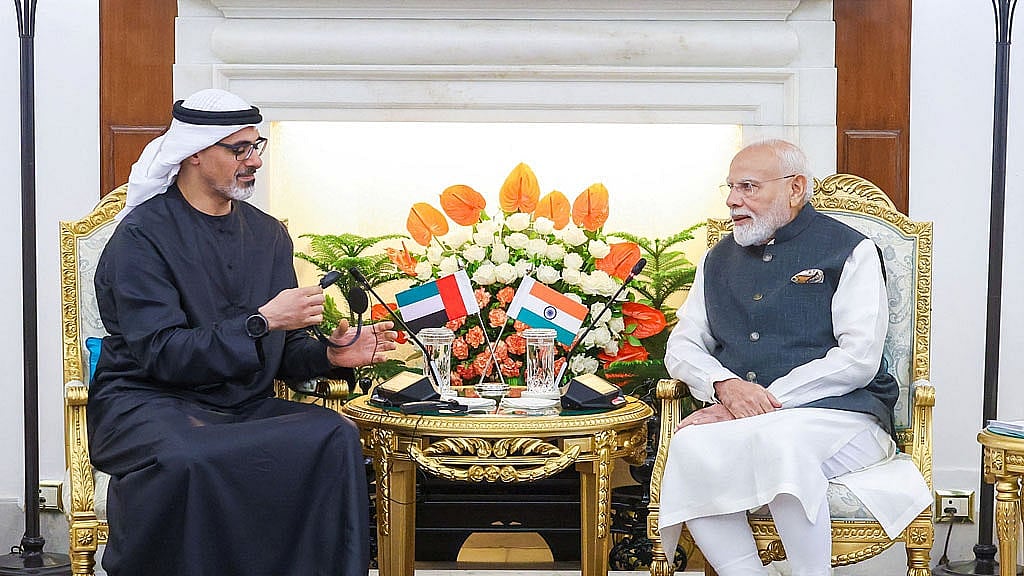
Iran and the United Arab Emirates are sitting around the same BRICS table in New Delhi this weekend.
But the war in West Asia has left the two members sharply divided and complicated efforts by the expanded grouping to speak with one voice.
The UAE suspended all trade and financial transactions with Iran in August after being hit by Iranian missiles during the conflict, Reuters reports.
The disagreement has already had consequences.
Differences between Tehran and Abu Dhabi prevented BRICS foreign ministers from issuing a joint statement when they met in New Delhi in May, according to Reuters.
This time, however, negotiators appear to have found a way through.
BRICS countries have agreed on a joint declaration after representatives worked to bridge the Iran-UAE divide, four sources told Reuters on Saturday.
The declaration is unlikely to name any country but will condemn unilateral war by any country, the sources said. BRICS leaders are expected to approve it on Saturday.
The breakthrough does not make the differences between Iran and the UAE disappear.
But it provides an important test of whether an increasingly diverse BRICS can accommodate those differences and still reach consensus.
Expansion Brought New Fault Lines
BRICS once consisted of Brazil, Russia, India, China and South Africa.
Egypt, Ethiopia, Iran and the UAE joined in 2024, followed by Indonesia in 2025.
Expansion widened the grouping's geographical and economic reach.
But Reuters reports that it has also complicated BRICS' consensus-oriented approach as countries with divergent foreign-policy interests try to find common positions.
The West Asia war has brought that problem into particularly sharp focus.
Iran is fighting a months-long war with the United States and remains subject to extensive Western sanctions.
The UAE, meanwhile, has close economic and security relationships with Western countries and has itself been hit by Iranian missiles during the conflict.
Yet both are now inside a grouping that relies on consensus.
Their differences can therefore complicate BRICS' ability to agree on a common position.
What Iran Is Seeking at BRICS
Iranian President Masoud Pezeshkian used Friday's BRICS Business Forum to call for greater protection for trade from economic pressure.
He urged BRICS to create an environment in which no country could disrupt another's "legitimate trade", Reuters reports.
Pezeshkian said the increasing use of economic instruments to exert pressure was jeopardising legitimate trade between countries.
BRICS members are meanwhile pursuing ways to make cross-border payments easier and reduce reliance on dollar-based financial channels.
Reuters reports that a BRICS Pay system is being developed to link members' fast-payment systems, while the grouping is also exploring links between central bank digital currencies and greater use of national currencies in trade.
An analysis in The Indian Express places Iran at the more explicitly anti-Western end of the spectrum within BRICS, with resistance to US power a central element of Tehran's foreign policy.
But BRICS is not a military alliance, and its members do not share a common foreign policy.
Several maintain close relationships with Western countries.
Iran and UAE Still Find Common Ground
Their differences over the war have not prevented Iran and the UAE from cooperating in other areas.
At the BRICS Business Forum on Friday, representatives from both countries backed greater cooperation among women-led businesses.
The Indian Express reported that Iranian and Emirati representatives were among those advocating stronger business networks, better market access and greater cooperation among women entrepreneurs across BRICS economies.
It is a small but telling example of how cooperation within BRICS can work.
Members can disagree sharply on security and foreign policy while working together on trade, development and other areas where their interests overlap.
The West Asia conflict poses a harder question: what happens when those disagreements threaten consensus on a major international crisis?
India Walks the Tightrope
The dispute also presents a challenge for summit host India.
Reuters describes New Delhi as walking a diplomatic tightrope in the conflict, given its historical and cultural ties with Iran, strategic relationship with Israel and close ties with Arab countries where millions of Indians live and work.
The conflict has directly affected India too.
Attacks on vessels transiting the region have killed at least 10 Indians, Reuters reports.
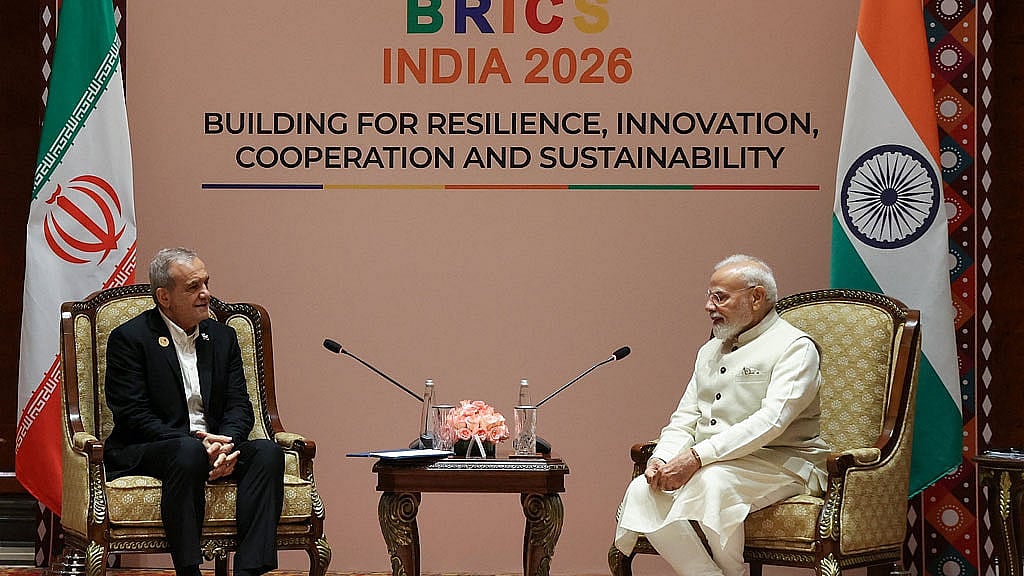
Prime Minister Narendra Modi raised maritime security when he met Pezeshkian in Delhi on Friday.
India's Foreign Ministry said Modi stressed the need to safeguard freedom of navigation and commerce as well as the safety and well-being of seafarers.
New Delhi has condemned Iranian attacks on Gulf neighbours, energy infrastructure and shipping.
But at the Shanghai Cooperation Organisation summit in Bishkek last month, India also signed a declaration condemning the US-Israeli military campaign against Iran and Western sanctions, Reuters reports.
India has now had to translate that balancing act into language the wider BRICS grouping can accept.
Representatives have agreed on a compromise that is unlikely to name individual countries but will condemn unilateral war by any country, four sources told Reuters.
The leaders are expected to approve the declaration on Saturday.
Bigger, But Harder to Hold Together
The Iran-UAE dispute points to a broader disagreement over what BRICS should be.
Reuters reports that Russia and China see the grouping as a counterweight to the West, while India and Brazil place greater emphasis on economic cooperation and reform.
The Indian Express similarly argues that BRICS contains countries with markedly different relationships with the West, ranging from cooperation and strategic autonomy to much more direct confrontation.
Those differences predate the group's latest expansion.
But bringing more countries into a grouping that works by consensus has made accommodating them more complicated.
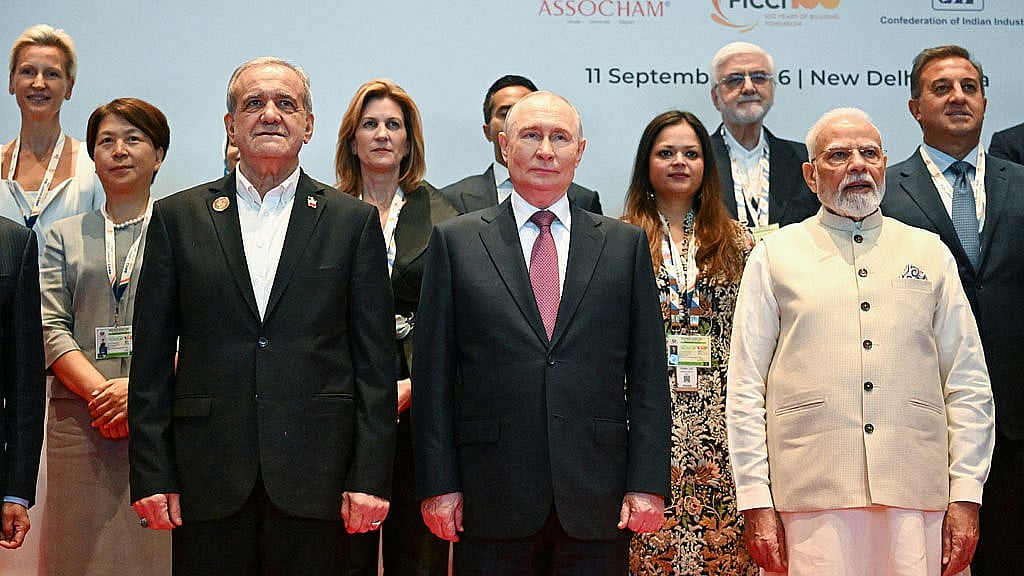
The agreement reached in Delhi suggests those differences do not necessarily make consensus impossible.
After failing to agree a joint statement at the foreign ministers' meeting in May, BRICS representatives have now found language that appears capable of accommodating both Iran and the UAE.
Whether that compromise amounts to meaningful geopolitical agreement is another question.
But it illustrates both sides of BRICS expansion.