Published : 29 Mar 2026, 05:16 AM
Updated : 21 Aug 2026, 03:32 PM


An intelligence strategy designed by Israel’s foreign intelligence service Mossad to trigger a popular revolution within Iran has stalled, reportedly leaving Israeli Prime Minister Benjamin Netanyahu increasingly concerned about the longevity of American military backing.
According to a New York Times report published on Mar 22, the collapse of this internal "regime-change" objective has created a rift in expectations between Jerusalem and Washington.
The report, which draws on interviews with unnamed high-ranking American and Israeli officials, suggests that the original proposition centred on the belief that targeted strikes against Iran’s top leadership would act as a catalyst for a nationwide revolt.
However, as weeks pass without a significant breach in Tehran's domestic control, the US administration has grown sceptical, the New York Times report said.
Early in the conflict, the United States had shown a level of confidence in the Israeli projection that the Iranian public was primed for a coup. This optimism was echoed by President Donald Trump, who, shortly after the hostilities commenced, suggested that taking over the Iranian government was a viable immediate goal.
Shahar Coifman, a prominent analyst cited in the report, offered a stinging critique of the strategy. He argued that the blueprints were fundamentally flawed from their inception.
"The objective of dismantling the Iranian government through these specific means was never a realistic or achievable goal within the scope of this current war," Coifman noted, suggesting the plan was destined for failure regardless of tactical execution.
The disconnect became palpable during a recent high-level meeting where Netanyahu reportedly expressed deep frustration, the report said, adding that the prime minister is worried that without a clear internal collapse in Tehran, the US might seek an early exit from the military campaign.
The New York Times report revealed that Mossad had invested significant resources into studying how many citizens would need to participate in protests to threaten the government.
Under former chief Yossi Cohen, the agency eventually concluded this gap could not be bridged and pivoted toward "kinetic" actions, such as assassinating nuclear scientists and sabotage.
The current Mossad chief, David Barnea, reversed this, betting heavily on a wartime insurrection that has yet to occur.
The report suggested that the return to a "revolt-based" strategy for the current conflict appears to have ignored previous lessons learnt about the resilience of the Iranian state apparatus.
Approximately three weeks into the war, US intelligence delivered a sobering briefing to Donald Trump.
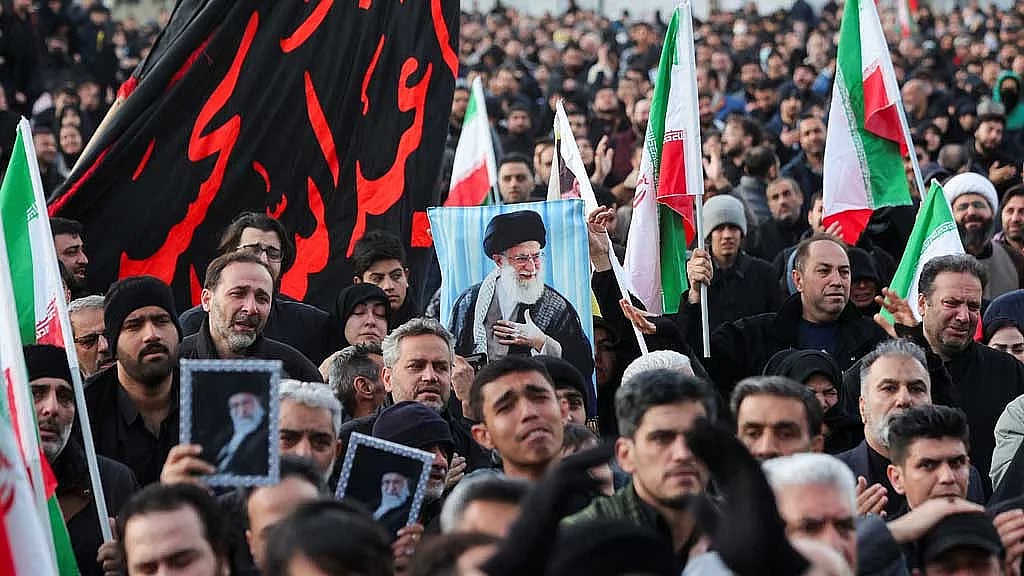
The assessment was clear: the Iranian public would not rise against their leaders as long as American and Israeli munitions were falling on their cities. Instead of triggering a civil war or a mass insurrection, the external strikes appeared to have the opposite effect, stiffening national resolve.
A significant factor in this miscalculation involves Iranian nationalism, the report noted.
Despite internal grievances, the prospect of a foreign-backed regime change, particularly one involving Kurdish factions, has proven deeply unpopular.
The report highlights that while Israel hoped to leverage Kurdish groups to destabilise the borders, this move triggered immediate alarms in the region.
Turkey, in particular, issued stern warnings against the utilisation of Kurdish militias in the region.
Bafel Talabani, president of the Patriotic Union of Kurdistan, warned that a Kurdish incursion could actually unify Iranians against a "separatist movement".