Home
+
Published : 31 Mar 2026, 07:20 PM
President Trump has informed his inner circle that he is prepared to terminate the US military offensive against Iran, according to a report by The Wall Street Journal (WSJ).
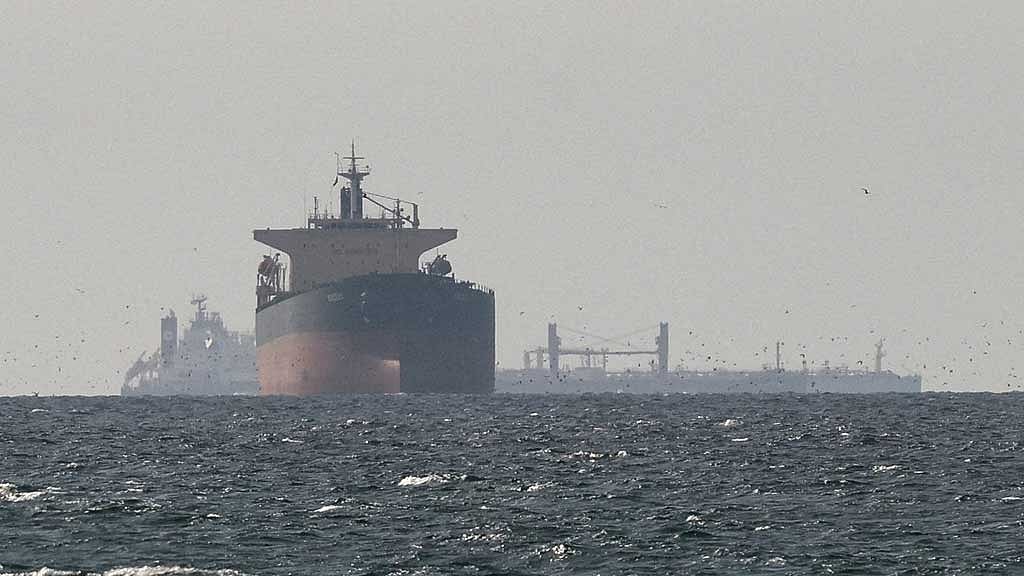
This decision comes as the Strait of Hormuz remains largely impassable, potentially leaving Tehran in control of the strategic waterway for the foreseeable future, reported the New York-based broadsheet.
Administration officials revealed that Trump and his advisors recently concluded that a full-scale operation to forcibly unblock the strait would drag the conflict beyond his desired four-to-six-week window.
Instead, the White House aims to cripple Iran’s naval and missile capabilities before pivoting to diplomatic pressure, the report added.
If the waterway remains closed, Washington intends to look toward European and Gulf partners to spearhead any reopening efforts, the article said.
This internal stance appears to clash with Trump's public posturing.
While he has previously threatened to strike civilian energy grids if the route isn't cleared, he has also simultaneously dismissed the strait’s importance to American energy independence, calling it a problem for other nations.
Even as Trump describes the war as a "lovely stay", the USS Tripoli and elements of the 82nd Airborne have entered the region.
Despite his desire for a quick exit, Trump is reportedly weighing a high-risk mission to seize Iran's uranium stockpiles.
Reuters reported that Trump on Monday “repeated his warning to Tehran to open the Strait of Hormuz or risk US attacks on its oil wells and power plants”.
"Great progress has been made but, if for any reason a deal is not shortly reached, which it probably will be, and if the Hormuz Strait is not immediately 'Open for Business,' we will conclude our lovely 'stay' in Iran by blowing up and completely obliterating all of their Electric Generating Plants, Oil Wells and Kharg Island," Reuters quoted a social media post by Trump.
National Security Advisor Marco Rubio, speaking to Al Jazeera, suggested the current campaign could wrap up within weeks, the WSJ article reported.
"It will then be up to Iran to decide, or a global coalition -- with US participation -- will ensure it is open one way or the other," Rubio said.
The prolonged closure has already sparked a global crisis. US allies are suffering from shortages of essential goods like fertiliser and computer chip components.
Suzanne Maloney, an Iran expert at the Brookings Institution, warned that withdrawing before the strait is open is "unbelievably irresponsible," noting that the global nature of energy markets means the US cannot be shielded from the escalating economic fallout.
The fallout of the closure is being felt worldwide. With 20 percent of the world’s oil supply flowing through the chokepoint -- 84 percent of which is bound for Asian markets -- countries like India are reeling, the WSJ said.
Benchmark US oil prices closed above $100 for the first time since 2022 on Monday, with analysts warning of a spike to $200 if the disruption persists.
Allies in Europe and Asia are facing critical shortages of helium and fertiliser.
Despite this, Treasury Secretary Scott Bessent suggested there is no immediate rush, noting that "the market is well-supplied" as some nations strike individual deals with Tehran.
He hinted that a multinational escort system could eventually be established.
While nearly 40 nations, including the UK, France, and Canada, have pledged to assist in ensuring safe passage, the US military footprint continues to grow, according to the WSJ report.
White House Press Secretary Karoline Leavitt reinforced the administration's stance, stating that Trump expects the Iranian regime to "make a deal" as their military assets are diminished.
Officials believe that once Iran’s navy is hobbled, its grip on the strait will naturally weaken, allowing the US to reallocate resources.
She emphasised that the primary goals -- targeting Iran’s nuclear ambitions and missile stocks -- are being met.
Washington-based experts like Rich Goldberg argued in the WSJ article that the strategy of ending the war with Hormuz closed makes sense: once the external threat of the Iranian Navy is removed, the strait becomes a manageable secondary issue.