Published : 13 Sep 2026, 05:11 AM
Updated : 16 Sep 2026, 11:50 AM


BRICS is pressing for a reshaped global order in which developing countries have greater influence, while backing a ceasefire in Gaza, opposing unilateral sanctions and urging diplomacy in conflicts elsewhere.
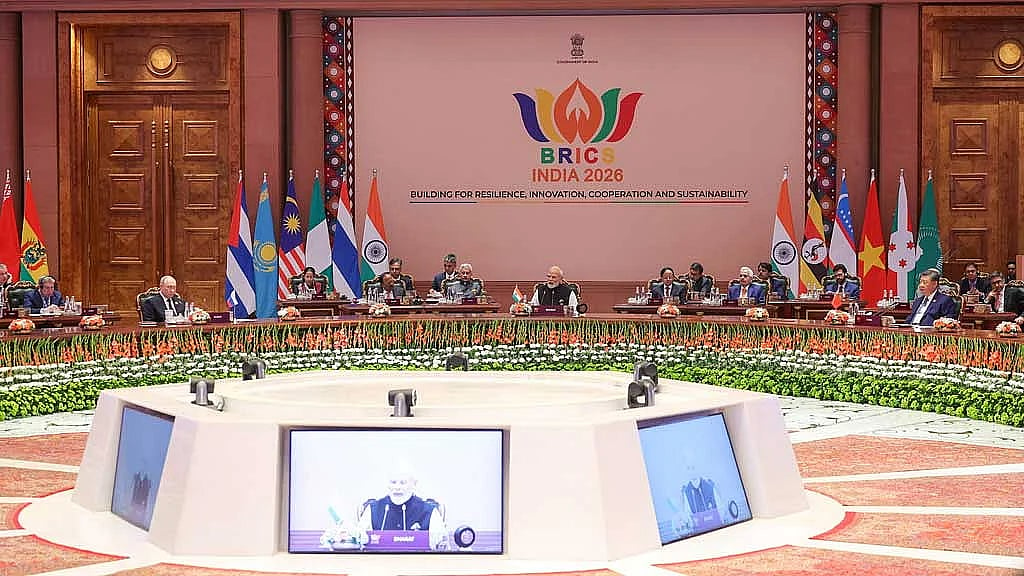
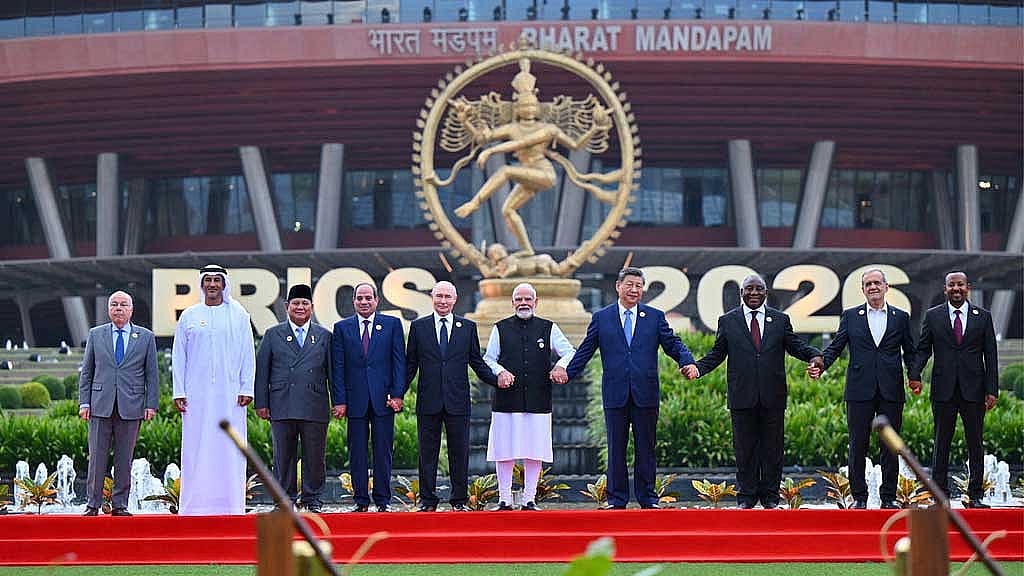
The leaders adopted the New Delhi Declaration 2026 at the 18th BRICS Summit in New Delhi under the theme “Building for Resilience, Innovation, Cooperation and Sustainability” on Saturday.
The 45-page declaration sets out the bloc’s positions on global governance, conflicts, trade, climate, health and technology.
The leaders say the bloc’s cooperation should promote peace, a fairer international order, sustainable development and inclusive growth.
At the centre of the document is a call to make international institutions more representative of today’s global realities.
BRICS leaders reaffirm their support for comprehensive UN reform, including the Security Council, and say developing countries should have greater representation.
They say Security Council reform should amplify the voice of the Global South.
China and Russia, both permanent members of the council, also reiterate support for Brazil and India playing a greater role in the UN, including its Security Council.
The declaration also calls for greater geographical representation in the UN Secretariat and other international organisations, particularly at senior and decision-making levels.
It says the selection of senior UN officials should be transparent and inclusive and notes that no woman has ever been elected UN secretary-general.
Conflicts and West Asia
On conflicts, the leaders express concern over growing tensions and call for dialogue, diplomacy and conflict prevention.
They express “deep concern” over the escalation of tensions in West Asia, urging maximum restraint and the protection of civilians and civilian infrastructure.
They also call for efforts to maintain the flow of global trade, supply chains and energy in accordance with international law.
On Gaza, the declaration calls for a ceasefire and full, unhindered humanitarian access.
It expresses concern over continued violence despite the October 2025 ceasefire and rejects policies aimed at forcibly displacing Palestinians from Gaza.
The leaders reaffirm support for a two-state solution, with a sovereign Palestinian state within the internationally recognised 1967 borders, including Gaza and the West Bank, with East Jerusalem as its capital. They also reaffirm support for Palestine’s full membership of the UN.
The declaration also opposes forced displacement of Palestinians and condemns violations of international humanitarian law, including attacks on civilians and civilian infrastructure, the use of starvation as a method of warfare and obstruction of humanitarian assistance.
On Lebanon, the BRICS leaders welcome the ceasefire and call for its strict implementation, while urging Israel to withdraw its occupying forces from Lebanese territory.
They also stress the safety and freedom of movement of UN peacekeepers and condemn attacks on UNIFIL.
The declaration expresses grave concern over Sudan’s deteriorating humanitarian situation and calls for an immediate, permanent ceasefire and a peaceful resolution through dialogue.
It also backs a peaceful and inclusive political transition in Syria and calls for the withdrawal of occupying forces.
Push against Unilateral Measures
The bloc also takes a firm position against unilateral coercive measures, including economic and secondary sanctions that it says are contrary to international law.
The leaders say such measures can have far-reaching effects on human rights, development, health and food security.
They call for their elimination and reiterate opposition to sanctions not authorised by the UN Security Council.
The declaration separately calls for reform of the World Trade Organization and a more open, equitable and predictable multilateral trading system.
It voices concern over rising tariffs, non-tariff measures and protectionism, saying such policies can disrupt trade and global supply chains.
More Voice for Emerging Economies
Economic governance is another major theme.
BRICS leaders call for reform of the Bretton Woods institutions to make them more representative and reflect changes in the global economy.
They specifically seek greater representation for emerging markets and developing economies in institutions such as the IMF and World Bank.
They also reaffirm their support for IMF quota and governance reform, calling for quota realignment that reflects countries’ positions in the global economy and increases the shares of emerging markets and developing economies.
The declaration highlights the New Development Bank as an important BRICS institution for development and infrastructure in emerging economies.
It encourages the bank to expand its capacity to mobilise resources, increase local-currency financing and support projects promoting sustainable development and economic integration.
Beyond Geopolitics
The declaration ranges well beyond global politics.
The leaders reaffirm cooperation on health, including universal health coverage, tuberculosis research, pandemic preparedness and early-warning systems.
They also endorse initiatives on healthy lifestyles and mental wellbeing.
On technology, they highlight artificial intelligence, digital public infrastructure, cybersecurity and cooperation on research and innovation.
They describe AI as having significant potential for economic growth and sustainable development while stressing safety, security, inclusiveness and reliability.
Climate change also features prominently, with the bloc reaffirming support for the Paris Agreement and calling for stronger international action on climate finance, adaptation and sustainable development.
The declaration also covers transport, tourism, youth, women’s economic participation, space, anti-corruption efforts, counterterrorism, digital connectivity and other areas of BRICS cooperation.
India’s 2026 BRICS chairship is commended in the closing section, while China receives full support to take over the chairship and host the 19th BRICS Summit in 2027.