Published : 07 Sep 2026, 06:30 PM
Updated : 16 Sep 2026, 11:48 AM


The Premier League’s third round delivered its first heavyweight test, a few uncomfortable reminders and plenty of evidence that expensive rebuilds do not come with instant solutions.
Arsenal came from behind to beat Chelsea, Liverpool found their first win under Andoni Iraola and Manchester United twice surrendered a lead at Everton. Elsewhere, Manchester City stayed perfect without looking irresistible, while Aston Villa’s miserable start showed little sign of easing.
Here are five things we learned from Gameweek 3.
Chelsea Struck First. Arsenal Responded Like Champions
It took Morgan Rogers just 77 seconds to remind Arsenal what they had missed out on in the summer.
Arsenal responded as though the goal had irritated them.
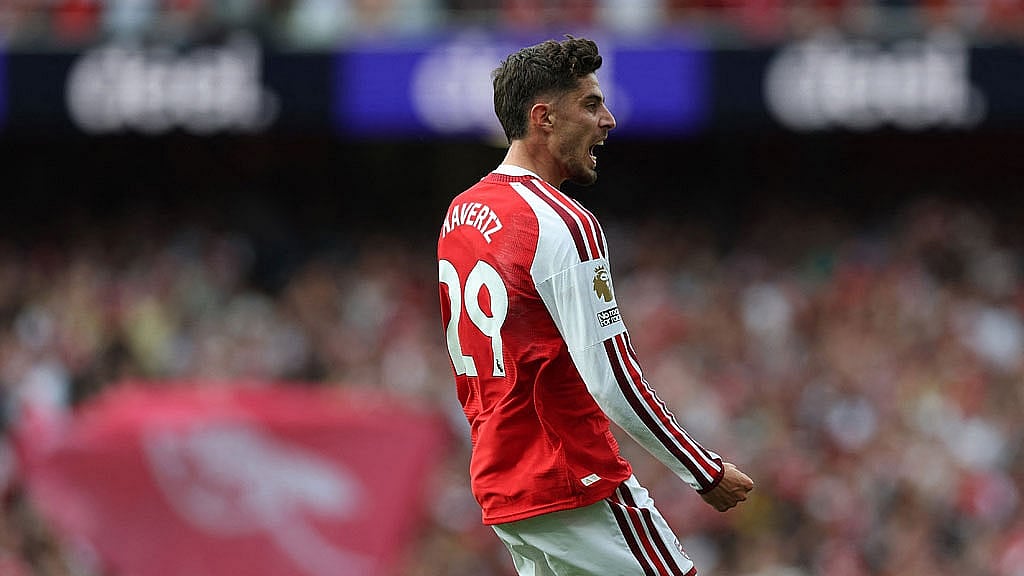
The pressure came in waves. Riccardo Calafiori had a goal ruled out, Bukayo Saka tested Emiliano Martinez and, after 25 minutes, Kai Havertz drilled in the equaliser from the edge of the box. By then, Chelsea’s dream start felt less like a platform than a provocation.
Havertz was at the heart of Arsenal’s comeback, which made the pre-match debate around him particularly timely.
Jamie Carragher had compared aspects of his role to the one Roberto Firmino performed so effectively for Liverpool, only for Gary Neville to dismiss the suggestion out of hand.
Nobody needs to argue that Havertz is Firmino reincarnated for the comparison to have merit. Both can function as facilitating forwards, dropping away from the conventional No 9 spaces and helping the players around them flourish.
His afternoon offered a neat demonstration.
Havertz scored his fourth goal against Chelsea since joining Arsenal, then played an equally important part in Martin Ødegaard’s winner without touching the ball. Christos Tzolis fed the pass inside and Havertz deliberately let it travel across him, drawing Chelsea’s attention and opening the space for Ødegaard to finish.
Ødegaard’s return to full fitness gives Arsenal another dimension. He repeatedly came towards the ball to help with the build-up before reappearing higher up the pitch, less a fixed No 10 than a player free to connect midfield and attack. With Havertz pulling defenders around him and Saka threatening from the right, Arsenal’s attacking rotations repeatedly stretched Chelsea.
Tzolis quietly played his part too. Technically secure and comfortable receiving under pressure, the 24-year-old produced another assured outing in what was his first major test since arriving in north London.
Chelsea, for all the excitement around an attack featuring João Pedro, Cole Palmer and Rogers — inevitably dubbed “JP Morgan” — never really turned their early advantage into sustained pressure.
They had moments. Rogers curled wide, Pedro Neto struck the post and Estêvão forced a superb late save from David Raya. Chelsea remained dangerous whenever Arsenal gave them space to break.
But they were moments rather than waves.
Once Ødegaard made it 2-1 five minutes after the interval, Arsenal largely kept Chelsea at arm’s length.
Martinez had to deny Saka and Ezri Konsa in quick succession, and the champions always appeared more capable of raising the tempo again than Chelsea did of pinning them back.
That ability to change the nature of a game may be the most significant part of Arsenal’s perfect start.
Last season, Arteta’s side became masters of protecting an advantage — almost Mourinho-era Chelsea-like in their ability to take the oxygen out of matches once they got ahead.
On Sunday, they showed the other side of it: fall behind, turn up the pressure, seize control and then shut the door.
Arsenal are now unbeaten in 12 games against Chelsea in all competitions, and Arteta has turned a rivalry that once provided some of the Gunners' most painful afternoons into one in which his side increasingly look like the team setting the terms.
United Have More Firepower. They Still Don't Have Control
There was encouragement for Manchester United in seeing Bryan Mbeumo and Benjamin Sesko both score at Everton.
There was rather less in what happened after they did.
Mbeumo put United ahead 61 seconds into the second half with a superb individual goal. Tyrique George levelled in the 83rd minute, Sesko seemingly won it with a header five minutes later, and still Michael Carrick's side could not get home.
Ainsley Maitland-Niles' spectacular stoppage-time equaliser was the sort of goal that can be dismissed as unstoppable. Carrick did not quite allow his side that excuse. United, he admitted, might have needed to manage the game better.
That is the more persistent concern.
United's attacking players looked dangerous, and the fact that Mbeumo and Sesko both found the net offered evidence of the extra firepower Carrick has at his disposal. But leads are supposed to simplify matches. United continue to make them complicated.
They have now conceded at least twice in each of their first three league games — only the second time in the last 50 years they have started a season that way.
Neville focused less on the quality of Maitland-Niles' finish than the breakdown before it: an isolated press allowed Everton to play through United when organisation should have been the priority.
The finish was exceptional. The opportunity was preventable.
United have four points from three games despite twice leading at Everton. For all the attention on whether their forwards can provide enough goals, another question is becoming harder to avoid.
Can Carrick's side learn what to do once they have something to protect?
Liverpool May Already Have Found the Partnership Iraola Needs
Alexander Isak scored twice inside nine minutes at Ipswich. Bradley Barcola made his debut after a £123 million move from Paris Saint-Germain.
Yet Liverpool's most interesting attacking contribution came from a player who had spent much of the summer being tipped for the exit.
Cody Gakpo had been linked with Tottenham Hotspur before Manchester City made a more serious late push, opening talks with Liverpool over a deal as the transfer deadline approached. He stayed — and at Portman Road supplied both of Isak’s goals, first sending the striker clear for the opener before releasing him again three minutes later.
Those two assists continued a pattern. Gakpo also created Isak's goal against Nottingham Forest the previous weekend, meaning all three of the Swede's league goals this season have come from his passes.

That relationship could be particularly useful for Andoni Iraola.
Liverpool's opening two games had produced four goals but only two points, and Isak said afterwards that the emphasis at Portman Road had been on attacking quickly once possession changed hands.
Gakpo twice found him in precisely those situations.
It also made the summer uncertainty around the Dutchman look increasingly curious. Manchester City were among the clubs interested before the deadline, while Liverpool added yet more competition in attack through Barcola.
Iraola, however, said before the Ipswich game that he had never doubted Gakpo's importance, and Virgil van Dijk called him "outstanding" afterwards.
There is still a caveat. Liverpool's explosive opening did not turn into 90 minutes of attacking dominance. They dialled things back after the break and instead produced their first clean sheet of Iraola's reign.
But perhaps that was useful too.
After two messy draws, Liverpool finally showed a simpler route through games: find Gakpo early, release Isak quickly and then control what follows.
City Stay Perfect, But Far from Polished
Manchester City have nine points from nine. They do not yet look like a team playing with nine-point fluency.
Promoted Coventry made them work for Saturday's 1-0 win at the Etihad, where Erling Haaland's first-half header proved enough and Gianluigi Donnarumma was required to preserve the advantage late on.
That might sound underwhelming after a summer overhaul costing roughly £450 million.
The more interesting evidence, though, came in midfield.
Enzo Fernández was not even supposed to start. The £125 million deadline-day arrival was drafted in after Nico O'Reilly was injured in the warm-up and immediately looked comfortable, releasing Antoine Semenyo in the move that ended with Haaland's winner.
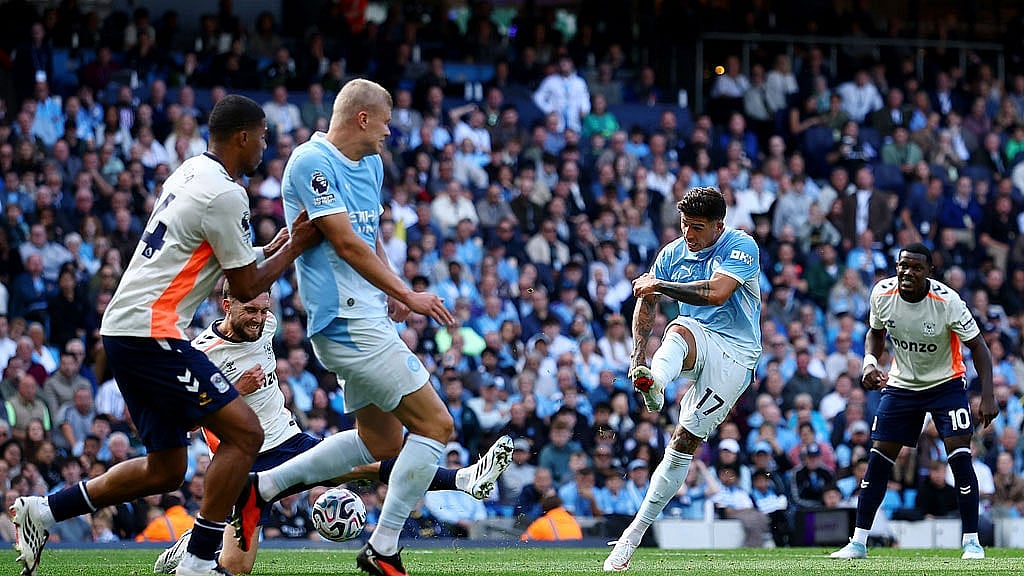
Alongside him, Elliot Anderson produced numbers that looked almost designed to invite Rodri comparisons.
He completed 143 passes — four more than Coventry's entire team — from 178 touches, won all six of his ground duels and covered more ground than any other City player.
That matters because replacing Rodri was never realistically going to be about finding another Rodri.
City's answer increasingly looks collective: Anderson controlling and progressing possession, Fernández capable of operating deeper or breaking forward, and Rayan Cherki supplying invention higher up. The pieces are new, and their relationships are still developing.
Coventry showed as much. City dominated the ball without consistently turning that possession into chances and remained only one moment away from dropping points until the end.
That is why their perfect start should probably concern rivals rather than reassure them.
City are still learning what this expensive new version of themselves should look like. They are winning every game while they do it.
Villa Have Rebuilt Their Attack. They Haven't Rebuilt Their Goals
Aston Villa finally registered their first shot on target of the Premier League season at Hull.
It arrived in the opening quarter of an hour of their third match.
That alone explains why a 0-0 draw and a first point of the campaign offered only limited relief for Unai Emery. Villa have now played three league games without scoring.
There were at least signs of life at Hull. Nicolas Jackson headed wide early, George Hemmings produced that overdue effort on target, while John McGinn and Emi Buendía both passed up presentable opportunities after the break.
But the broader problem stretches beyond finishing.
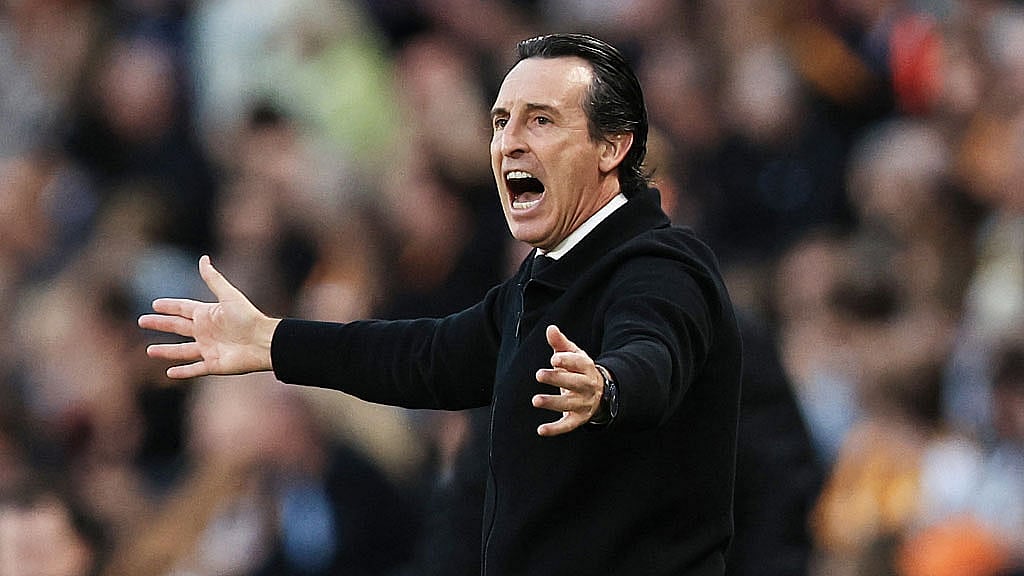
Villa spent the summer rebuilding an attack and midfield stripped of some of last season's defining figures. Ollie Watkins left for Al Hilal, Morgan Rogers joined Chelsea and Youri Tielemans moved to Manchester United. Jackson was among those brought in to replace what disappeared.
Those are not minor adjustments.
Watkins supplied years of goals and running in behind. Rogers carried the ball through pressure and increasingly produced in the final third. Tielemans dictated possession. Removing all three at once was always likely to alter how Villa create chances as much as who finishes them.
That has been evident so far.
Jackson gives Emery movement and physical presence, and the Hull performance was substantially better than the opening-day collapse against Brighton. But Villa still look like a side trying to rediscover the routes by which the ball reaches dangerous areas consistently.
Three matches are nowhere near enough to condemn a rebuild.
They are enough, however, for the first problems to become obvious.
Villa replaced plenty of attacking talent this summer. They have not yet replaced the mechanisms that made the old attack work.