Published : 01 Sep 2026, 08:36 AM
Updated : 08 Sep 2026, 09:37 AM


Long before Lionel Messi became Argentina’s record scorer, World Cup-winning captain and most-capped player, Spain were trying to persuade the teenage Barcelona prodigy to represent La Roja.
Argentina, meanwhile, had been slow to bring him into their youth system.
More than two decades later, there was an extraordinary symmetry to the way the story ended: Messi’s 207th and final appearance for Argentina came against Spain in the 2026 World Cup final.
Argentina lost 1-0 after extra time. Messi announced his international retirement weeks later at 39, ending a career that brought 125 goals, two Copa América titles and the World Cup.
But while Spain’s interest in the teenager was real, the uncertainty appears to have been largely institutional rather than Messi’s own.
The Teenager Argentina Barely Knew
By his mid-teens, Messi’s ability was no secret at Barcelona.
He had left Rosario for Spain at 13 and was rising rapidly through La Masia. In Argentina, however, he remained largely unknown outside his home city.
That opened a door for Spain.
Barcelona youth coach Alex García repeatedly raised Messi’s case with Ginés Meléndez, then a coordinator in Spain’s youth system, because Argentina had not called him up. The Spanish federation attempted to persuade Messi to represent the country in which he was developing his football.
Argentina’s problem was more fundamental: its coaches had barely seen him.
That changed with something that now seems almost impossibly quaint for a player who would become one of football’s most scrutinised stars: a VHS tape.
The Tape That Changed Everything
The idea came from Messi’s father, Jorge.
In May 2003, Horacio Gaggioli, one of the youngster’s early agents, handed Argentina assistant Claudio Vivas a videotape containing a handful of Messi’s highlights recorded from Barça TV.
The footage eventually reached Marcelo Bielsa, then Argentina’s senior coach. Bielsa initially thought it was being played too quickly. Told that it was already running at normal speed, his response was succinct: “He’s phenomenal.”
Vivas wanted more than a short highlights package, but he had seen enough to know Argentina needed to act. When he passed the tape on to youth coach Hugo Tocalli, his message was simple: “Don’t let this player escape.”
Tocalli remembered the long-haired 16-year-old darting repeatedly past opponents. “He was a squirrel,” he later recalled.
Tocalli also revisited the episode in Álex de la Iglesia’s 2014 documentary “Messi”, recalling how the teenager could accelerate from “0 to 100” within only a few metres.
But timing worked against Messi.
The tape reached Tocalli only around 10 days before Argentina left for the 2003 Under-17 World Cup in Finland. He decided it would be unfair to remove one of the players who had gone through qualifying and preparation merely to accommodate a teenager he had only just discovered.
Then Argentina ran into Spain.
‘You Knew Him and Didn’t Bring Him?’
Spain beat Argentina 3-2 in the semi-finals on Aug 27, 2003.
The following day, at the hotel shared by the teams, Tocalli encountered the cook travelling with the Spanish delegation.
The cook told him that Argentina might have been champions had they brought the gifted youngster playing for Barcelona.
Tocalli immediately realised he meant Messi.
The exchange drove home just how well Spain knew a player Argentina had left at home. Tocalli later recalled fearing that Spain might get to Messi before Argentina did.
Once he returned from Finland, he asked the Argentine Football Association to move.
What followed was considerably less glamorous than the career it helped launch.
A Phone Book, a Misspelt Name and Argentina’s Call
AFA official Omar Souto was given the job of locating Messi’s family.
Without a direct number, he went to a telephone booth outside Buenos Aires, opened a directory and began calling people named Messi in Rosario — initially asking for “Leonardo”.
He eventually reached Lionel’s grandmother, then an uncle, and finally Jorge Messi in Spain.
Jorge first corrected the AFA official on his son’s name.
Then came the answer that removed much of the mystery over which country Messi himself wanted to represent:
“At last you called him. My son wants to play for Argentina.”
Even the subsequent paperwork hinted at how unfamiliar Argentina still were with their future captain. When the AFA faxed Barcelona his first call-up, his name appeared as “Leonel Mecci”.
Argentina arranged an Under-20 friendly against Paraguay on Jun 29, 2004, partly to bring Messi formally into the national-team setup.
Only around 500 spectators were there at Argentinos Juniors’ stadium.
Messi came off the bench with Argentina already well ahead and scored, collecting the ball near halfway before racing through and beating the goalkeeper.
It was a modest beginning to an international story that would eventually encompass 207 senior appearances.
Then He Faced Spain
By the following year, Argentina no longer needed a VHS to know what they had.
Messi was emerging as the outstanding player of their team at the 2005 Under-20 World Cup in the Netherlands.
Waiting in the quarter-finals were Spain.
The match carried an unusual personal dimension. Messi had grown up inside Spanish football and knew many of the players he was facing, including former Barcelona youth teammate Cesc Fàbregas.
Pablo Zabaleta, Argentina’s captain at that tournament, recalled that Messi was particularly eager for the match. He wanted to demonstrate that choosing Argentina had been the right decision, Zabaleta said.
Spain went ahead.
Argentina responded.
Zabaleta equalised before Messi took over, first helping create another opening and then scoring as Argentina won 3-1. Contemporary FIFA's retrospective credits Messi with a decisive role in the victory.
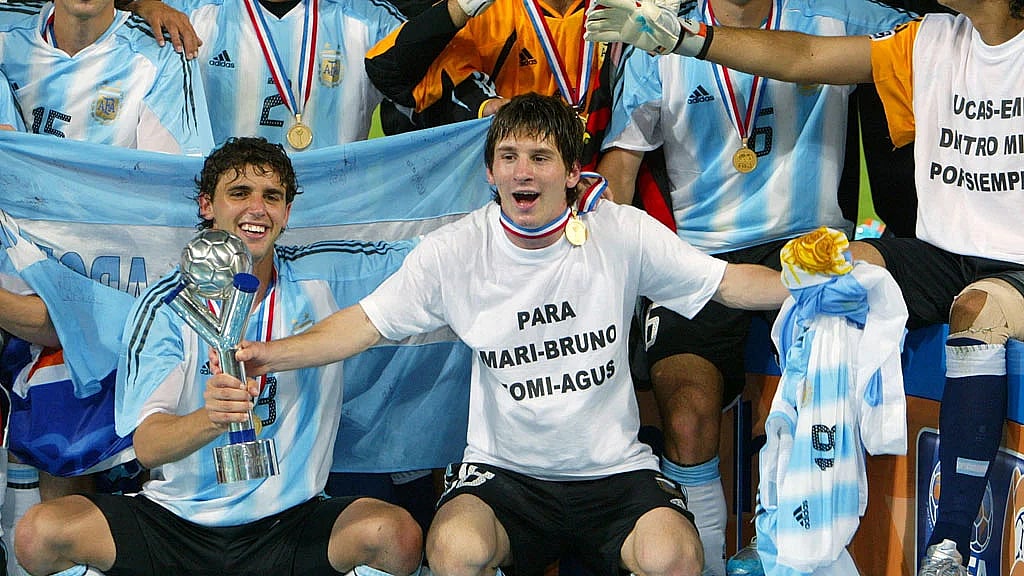
Argentina went on to beat Brazil in the semi-finals and Nigeria 2-1 in the final, with Messi scoring both goals from the penalty spot.
He finished the tournament with six goals and won both the Golden Boot as top scorer and the Golden Ball as its outstanding player.
The teenager Argentina had once struggled to locate had announced himself to the world.
From Near-Misses to Immortality
Messi made his senior Argentina debut later in 2005.
What followed was not the uninterrupted march towards glory that might have seemed inevitable after that Under-20 triumph.
Argentina lost the 2014 World Cup final and Copa América finals in 2015 and 2016. After the last of those defeats, Messi briefly announced he was finished with international football.
He returned.
That decision changed the story.
Argentina beat Brazil at the Maracanã to win the Copa América in 2021, ending Messi’s long wait for a senior international trophy.
The Finalissima followed in 2022.
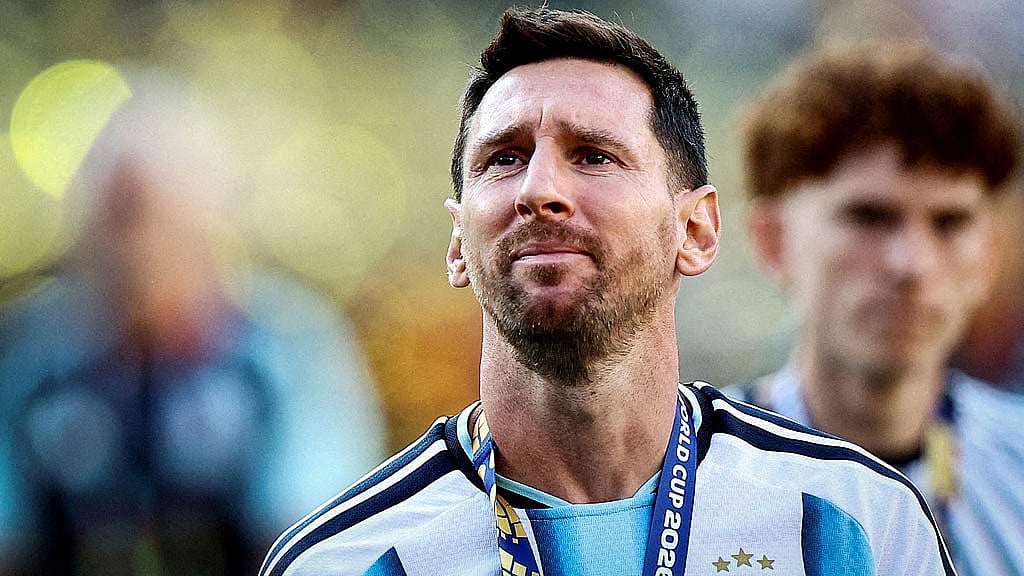
Then came Qatar, where Messi finally lifted the World Cup after Argentina beat France on penalties in an extraordinary final.
Another Copa América followed in 2024, before Messi captained Argentina to yet another World Cup final in 2026.
By the time he finally walked away, he had become Argentina’s record appearance-maker with 207 caps and their leading scorer with 125 goals.
And Finally, Spain Again
Twenty-one years after Messi faced Spain in that Under-20 World Cup quarter-final, the countries met again on the biggest stage of all.
This time Spain prevailed.
Their 1-0 extra-time victory in the 2026 World Cup final denied Messi a second world title and became his last appearance for Argentina.
The familiar claim that Messi “almost played for Spain” therefore needs some qualification.
Spain certainly wanted him. Barcelona figures had alerted the Spanish youth system to his availability while Argentina had yet to call, and Tocalli was sufficiently concerned to fear losing him.
But the recollections of those directly involved suggest Messi’s own preference was much clearer.
His father’s response when Argentina finally called said it best: his son wanted Argentina.
More than two decades later, the scarcely known teenager from Barcelona left as their World Cup-winning captain, greatest goalscorer and most-capped player.