Published : 22 Aug 2026, 07:01 AM
Updated : 08 Sep 2026, 09:34 AM


Six months after forming his government, Prime Minister Tarique Rahman has reshuffled his cabinet, bringing six new faces into executive roles as the departure of senior minister Mirza Fakhrul Islam Alamgir for the presidency triggered a wider reorganisation.
The prime minister has removed Information Minister Zahir Uddin Swapon from the cabinet, appointing him instead as an advisor with the rank of minister.
Civil Aviation and Tourism Minister Afroza Khanam Rita has been moved to another portfolio, while Rashiduzzaman Millat, previously the junior minister in the same ministry, has been promoted to take charge.
Analysts say such changes are not unusual for a BNP government returning to power after a gap of nearly two decades with a cabinet made up largely of new faces.
Others, however, find a reshuffle just six months into the administration somewhat surprising.
Tarique’s government was sworn in on Feb 17 after the BNP won a landslide in the 13th parliamentary election. Alongside the prime minister, 25 ministers and 24 state ministers took oath that day.
Hafiz Uddin Ahmad later left the cabinet to become speaker, while State Minister Kayser Kamal became deputy speaker in March.
Ahmed Azam Khan joined the cabinet in Hafiz Uddin’s place. Chattogram Hill Tracts Affairs Minister Dipen Dewan resigned on Jun 1.
Mirza Fakhrul’s move to the presidential palace then left the local government ministry vacant, while Friday’s reshuffle saw Swapon leave the cabinet.
The Tarique government now has 26 ministers and 24 state ministers.
The prime minister also had 10 advisors, five with the rank of minister and as many with the rank of state minister.
With Humaiun Kobir becoming a state minister and Swapon moving from minister to advisor, the overall number of advisors remains unchanged.
Former secretary AKM Abdul Awal Mazumder likened the reorganisation of the 51-member cabinet to “replacing the supporting posts of a thatched hut”.
He said six months had given the prime minister time to assess how his ministers were performing.
“You could say the prime minister started almost from scratch,” Mazumder said. “Most members of his cabinet were also new faces. He has now seen how they work, and after testing things out, some of the supporting posts have to be changed.”
He noted that similar changes were made early in the government of the late former prime minister Khaleda Zia after she came to power in 1991.
“When a party returns to power after a long break, this is something that naturally has to be done,” he said.
“Many senior leaders who were in government before may have died, while others may no longer be able to work because of age.”
Political commentator Prof Zobaida Nasreen, however, said the timing could surprise people.
“Cabinet reshuffles happen all the time. But a reshuffle within six months may have left people a little surprised,” she said.
“To me, what appears to be happening within these six months is that the government and the BNP as a political party are moving much closer together. As a result, the BNP’s separate significance and position as a political party are becoming blurred.”
The Dhaka University anthropology professor said the latest appointments could also point to further changes ahead.
“The appointments are now being made on the basis of various calculations,” she said. “There are younger people from the party, and there are experienced people as well.
“One aspect is coordination. Another, in my view, is an attempt to find an understanding between the BNP’s internal and power-centred politics and the party and the government. There may also be various pressures at work.”
Who Got Which Ministry
Four new ministers have joined Tarique’s government, although one of them was already a state minister. Two new state ministers have also taken their oaths, including one who was previously an advisor to the prime minister.
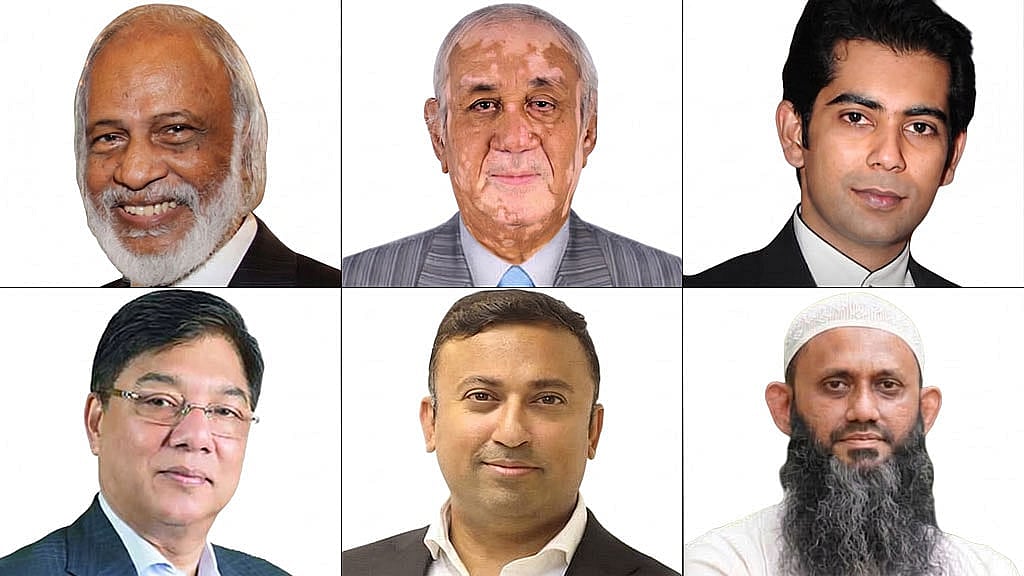
BNP’s National Standing Committee member Abdul Moyeen Khan, Bandarban MP Sa Ching Prue Jerry, Bangladesh Jatiya Party-BJP Chairman Andaleeve Rahman Partho and State Minister for Civil Aviation and Tourism Rashiduzzaman Millat have been sworn in as ministers.
Humaiun Kobir and Gaibandha-4 MP Mohammad Shamim Kaiser Lincoln have taken oath as state ministers.
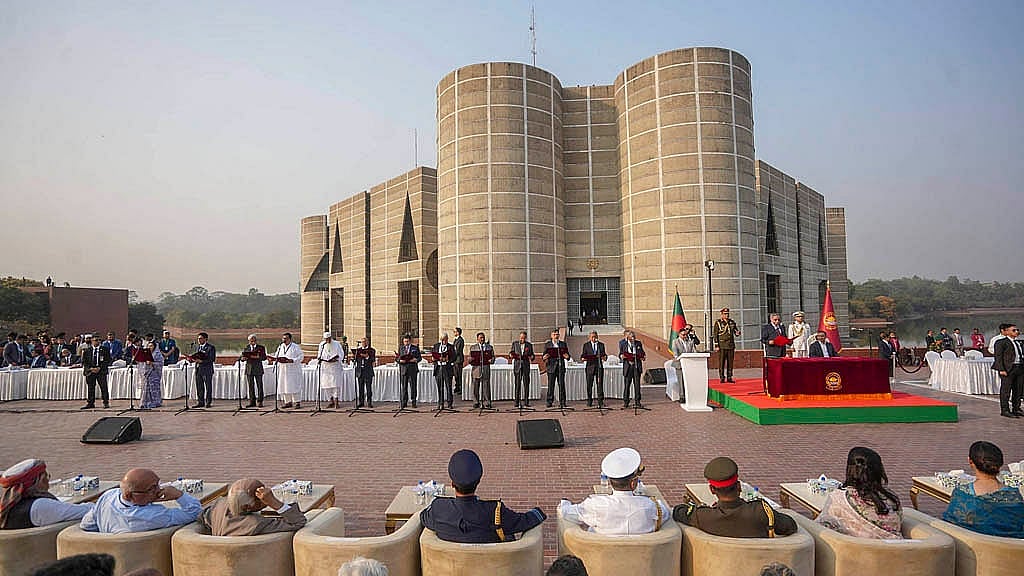
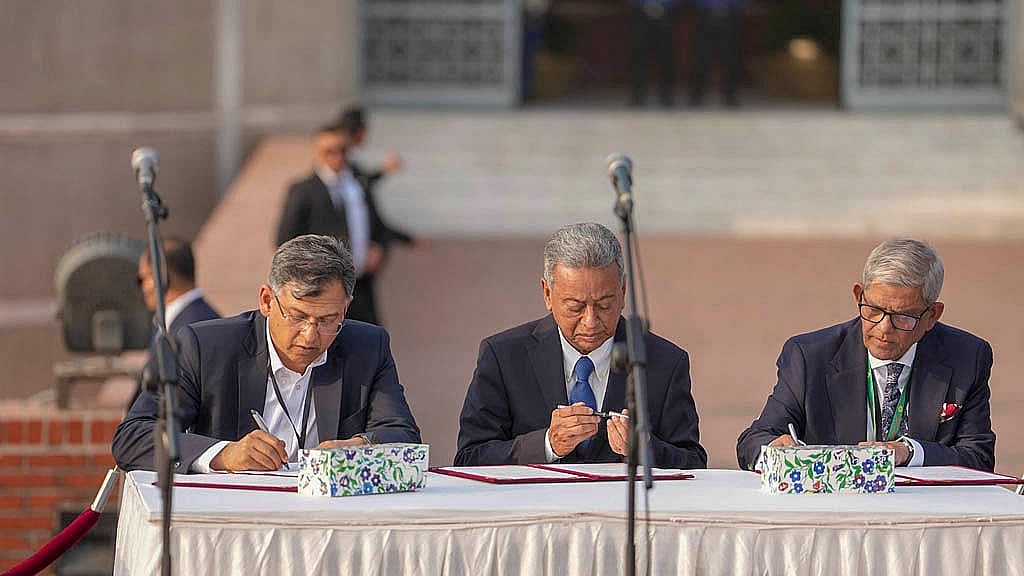
Mirza Fakhrul was sworn in as the new president at Bangabhaban on Friday evening.
Soon afterwards, he administered the oath to the four ministers and two state ministers.
Cabinet Secretary Nasimul Gani announced their portfolios later that night.
Veteran BNP leader Moyeen Khan has taken charge of the local government portfolio vacated by Mirza Fakhrul.
Moyeen, now the MP for Narsingdi-2, served as information minister in Khaleda Zia’s government from 2001 to 2002.
Partho, who contested the parliamentary election in alliance with the BNP and won the Bhola-1 seat, has been made information and broadcasting minister.
Cabinet Secretary Nasimul said outgoing information minister Swapon would become an advisor to the prime minister with the rank of minister.
Jerry, a member of the BNP Executive Committee, has been given charge of the Ministry of Chattogram Hill Tracts Affairs, which had been without a minister for about two and a half months.
Jerry was also elected to parliament in the sixth parliamentary election in 1996. He has previously served as chairman of Bandarban Sadar Upazila and the Bandarban Hill District Council.
Nasimul said Millat, promoted from state minister, would take charge as civil aviation and tourism minister.
Current minister Afroza Khanam Rita has instead been given the food ministry.
New State Minister Lincoln has been assigned to the Ministry of Religious Affairs, where Kazi Shah Mofazzal Hossain Kaikobad is already serving as minister.
Shama Obaed Islam is already serving as a state minister in the foreign ministry where former advisor Kobir is the latest appointee.
Asked about having two state ministers in one ministry, the cabinet secretary saw no problem.
Former secretary Mazumder agreed.
He said the order of seniority in the cabinet, who serves where and how many state ministers are assigned to a ministry all fall entirely within the prime minister’s authority.
He saw no breach of the Rules of Business in such an arrangement.
What Does the Reshuffle Signal?
Mazumder believes the cabinet has been reorganised after the prime minister assessed the “performance” of ministers in an administration that began with many newcomers.
“[He] himself was completely new to government and had spent a long time abroad,” he said.
“Soon after forming the government, he said in various discussions that he would make decisions after considering the performance of ministers.
“Most of those who joined the cabinet were also inexperienced and new. Now, after six months, he has been able to see where changes are needed and is making them accordingly.”
Prof Kazi Mohammad Mahbobor Rahman of Dhaka University’s Department of Political Science said the main reasons behind the changes at the information and civil aviation ministries could send a message to other ministers once “they emerge or are made public”.
“If the changes were made for negative reasons, other ministers will also become more cautious.”
Prof Rahman described Moyeen’s appointment to the local government ministry in place of Mirza Fakhrul as “appropriate”.
But he said the message behind bringing BJP Chairman Partho, an alliance partner, into the cabinet was less clear.
“Perhaps, because he is outspoken, he will be able to speak for the government and help shape public opinion,” he said.
The analyst believes Swapon may have been moved to an advisory role so that he can be used more extensively in party work.
He sees the wider reshuffle as an attempt to bring fresh momentum to the government rather than necessarily a response to failure.
“I do not think this reshuffle was made because of anyone’s incompetence or failure, or that this was the main consideration,” he said.
“The important consideration was where each person could be used most effectively.
“The idea may have been to make a few changes and see whether that can increase the pace or intensity of the government’s work.
“I do not think this reorganisation will have any major impact on the government. Changes have been made in a few places to meet the needs of both the party and the government.”