Published : 17 Feb 2026, 06:02 AM
Updated : 28 Aug 2026, 01:32 AM


For nearly two decades, Tarique Rahman was a name spoken more in courtrooms and political rhetoric than in corridors of power. Now, barely two months after returning home from 17 years in self-imposed exile, the BNP chairman stands on the threshold of the prime minister’s office -- his party riding a landslide victory to reclaim the state.
The speed of his ascent has startled even seasoned observers. While the BNP’s return to power was long anticipated, few expected Tarique’s rise to the premiership to unfold with such velocity.
Until mid-2024, the idea of him leading Bangladesh still seemed remote.
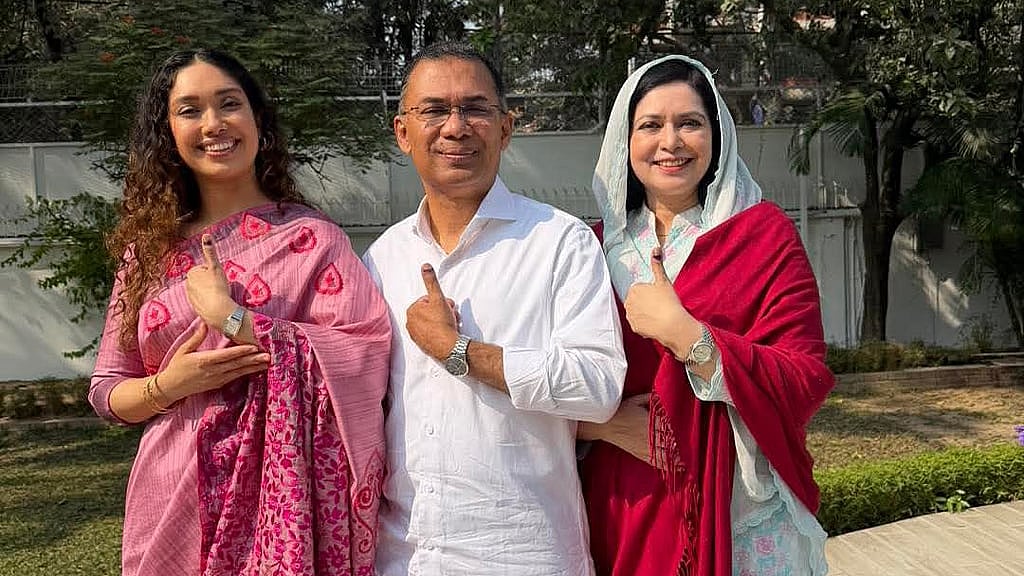
His political journey is inseparable from lineage. He is the son of Ziaur Rahman, the freedom fighter-turned-president who founded the BNP in 1978, and Khaleda Zia, the party’s indomitable leader and three-time prime minister. Yet Tarique’s path has been far from inherited ease.
Arrested on corruption charges during the Army-controlled caretaker government, he left the country in 2008 for medical treatment. What followed were 15 years of Awami League rule marked, from the BNP’s perspective, by repression: street protests crushed, leaders jailed, enforced disappearances alleged, and Khaleda imprisoned.
When Tarique returned in December, vast crowds greeted him. Days later, he lost his mother. By January, he had formally taken over the party’s reins and led it into an election that delivered a commanding parliamentary majority.
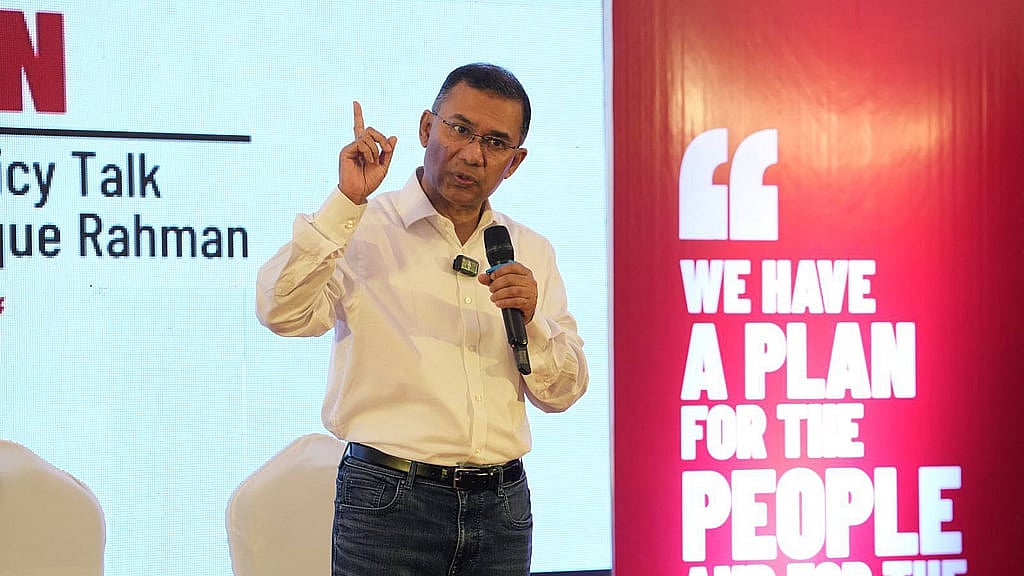
On the campaign trail, he struck a tone of resolve rather than revenge. Borrowing from Martin Luther King Jr, he told supporters: “I have a plan.”
He crisscrossed the country, mobilising grassroots workers and positioning the BNP as a centrist alternative to the Jamaat-e-Islami, repeatedly invoking Jamaat’s wartime past and conservative views on women.
Analysts say the strategy helped the BNP secure nearly two-thirds of the seats.
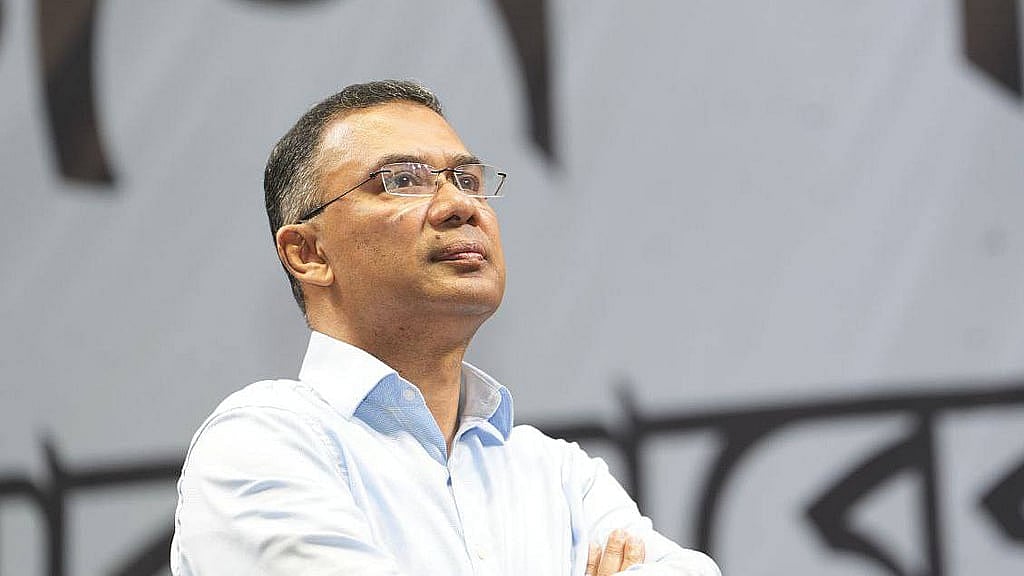
In an interview with Reuters before the vote, Tarique admitted the whirlwind pace had left him disoriented. “After we reached Dhaka, I don’t know how we spent each minute,” he said.
Now preparing to take office, he has pledged to move beyond the politics of vengeance, promising a renewed focus on anti-corruption and restoring law and order -- an agenda he says will define his leadership.
From Mother’s Shadow To BNP’s Helm
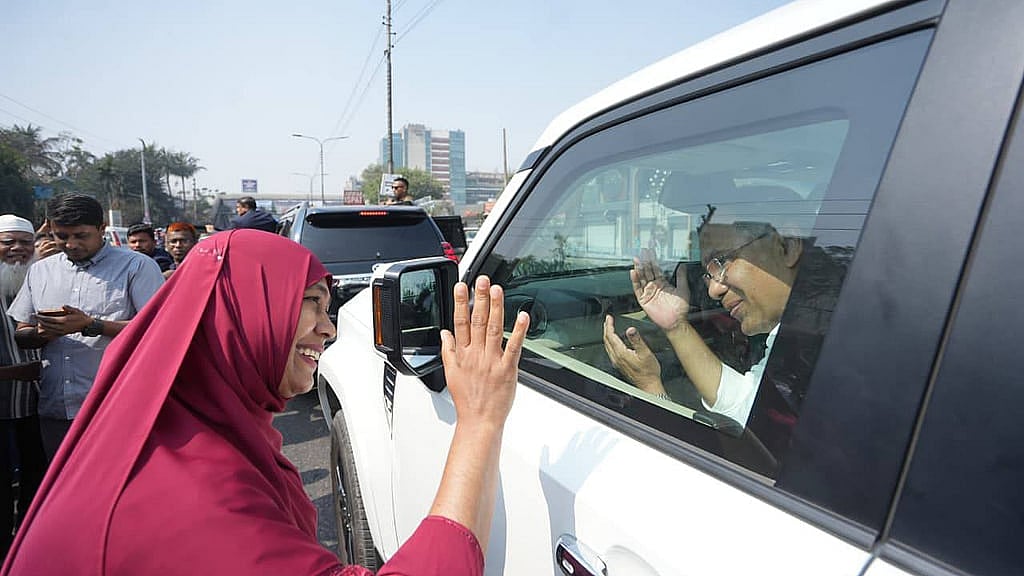
Born on Nov 20, 1968, in Gabtali of Bogura, Tarique grew up at the heart of Bangladesh’s turbulent political history. His father, Ziaur Rahman, commanded Sector 1 during the Liberation War before rising to Army chief and president. After Zia’s assassination in 1981, Khaleda entered politics and would go on to lead the BNP for more than four decades.
Tarique joined the party formally in 1988, accompanying his mother in anti-Ershad protests and campaigning in the landmark 1991 election.
By 2001, he had established the “Hawa Bhaban” office, which soon became synonymous with his growing influence. Though he held no formal post, he was widely seen as a power broker during the BNP’s 2001–2006 tenure, a period dogged by corruption allegations.
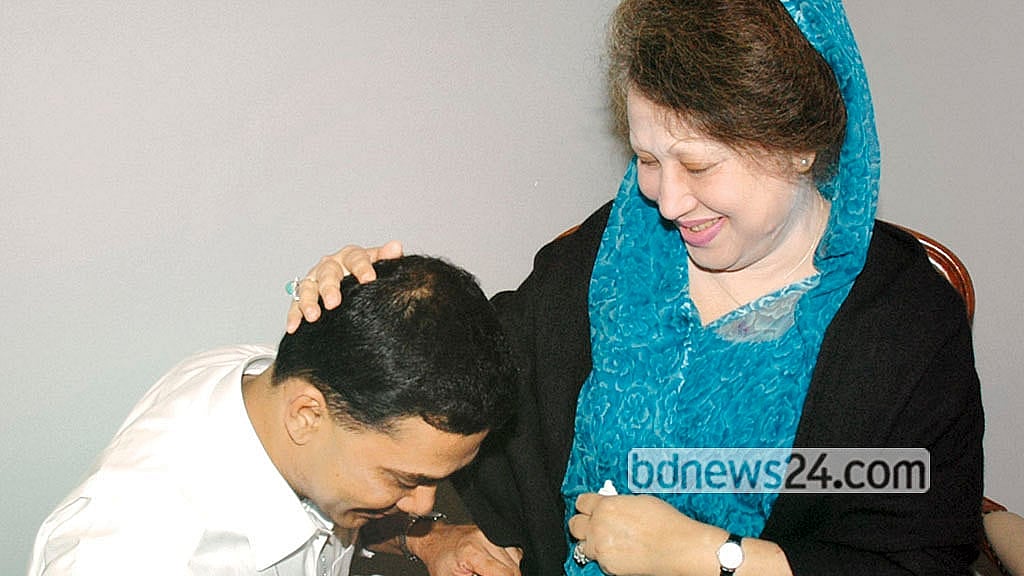
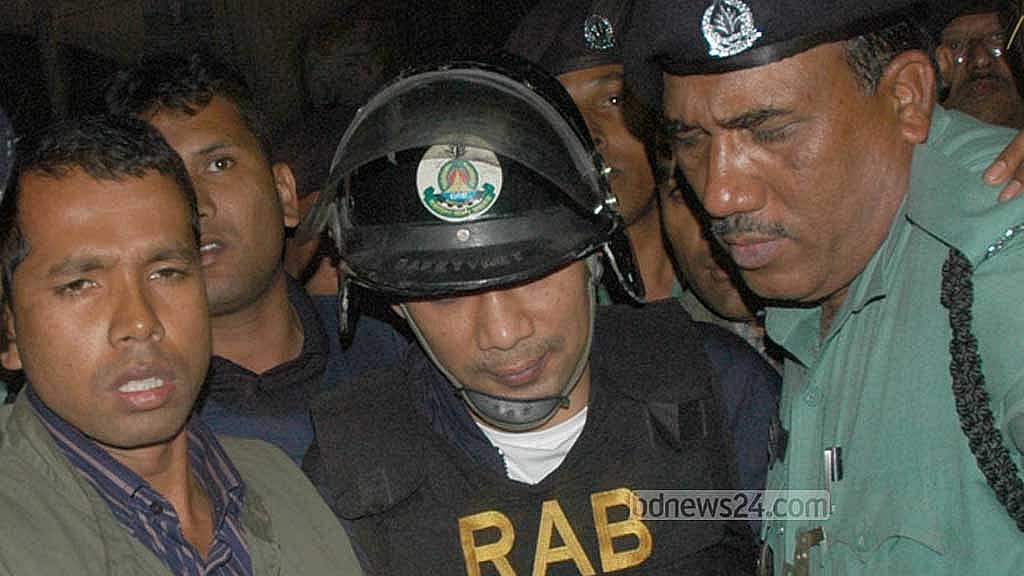
His arrest in 2007 and subsequent exile in London marked the most dramatic rupture in his career.
Convicted in several cases, including the Aug 21 grenade attack, and declared a fugitive, he nonetheless remained central to party strategy. In 2018, with Khaleda behind bars, the BNP named him acting chairperson.
From exile, he steered the party through years of political struggle. Khaleda’s death in December removed the final barrier to his formal elevation, which came in January 2026.
“Tarique Rahman has risen to leadership on his own merit,” BNP leader Gayeshwar Chandra Roy told bdnews24.com. “His organisational skills and resilience have brought him to the helm.”
After decades defined by exile, controversy, and survival, Tarique now stands poised to govern -- carrying the weight of a formidable legacy, and the burden of proving that his long journey has prepared him for power.
Peace, Unity, Anti‑corruption Vows
Since returning home, Tarique has sought to present himself as a statesman ready to look beyond the repression of the Awami League era.
In his interview with Reuters, he said: "What does revenge bring to someone? People have to flee from this country because of revenge. This does not bring anything good," he said. "What we need at the moment in the country is peace and stability."
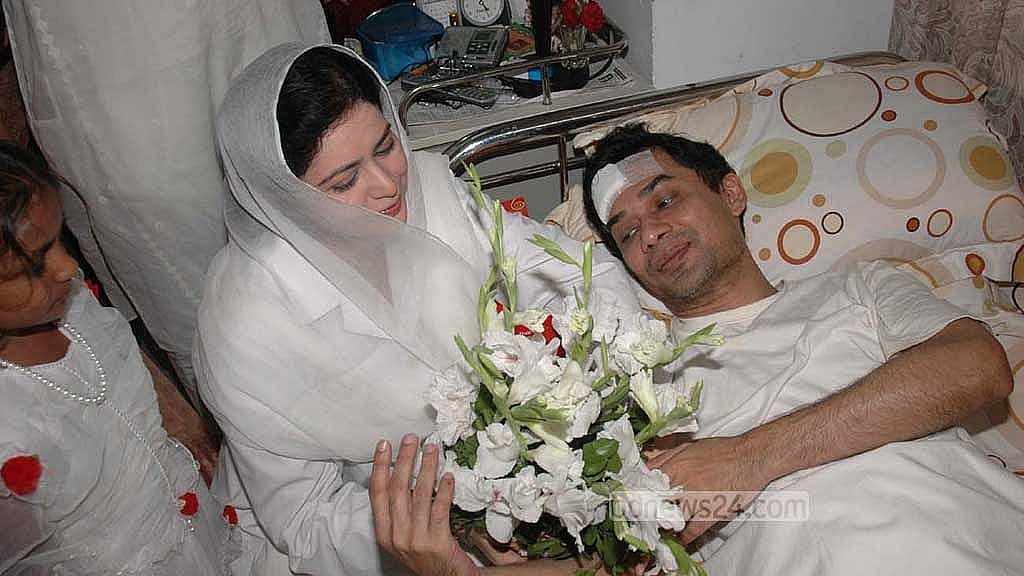
On the campaign trail, he engaged directly with young people, outlining his plan for an inclusive and democratic state built on peace, unity, tolerance and accountability.
His slogan was “Bangladesh First”.
Often seen in a white shirt, sometimes jeans and trainers, his casual style drew attention on social media.
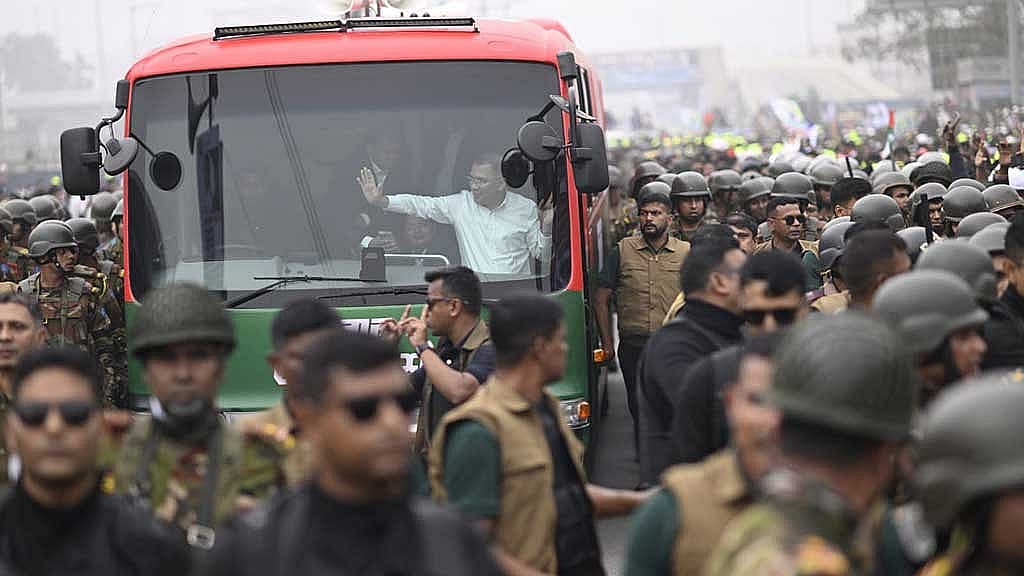
At rallies, red caps bearing the BNP’s slogan evoked comparisons with Donald Trump’s campaign imagery.
Analysts note that Tarique has managed to shed much of the image associated with BNP’s rule two decades ago.
At the manifesto launch on Feb 6, he pledged that if given the chance to govern, BNP’s priorities would be tackling corruption and restoring law and order.
“BNP will make no compromise with corruption,” he said, promising systemic reforms, transparency and accountability.
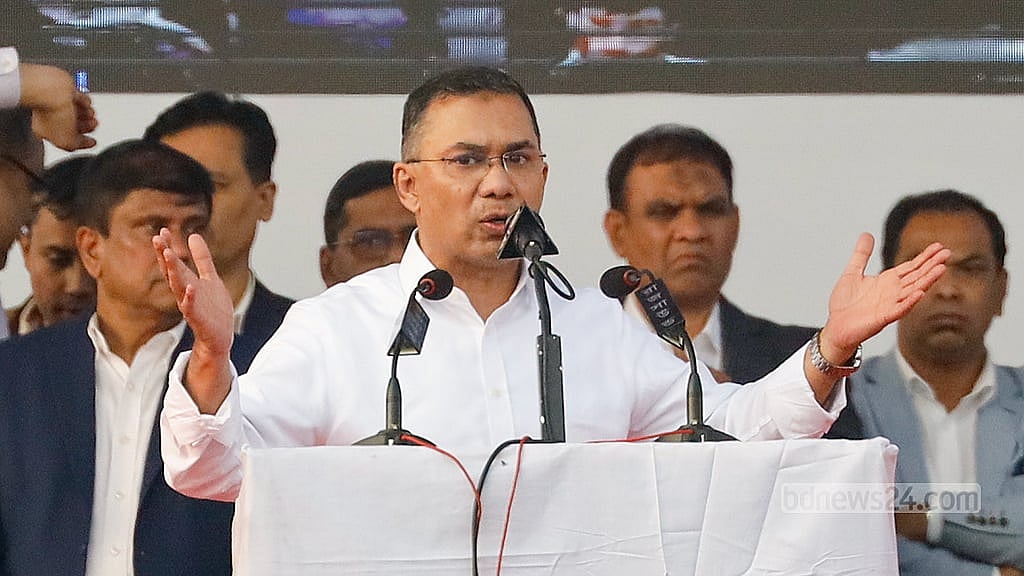
After the election victory, Tarique faced the media for the first time as prime minister‑in‑waiting.
“My message is clear -- peace and discipline must be maintained at all costs. We will not tolerate injustice or unlawful acts,” he said.
He stressed that no attack by the strong on the weak would be accepted, regardless of political, religious or social differences.
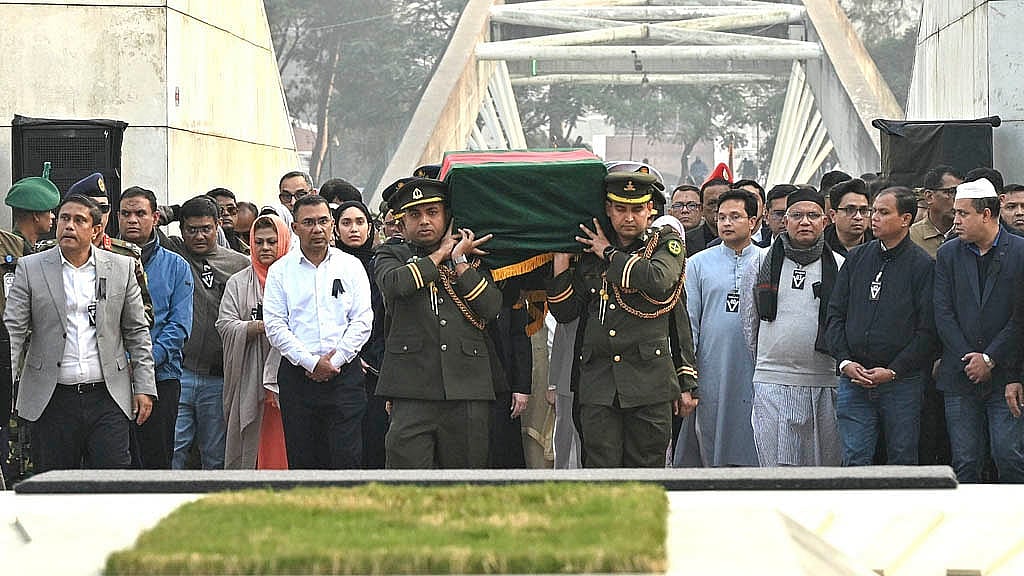
Calling justice the guiding principle of governance, he warned that without the rule of law, all efforts would fail.
“Law must apply equally to every citizen, whether in government or opposition, whatever their views,” he said.
He urged that electoral rivalries must not descend into revenge or vendetta.
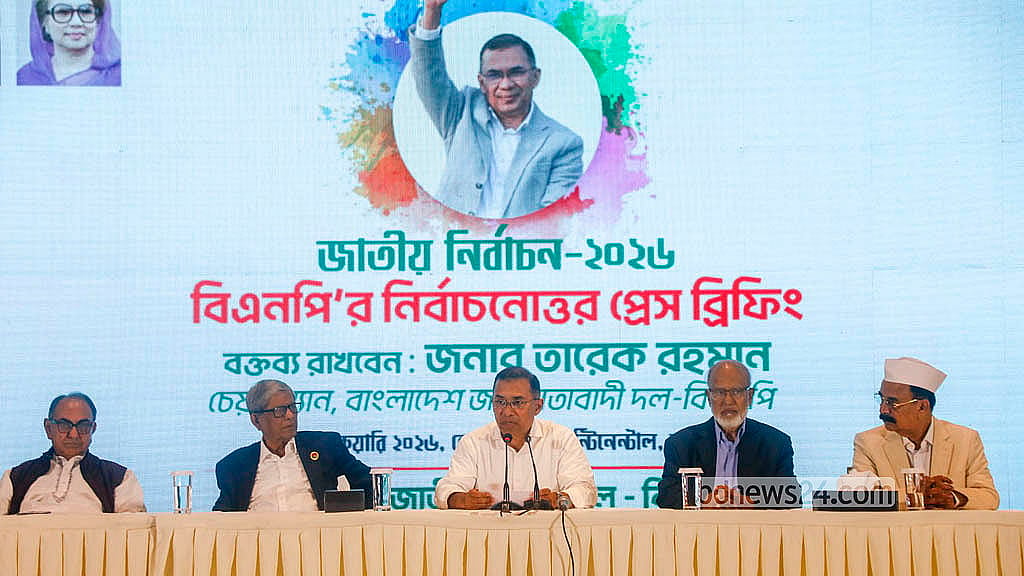
“Let us, as we once fought to establish democracy, now work to build a safe, humane Bangladesh through accountability, law and order, and a relentless fight against corruption,” Tarique said.
He appealed for cooperation across parties and opinions to achieve that vision.