Published : 08 Sep 2025, 07:58 PM
Updated : 28 Aug 2026, 01:26 AM


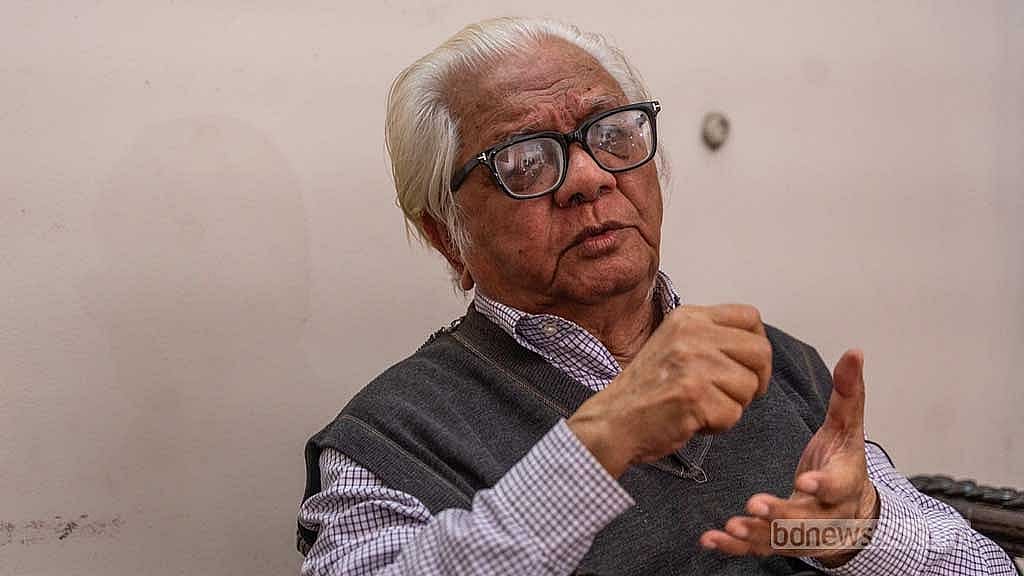
In a written statement to the International Crimes Tribunal before his death, Marxist thinker Badruddin Umar had warned that former prime minister Sheikh Hasina, ousted in the July Uprising and now in India, could face assassination at the hands of the Indian government.
The tribunal released his testimony following his death on Sunday.
In his statement, Badruddin said that even with India’s help in carrying out some “subversive activities”, the Awami League’s revival as a national political force was "impossible".
He described Hasina’s government as one entirely aligned with Indian interests, in contrast to her father, Bangabandhu Sheikh Mujibur Rahman, whom he characterised as more independent-minded despite his pro-India stance.
“Under these circumstances, banning the Awami League is not just a matter of political principle but of national security,” he wrote, calling the party a “structural agent of India” that endangered Bangladesh’s political, economic, and cultural future.
Hasina had survived the Aug 15, 1975, assassination of her father and family, as she was in Belgium with her sister Sheikh Rehana, her husband, and two children. The sisters later sought political asylum in India. Hasina lived in exile for nearly six years before returning to Bangladesh in May 1981.
During her long stay in India, Hasina deepened her ties with New Delhi and developed a close relationship with its intelligence agency, the Research and Analysis Wing (RAW), according to Badruddin. That relationship enabled New Delhi to bring her to power.
“That is why after her downfall, she fled to India. Staying there will itself be a kind of punishment -- she will burn in anguish,” Badruddin said.
“Another punishment could be -- in my view -- that the Indian government will kill her to free itself from embarrassment. As long as they keep her, relations with Bangladesh will not improve. To improve that relationship, a decision will have to be made about her.”
He continued, "So if Modi kills her, don’t be surprised. They will stage it to look like someone from Bangladesh killed her and run an organised campaign to spread that story.”
Badruddin described the July Uprising as the “most explosive and most transformative” in the country’s history and set out his views on the Awami League before and after independence.
“From beginning to end, Sheikh Hasina’s government was dedicated to protecting India’s interests. Sheikh Mujib was pro-India, but he did not govern under India’s orders. Sheikh Hasina’s system of rule, however, was built entirely according to India’s design.”
Contrasting Hasina's style of leadership to her father's, he said that while Sheikh Mujib may have been reckless, there was a fundamental difference between his way of governing and Hasina’s. "Sheikh Mujib rose from among the people, through struggles and movements. He had political maturity built over many years.
“By contrast, Hasina is like someone who parachuted into power. She became leader only because she was Sheikh Mujib’s daughter. She had no political base or personal popularity. She came to power as ‘the daughter of Mujib’, but she did not inherit his ideas or philosophy. Rather, Hasina destroyed the country’s political values.”