Published : 01 Aug 2025, 10:04 AM
Updated : 28 Aug 2026, 01:24 AM


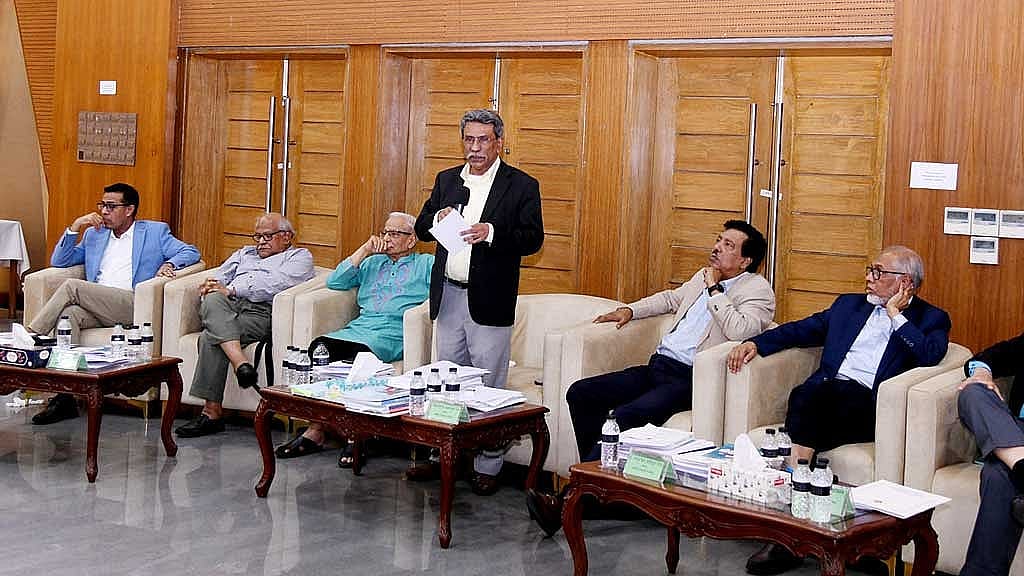
A five-month political dialogue aimed at reforming Bangladesh’s state structure concluded with agreements on 81 proposals, but uncertainty looms over how much of it will translate into real change.
Launched after the July Uprising that overthrew the Awami League (AL) government, the process saw intense efforts to align three dozen political parties on a shared vision for state reform.
The National Consensus Commission wrapped up talks on Jul 31 after securing agreements on a wide range of proposals -- from changes to constitutional articles to judicial decentralisation.
The commission's Vice-Chairman Ali Riaz described the outcome as a success despite noting that some proposals carried “notes of dissent”.
“In most cases, we have reached consensus. In some areas, the parties authorised the commission to propose revised drafts, which were later accepted,” he said.
“These agreed proposals have been shared daily,” Riaz added. “[On Thursday] we finalised several more. By [Friday], we’ll ensure full details are provided to you.”
Dhaka University’s political science professor SM Ali Reza viewed the broad-based agreement as a landmark.

“Bringing so many parties to the same table and finding common ground on core issues is a major success.”
Anthropologist and political commentator Prof Zobaida Nasreen disagreed. She argued that on issues like the state's guiding principles, consensus was always unlikely.
“The process was loud, but the results were limited. It looked more like a show than a true breakthrough,” she said.
While the commission presented revised proposals based on dissenting inputs, they acknowledged gaps.
“We have documented clear proposals where consensus was reached. Further discussions will finalise the July Charter,” Riaz said.
He also noted the tone of the talks. “Despite differences, parties engaged in a cordial and constructive manner.”
The commission will now integrate final opinions into a full version of the charter to be shared with parties in the coming days, the vice-chairman added.
WHERE THE TALKS ENDED
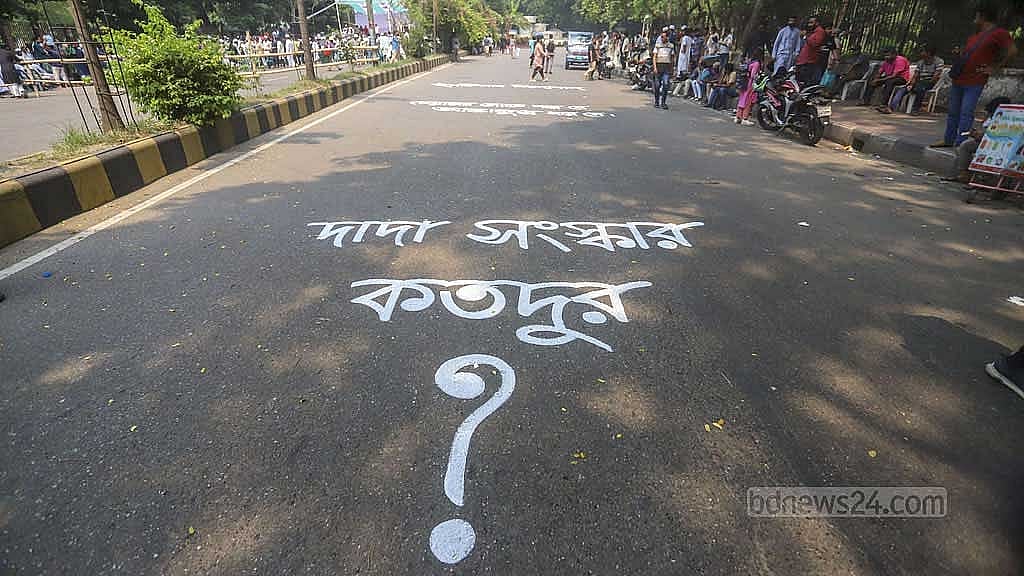
The demand for large-scale reform gained traction following the popular uprising on Aug 5 2024, which ended a decade and a half of AL rule.
As the country transitioned towards democratic governance, voices grew louder for constitutional and administrative reform to prevent any future return to authoritarianism.
The interim government, led by Muhammad Yunus, formed 11 reform commissions.
Of them, five -- on constitutional reform, electoral reform, judiciary, Anti-Corruption Commission and public administration -- submitted 166 recommendations.
The Consensus Commission sought feedback from 38 parties and alliances, with 33 submitting official positions.
From Mar 20 to May 19, 45 sessions were held, producing consensus on 62 points.
62 reform points 'agreed' in first phase: Consensus Commission
SECOND ROUND: CONCENSUS ON 19 MORE
Held across 23 days, the second phase included around 30 parties.
A total of 10 key issues were agreed upon with dissent notes attached, taking the total number of consensus items to 81.
Key areas of agreement:
• Amendment to Article 70 of the Constitution
• Determination of parliamentary committee chairpersons
• Delimitation of constituencies
• Presidential pardon powers
• Judicial decentralisation
• Gradual transfer of lower courts to Upazila level
• Power to impose emergency rule
• Chief justice appointment process
• Formation process of the Election Commission
• Restriction on prime minister holding multiple offices
• Prime minister’s term limit to 10 years
• Creation of Independent Police Commission
• Women’s representation in parliament
• Introduction of upper house in parliament
• Appointments to PSC, ACC, CAG, Ombudsman
• Presidential power and electoral system reform
• Expansion of fundamental rights
• Reform of state’s guiding principles
• Procedure for appointing caretaker government’s chief advisor
Dissent notes recorded on:
• Amendment to Article 70
• Women’s parliamentary representation
• Decentralisation of judiciary
• Prime minister holding multiple posts
• Appointments of key constitutional offices
• Creation of upper house
• Presidential election process
• Powers and duties of president
• Items 8, 9, 11, and 12 of caretaker government proposal
• National guiding principles
PATH TO IMPLEMENTATION
Among the decisions reached by the Consensus Commission, some can be implemented directly by the interim government through executive ordinances.
The remaining proposals will require political party commitments to be enacted through parliamentary approval, as outlined in the July National Charter.
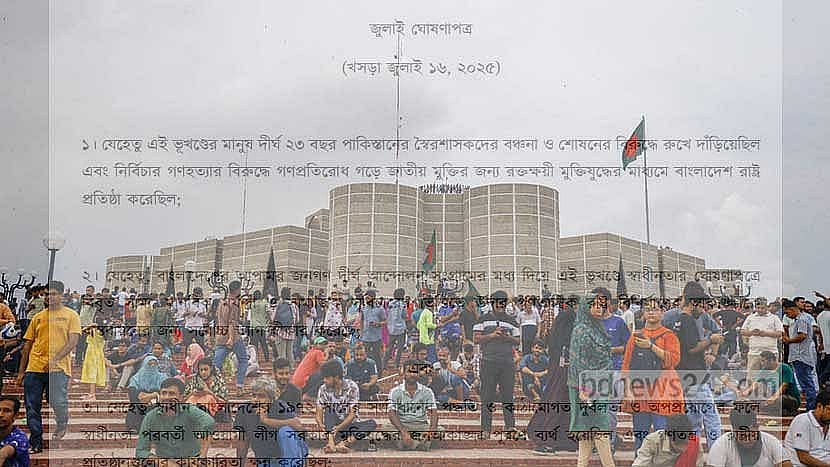
The commission has already drafted the July Charter in parallel with the reform talks.
It includes the proposals and recommendations that gained consensus, along with a commitment from political parties to implement them within two years after the election.
The charter will detail the background of its formation, the structure and activities of the Consensus Commission, and the proposals that achieved agreement.
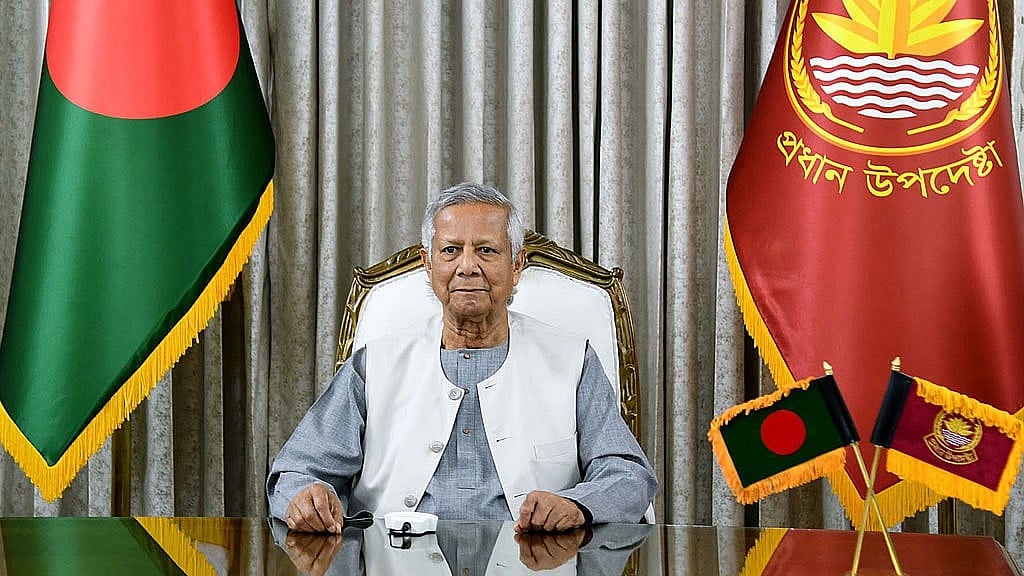
Once finalised, the draft will be signed by the heads or representatives of political parties, Yunus, and other members of the Consensus Commission.
Speaking Thursday night at the close of the talks, Riaz said the draft will be presented to political parties along with a proposal for how to carry out its implementation.
“Within a few days, we will deliver the complete draft to the parties,” said Riaz. “We hope this will pave the way for formal signing of the National Charter.”
Riaz added that discussions will follow to define the precise implementation mechanisms.
“Political parties have asked the commission to continue facilitating these conversations,” he said. “We believe it's essential to clearly identify the specific processes through which these agreements can be turned into action.
“The parties have shown both interest and sincerity in this regard.”
“We’ve urged them to continue internal deliberations as well,” Riaz added. “From our side, we will act as a catalyst and coordinate across stakeholders to ensure productive dialogue on implementation.”
Before that, however, the finalisation of the charter remains the commission’s immediate task.
“Over the next few days, we’ll focus on finalising the full draft,” said Riaz. “Once shared with the parties, if they have any feedback or suggestions for amendments, we’ll accommodate those.
“Only then can we begin formal discussions on how to carry it out,” he added.
REACTIONS
Prof Ali praised the dialogue process. “Stakeholders were deeply engaged. Initial differences narrowed over time. With more time, even unresolved issues might have seen consensus.”
He also criticised the scope of the commissions. “There was no education commission. Reports from health, labour, gender, media and local government commissions should’ve also been prioritised.”
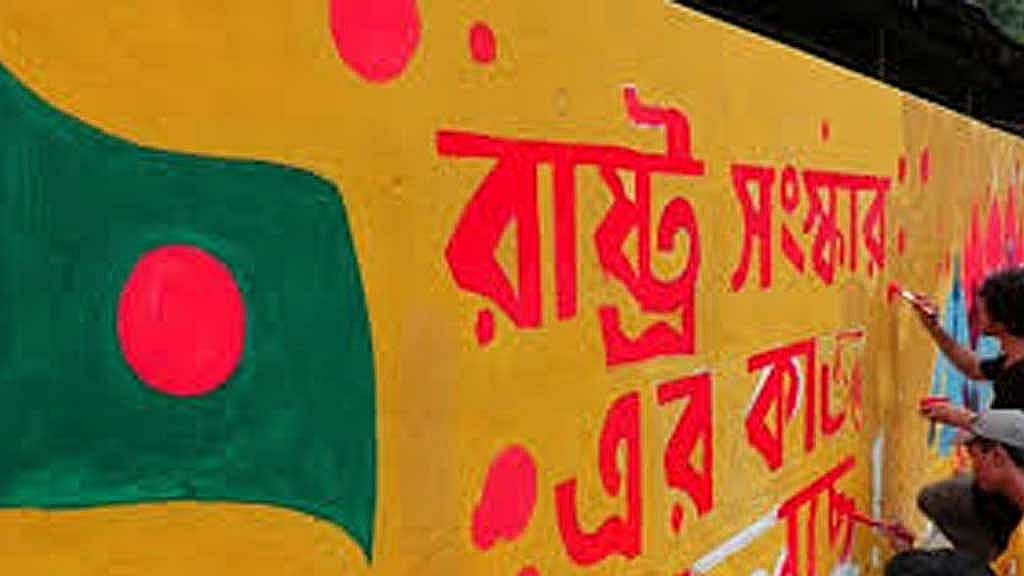
In contrast, Prof Zobaida questioned both the effectiveness and intent of the process. “Reforming fundamental constitutional principles with full agreement is unrealistic.
“The commission pushed for harmony, but pressure tactics were evident.”
She added, “Most commissions didn’t reach grassroots. Of 22 workshops by a few commissions, only eight were held in Dhaka. Public consultation was superficial. Are these truly the people’s recommendations?”
‘A MISTAKE FROM THE START’
Political thinker Farhad Mazhar has opposed the consensus dialogue process from the outset, arguing not for constitutional reform -- but for drafting an entirely new Constitution.
Speaking to bdnews24.com, he said: “The very concept of a National Consensus Commission is flawed. There was already popular unity. The uprising happened on the foundation of that unity.
“The notion of ‘national consensus’ was introduced to undermine the mass uprising. I’ve said this again and again.”
Farhad believes the government should have engaged directly with the people instead of going through political parties.
“There’s a simple way to talk to the people -- you have Upazilas, districts, institutions across society. Through small and large gatherings, the government could have asked the public: A mass uprising has occurred—what kind of state do you want now?”
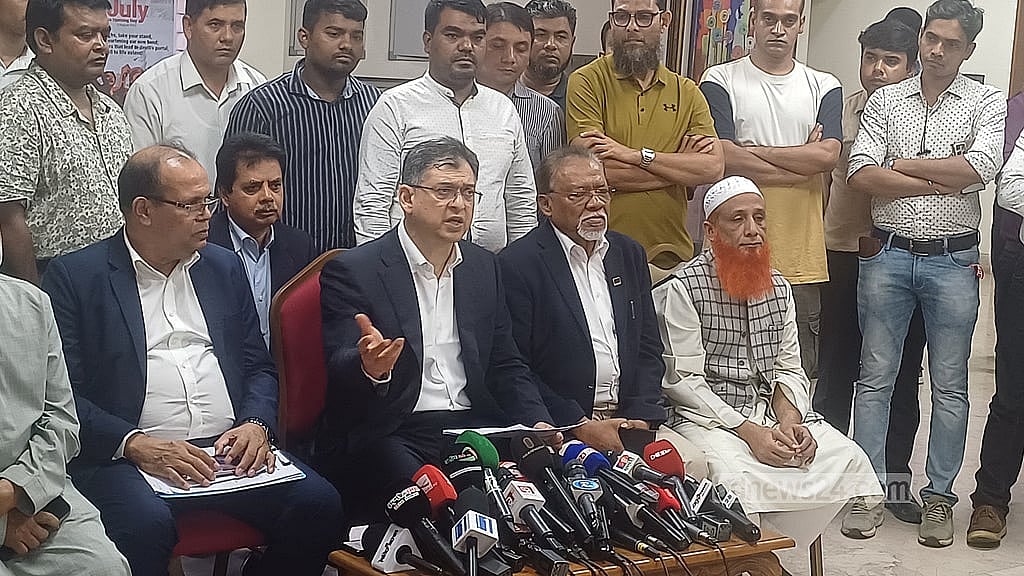
Drawing on his own experience, he highlighted three core principles that he believes define what people truly want:
“First: People do not want a state that violates individual rights or dignity. They do not want a constitution or structure that permits this. That’s number one.
“Second: People do not want laws or policies that destroy life, nature, or the environment.
“Third: People do not want laws or policies that destroy their livelihoods, jobs, or means of survival.”
Based on these principles, Farhad said a new constitutional framework must be developed -- or the existing constitution must be amended if it contradicts these ideals.
“It’s simple,” he said. “But those in power have ignored this.”
According to Farhad, sitting down with political parties was itself anti-people.
“The political parties didn’t lead the uprising. The people did. So why negotiate only with the parties?”
He added that the people could have easily been reorganised around a fresh national vision.
“The very phrase ‘national consensus’ is harmful,” Farhad argued. “It goes against the spirit of the mass uprising.”
LEGAL BASIS CONTROVERSY
Although consensus was reached on 19 core reform points, the National Consensus Commission now faces a major hurdle -- uncertainty over the legal status of the proposed July Charter.
Jamaat-e-Islami and the National Citizens Party (NCP) have warned they may not sign the charter without a clear legal or constitutional basis.
Meanwhile, four left-leaning parties, including the CPB and BaSaD, boycotted the final meeting over the omission of the Constitution’s four original principles, saying they are unlikely to endorse the charter in its current form.
Jamaat deputy chief Syed Abdullah Mohammad Taher said: “Without legal grounding and immediate implementation, this consensus means nothing. It must be legalised now.”
He cautioned that delays could be seen as a move to derail the election. “If the government does not act by the 5th of August, it will be responsible for the uncertainty.”
The NCP echoed these concerns. Member Secretary Akhtar Hossain said: “The current process lacks clarity. If this charter isn’t implemented quickly, we won’t sign. Without legal status, it’s just symbolic.”
The BNP, while opposing full constitutional recognition, backs state-level legitimacy. Its leader Salahuddin Ahmed said:
“This is the people’s will. It’s bigger than law. We’ve committed to incorporating it into the Constitution’s Fourth Schedule.”
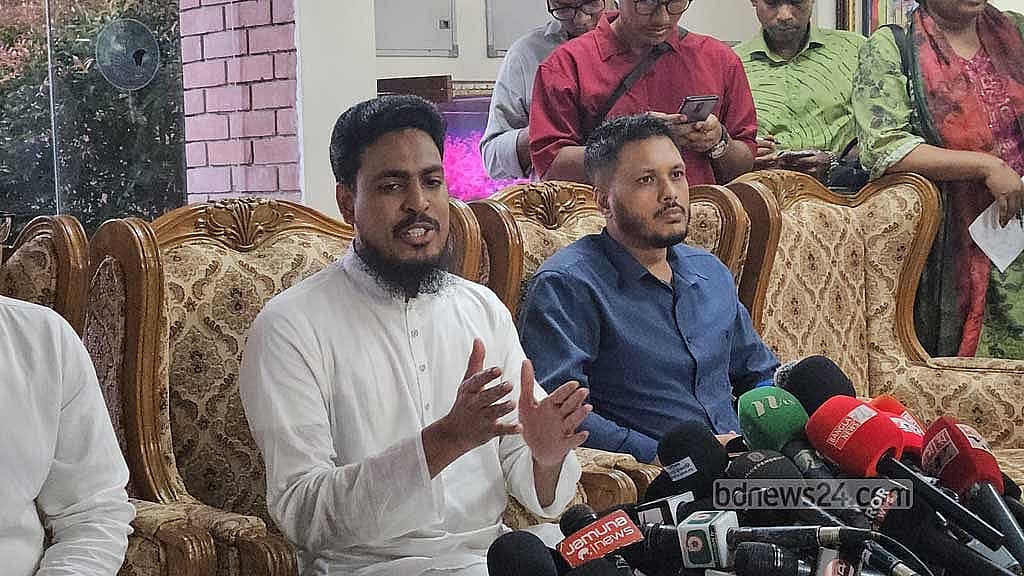
‘NEXT GOVERNMENT WILL FACE PRESSURE’
Dhaka University political science professor Kazi Mahbobor Rahman believes that even if political parties sign the July Charter, implementing the agreed reforms will remain a significant challenge for the next government.
“There are already differing views on how the reforms should be enacted -- some favour ordinances, others want legislation passed in the next parliament. So even with consensus, tensions will remain. Ordinances still require parliamentary approval.”
He noted that regardless of whether the consensus holds, any incoming government will face mounting pressure to act.
“No government will be able to ignore the demand for structural change.”
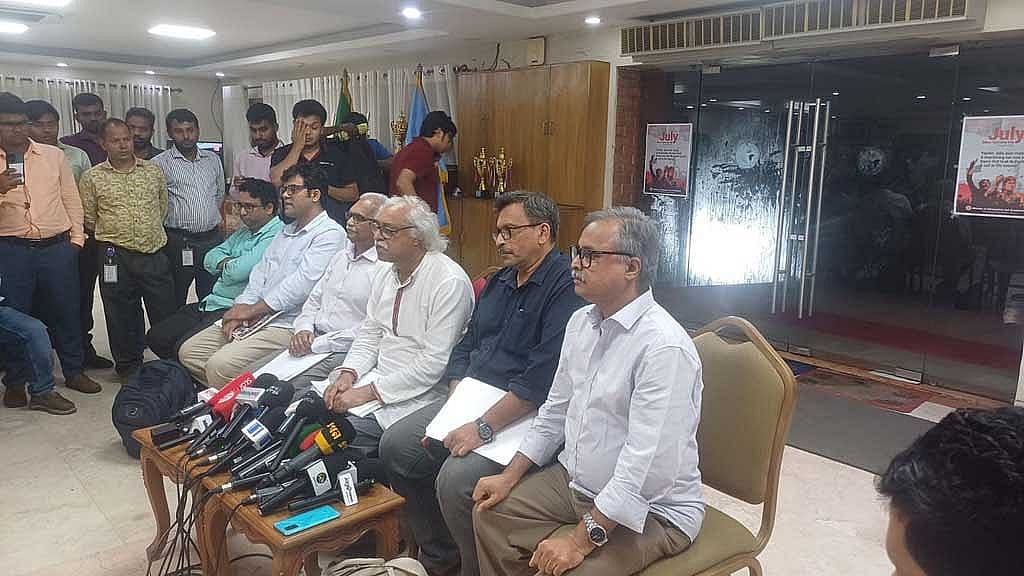
Mahbobor observed that the dialogue and consensus-building process have triggered public expectations and created space for civic engagement.
“Our problem is that we keep starting over. But this process has sparked a social conversation and placed real pressure on those in power to reform the state.”
He added that even partial implementation of the 81 agreed proposals would be a meaningful step forward.
“A shift has begun. Society has heard the call for change. That alone will help move the country and the state towards progress,” he added.
[Writing in English by Sheikh Fariha Bristy]