Published : 31 Jul 2025, 07:24 AM
Updated : 28 Aug 2026, 01:24 AM


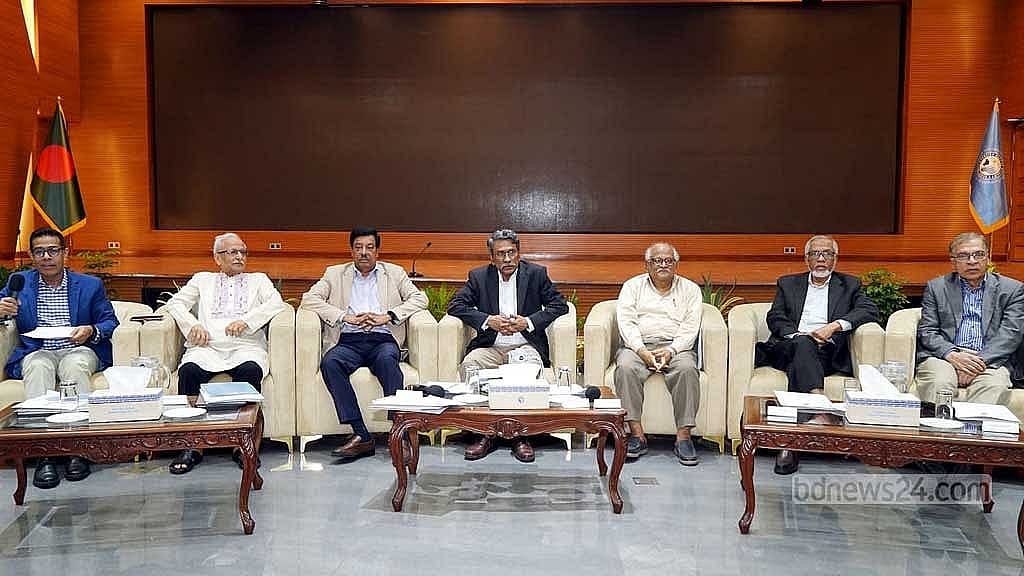
The National Consensus Commission says agreement has been reached on 62 of the 166 proposed reform measures during its first round of dialogue with political parties.
These agreed items were compiled into a list sent to participating parties on Wednesday.
Discussions on several of these topics continue into the second phase, including the structure of a proposed bicameral legislature and increasing the number of reserved seats for women to 100.
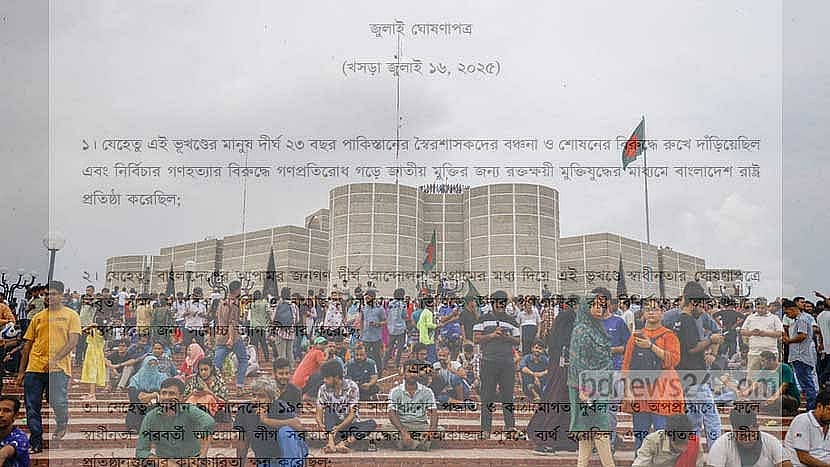
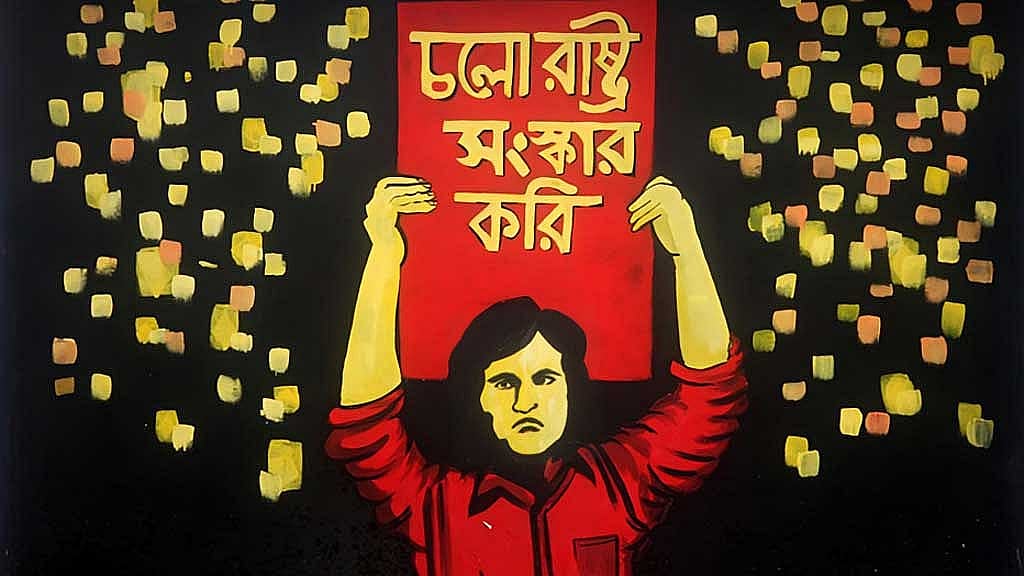
The commission began its work on Feb 15, following recommendations from six reform commissions formed under the interim government that took power after the Awami League was ousted through a student-led uprising.
According to the list, 30 parties backed the creation of a bicameral parliament, with both a lower and an upper chamber.
Debates, however, continue over how the upper house would be formed.
On the matter of raising the number of women's seats to 100, 19 parties supported the proposal in principle, with further discussions continuing.
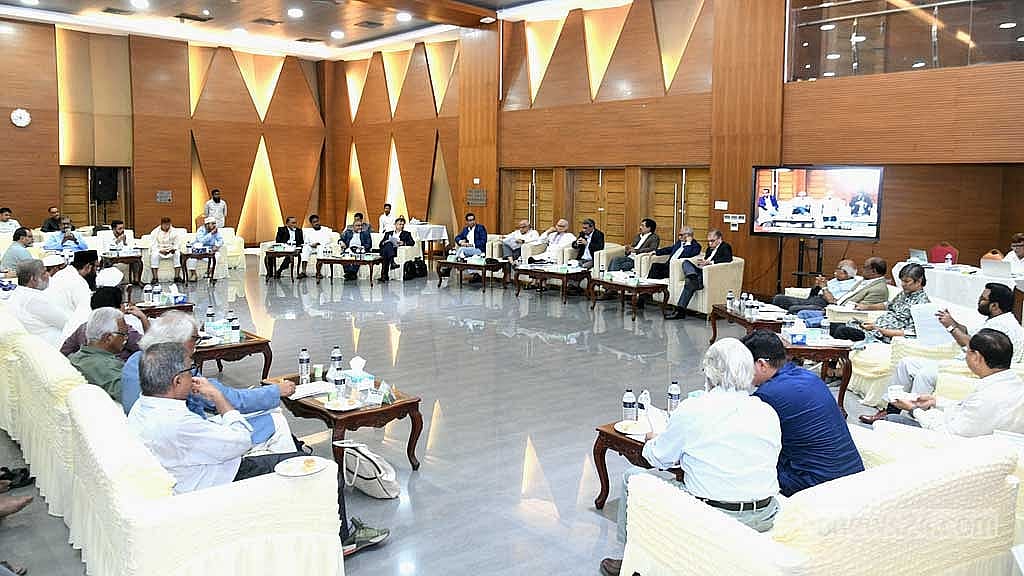
The list of agreed points was compiled following 45 sessions held between Mar 20 and May 19 with 33 of 38 invited political parties and alliances.
Labour Party President Mostafizur Rahman Iran told bdnews24.com, “We have received the list detailing the 62 issues we reached consensus on during the first phase.”
At an earlier briefing, Commission Vice-Chairman Ali Riaz said: “By [Wednesday], we are sharing with political parties the list of issues we have reached consensus on.
“We hope to deliver a comprehensive and acceptable draft charter to all parties by [Thursday].”
On Wednesday's 22nd day of the second round of dialogue, the commission held talks on seven unresolved topics, including state principles, the presidential election process, and women’s representation in parliament.
Discussions are also scheduled to take place on six additional issues: the Public Service Commission, the Anti-Corruption Commission, provisions for the appointment of the comptroller and auditor general and the ombudsman, the powers and responsibilities of the president (Article 48(3)), the presidential election process and the formation of the electoral college, the structure, member selection process, and jurisdiction of the upper house, proposals related to the expansion of citizens' fundamental rights, and state principles.
List of agreed items from first phase:
Constitutional reform – 18 items:
• Writing in that Bangladesh shall have a bicameral legislature with a lower house (parliament) and upper house (senate): agreed by 30 parties.
• Qualifications for senate members mirror those for the lower house: 24 parties agreed.
• Increase women’s reserved seats in Parliament to 100: 19 parties agreed in principle.
• Each house will appoint one deputy speaker from non‑ruling party members: 29 parties agreed.
• Legislation under Article 78(5) to define committee and member privileges: 24 parties agreed.
• The president may be impeached for treason, serious misconduct or constitutional violation via two‑thirds vote in the lower house followed by two‑thirds majority in upper house hearing: 28 parties agreed.
• Bengali will remain the state language, with all native languages officially recognised: 30 parties agreed.
• Article 6(2) will be revised to define citizens solely as “Bangladeshi”: 31 parties agreed.
• Articles 7 “Ka” and “Kha”, which limit constitutional amendments, will be repealed: 28 parties agreed.
• A new clause will affirm Bangladesh as a multiethnic, multilingual, multireligious, multicultural nation: agreed by 33 parties.
• Article 70 to be amended to allow MPs to vote freely during no-confidence motions, budget, and constitutional amendment bills: agreed by 25 parties.
• The list of fundamental rights under Parts II and III of the Constitution will be revised and citizens' rights expanded: 31 parties agreed.
• Any international treaty affecting national interest or state security will require ratification by majority vote in both houses of the legislature, 23 parties agreed.
• Elections of local government institutions will be held under the direct supervision of the Election Commission: 28 parties agreed
• Full functional autonomy will be ensured for all local government bodies in financial management and execution of legally mandated tasks, and they will have full financial control and authority over development projects unless part of a national plan: 27 parties agreed.
• Government officials engaged directly in local government activities will be under the authority of elected representatives, and relevant government departments will act under the direction of these representatives when implementing local development projects: 27 parties agreed.
• A district coordination council will be established in each district to facilitate coordination among all local government institutions within that district and act as a joint operational body. Its members will include the elected chairman and two vice-chairmen from each Upazila, the elected mayor and two deputy mayors from each municipality, and the elected chairman from each union council. Each city corporation will have its own coordination council: 25 parties agreed.
• Article 150(2) of the Constitution will be repealed and Schedules 5, 6, and 7 associated with it will be excluded from the Constitution: 23 parties agreed.
Electoral reform – 1 item
• Political parties registered under the Election Commission will be subject to the Right to Information Act 2009: 24 parties agreed.
Judicial reform – 18 items:
• The number of judges in the Appellate Division will be increased: 30 parties agreed.
• A Judicial Appointments Commission led by the chief justice will be formed: 26 parties agreed.
• The Judicial Appointments Commission will be constitutionally mandated: 29 parties agreed.
• Full independence of the judiciary will be ensured: 32 parties agreed.
• The Supreme Judicial Council will issue a code of conduct for judges to be updated periodically: 31 parties agreed.
• The council will also draft a code for retired judges and restrict use of the title “justice” in certain cases: 29 parties agreed.
• Article 116 will be amended to give Supreme Court authority over lower court judges: 31 parties agreed.
• A Supreme Court Secretariat will be created to oversee judicial administration budget and staff: 31 parties agreed
• A permanent government attorney service will be formed under the Constitution: 29 parties agreed.
• An independent criminal investigation service will be established by law: 30 parties agreed.
• All levels of the judiciary will be expanded with specialised courts set up: 32 parties agreed.
• The National Legal Services Organisation will be upgraded to a directorate: 30 parties agreed.
• Judges and court staff will disclose their assets every three years on public websites: 28 parties agreed.
• Court management will be digitised and reformed to reduce delays and ensure access to justice: 32 parties agreed.
• Legal Aid Services Act, 2000 will be replaced by a new 2025 ordinance with mediation provisions: 31 parties agreed.
• Lawyers' code of conduct will be modernised and political activities will be banned on court premises: 26 parties agreed.
• Political affiliations will be excluded from bar and lawyers’ association elections: 25 parties agreed.
• Judges showing political loyalty will face disciplinary action: 32 parties agreed.
Public administration reform – 6 items
• An independent probe panel will be formed to investigate July Uprising-related violence, vote rigging and misconduct by officials. 32 parties agreed.
• A permanent Public Administration Reform Commission will be created. 29 parties agreed.
• The Right to Information Act, 2009, will be reviewed and amended. 32 parties agreed.
• The Official Secrets Act, 1923, will be revised to improve information access. 27 parties agreed.
• Two new administrative divisions Cumilla and Faridpur will be created. 28 parties agreed.
• Special land courts will be established in each division to resolve land-related cases quickly. 25 parties agreed.
Anti-Corruption Commission reform – 19 items
• Article 20(2) will be amended to prevent misuse of public office and ensure ethical labour practices: 30 parties agreed.
• A national anti-corruption strategy will replace current integrity mechanisms and an ombudsman will be empowered to monitor compliance: 30 parties agreed.
• Laws will permanently ban legitimisation of income from unknown sources: 32 parties agreed.
• A law will be enacted to prevent conflict of interest and abuse of authority: 31 parties agreed.
• Ownership details of companies trusts and foundations must be registered and made public: 29 parties agreed.
• Election finance laws will require full disclosure of funding by parties and candidates and asset declarations of elected officials to be made public: 25 parties agreed.
• All public service providers including police stations registries passport and revenue offices will be fully digitised: 29 parties agreed.
• Private sector bribery will be made a punishable offence under the UN Convention against Corruption (UNCAC): 31 parties agreed.
• Bangladesh will adopt the Common Reporting Standards for financial transparency: 30 parties agreed.
• Number of ACC commissioners will be increased from three to five including at least one woman: 29 parties agreed.
• Eligibility for ACC commissioners will include 15 years’ experience in relevant fields: 26 parties agreed.
• Commissioners will serve four years instead of five: 25 parties agreed.
• Selection committee will be renamed as the Screening and Review Committee: 31 parties agreed.
• The committee will be composed of seven members including senior justices officials and public representatives: 25 parties agreed.
• Transparent selection procedures will include public calls for nominations interviews and asset disclosures. Final names will be sent to the president: 27 parties agreed.
• ACC performance will be reviewed biannually through public hearings led by the screening committee with media and civil society participation: 31 parties agreed.
• Section 32 “Ka” of the Anti-Corruption Commission Act requiring prior government approval to file cases against officials will be repealed: 27 parties agreed.
• Section 309 of the Income Tax Act, 2023, will be amended to ensure ACC’s access to all documents: 27 parties agreed.
• Bangladesh will officially join the Open Government Partnership to promote transparency and accountability: 23 parties agreed.