Published : 11 Sep 2025, 03:45 PM
Updated : 21 Aug 2026, 01:47 PM


The 2025 Dhaka University Central Students’ Union (DUCSU) election delivered a stunning upset, as Islami Chhatra Shibir, the student wing of Jamaat-e-Islami, swept to power against all expectations.
Long criticised over issues of the Liberation War, accused of muscle power politics in the 1980s and 1990s, and known as a religion-driven organisation often avoided in public discourse, Shibir has, against the odds, gained the trust of DU students.
After the July Uprising, Shibir re-emerged on the campus politics with a carefully crafted strategy. According to students, faculty, former DUCSU vice-presidents and general secretaries, and political analysts, Shibir presented an inclusive front by involving students outside overtly political profiles, appealing to a broader base.
Their engagement with students in dormitories, combined with restraint from overt arrogance or disruptive behaviour, resonated with those seeking an end to old “mud-slinging”, internal conflicts, and tagging culture, they say.
Observers noted that division among rival panels, coupled with their failure to conduct coordinated campaigns, gave Shibir a strategic advantage. Analysts also argue that the current generation of students, shaped by new perspectives and self-centric thinking about the present and future, was less influenced by the organisation’s controversial past, making them more receptive to Shibir’s contemporary approach.
Whether this DUCSU model can impact national politics remains a matter of debate. Some experts contend that national political dynamics are far more complex, leaving little room for straightforward translation of Shibir’s campus strategy.
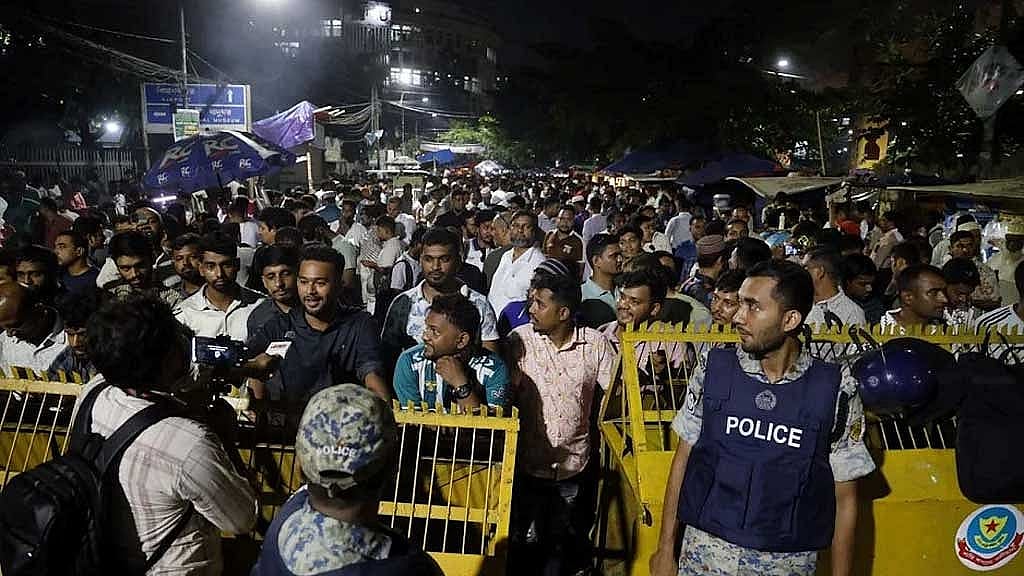
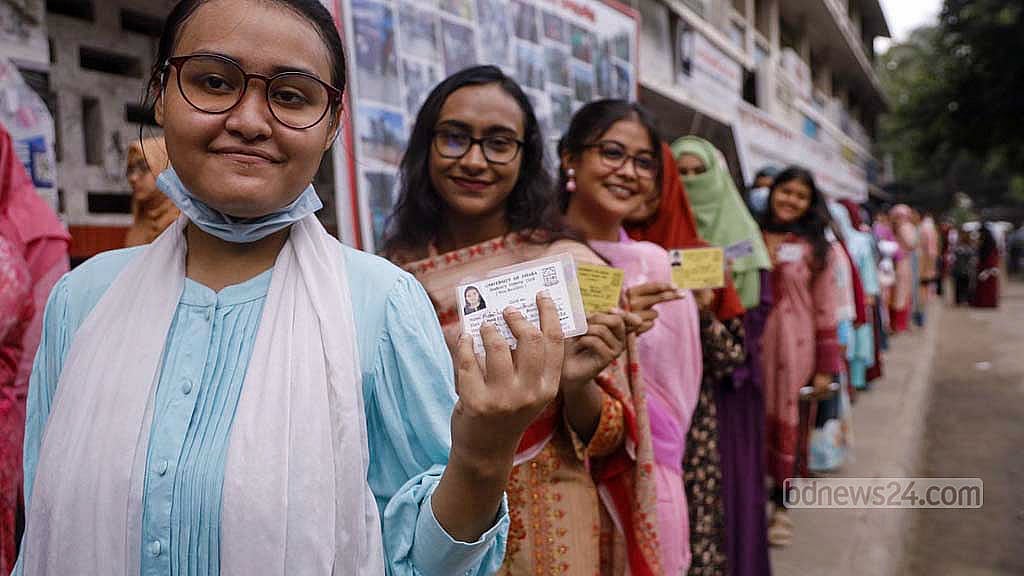
Voting extended throughout Tuesday, concluding in the early hours of Wednesday. Despite reciprocal accusations, reports of political figures crowding entry points, and allegations of ballot tampering, the election proceeded largely peacefully. Approximately 78 percent of the 40,000 eligible students cast their votes.
Of DUCSU’s 28 posts, including VP and GS, and 12 editorial positions, Shibir’s United Students’ Alliance secured nine top posts and a total of 23 positions across the board.
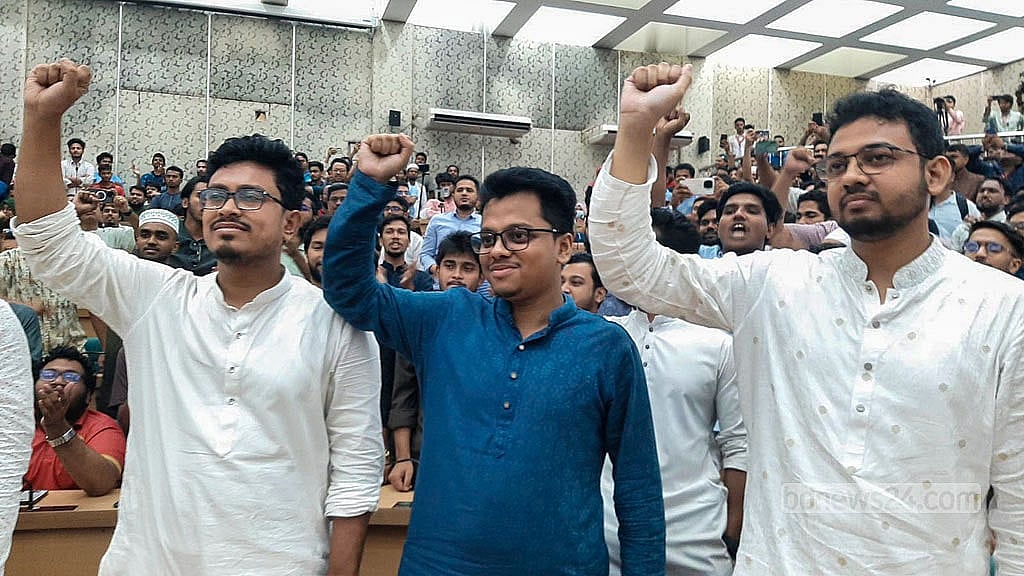
Until a political shift over a decade ago, the group had not participated openly on campus. Post-Uprising, Shibir leaders risked infiltrating rival student leagues and gradually established themselves in public, with Shadik Kayem, SM Farhad, and Md Mohiuddin Khan emerging as key leaders. The trio dominated the top three DUCSU posts by large margins.
Shibir’s re-emergence did not go unchallenged. Persistent criticism regarding the Liberation War and student league affiliations circulated on social media. In August, a display at TSC featuring images of convicted war criminals forced Shibir to retreat temporarily, reflecting the continued sensitivity of their past.
A VOTE BEYOND SHOWDOWNS
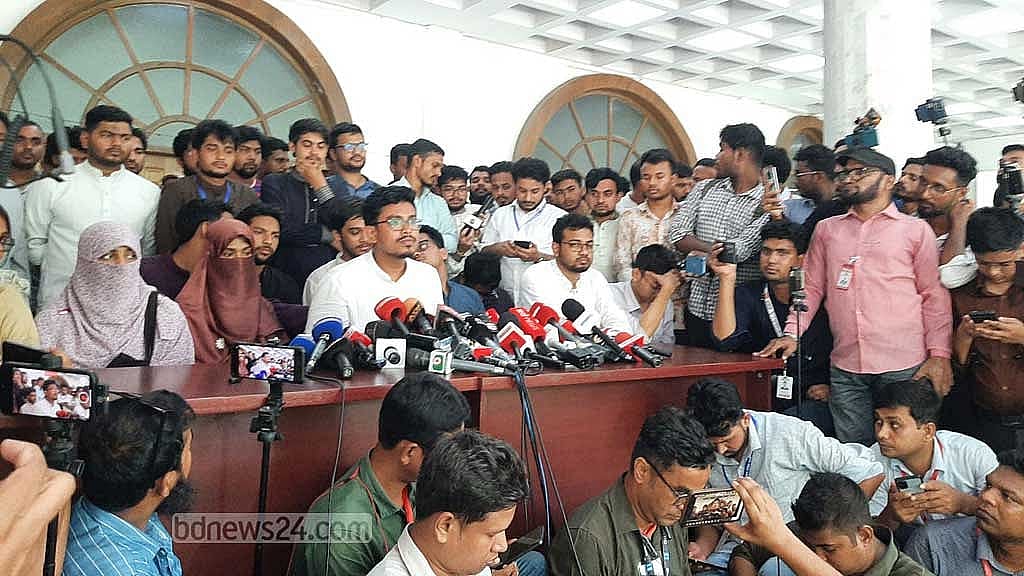
By around 12:45am on Wednesday, early signals of Shibir’s victory became evident as centre-wise results trickled in. Large gatherings of BNP and Jamaat-e-Islami leaders at campus entrances raised security concerns, prompting heightened vigilance.
Around 3 am, Shibir supporters staged victory marches in multiple locations. Meanwhile, rival candidates, including Abidul Islam Khan of Chhatra Dal and Umama Fatema of the Independent Alliance, rejected the results, alleging electoral fraud.
As results from 18 halls were compiled, an official declaration came on Wednesday morning at 8am from DUCSU Chief Returning Officer Professor Jasim Uddin at the Nawab Nawab Ali Chowdhury Senate Building. Celebration among Shibir activists extended through the morning.
Shibir’s main competitors were candidates of the Jatiyatabadi Chhatra Dal, who failed to secure any victory. The Bangladesh Democratic Student Union (BAGCHAS), formed by students active during the July Uprising, failed to consolidate support, as progressive students split across panels.
Students pointed to multiple reasons for Shibir’s unprecedented success.
Maliha Islam, a student of Shamsunnahar Hall, told bdnews24.com: “Shibir won because other organisations carried arrogance. They always considered themselves superior, and DU students responded through the ballot.”
She added that a shift away from mud-slinging politics could benefit others in the future.
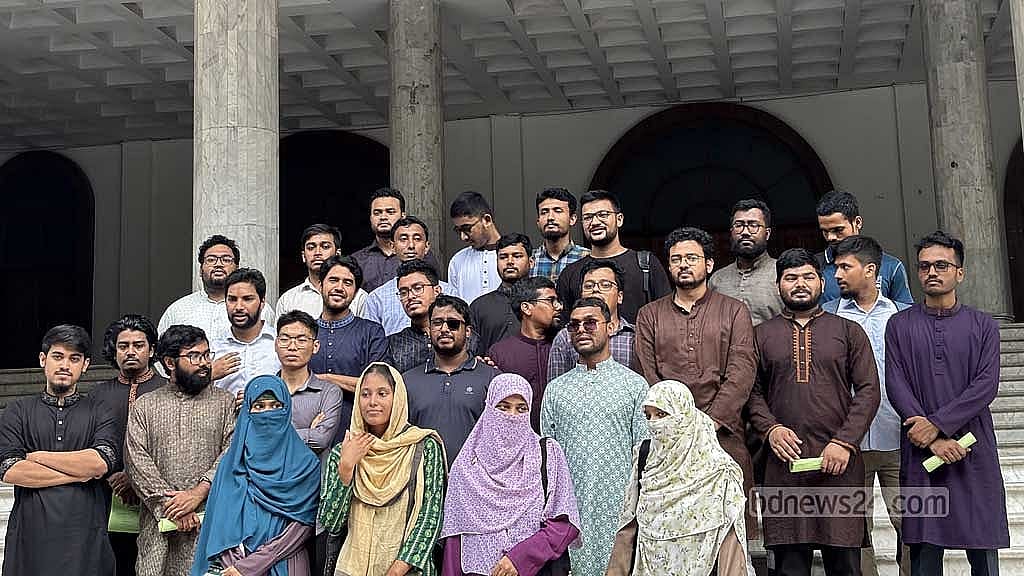
Fardin Rahman of mass communication and journalism department observed that Shibir’s panel reflected diversity -- covering hijabi and non-hijabi women, minority Chakma students, and others -- while strong leadership from Shadik and Farhad elevated their credibility.
Critics’ past allegations did not resonate with the new generation, who viewed such claims as campaign rhetoric rather than reality.
Fardin said, “Every candidate on Shibir’s panel worked in unison. Other panels mainly focused on criticising Shibir and failed to mobilise voters effectively.”
Asaduzzaman, a student of history, added: “This victory demonstrates that tagging, unnecessary accusations, and false statements often backfire. Shibir’s achievement lies less in brilliance than in exploiting rivals’ weaknesses and maintaining relevance over the past year, which built a positive perception among students.”
WELL-ORGANISED SHIBIR VS DIVIDED COMPETITORS
Billal Hossain, a student from the 2018-19 batch at Dhaka University, reflected on why students did not choose Chhatra Dal in the DUCSU election, pointing to infighting within the organisation.
He said, “A lot of grouping exists within Chhatra Dal. They even told their own supporters not to vote for their candidates. Many of their people didn’t even campaign.”
He added that Chhatra Dal had to bring in outsiders to carry out their campaign, further highlighting the internal disarray.
Just before the election, the news broke that six prominent Chhatra Dal leaders had been permanently expelled from the organisation for running for hall positions against their own candidates.
Left-leaning student organisations also failed to unify for the election, fielding at least three different panels. Leaders from the BAGCHAS, who led the anti-discrimination student movement, also ran on separate tickets, making it harder for them to consolidate a unified base.
Political science department Prof Kazi Mohammad Mahbobor Rahman told bdnews24.com, “The impact on the DUCSU election was primarily driven by the ‘network’ -- a well-organised network. It was clear that Shibir was organised, had a sound plan, and their strategy was in place.”
He added, “They were prepared well in advance. Their candidates were already decided internally, whereas other panels were not as clear. Many candidates didn’t even know they were running until a few days or weeks before the election.”
Mahbobor said the winning panel seemed to have been preparing since the July protests, capitalising on the momentum of that time. This organisational strength, paired with Shibir’s ability to maintain unity, allowed them to reach out to students effectively.
Students, in turn, responded positively, rejecting the division and infighting among rival panels.
‘THE LESSER EVIL’
Despite the criticism of its past activities, Shibir has gained traction, especially among young voters disillusioned with what they perceive as the misrule of the ruling party.
Former DUCSU general secretary from the 1989-90 batch, Mushtuq Husain, said Shibir’s victory reflected a broader frustration with the ruling party’s student wing, which had dominated the campus for years.
He said, “Students have chosen Shibir as the lesser evil, mainly because they are seen as upholding religious values and avoiding corruption.”
Mushtuq also said Shibir’s message of integrity and their perceived cleanliness in politics stood in stark contrast to what students viewed as the ruling party’s corruption and authoritarian practices.
“Many students feel disillusioned by the politics of power-sharing, corruption, and violence. Shibir, despite its past associations, has positioned itself as a more viable alternative,” he added.
The notion of Shibir as a better alternative to the current political climate, including the ruling party’s "iron-fist" control over campus politics, resonated with a large section of students.
Mushtuq said, “The young voters of today are less concerned with the ideological battles of the past and more focused on creating a future with less corruption, fewer political wars, and more stability.”
The Bangladesh JaSoD member explained, “The government’s brutality, especially during the July killings, has left a bitter taste in the mouths of students. They know that Shibir’s involvement in the 1971 struggle is a contentious issue, but when compared to the government’s handling of the anti-discrimination protests and the state-sponsored violence, they chose Shibir as a safer political outlet.”
Mahmudur Rahman Manna, former VP of DUCSU who now heads Nagorik Oikya, framed Shibir’s victory as a rejection of “extortionist and opportunistic politics.”
Speaking at a discussion at the Dhaka Reporters Unity on Wednesday, Manna said: “This generation has decided they no longer want the corrupt politics of showdowns and thuggery, the kind of politics that has been driven by manipulation, control, and lies.”
Drawing comparisons with the global political shift, Manna invoked the example of Generation Z’s political awakening, from Africa to Latin America. He referenced an article published in Uganda that quoted Gen Z as saying: “We are tired of living in humiliation, and we want to show some courage now.”
Manna added, “Students are tired of the ‘guest room culture’, where senior figures dictate terms, control admissions, and deny basic student rights. They’ve been humiliated, and they’re ready to rise.”
WILL IT IMPACT NATIONAL POLITICS?
Manna does not believe that the DUCSU election will have any substantial impact on national politics.
He said, “I was very popular among the students, but I never made it in my political party. I never came to power, and my party never did either. So winning DUCSU doesn’t necessarily mean they will make a huge impact on national politics.”
He added, “But think about it -- when I was in my position, I didn’t have an organisation behind me. But the people who have won this time have organisations. They will be able to transform them into something meaningful.”
Mushfiq Hossain, a former DUCSU general secretary, believes that if the new DUCSU leadership can make a “significant” contribution, it will have an effect on national politics.
He said students who had played a role against the previous government emerged victorious in the DUCSU elections.
“After the 1990 uprising, Chhatra Dal was successful. After that, in the 1996 national elections, BNP lost, but look at them.”
He added, “The Student Union won in 1972. Chhatra League won in 1989, 1980, 1981, and 1962. They also won in 1982. In national elections, these organisations didn’t have much of a significant impact."
“But if DUCSU leadership can carry out tasks like these large-scale movements, it could benefit them in national elections or those aligned with them. For example, the benefits of the 1969 uprising were felt by Chhatra League leaders in the 1970 elections. The Awami League gained from that,” he said.
He speculated that Shibir, through its success, would try to leverage the support of its affiliated political party, Jamaat-e-Islami.
“Jamaat-e-Islami, Shibir’s political affiliate, has experience in parliamentary elections. They have participated before. Therefore, they will try to capitalise on this success,” he said.
He explained, “If they don’t overdo it and remain patient and restrained, they could perform relatively better.”
However, Mushfiq also pointed out that the influence of Shibir in national politics would ultimately depend on the public’s mindset.
He said, “The people of Bangladesh prefer democratic, secular, and liberal moral values. Jamaat has not yet proven itself in this regard. They now have the opportunity to do so.”
He reflected on how, in the past, Jamaat had taken over student unions in Chattogram and shown authoritarian tendencies.
“But Dhaka University has not yet witnessed that. At Dhaka University, they’ve shown a more peaceful, student-friendly image, and that could work in their favour,” he added.
The failure of progressive and independent candidates to present a united panel will likely allow Shibir to take advantage of its organised strength in future DUCSU, RUCSU, and CUCSU elections, he noted.
“Shibir will try to use this advantage to win in the future."
However, Prof Mahbobor believes that Shibir’s victory in the DUCSU election will not have an impact on national politics.
He said, “It seems to me that people today are making their own decisions about their plans and preferences. They no longer get influenced by others when making decisions.”
He continued, “Also, this election will be six months before the national elections. It will depend on how those elected can retain their positions, their character, and the trust they earned in the July movement.”
He noted, however, that maintaining that character after victory is difficult. He said, “It’s hard to say whether this will affect national politics, but it won’t be easy to gauge.”
He explained, “Now, people’s sympathy is leaning towards those who are in a weaker position, like Shibir. For the last 15 years, Jamaat and Shibir have been labelled and put under pressure, but that has attracted a lot of people to their cause.”
He added, “But this attraction may diminish. I’m not saying it will definitely decrease, but it could. Generally, the people of Bangladesh have a tendency not to stay with the side that is always victorious.”
“NO HARM TO LIBERATION WAR”
Mushfiq also suggested that Shibir’s influence on national politics could be negated if they were seen as disrespecting the Liberation War.
He said, “Student society is very sensitive. Even though they may like Shibir, if they insult the Liberation War, they will quickly turn against them. The entire campus will turn against them.”
He recalled how, after the 1990 uprising, Shibir assumed that insulting the Liberation War would not provoke any backlash.
“They hung up pictures of their leaders who had been sentenced to death. Very quickly, protests arose, and the organisations that organised these protests were not as strong as Shibir. But the protest’s intensity was so high that morally, Shibir was weakened,” he said.
“Now, if they think they can defy 1971 because of their victory, the entire campus will rise against them in no time. It will not be possible for them to continue operating within DUCSU, and this issue is very ‘sensitive’.”
Fauzia Moslem, the president of the Bangladesh Mahila Parishad, said: “There has been a generational gap in politics. There was a time when politics was connected to democratic values, secularism, and progressive equality. Students used to be aligned with these values.”
She added, “But now, I feel that the new economic trends have made people more self-centred. This has made them more commercially oriented. I’m not sure whether Shibir’s victory will have an impact, but students today are focused on their own development.”
“The question of secularism is under threat globally, and this reflects in everything,” she said.
[Additional Reporting by Dhaka University Correspondent Arfatul Islam Naim. Writing in English by Syed Mahmud Onindo]