Published : 14 Aug 2026, 02:52 AM
Updated : 08 Sep 2026, 09:32 AM


Has the ice started to thaw in the currently frozen India-Bangladesh relations? There are indications that tentative steps towards improvement are being taken, but the sum total of those steps do not yet represent a breakthrough.
The first meeting between Prime Minister Tarique Rahman and Dinesh Trivedi, the Indian high commissioner in Dhaka, although officially only a courtesy call, did contain enough substance for both sides to brief the media afterwards.
Trivedi, the experienced politician that he is, heaped praise on his host and spoke eloquently about solving issues and moving ahead.
The Bangladesh Foreign Minister Khalilur Rahman did not rule out the possibility of Tarique attending next month’s BRICS summit in New Delhi, in his capacity as the chairman of the regional grouping, BIMSTEC. This will surely raise speculation that the visit may even go ahead, accompanied by a storm of protest from hardliners.
The foreign minister, as expected, informed the media that India had been asked to expedite the extradition of former Prime Minister Sheikh Hasina to face trial in Bangladesh.
Hasina has already announced that she’d return voluntarily in December to face the courts; but Dhaka is still keen to see her “extradited”.
Security and Legal Rights
In the middle of all this, the sudden arrival in Dhaka of India’s top spy Parag Jain raised the level of speculation several notches higher. The government has tried to play it down by calling it a routine visit by the head of India’s Research and Analysis Wing or RAW.
But reports that Jain didn’t just meet his counterparts in the DGFI, but also the prime minister’s defence Advisor and the home minister, are likely to keep the rumour mills chugging for some time.
It is too early to suggest all these comings and goings are shifting the ground decisively one way or the other, as far as the Hasina issue is concerned. But some pronouncements appear to be more conciliatory than others.
On Tuesday, government spokesperson and the Prime Minister’s Information Advisor Zahed ur Rahman addressed two issues that would likely be high up the agenda for both India and Hasina: security and legal rights.
Zahed acknowledged Hasina’s pledge to return in December, which in itself sounded like progress.
“If she returns, she will be provided full security and brought to trial, with all her legal and constitutional rights ensured,” Zahed said at his weekly briefing at the Secretariat.
To be fair, Zahed had previously made similar points about Hasina being able to defend herself in a court. But in the current circumstances, where angry words have been spoken and Hasina has been branded a “genocider’ and a “mass murderer” in official foreign ministry statement, for the information advisor to speak of “providing full security” and “all legal rights,” does sound like a departure from the past few days.
India’s Steadfast Ally
It appears, from the Bangladesh side, the vocal presence of Hasina in the Indian capital remains the major irritant. Ever since a Bangladesh Army transport plane flew the former prime minister to the Hindon Airbase near New Delhi, Dhaka has found her presence there an affront.
The interim regime headed by Muhammad Yunus and its successor, the elected government led by Tarique have both been calling for Hasina’s extradition. The Indian side appears to be taking a “wait and see” approach to the extradition calls.
In any case, there are lengthy legal procedures for extradition at the best of times, and the Hasina case is not a cut-and-dry one.
Hasina has been New Delhi’s steadfast ally during her last, 15-year stint in power, especially by ensuring that insurgent factions which operate in India’s north-eastern states would be denied a safe haven inside Bangladesh.
The number of insurgent leaders living in safe houses in Bangladesh were handed over to India.
It is this security issue Hasina refers to when she says, “India will never forget what I have done for them.”
Not surprisingly, New Delhi has treated Hasina as a “guest” for the past two years and given her the respect accorded to heads of government. How far will Delhi go to accommodate Dhaka’s wishes without endangering Hasina? That now appears to be the key question.
‘Show Trial’ in Dhaka
It is highly unlikely that Delhi would extradite Hasina simply to face the death penalty. There are serious questions about the penalty itself, as the trial in which she was convicted of crimes against humanity was deemed to have been “not fair” by even her strong critics, Human Rights Watch and Amnesty International.
The trial in absentia, where the accused had no defence to speak of, looked more like a “show trial” than a delivery of justice.
India is keen to reset its relations with a post-Hasina Bangladesh, as evidenced by Prime Minister Narendra Modi’s invitation to Tarique back in February to visit New Delhi with his family. There has been no positive response from Tarique; but India’s desire to put its relations with Bangladesh on a more businesslike footing does not appear to have diminished.
New Delhi is aware that significant sections of Bangladesh’s currently dominant political forces would try to undermine any attempt to normalise relations.
Much now depends on what kind of message the high commissioner is carrying back to his bosses in Delhi, and what decision Tarique would take in light of promises, if any, made by Trivedi.
Extradition or a voluntary return -- this seems to be where the two sides are stuck, and both sides would need to move towards the other in order to resolve the impasse.
But, by the sound of recent goings-on, a resolution of the Hasina issue is perhaps closer than we think.
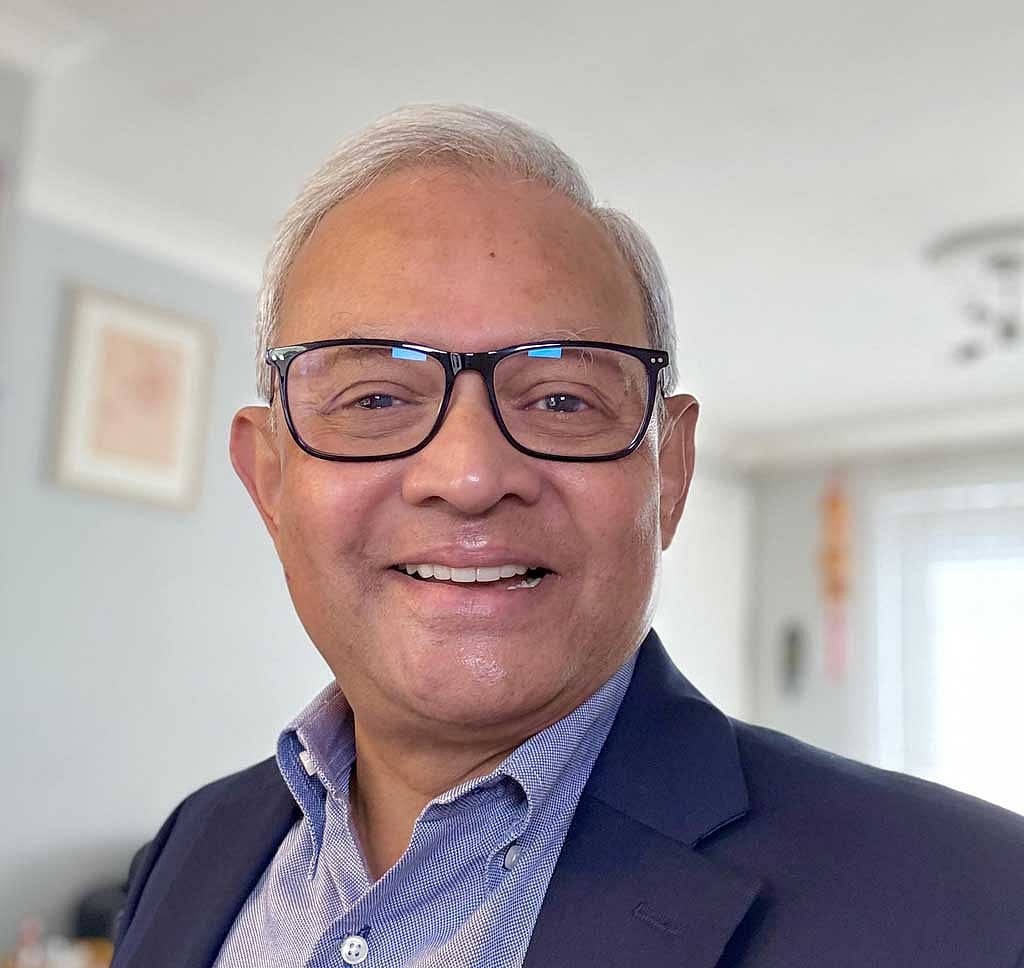
[Sabir Mustafa is a journalist and podcaster]