Published : 25 May 2026, 04:32 PM
Updated : 21 Aug 2026, 03:46 PM


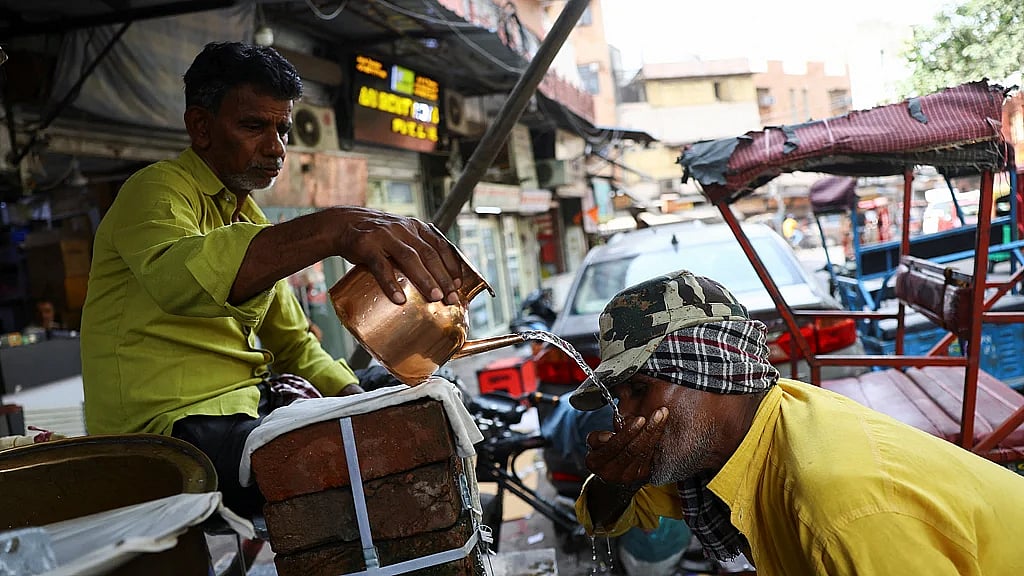
At least 16 people have died from heatstroke in southern India this summer as a heatwave grips large parts of the country, Dawn reports.
All deaths were reported in the southern state of Telangana, with Revenue Minister Ponguleti Srinivasa Reddy calling for "statewide vigilance" to protect public health, the Pakistani daily said.
"The intensity of the heat has reached unprecedented levels," his office said in a statement, adding that officials should issue advance warnings about precautions during heatwaves.
The local government in Telangana advised the elderly, children, and pregnant women to avoid going out during the day unless necessary.
Temperatures across several cities in the country of 1.4 billion people have recently hovered well above 45 degrees Celsius (°C).
Earlier this week, the India Meteorological Department predicted above-normal temperatures and intense heatwave conditions in several parts of the country, the newspaper said.
In the capital New Delhi and nearby cities, temperatures have remained above 40°C throughout the week, pushing power usage to record levels.
High overnight minimum temperatures are also offering little relief.
Health experts say extreme heat can cause dehydration that thickens the blood and, in severe cases, leads to organ failure.
India is no stranger to scorching summers, but years of scientific research have found climate change is making heatwaves “longer, more frequent, and more intense”.
The country's highest officially recorded temperature is 51°C, measured at Phalodi in Rajasthan in 2016.
The world's most populous nation is also the third-biggest emitter of greenhouse gases and relies heavily on coal for power generation.
It has committed to achieving a net-zero emissions economy by 2070, two decades after most of the industrialised West.