Published : 24 Mar 2026, 07:26 AM
Updated : 21 Aug 2026, 03:30 PM


Sleepless nights, loss of appetite, anxiety, and recurring suicidal thoughts -- yet no visit to a doctor.
Instead, “Atoshi” (pseudonym), a 25-year-old graduate, relies on Google and YouTube to self-medicate with sleeping pills bought over the counter.
“I’ve heard psychiatric medicines cause thyroid issues, weight gain, and hair loss,” she told bdnews24.com. “I try to keep myself busy. But at night, when I’m alone, the thoughts return. So I take sleeping pills.”
She is unaware of counselling options and says her friends discouraged her from seeking professional help.
“They say they are there for me. But they don’t have time to really listen. In our society, a psychiatrist means a ‘doctor for the mad’.”
A graduate from a private university, Atoshi left her job last year ahead of marriage plans.
After her three-and-a-half-year relationship ended, she fell into depression.
She says she once went seven days without eating, losing 8kg, and was taken to a traditional healer by her family.
Now living alone in Dhaka, she says: “The thought of suicide keeps coming back. I want to go out, but I have no one to go with.”
Her story reflects a wider crisis.
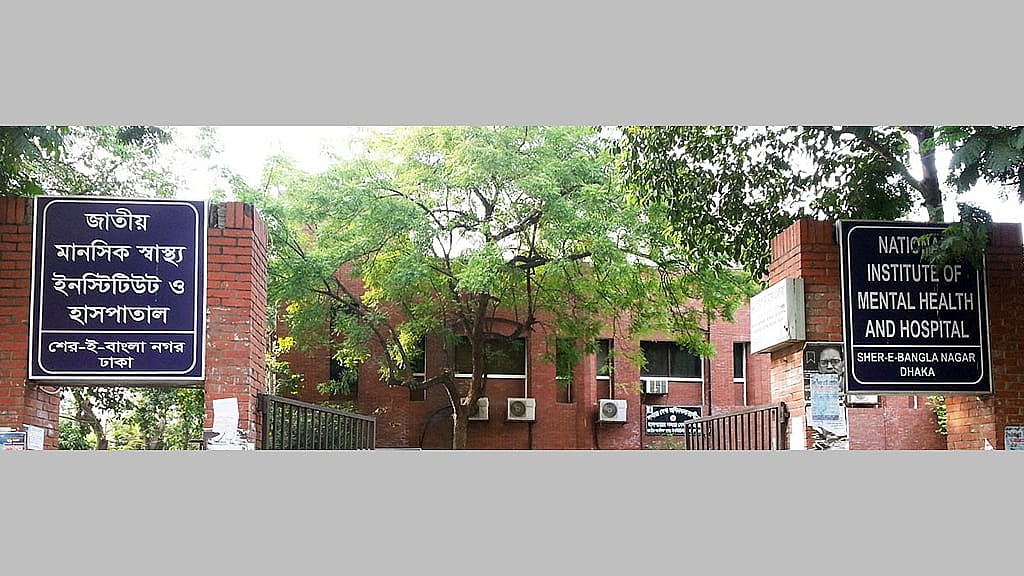
According to the National Institute of Mental Health, 18.7 percent of adults and 12.6 percent of children in Bangladesh suffer from mental health issues -- yet 91 percent of adults and 93 percent of children remain outside treatment.
Experts say the situation is unlikely to improve without urgent intervention.
Prof Kamal Uddin Ahmed Chowdhury of Dhaka University’s clinical psychology department identifies a lack of facilities, awareness, and low budgetary allocation as the primary culprits.
“About 90 percent of services are Dhaka-centric. In many districts, there are only one or two psychiatrists,” he said. “Psychologists are almost unavailable.”
As a result, many turn to traditional healers, believing mental illness is caused by supernatural forces such as spirits or curses.
Social stigma also plays a major role.
“Families feel ashamed. They fear social judgement or problems in marriage prospects, so they try to hide the illness,” he added.
NIMH Director Mahbubur Rahman cited shortages of trained professionals, infrastructure, and awareness.
“Even if awareness increases, services must be available. A patient from a remote area has to travel to a district town -- many will instead choose a traditional healer,” he said.
He also pointed to the limited availability of psychiatric medicines outside major cities and persistent social neglect of patients.
Addressing fears around medication, he said: “Some conditions require long-term treatment. Side effects can be managed or medicines adjusted. Such complications are rare.”
Despite efforts since 2013 to train general physicians under a World Health Organization-supported programme, access remains limited.
Shahriar Ahmed (pseudonym), a public university student, said he has struggled with mental health issues for four years but has not sought help due to financial constraints and difficulty explaining his condition.
“I don’t feel comfortable. Something feels wrong. Sometimes suicidal thoughts come, but I keep fighting,” he said.
A 2024 study by the Aachol Foundation found 79.9 percent of university students reported experiencing depression.

While 38.3 percent said mental health services were available on campus, 35.5 percent said they were not, and 26.2 percent were unaware of any services.
Sheikh Rafiquzzaman, who coordinated the research, noted that mental health remains a taboo in the education system.
“Students aren't taught to recognise symptoms, and teachers aren't trained to provide support. There is a profound shortage of foundations, doctors, and workers in this field,” he said.

What Happens Without Treatment?
Experts warn that ignoring mental health symptoms not only exacerbates individual suffering but also fuels a rise in social intolerance and violence.
Prof Kamal says early treatment of serious mental health conditions can prevent complications and improve recovery.
“In many cases, families fail to recognise the symptoms early, delaying treatment and allowing the condition to worsen. People often try to adjust to mild problems on their own,” he said.
“If depression is addressed early, recovery is possible. Otherwise, the risk of suicide rises significantly. Mental illness also severely reduces a person’s ability to function.”
He warned that a lack of mental health care is contributing to growing intolerance in society.

“People are unwilling to listen to others, resorting to anger and violence to resolve issues. They try to impose their views, and if resisted, react aggressively -- leading to clashes in public spaces. These reflect poor mental well-being,” he said.
According to him, untreated mental health issues can increase suicidal tendencies, substance abuse, and internet addiction among young people, and may lead to involvement in crime, both social and economic.
He outlined warning signs of severe conditions, including hearing voices, excessive or incoherent speech, insomnia, aggression, social withdrawal, neglect of personal hygiene, or extreme behavioural changes.
“Unusual emotional patterns -- such as constant laughter without reason, or persistent sadness with no sense of joy -- are also signs. If these persist, medical attention is necessary,” he added.
Treatment is possible through medication and counselling, with many cases manageable if addressed in time. Severe cases may require long-term care.
NIMH Director Mahbubur said untreated patients may gradually lose quality of life, productivity, and social stability.
“Many patients end up wandering without support or being excluded from society. Early treatment offers a much better chance of recovery,” he said.
Researcher Rafiquzzaman warned that lack of treatment can lead to deep depression, anxiety, panic attacks, and an increased risk of self-harm.
“Even if they do not attempt suicide, individuals may become irritable, aggressive, emotionally withdrawn, and develop long-term trauma,” he said.
Infrastructure Gap
NIMH data reveals a staggering shortage of manpower, with only 0.50 mental health professionals available per 100,000 people.
The country has around 350 psychiatrists (0.17 per 100,000), 565 psychologists (0.34), seven psychiatric social workers (0.004), and 324 occupational therapists (0.18).
There are also 21,267 trained general physicians, 9,400 trained health workers, and 28,165 trained nurses in mental health, along with about 700 nurses working in specialised facilities and 172 speech therapists.
Clinical psychology is taught as a dedicated department only at Dhaka and Rajshahi universities.
While Jagannath University offers a specialised master’s course, it lacks a separate department.
The NIMH itself operates with fewer than 400 staff, despite a proposal to expand to 879 positions, said Administrative Officer Kamruzzaman Mukul.
“The proposal was submitted in March, but progress stalled due to political instability and a change in government. We plan to resume the process,” he said, adding that staff shortages are disrupting treatment and overall operations.
The institute admits around 15 to 25 patients daily. Although 400 beds are approved, only 360 are currently in use due to a lack of staff, alongside 18 observation beds.
Dr Jebun Nahar, responsible for patient admissions, said many patients are unaware that hospitals such as Shaheed Suhrawardy Medical College Hospital, Sir Salimullah Medical College Mitford Hospital, and Dhaka Medical College Hospital have dedicated psychiatry departments.
“As a result, most cases are referred here, creating excessive pressure. We often cannot admit new patients,” she said. “There is no provision for floor admissions. Patients require long-term care, and it takes time to assess their response, so beds are not freed up quickly.”
The Way Forward: Training, Funding, and Awareness
Experts are calling for a multi-pronged approach to bring mental health services to the grassroots, focusing on decentralising care and increasing public investment.
NIMH Director Mahbubur stressed the need to train primary healthcare providers and amplify awareness.
“If we can inform people that services are available at Upazila and district hospitals, patients will come. Local doctors can provide initial care and refer them to us only when necessary,” he said.
Prof Kamal pointed to successful local models.
During COVID-19 pandemic, awareness campaigns in schools and clubs in Jashore, Bagerhat, and Rampal led to a noticeable increase in people seeking professional help.
He advocates for hiring psychiatrists and psychologists at all service centres and training teachers to identify early warning signs.
“Access must be universal. There isn’t a single psychiatrist in Satkhira. People call me asking where to go, and I have to tell them to travel to Khulna or Jashore,” Kamal said.
“For the poor, the cost of travel and the logistics of transporting a mentally ill person are major hurdles,” he noted.
Researcher Rafiquzzaman emphasised the need to bring mental health into public discussion to dismantle the prevailing taboo.
“The lack of discussion means people don’t even realise these are treatable medical conditions. Mental health must be integrated into education policy, and more workforce must be developed. This sector has long been neglected,” he said.
Referring to budget allocations for mental health, Sayedur Rahman, who served as special assistant to former chief advisor Muhammad Yunus, told bdnews24.com that the country faces its most acute shortage in trained personnel.
He added that efforts to raise awareness will be gradually expanded across both general and medical education.