Published : 03 Aug 2026, 06:48 AM
Updated : 08 Sep 2026, 09:29 AM


Measles Deadlock
Daily toll stuck at six: It has barely moved in five months, reaching 837 fatalities and over 128,000 cases by late July
3.9mn children uncounted: Nutrition campaign data reveals millions may have been skipped during national immunisation drives
No national treatment plan: Hospitals are still managing the surge without an officially approved clinical guideline from health authorities
Calls to check immunity: Experts demand urgent antibody testing to confirm whether vaccinated children are genuinely protected
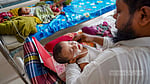
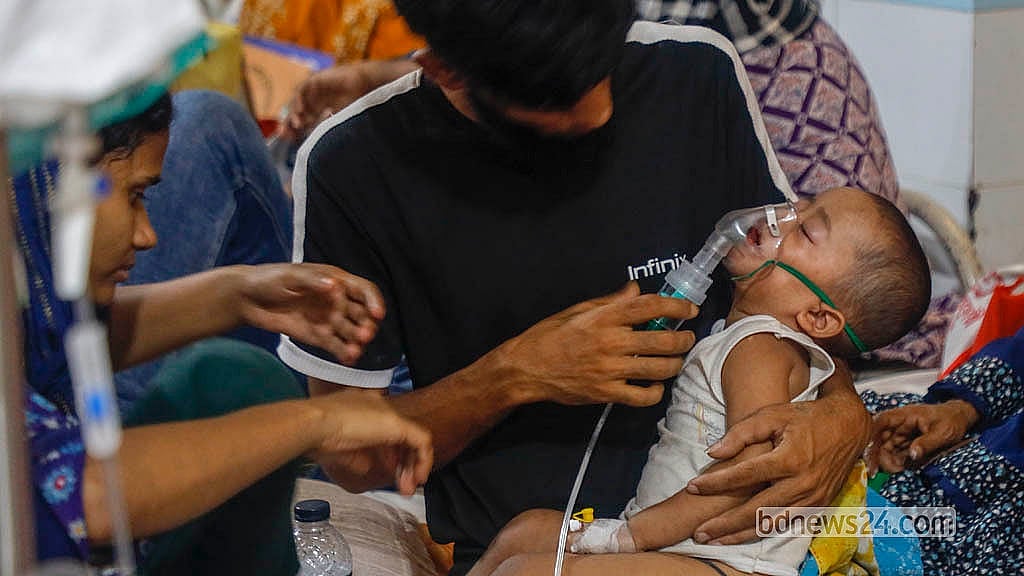
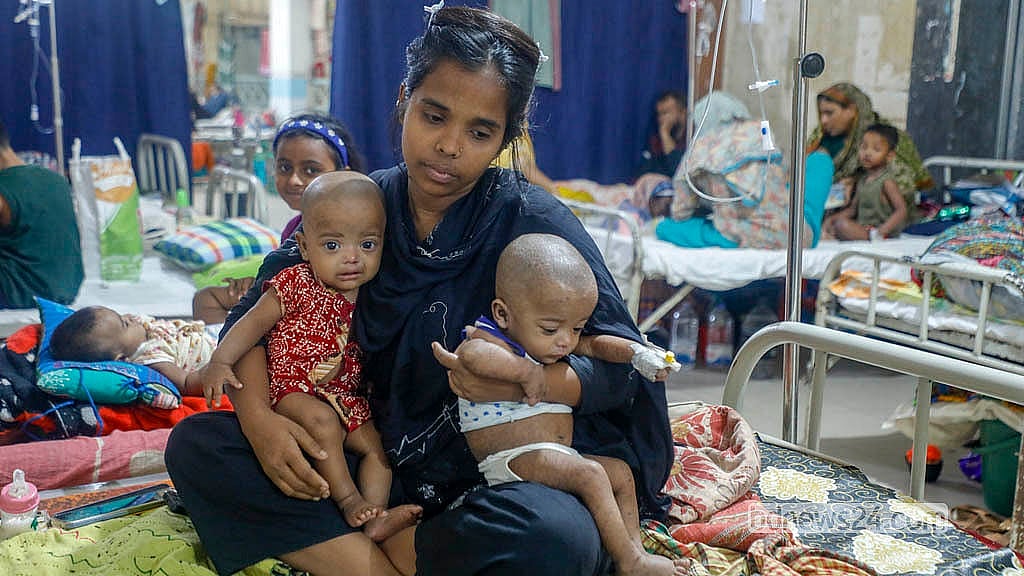
A child survives measles only to slip into pneumonia. Another arrives at a hospital, feverish and struggling to breathe. Across Bangladesh, an outbreak expected to recede after an emergency vaccination drive has instead settled into a grim persistence.
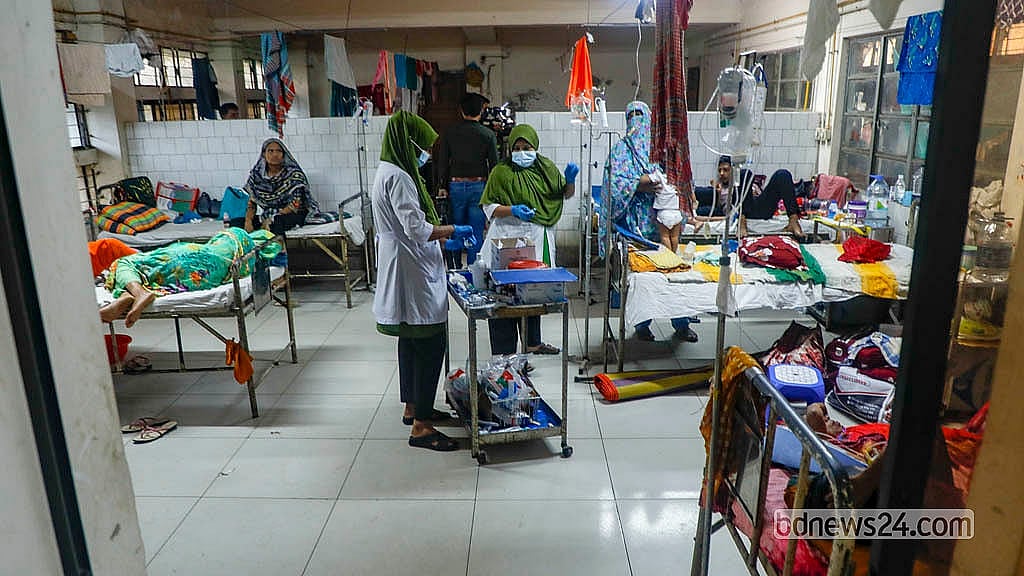
Children are still dying almost every day. Hospitals remain crowded. And nearly five months into the outbreak, the average daily death toll has barely shifted from where it stood in the early weeks.
Why, then, are the deaths not stopping? And why is transmission refusing to fall?
Experts point to gaps in vaccination coverage, weaknesses in the health system and the absence of an approved national guideline for treating measles. They are also calling for antibody tests to determine whether vaccinated children have developed enough immunity to protect them from the disease.
The figures make the concern difficult to dismiss. By Jul 31, Bangladesh had recorded 837 deaths among children with measles or its symptoms, while more than 128,000 patients had been treated at hospitals.
The average daily death toll -- about six -- remains almost unchanged from the outbreak’s first month.
Numbers that Refuse to Bend
The Directorate General of Health Services (DGHS) began publishing regular outbreak figures on Mar 15. By Apr 14, 198 deaths had been recorded, an average of 6.6 a day, alongside 19,361 hospital cases.
A month later, deaths had climbed to 439, averaging 7.3 a day, while cases reached 54,419. By Jun 13, the toll stood at 648 and cases at 84,899.
By Jul 13, 759 people had died and 112,376 had been treated. At the end of July, the toll reached 837, with 128,310 cases -- an average of about 923 patients a day.
Prof Mahmudur Rahman, former director of the Institute of Epidemiology, Disease Control and Research (IEDCR), told bdnews24.com: “Actually, it is not possible to prevent deaths unless the number of infected patients is reduced. Therefore, the first thing that must be done is to ensure correct vaccine coverage.”
The persistence of the outbreak has therefore put the vaccination campaign under scrutiny.
Coverage Conundrum
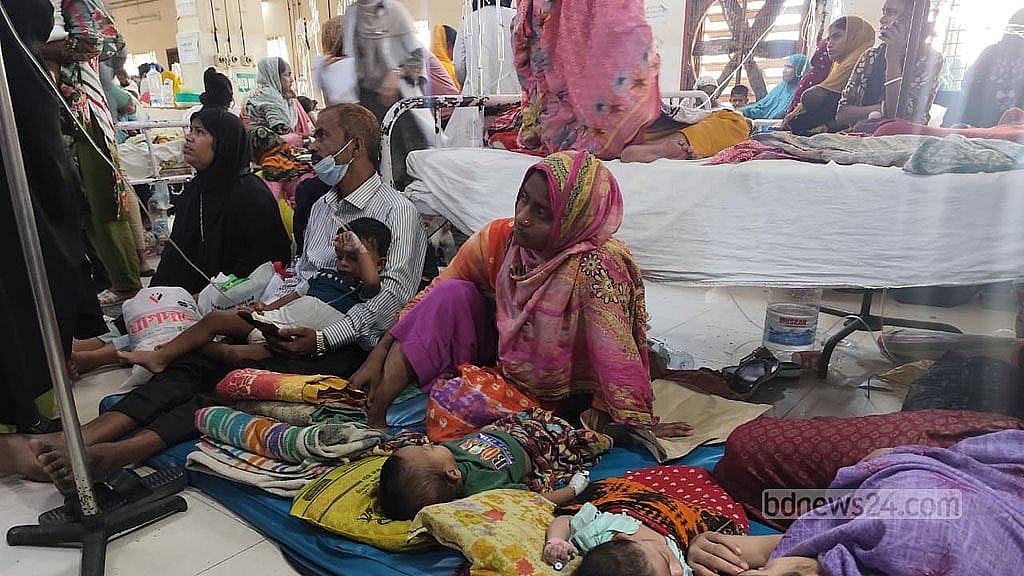
The government began emergency measles-rubella vaccination in 30 high-risk Upazilas on Apr 5, expanded it to four city corporations a week later and launched a nationwide campaign from Apr 20 to May 20.
The health directorate later reported 104 percent coverage, saying 18.7 million children had received vaccines against a target of 18.02 million.
But another government initiative has raised questions over those numbers.
Both measles vaccination and the Vitamin A Plus campaign target children aged six to 59 months. Yet the National Nutrition Institute said 22.36 million children received Vitamin A capsules on Jun 28, compared with 18.47 million recorded as receiving measles vaccines -- a gap of nearly 3.9 million children.
Tajul Islam A Bari, a former EPI programme manager and public health specialist, told bdnews24.com: “The coverage shown by the current government is not correct. Rather, the number of children who received Vitamin A capsules is currently the accurate figure.”
He said the vaccination target itself was outdated.
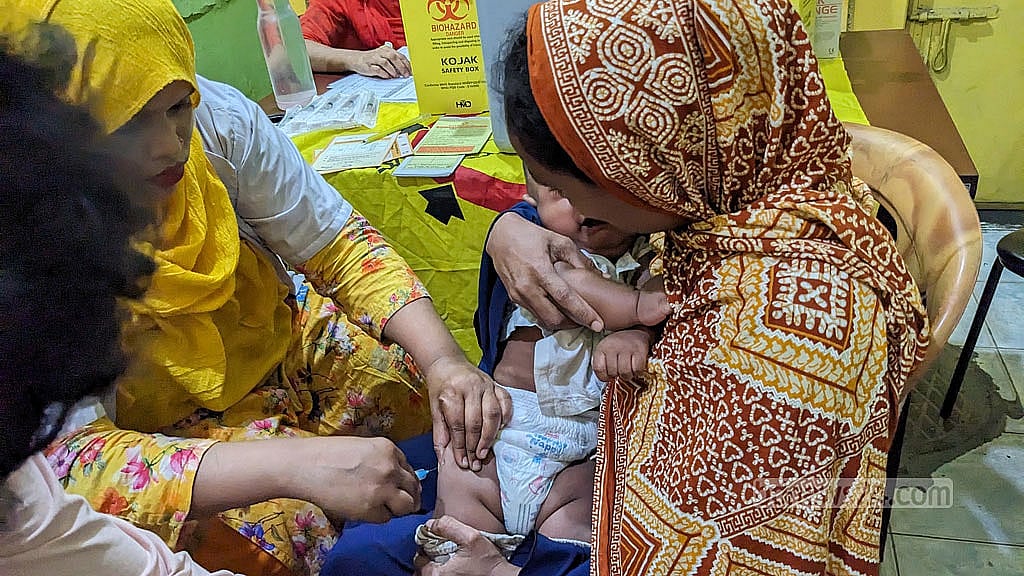
Health Minister Sardar Sakhawat Husain said, “In the past four years, they did not procure the measles vaccines that were supposed to be given. There was no campaign after December 2020. Even when UNICEF requested it, they did not buy the vaccines.
“We are now seeing that 99 percent of the children currently affected by measles are unvaccinated. So this vaccination programme has now been accelerated, and recently more than 100,000 additional children have been brought under it.”
Bari said, “Deaths are not stopping because the vaccine coverage is not correct. Because it is not possible to control measles before bringing at least 95 percent of a population under vaccination.”
EPI Assistant Director Hasanul Mahmud said officials had identified the gap between the two campaigns and informed the minister.
He said a decision would be taken soon, while vaccination remained available and officials were collecting information on children missed by either campaign.
Health System Without a Playbook
The weaknesses extend beyond vaccination, according to public health specialist Mushtuq Husain.
“Some deaths could have been prevented if the health system were better, but this aspect is not good either. Because even now, it has not been possible to make all the people in the country aware,” he said.
He called for children with fever to be isolated and taken to local health facilities if symptoms persist.
“Primary healthcare in the country must be improved. In other words, there must be a healthcare facility between an ICU and the home. This will save patients’ lives while also reducing pressure on hospitals in cities,” he said.
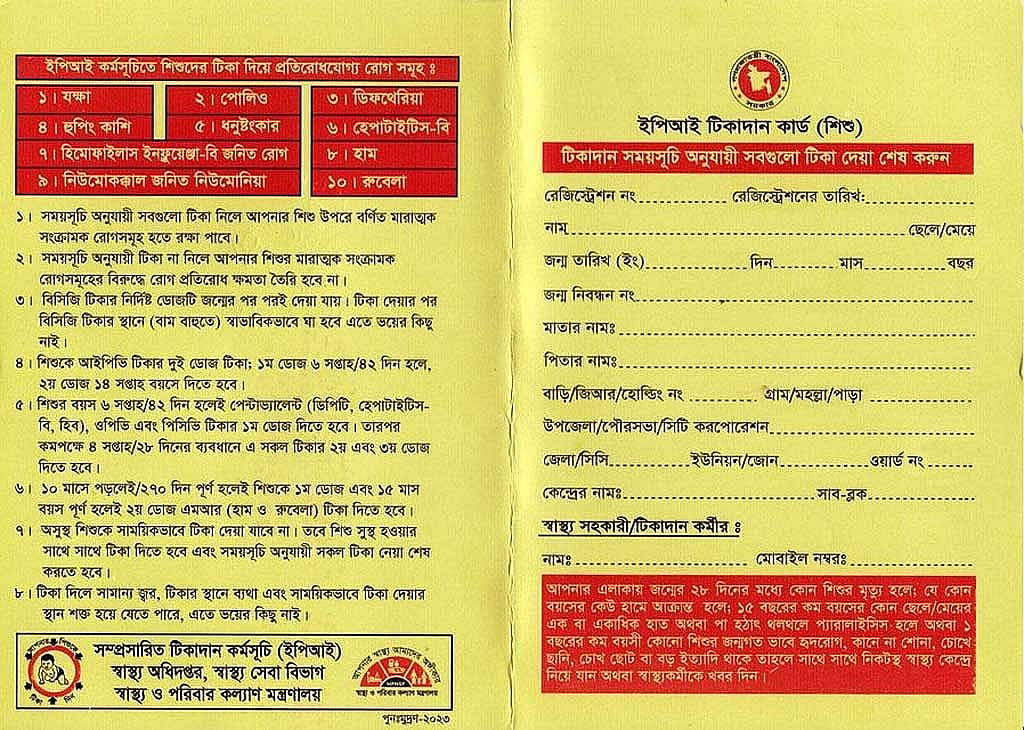
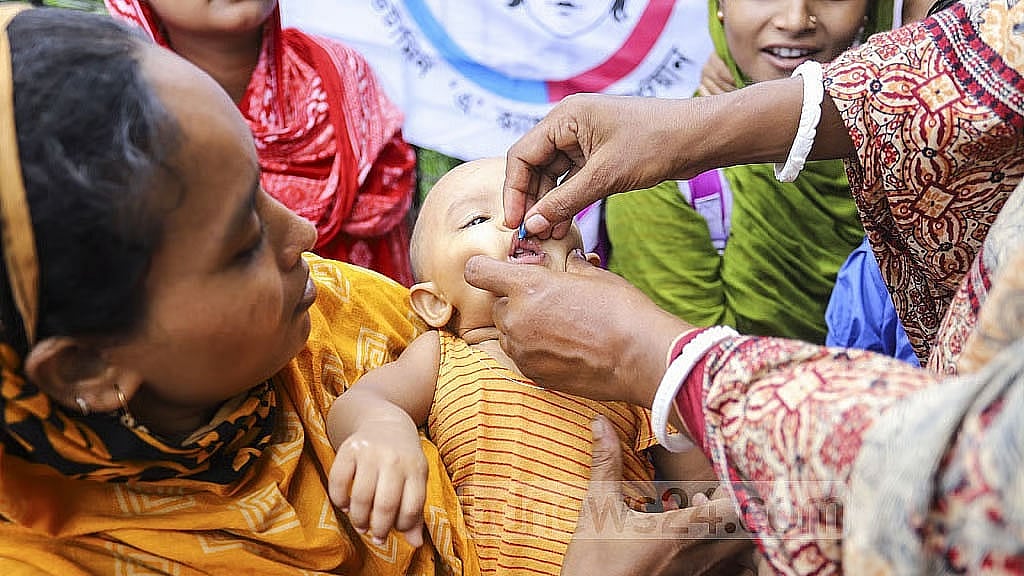
Experts also point to the absence of an approved national guideline for treating measles.
The health ministry formed a technical committee on Apr 27 to prepare such a protocol. Its head, Prof Md Halimur Rashid, said in June that a guideline had been prepared but was awaiting approval.
Zahid Raihan, additional director general of the DGHS, said: “Nothing like that has come to my office so far. So I cannot say.”
Did the Vaccines Actually Work?
With infections persisting despite three vaccination drives, experts are now calling for antibody testing among vaccinated children.
Bari said, “Antibodies develop in children’s bodies within two to four weeks of vaccination. After vaccination, if the level of antibodies in a child’s blood is 120ml according to international standards, it will provide protection against measles.
“It is possible to verify this by collecting blood samples from different parts of the country. If this can be done, it will be good for the future.”
He added that antibody levels could be significantly higher after a child recovers from measles.
A public health expert who declined to be named said institutions including the IEDCR, icddr,b and Institute of Public Health could conduct such testing. But there is still no clear government plan or budget for it.
Mahmudur said, “But considering the measles outbreak, unless the maximum possible work is done through a meeting of experts now, it will be difficult to improve the situation further.”
Experts See Official Neglect
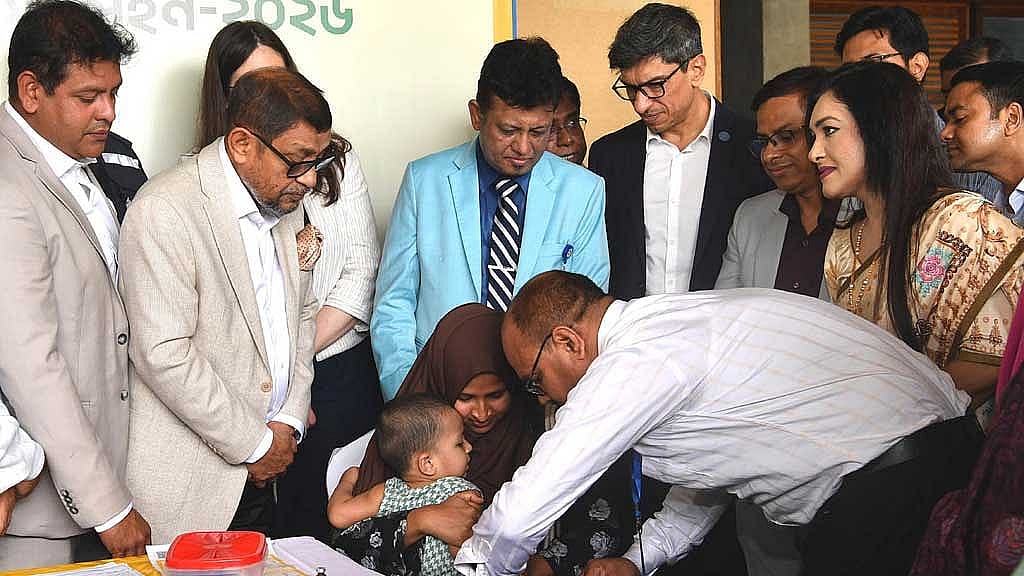
Prof Be-Nazir Ahmed, a former chief scientific officer at the IEDCR, said the decision to vaccinate another 100,000 children itself showed that coverage was incomplete.
“At least 95 percent of children in the specified age group must be brought under vaccination, otherwise this infection will not stop until the children who have been missed contract measles,” he said.
He called for an intensive campaign to find unvaccinated children, including door-to-door awareness drives.
Mahmudur was more blunt: “The situation has reached this stage, and the government is not paying enough attention.”
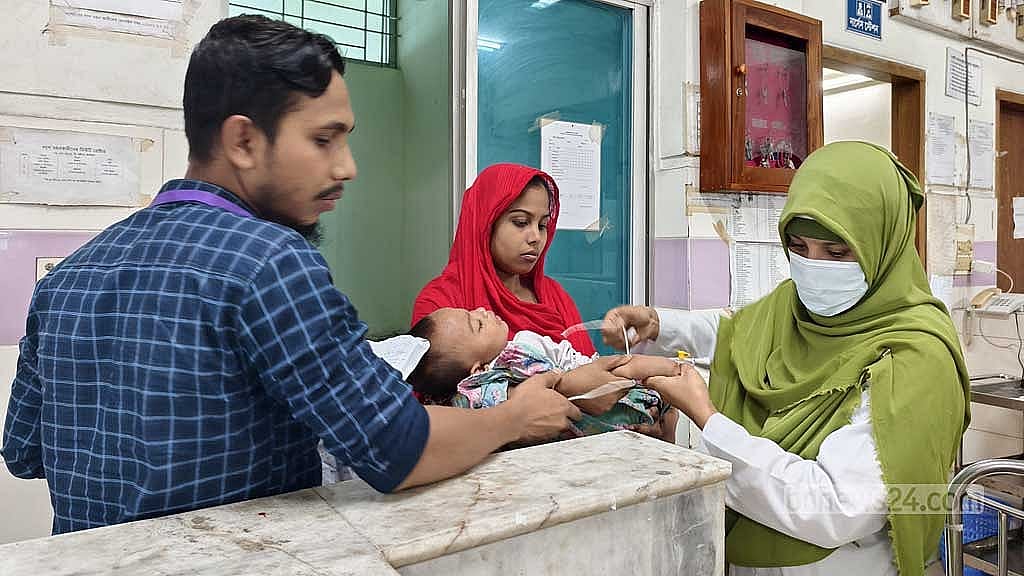
He called for experts to be brought together to devise a stronger response, including measures for infected infants and older children.
“Children under 6 months are being infected in the country, and a different arrangement must be made for them. Again, since the infection is not stopping, those above the specified age must also be brought under vaccination.
“There are also some other technical issues that must be addressed with the highest priority, taking expert opinions into account. Without these, it is not possible to improve the situation.”