Published : 20 Aug 2026, 07:14 AM
Updated : 08 Sep 2026, 09:34 AM


Measles and Mutated Threats
Lethal interplay: Measles disables young immune systems, leaving infants highly exposed to co-infections
Adenovirus threat: Over half of critically ill children tested in Dhaka showed dangerous adenovirus co-infections
Immunity deficit: Vaccine coverage remains below the essential 95 percent mark required to ensure herd immunity
Why are children still dying from measles, a vaccine-preventable infectious disease? And could other infections be pushing children already weakened by measles towards death?
As those questions persist, doctors say co-infections with other viruses and bacteria may be worsening the condition of measles patients. Adenovirus has already been detected in some children.
Some experts believe controlling the measles outbreak itself could weaken many of the other risks confronting patients.
The Directorate General of Health Services (DGHS) has obtained detailed information on more than 300 deaths involving children with measles symptoms.
Analysis shows many also suffered complications including pneumonia and bronchopneumonia, sepsis, meningitis and encephalitis.
Such conditions can be caused by bacteria, viruses, fungi or other pathogens.

Prof Mahmudur Rahman, former director of the Institute of Epidemiology, Disease Control and Research (IEDCR), told bdnews24.com: “Adenovirus and some other viruses do not have specific treatments. And when multiple viruses attack the body, they can cause complications.
“However, we have to control the main factor causing the patient’s condition to deteriorate. At present, the first priority must be to control the measles situation. If we do that, the other factors will naturally weaken. So we must not lose focus on controlling the main problem or disease.”
The first measles cases were detected in Bangladesh in January, although the government began publishing official data on Mar 15.
Despite vaccination, confirmed measles deaths nationwide are nearing 100, according to government figures, while more than 800 children have died with measles symptoms.
As cases and deaths rose, the government launched emergency vaccination in 30 high-risk Upazilas on Apr 5 for children aged 6 months to 59 months. The campaign expanded to four city corporations on Apr 12 and nationwide on Apr 20, ending on May 20.
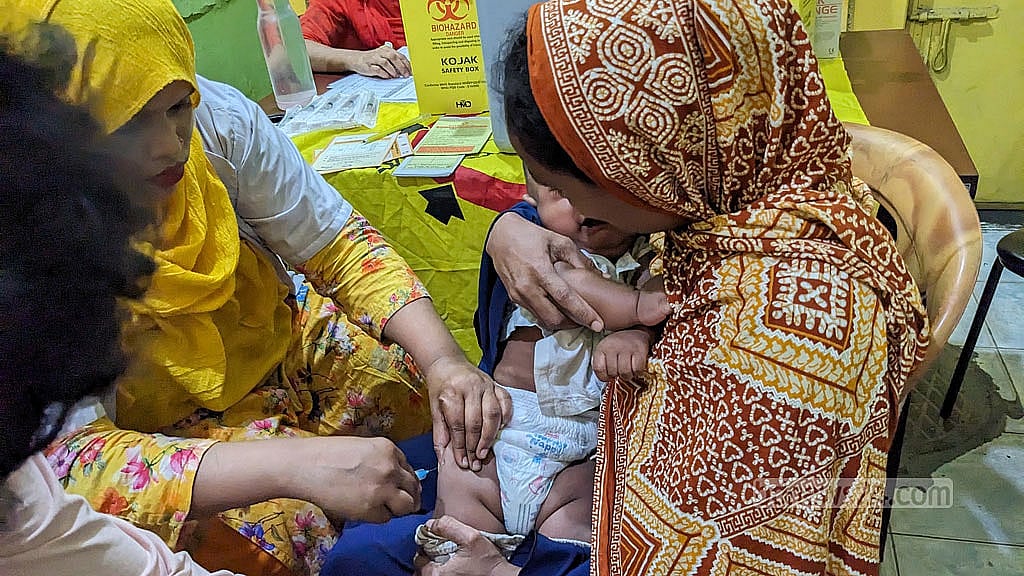
The latest health directorate data show 19.36 million children received vaccines, exceeding the campaign target of 18.02 million.
Experts had already questioned the government’s claim that more than 100 percent of targeted children had been vaccinated.
During the June vitamin A campaign, the number of children aged 6 to 59 months was put at 24 million, creating a gap of about 5.5 million between the targets of the two campaigns.
Public health and immunisation expert Tajul Islam A Bari argued that measles vaccine coverage was only 76.66 percent.
“Achieving herd immunity requires 95 percent vaccine coverage. We are about 18 percentage points short of that. That is why measles transmission is not declining. Children need to be vaccinated quickly.”
The government has continued saying missed children would be vaccinated. On Sunday, an inter-agency coordination committee on immunisation decided to vaccinate 1.6 million children who had been missed across the country.
Adenovirus Detected
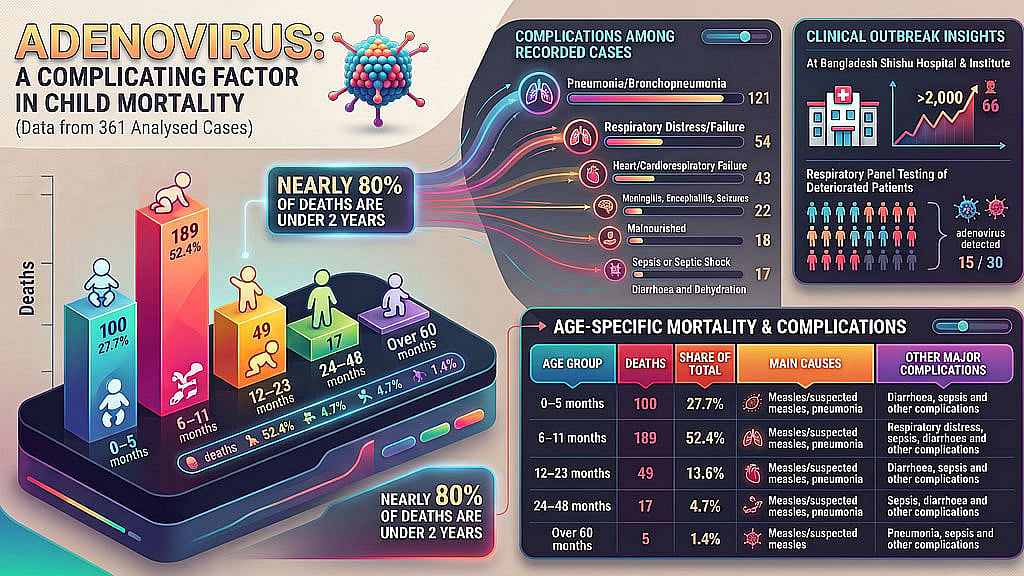
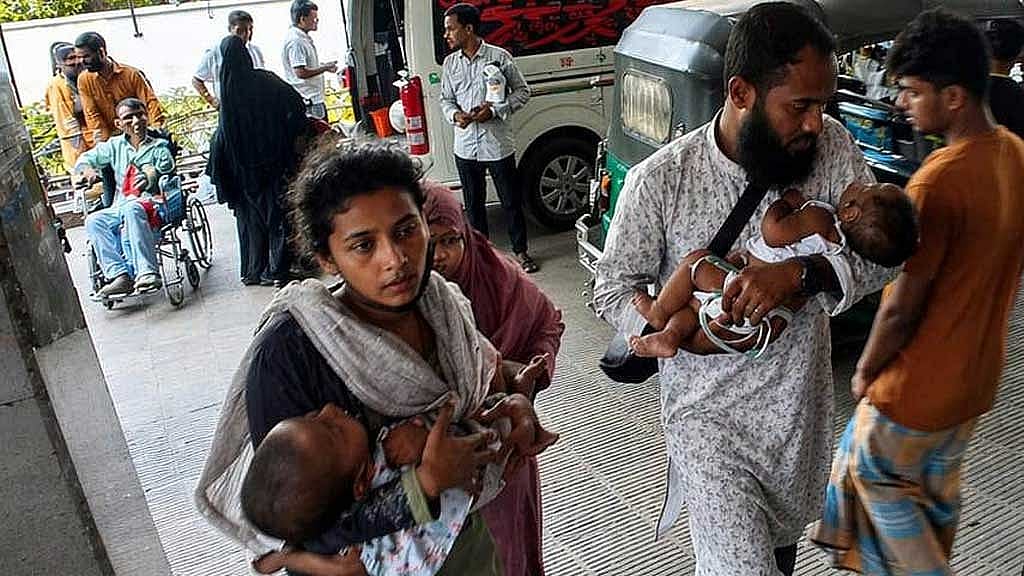
Of 361 children whose detailed records have been analysed, 189 deaths -- 52.4 percent -- were among those aged 6 to 11 months. Another 100 were aged zero to 5 months, accounting for 27.7 percent.
Forty-nine children aged 12 to 23 months died, while 17 were aged 24 to 48 months and five were older than 60 months. Nearly 80 percent of the children were under 2.
Among the recorded complications, 121 children had pneumonia or bronchopneumonia, 54 had respiratory distress or failure, 43 suffered heart failure or cardiorespiratory failure, 18 had sepsis or septic shock, 22 had meningitis, encephalitis or seizures, 17 had diarrhoea and dehydration, and 21 were malnourished.
|
Age |
Number of deaths |
Share of total |
Main causes/complications |
Other major causes |
|
0–5 months |
100 |
27.7% |
Measles/suspected measles, pneumonia |
Diarrhoea, sepsis and other complications |
|
6–11 months |
189 |
52.4% |
Measles/suspected measles, pneumonia |
Respiratory distress, sepsis, diarrhoea and other complications |
|
12–23 months |
49 |
13.6% |
Measles/suspected measles, pneumonia |
Diarrhoea, sepsis and other complications |
|
24–48 months |
17 |
4.7% |
Measles/suspected measles, pneumonia |
Sepsis, diarrhoea and other complications |
|
Over 60 months |
5 |
1.4% |
Measles/suspected measles |
Pneumonia, sepsis and other complications |
Since the outbreak began, more than 2,000 measles patients have been treated at Bangladesh Shishu Hospital and Institute, where 66 have died.
Thirty children whose conditions deteriorated underwent respiratory panel tests. Adenovirus was detected in half of them.
Several doctors from the hospital presented the findings on measles and adenovirus co-infection at a Jun 23 meeting of the health directorate. Senior health officials, doctors from different hospitals, measles specialists, UNICEF representatives and officials from icddr,b attended the meeting.
Prof Mirza Md Ziaul Islam, director of the hospital, said the tests were conducted on children whose conditions remained complicated or failed to improve.
“We conducted the specialised tests on children whose physical conditions had continued to deteriorate or were not improving. We found a particular pattern.
“However, this test cannot be conducted everywhere and is also somewhat expensive. Drawing on our long experience, we were looking for possible new causes of the complications, and that is how we detected adenovirus.”
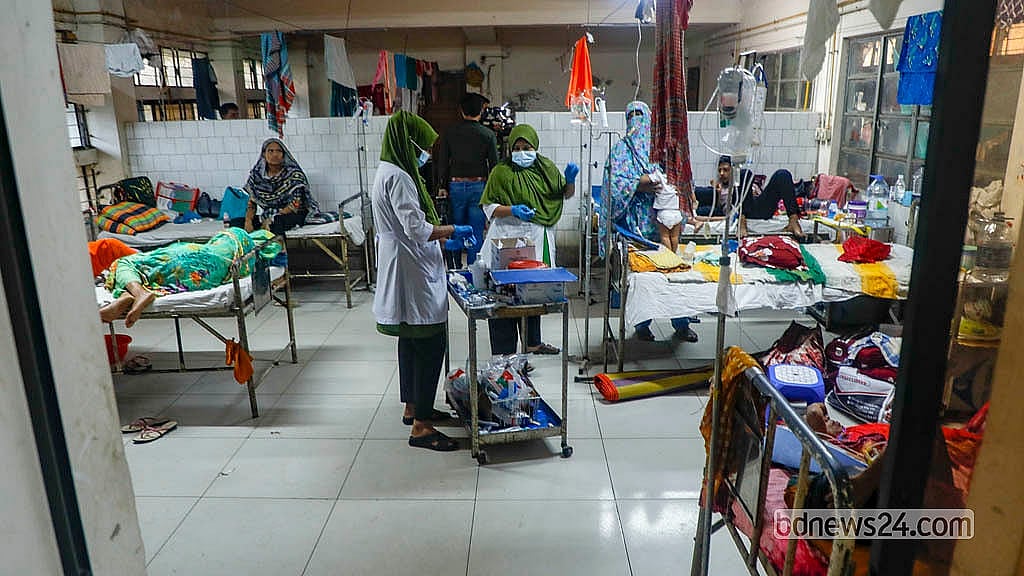
He said malnutrition and measles can severely weaken children’s immune systems, allowing viruses and bacteria to enter easily and cause bronchopneumonia, sepsis and other complications.
Dr Ziaul said adenovirus was currently contributing to complications in children with measles. While adenovirus is generally harmless, it can cause a range of complications when it enters the body of someone suffering from measles. Human bocavirus and cytomegalovirus were also contributing to complications, he said.
Dr Zahid Raihan, additional director general of the health directorate, said deaths where measles had not been confirmed were initially classified as suspected measles.
“We have classified those whose tests did not confirm measles since the beginning of the outbreak as suspected cases. However, there are no longer such deaths.”
He said many children were now dying from “pure pneumonia”, but doctors sometimes classified them as suspected measles because they did not obtain a clear account from families about the child’s condition before reaching hospital.
“There has been discussion about removing this category of suspected measles deaths. But no decision has been made yet.”
But Mushtuq Husain, former chief scientific officer at IEDCR and a public health expert, said measles patients were dying not only from pneumonia, fever and colds but from a range of complications.
“Patients are not dying only from pneumonia, fever, cough or colds. They are dying after developing measles and a range of other complications.”
He warned against concealing information or presenting different figures during an epidemic.
“Information should not be concealed or different information presented during an epidemic. That is harmful for the future and undermines the credibility of institutions.”