Published : 05 Sep 2026, 10:26 PM
Updated : 16 Sep 2026, 11:47 AM


A ghost story Rubaiyat Hossain heard as a child in a Dhaka beauty parlour has followed her for nearly two decades.
Now it has reached Venice.
The Bangladeshi filmmaker has turned that memory into “The Difficult Bride”, a supernatural drama about beauty, marriage and the expectations imposed on women, which is competing in the Orizzonti section of the Venice International Film Festival.
Variety has unveiled a new clip from the film alongside an interview with Hossain as it begins its Venice run, offering a closer look at a project whose roots lie in Mayfair, one of Dhaka’s longstanding beauty parlours.

Hossain was around seven when, while visiting the salon with her mother, she heard a story about a bride who had died there.
The image stayed with her.
“It was in sepia for some reason,” she told Variety, recalling how vividly she imagined the story as a child.
Over time, that memory became the seed for a film about something larger: the rituals surrounding marriage and beauty, and what happens when a woman’s body begins to resist what is expected of it.
“The Difficult Bride” follows Zaineen, a bride-to-be in Dhaka who is looking forward to her wedding but becomes increasingly uncomfortable with the preparations intended to make her thinner, fairer and more conventionally “bridal”.
As home remedies, makeovers and family expectations pile up, her body begins behaving in disturbing ways and the familiar gives way to haunting visions, animals and the supernatural.
The Venice festival describes her journey towards marriage as a physical and psychological struggle against what is being imposed on her.
For Hossain, the pressures do not come from men alone.
She told Variety that women can themselves be among the strongest “upholders and sustainers of patriarchy”, participating in the very system that restricts them.
That tension runs through the film’s world of elaborate bridal rituals, beautiful homes and considerable privilege.
Hossain describes “The Difficult Bride” as the final part of an unofficial trilogy examining Bangladeshi women across different social classes.
“Under Construction” centred on a middle-class woman, while “Made in Bangladesh” followed a working-class garment worker.
This time, Hossain turns to the wealthy world of Dhaka’s Gulshan and Baridhara.
Yet wealth does not necessarily bring freedom.
“Even in this gilded cage, even with all these privileges, you can’t be free,” Hossain told Variety.
The idea echoes the director’s statement published by Venice, in which she says that growing up in Bangladesh made her acutely aware of how women’s bodies, desires and movements are constantly observed, regulated and judged.
She began developing “The Difficult Bride” as a short film in 2006 and continued rewriting it as her own life changed.
Eventually, she says, realism gave way to dreams, ghosts and urban myths, allowing her to explore the contradiction between the elaborate rituals of femininity and an instinctive self that wants to remain untamed.
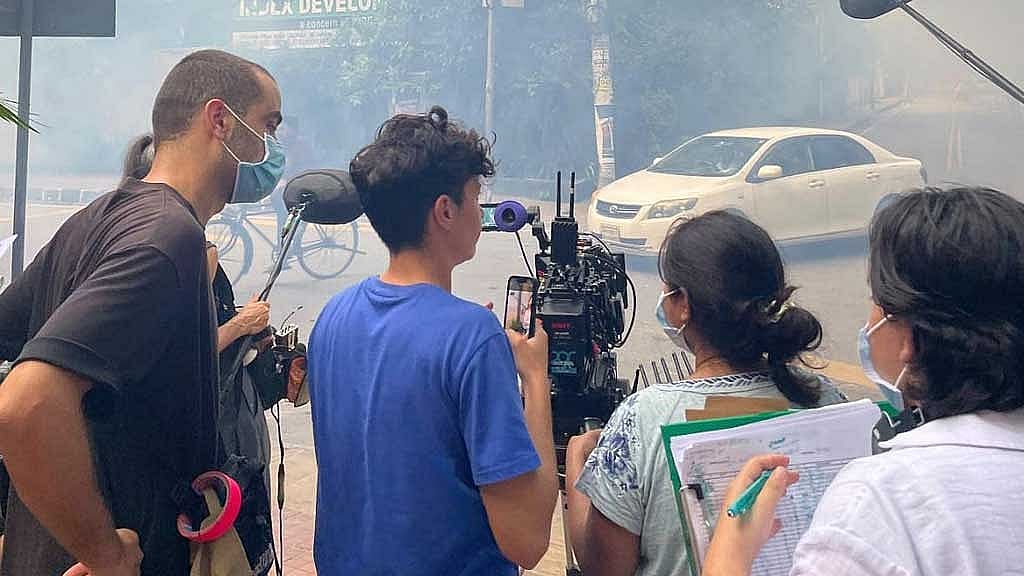
Much of the film was shot inside Hossain’s own home, where familiar surroundings became part of an emotional landscape in which memory, dream and reality could blur.
The production also produced an unexpected lead actor.
Zaineen Chowdhury Karim had originally been working as Hossain’s assistant director. But after changes to the cast amid Bangladesh’s upheaval in July 2024, Hossain began considering her for the central role.
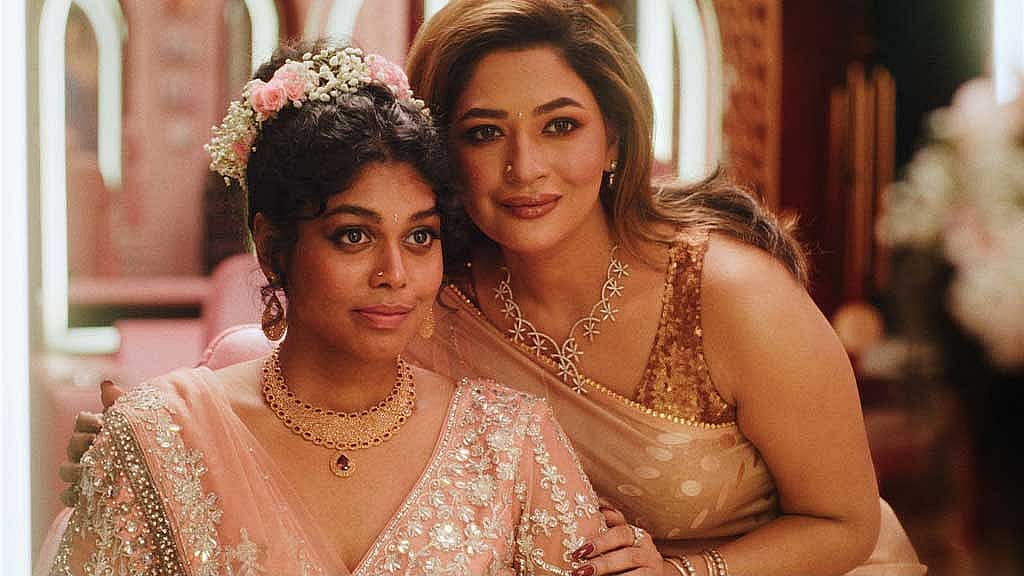
She told Variety she auditioned Karim repeatedly — as many as 20 times — before finally casting her.
Karim now leads an ensemble that includes Rikita Nondine Shimu, Sunerah Binte Kamal and Azmeri Haque, alongside Saberi Alam, Shatabdi Wadud, Dameer Khan and Mohammed Bari.
The 88-minute film is a France-Bangladesh-Portugal-Norway-Germany co-production and received support from the Fondazione Prada Film Fund. Films Boutique is handling international sales.
Its Venice appearance marks a significant moment for Bangladeshi cinema: “The Difficult Bride” is the first Bangladeshi feature to compete in the festival’s Orizzonti section.
It has press and industry screenings on Sept 5 before its first public screening at Sala Darsena on Sept 6, with further screenings scheduled for Sept 7.
After Venice, the film is also headed to Toronto and the BFI London Film Festival.
Hossain, who teaches part-time at Smith College in the US, is already looking ahead. Her next film is set in Lisbon and follows an undocumented Bangladeshi woman who migrates after a cyclone. She is also developing a television adaptation of J Courtney Sullivan’s novel “The Cliffs”.