Published : 09 Sep 2026, 07:12 AM
Updated : 16 Sep 2026, 11:48 AM


Requiem or Revival?
Choked beyond rescue: Oxygen drops near zero as microplastics, heavy metals and sewage kill marine life
A web of contamination: Over 400 toxic outlets continuously dump waste into the capital's waterways
One month to conform: Polluters face imminent fines and factory closures under a strict navy crackdown
Beyond fines and raids: Lasting river revival demands total industrial compliance and social mindsets
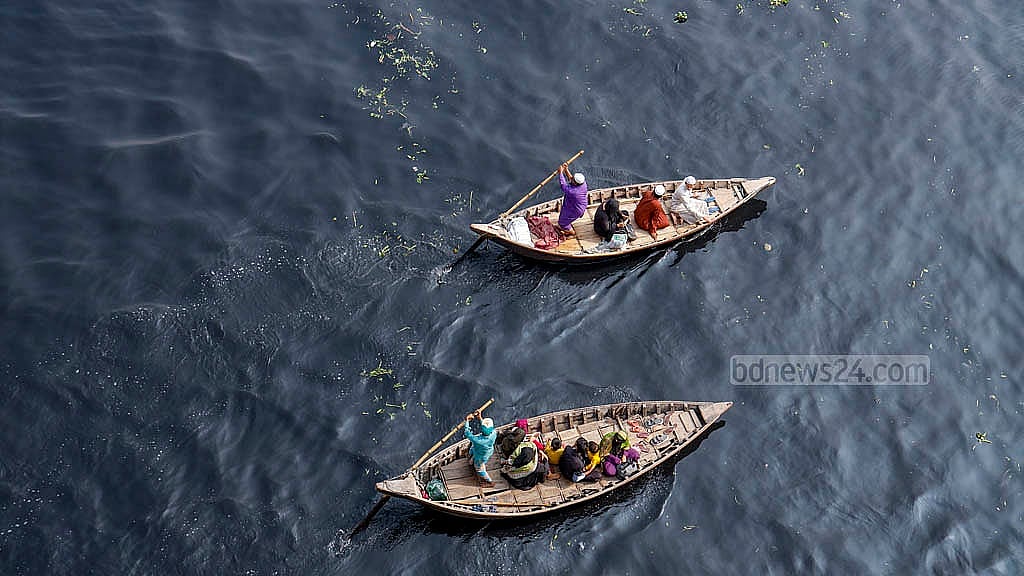
Dhaka grew around the Buriganga, drawing life from its waters and commerce from its banks. Decades of unchecked waste have turned that lifeline into a river where even fish struggle to survive.
The transformation has become so stark that even the State Minister for Environment Shaikh Faridul Islam says he feels uncomfortable calling it a river.
To him, it has become closer to a reservoir -- or a drain.
A professor at Bangladesh Agricultural University paints an even grimmer picture: there is not enough dissolved oxygen in the water for fish to survive.
Native fish have all but disappeared, with only sucker fish -- an introduced fish that feeds on waste -- still being found.
And the Buriganga is far from alone. The Turag, Balu, Shitalakkhya and Dhaleshwari -- rivers that surround Dhaka -- are all struggling under the weight of untreated waste.
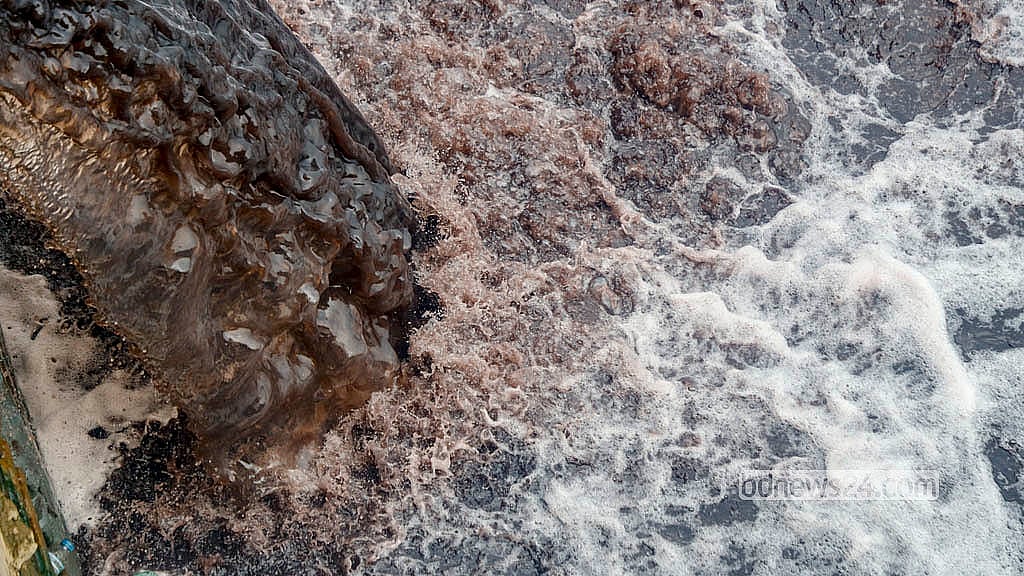
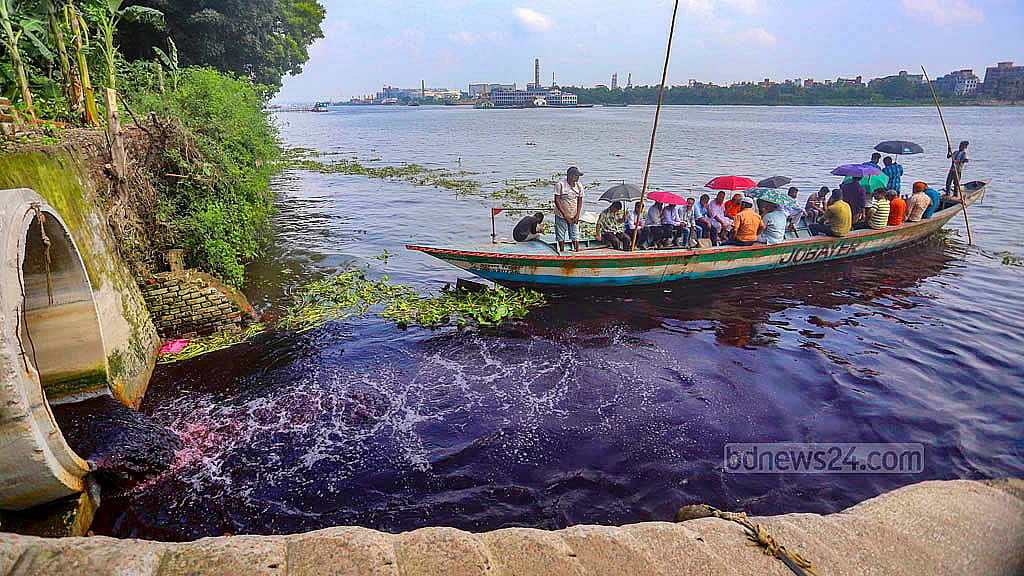
The Bangladesh Inland Water Transport Authority (BIWTA) has identified 424 outlets through which waste is discharged.
Of these, 66 have been identified as Dhaka WASA outlets. Another 244 were linked to privately owned and private industrial establishments, as well as the two city corporations.
A survey found 224 waste outlets along the Buriganga and Turag -- 166 on the Buriganga and 58 on the Turag.
“The situation is truly terrible,” said Inamul Haq Khan, senior vice-president of the Bangladesh Garment Manufacturers and Exporters Association (BGMEA), describing the two rivers as waterways where the water no longer moves and has turned almost like mud.
Experts say shutting identified waste outlets must go hand in hand with greater public awareness if the rivers are to be brought back to life.
A River Pushed to the Brink
A meeting on “Development of the Buriganga River’s Water and Environment” was held at the Secretariat on Aug 6.
Prime Minister Tarique Rahman ordered an integrated action plan to prevent pollution in the Buriganga, Turag, Balu, Shitalakkhya and other rivers around Dhaka.
The meeting stressed effective operation of effluent treatment plants (ETPs) in industries, improving canals and drainage systems, regular drives against polluters, stronger enforcement of existing environmental laws, better coordination among government agencies, and greater public awareness and civic participation.
Prof Muhammad Shahjahan of Bangladesh Agricultural University’s Department of Fisheries Management said a study of the Buriganga found extensive microplastics and dangerously poor water quality.
“Primarily, a study of the Buriganga River found that there is a lot of microplastics there. Besides, the levels of dissolved oxygen, biochemical oxygen demand and chemical oxygen demand are all at levels where fish cannot survive. In addition, heavy metals such as cadmium and mercury have also been found extensively.
“That is why it can almost be said that there are no fish. Only an introduced fish -- called sucker fish, which eat dirt and waste -- has been found.
“The Arial Beel is becoming polluted because of the Buriganga. The Buriganga is connected to the Shitalakkhya, and the Shitalakkhya is connected to the Arial Beel. The condition of the Buriganga is very bad; it is one of the most polluted rivers in Bangladesh.”
BUET Prof AKM Saiful Islam said the identified outlets offer a crucial point of intervention.
“Dhaka’s total environment, particularly river pollution, is so poor that Bangladesh ranks at the lower end of the indices used to measure a healthy city.
“It rains so much, there are so many rivers, yet this is the situation because of the water entering the rivers, particularly at these points. We saw that the points have been identified in the report. We have to see where the source is; if we can stop the source, the environment will improve.”
The water and flood management expert said enforcement alone would not deliver lasting results.
“No one can remove these points; physically, they exist. Where they come from is something the Department of Environment, district administration and law-enforcing agencies have to address. Raids reduce it to some extent.
“It can be reduced considerably through fines under existing laws. But for long-term benefits, people actually have to be made to understand. The mindset has to change.”
Faridul said the government would initially focus on the 38-km stretch of the two rivers -- 15km of the Turag and 23km of the Buriganga.
“We will first work mainly on two rivers… Turag is 15 kilometres, Buriganga is 23 kilometres. We will work on a total of 38 kilometres of river.
“At the same time, our drives elsewhere will continue. We will identify all those within these 38 kilometres and give them time; first, we will fix these.”
He said the government would subsequently work with other ministries on the Shitalakkhya, Balu and Dhaleshwari, while Department of Environment teams were conducting regular drives.
“Alongside environmental laws, we will try, with the help of the Navy, to properly address these places and shut them down as quickly as possible. Because unless the sources are closed, the river water cannot be restored. ...The overall condition of the river water is not good.”
A Navy report presented on Aug 13 found the Buriganga’s dissolved oxygen had fallen dangerously low.
A healthy aquatic environment requires at least 5 milligrams per litre, but the river’s average level is now 1.70-2.68mg per litre, falling to around zero or below 1 mg per litre in some areas during the dry season.
The report assessed the rivers as follows:
● Turag: Environmentally critical, with industrial waste, sewage and plastic as the main pollutants.
● Buriganga: Extremely critical because of tannery, sewage, industrial and market waste, oil and black sludge.
● Dhaleshwari: Highly vulnerable, with industrial waste, heavy metals and pathogens as the main pollutants.
|
Parameter |
Ideal standard |
Buriganga current level |
Assessment |
|
Dissolved oxygen |
>5 mg/l (ideal 6-8) |
1.70-2.68 mg/l |
Far below minimum; high risk |
|
Biochemical oxygen demand |
<3 mg/l (maximum 6) |
10.67-13 mg/l |
1.2-2.2 times above acceptable limit |
|
Chemical oxygen demand |
<5 mg/l |
31.56-53.44 mg/l |
6.3-10.7 times above ideal; highly polluted |
Experts say the Buriganga, Turag and Dhaleshwari should be treated as parts of the same water system. Since the Dhaleshwari flows mainly southwards, the initial focus is on stopping pollution in the Buriganga and Turag.
Pollution Hotspots
The pollution does not come from a single point. It enters the Buriganga and Turag through a sprawling network of industrial areas, drains, markets, ports and settlements along their banks.
On the Buriganga, the identified hotspots stretch across both the northern bank, facing Dhaka city, and the southern bank in Keraniganj.
They include Sadarghat Launch Terminal, Babubazar Bridge, Ahsan Manzil, Zinjira, Wiseghat, Kaliganj in Keraniganj, Badamtoli Ghat, Aganagar, Farashganj, Kalindi, Shyambazar, Islampur, Charkaliganj, Chawk Bazar, Hasnabad, Lalbagh, Kadamtali in Keraniganj, Kamrangirchar, Tegharia and Hazaribagh.
Other identified pollution points lie along the riverside around Zinjira, in central Keraniganj, near the Armenian Church, around Basta Ghat, and at Bara Katara, Chhota Katara and Raysahib Bazar, as well as other riverside areas of Keraniganj.
The Turag has its own chain of pollution hotspots, beginning around Konabari BSCIC-Baimail and the Kashimpur-Eshrakandi industrial zone. The identified areas include Kodda and Kodda Bazar, the Kamarpara-Rustampur corridor, Arichpur-Machimpur-Tongi Bazar, Tongi river port and the Tongi railway bridge.
Further along the river are the Gazipura-Barabari-Shukundirbagh area, the canals and estuary around the Nimtali-Majukhan bridge, the Tongi Canal-Turag junction, the Squib Road industrial cluster and the Millgate Road dyeing and washing cluster.
Other hotspots include the Ashulia-Beribandh riverside, Gabtoli-Nowabherbagh and the stretch from Mirpur Beribandh to Mirpur Bridge.
Behind these hotspots are 224 identified waste-discharge outlets along the two rivers -- 166 on the Buriganga and 58 on the Turag.
Private and individually owned factories and industrial establishments account for 107 of the outlets: 81 on the Buriganga and 26 on the Turag.
Dhaka WASA has 57 outlets discharging into the Buriganga and nine into the Turag.
Dhaka South City Corporation has 19 outlets on the Buriganga, while Dhaka North City Corporation has one on the Buriganga and 15 on the Turag.
Several other public bodies are also linked to the discharge points. On the Turag, three outlets belong to Gazipur City Corporation, three to Kaundia Union Parishad and one to the Water Development Board.
On the Buriganga, three outlets are linked to Kutubpur Union Parishad, one to Zinjira Union Parishad, two to Kalindi Union Parishad and two to Shakta Union Parishad.
The numbers make clear how diffuse the problem has become. The Buriganga and Turag are not being poisoned by one factory, one drain or one authority, but by a web of discharge points spread across the river system -- making the government's promise to stop the pollution at its source both necessary and daunting.
A Month Before the Crackdown
After meeting the premier, Principal Secretary ABM Abdus Sattar formed two teams: one for monitoring and another for implementation, with representatives from the navy, city corporations, environment authorities and relevant ministries.
Faridul said discussions with BGMEA, BKMEA, BTMEA and the Bangladesh Garments Washing Industries Association had produced a positive response.
“The positive sign is that everyone has agreed on one thing -- the associations will not make any recommendation regarding those who do not have ETPs or are operating illegally. At the same time, the issue was raised that those who do not have ETPs and are discharging waste should not be blackmailed.”
He said the government had agreed.
The minister said discussions with stakeholders would continue and that a directive could come next week.
“Maybe next month we will have to move to the stage of fines or closing factories that are not installing [ETPs]. For now, we are giving them space, a certain amount of time, about a month -- those who do not have one should install it within that time. And regarding those who have installed one but are not operating it, we are talking to them so that they start operating it.”
ETPs treat toxic industrial wastewater and chemically contaminated liquid before it is discharged or reused.
Business leaders have welcomed government assistance.
BGMEA’s Inamul said they would fully cooperate if the authorities worked with the navy.
BKMEA President Mohammad Hatem called for duty-free imports of ETP materials and proposed central ETPs at canal outlets.
Principal Secretary Sattar said 14 government agencies had been consulted and that the navy’s presentation had given them a vision.
“Now I am hopeful -- with your cooperation, we can make the Buriganga, Turag, Dhaleshwari and Shitalakkhya rivers like the Thames.”
He urged businesses to help build a corruption-free, environmentally friendly and private-sector-friendly society, promising to explore reducing taxes on chemicals needed for ETPs and sewage treatment plants to zero.
Beyond Raids and Fines
Prof Saiful said enforcement must be matched by social change.
“This has to come from both sides. Something has to be done socially; society itself has to be upgraded. We cannot continue this game of cat and mouse with jail and fines.”
He suggested incentives for clean industries, including tax reductions and certificates identifying factories as pollution-free.
Prof Shahjahan said a plan developed during the interim government had proposed dredging and dumping about one foot of riverbed material to remove plastics and other waste and restore water flow, alongside stopping industrial discharge.
Faridul said the prime minister was giving environmental protection high priority and wanted the Buriganga restored “at any cost”.
The government also plans to introduce water buses along the river belt around Dhaka, alongside efforts to improve water quality and waste management.
“People’s awareness also has to be increased, and to protect our environment and ecology, we have to restore this river, restore its life. Everyone’s cooperation is needed for this.”
The Buriganga has been asked to carry too much for too long. Now the government says it wants to give the river back what the city has taken from it: clean water, oxygen and a chance to live.
Whether that chance arrives will depend on what happens beyond the riverbank -- at the factories, drains and outlets where the pollution begins.