Published : 16 Nov 2026, 01:34 AM
Updated : 16 Nov 2026, 01:23 AM


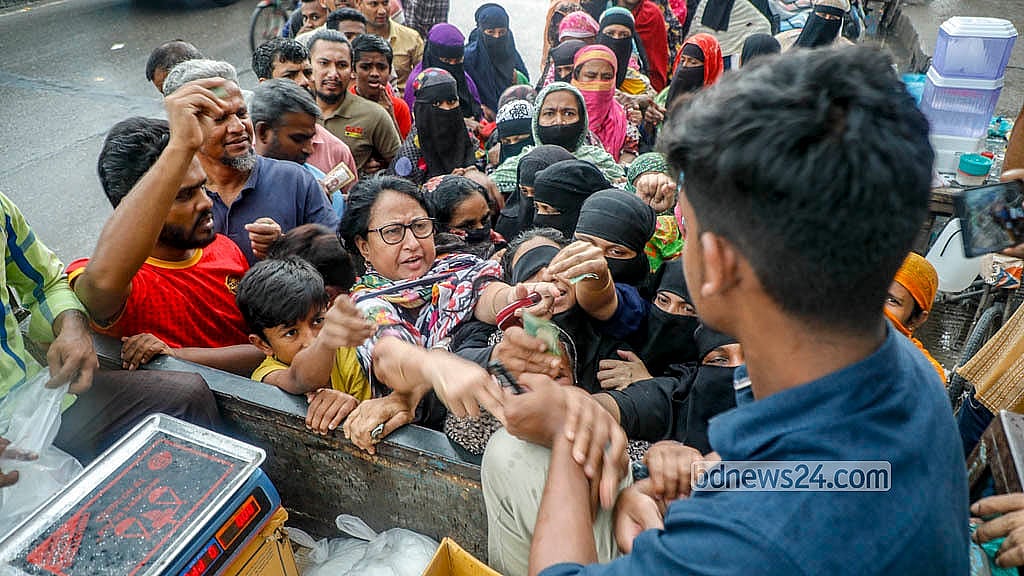
At a salon in Dhaka’s Shewrapara, Govinda Shil can no longer make ends meet. For six years, he earned about Tk 25,000 a month from daily wages and tips, enough to support his wife and two children and put away a little. Now fewer customers come through the door. His income has fallen as the prices of rice, lentils, oil and other essentials have climbed. Each month, he borrows to keep the household going.
“Things are very difficult now, sir. I can’t carry on like this. I can’t make the sums add up. A kilogram of rice alone costs Tk 70. Everything in the market is so expensive,” the 35-year-old said at his salon on Friday.
Mahibul, a 25-year-old from Gaibandha who moved to Dhaka two years ago, is struggling too. He drives a battery-powered rickshaw and rents a bed in a shared house in Mohakhali; his family remains in the village.
“I earn Tk 1,500 to Tk 1,600 a day driving the rickshaw. After paying Tk 500 to the owner, what remains is spent on my food and rent in the mess. My mother and sister are back home. I can’t send them anything,” he told bdnews24.com on Sunday.
After a pause, he added: “Life is no longer manageable.”
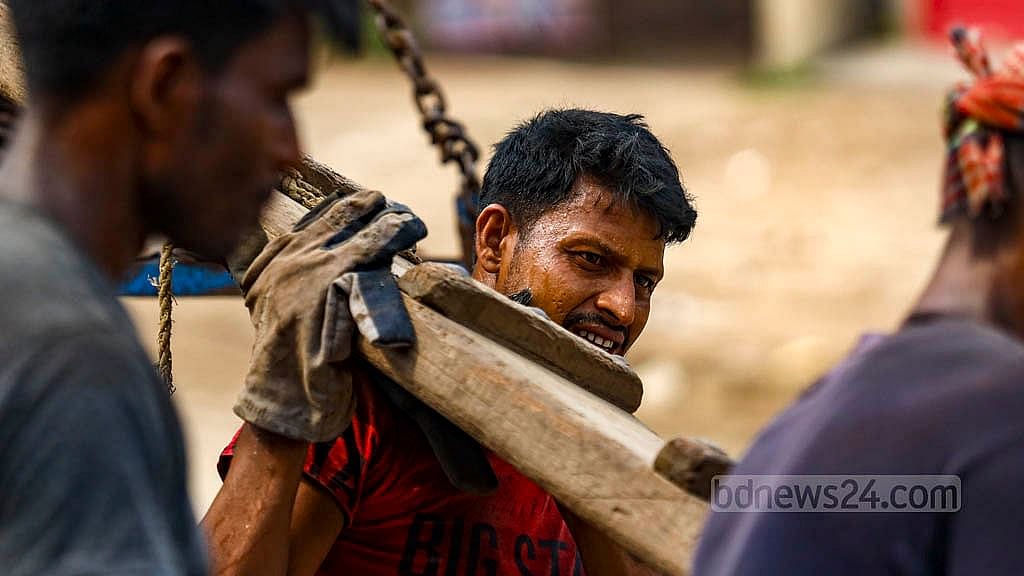
Their stories reflect a wider squeeze on Bangladesh’s low-paid workforce. Wages are rising, but essentials and everyday services are becoming more expensive even faster, eroding workers’ purchasing power.
Bangladesh Bureau of Statistics (BBS) figures show overall inflation easing to 8.27 percent in October from 8.34 percent in September.
Wage growth fell more sharply, to 7.63 percent from 7.90 percent. Prices are still rising faster than pay.
The divergence has persisted for 57 consecutive months, since February 2022. In October, the gap between inflation and wage growth widened to 0.64 percentage points, from 0.44 points a month earlier.
The arithmetic is simple, and punishing.
Someone earning Tk 100 in October last year would now earn Tk 107.63 after wage growth. But buying the same goods and services costs Tk 108.27. The increase in pay is swallowed by higher prices, leaving less for other needs and no room to save.
The Squeeze beyond the Food Basket
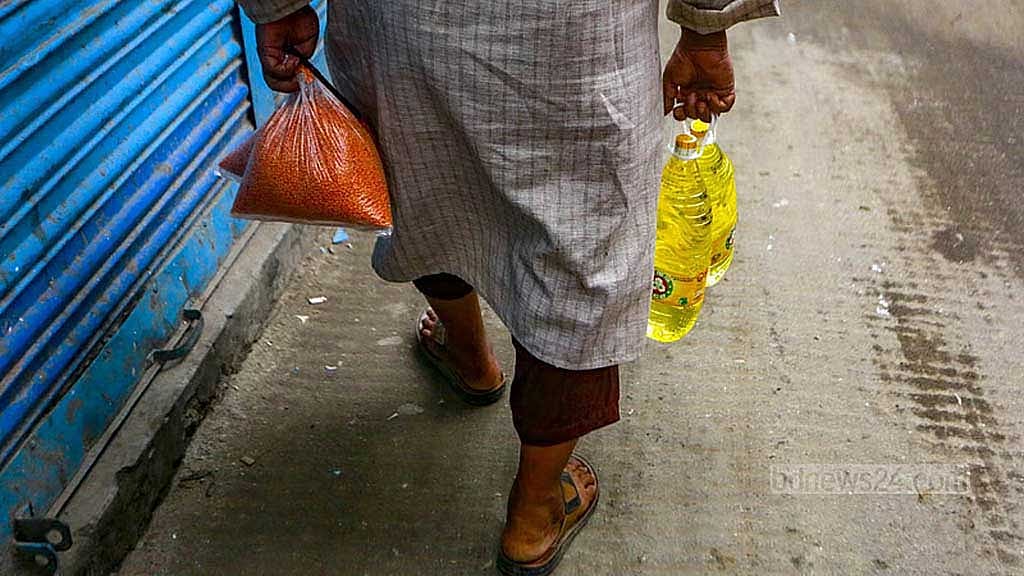
The easing in headline inflation masks a rise in non-food costs. Food inflation fell from 7.22 percent in September to 6.4 percent in October, while non-food inflation rose from 9.3 percent to 9.89 percent, reflecting higher transport, housing, education and healthcare costs. Rural non-food inflation reached 10.21 percent, up from 9.57 percent.
“Winter vegetables are arriving, but none are available for less than Tk 80 a kilogram. A small cauliflower costs Tk 50. Edible oil prices have gone up repeatedly; prices of sugar and other goods are rising too. The increase in fuel prices has affected the prices of everything,” said Jahangir Alam, director of the Dhaka School of Economics.
“Ramadan is approaching; past experience tells us prices will rise another round.”
Selim Raihan, executive director of the South Asian Network on Economic Modeling (SANEM), called the widening gap worrying.

“For the past two months, we have been getting worrying data. The wage index fell in October after September. Previously, we used to see wage growth rise alongside inflation; now it is falling. This is not a good sign.
“If we analyse the current inflation and wage index figures, we see another worrying development: inflation is putting additional pressure on real wages. In other words, even when income rises in nominal terms, inflation eats it away.”
He said wages were failing to keep pace with market costs, reducing real incomes and spending power. “Many people are breaking into their savings to get by. Many do not even have savings,” he said.
Fuel has added to the strain. Diesel rose from Tk 100 a litre to Tk 115 in April and Tk 135 in September. Higher fuel costs raise transport, production, irrigation, storage and distribution expenses, which are passed on to consumers, Raihan said.
Rural poor people, small farmers and day labourers are especially exposed. Controlling rural inflation also requires attention to farm inputs, transport costs, local market oversight and social protection.
Bangladesh Bank has warned that higher fuel prices and partial implementation of the new public-sector pay scale could complicate efforts to contain inflation, through higher production costs and government spending.
Who Is Counted, and Who Is Left Exposed?
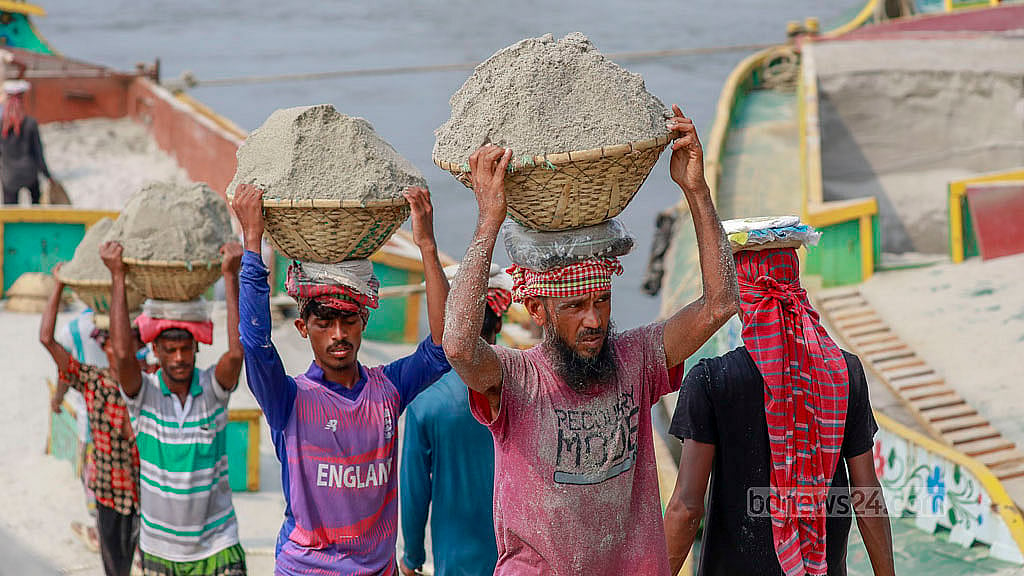
The BBS wage index tracks changes in pay for low-paid skilled and unskilled workers across 63 occupations in agriculture, industry and services.
It covers 17 agricultural occupations, 30 in industry and 16 in services, measuring daily or hourly wages. Salaried employees and higher-income professionals are excluded, so the index is not a measure of income growth for every worker.
It is, however, an important gauge of conditions among low-wage earners.
In October, wage growth stood at 7.55 percent in agriculture, 7.62 percent in industry and 7.96 percent in services. All three sectors recorded slower growth than in September.
Informal work dominates the wider labour market. The World Bank’s Nov 3 report, “Demographic Change in South Asia: From Tailwinds to Headwinds for Development”, estimates that 58 million people in Bangladesh work informally, nearly 84 percent of total employment.
Even 44 percent of graduates are in informal jobs, it says, citing slow formal job creation, low female participation and skills gaps.
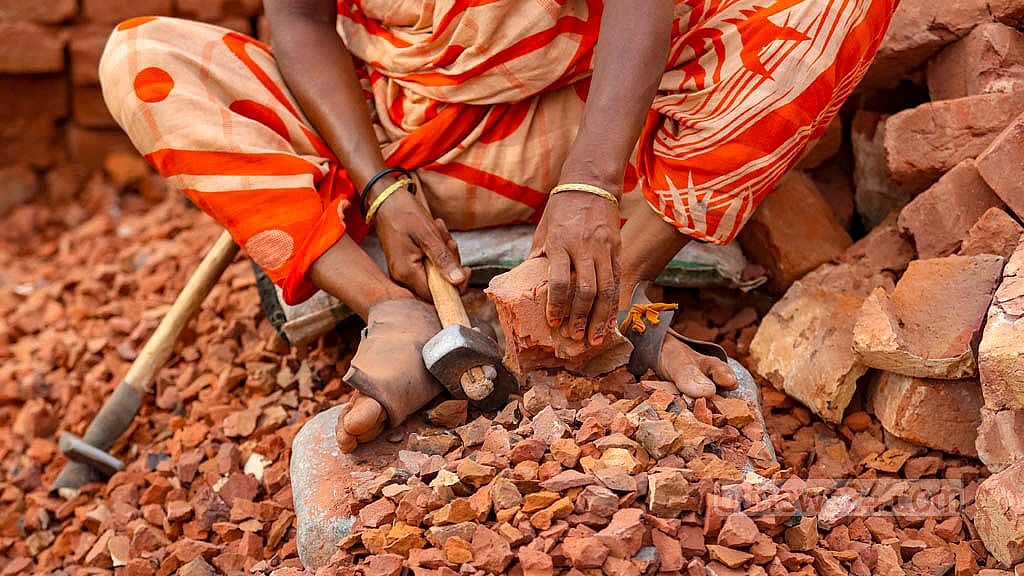
Many have no fixed wage structure, job security or social protection. Their pay does not automatically rise with prices; if work dries up or illness keeps them away, income stops altogether.
The new public-sector pay scale has raised incomes for one group. Public employees received October pay and three months’ arrears under the new scale on Nov 1.
Garment workers are demanding wages that reflect living costs, and the government has formed a wage board.
For Govinda and Mahibul, there is no such cushion. Fewer customers mean less money for the barber; after rent, food and the rickshaw owner’s fee, the driver has nothing to send home. Their jobs differ, but their predicament is the same: income no longer covers the cost of living for millions of low-paid workers across the country.