Published : 23 Sep 2026, 03:19 PM
Updated : 23 Sep 2026, 03:21 PM


Although 92.6 percent of Micro, Small and Medium Enterprises (MSMEs) in Bangladesh are micro enterprises, they only receive 14 percent of loan amounts disbursed to the sector, according to a study.
The report highlights a major gap in access to formal finance, according to the study conducted by LightCastle Partners as research partners, with support from SME Foundation as implementing partner and Visa as strategic partner.
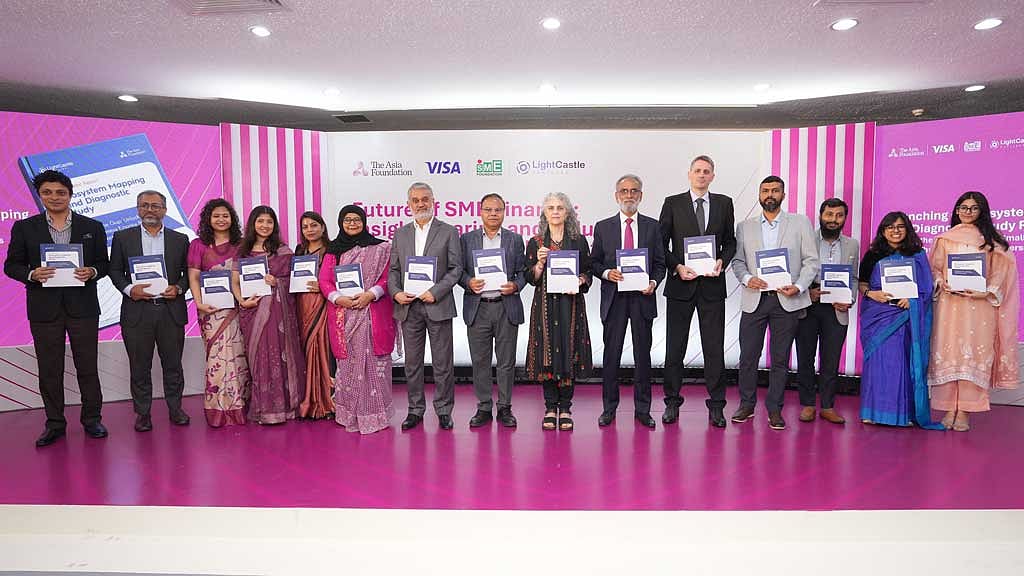
A seminar for disseminating the report was held in Dhaka on Tuesday, bringing together stakeholders from Bangladesh Bank, SME Foundation, banks and financial institutions, fintech companies, MFS providers and development organisations, according to a press release.
It was organised under “Bridging the Gap: Unlocking Small Business Finance through Fintech Partnerships,” by The Asia Foundation.
Filip Graovac, senior advisor, Innovation and Future Economy, and the project lead of the Bridging the Gap programme at The Asia Foundation, introduced the major issues covered by the study.
It found that Bangladesh has around 7.16 million MSMEs, accounting for 61.2 percent of all enterprises, which provide employment to around 19 million people. These MSMEs have a $2.8 billion financing gap.
“Although 92.6 percent of Micro, Small and Medium Enterprises are micro enterprises, they receive only 14 percent of disbursed Micro, Small and Medium Enterprises loan amounts, highlighting a major gap in access to formal finance,” the press release said.
“The study found that 95.2 percent of surveyed Micro, Small and Medium Enterprises faced financial shortages and 86 percent were typically borrowed, while only 58 percent had formally applied for loans. Only 2.62 percent of formal applicants reported rejection, indicating that many businesses drop out before reaching the formal application stage.”
The study is based on research covering 329 MSMEs, 19 key informant interviews, 12 in-depth interviews and four focus group discussions.
The press release said the study also identified strong potential for digital finance.
While 87 percent of MSMEs had a digital footprint and 97 percent were active on Mobile Financial Services platforms, only 11.55 percent had accessed digitally enabled credit.
In addition, the current digital products were largely limited to Tk 50,000 or below and short repayment periods, while around 60 percent preferred loans above Tk 300,000 and 85 percent preferred tenures longer than six months.
Working capital accounted for 57 percent of MSME borrowing, the study said.
Women-led and service-sector enterprises could act as potential entry points for digital-credit pilots, the study found.
About 83.1 percent of women with no prior knowledge of digital credit expressed interest in it, while 86 percent of service businesses showed interest in digital credit, it said.
The discussion at the seminar focused on easing access to finance and technology, simplifying lending processes, creating a digital ecosystem, the standardisation and digitisation of finance, the importance and challenge of data and data interpretation to make decisions, bridging the gap between bank, customer and digital space, easing the digital recovery process, creating inclusive and women friendly environment for female entrepreneurs and using digital transaction data for alternative credit assessment.
The panellists also spoke of the potential future use of AI-assisted alternative credit scoring, with emphasis on responsible data use, privacy and consent.
The research recommended focusing on four priorities: piloting digitally enabled lending, building interoperable and consent-based data systems, improving the commercial viability of small-ticket lending, and strengthening the regulatory and institutional environment for responsible financial innovation.
Graovac emphasised on bridging the gap between capital and policy, saying: “We are not short of capital, we are not short of policy intent, we are short of the working connection between the two.” Chief Guest Muslim Chowdhury, former comptroller & auditor general of Bangladesh and former finance secretary, stressed keeping small and medium enterprises separate, to avoid misguided policy.