Published : 08 Sep 2026, 08:05 PM
Updated : 16 Sep 2026, 11:48 AM


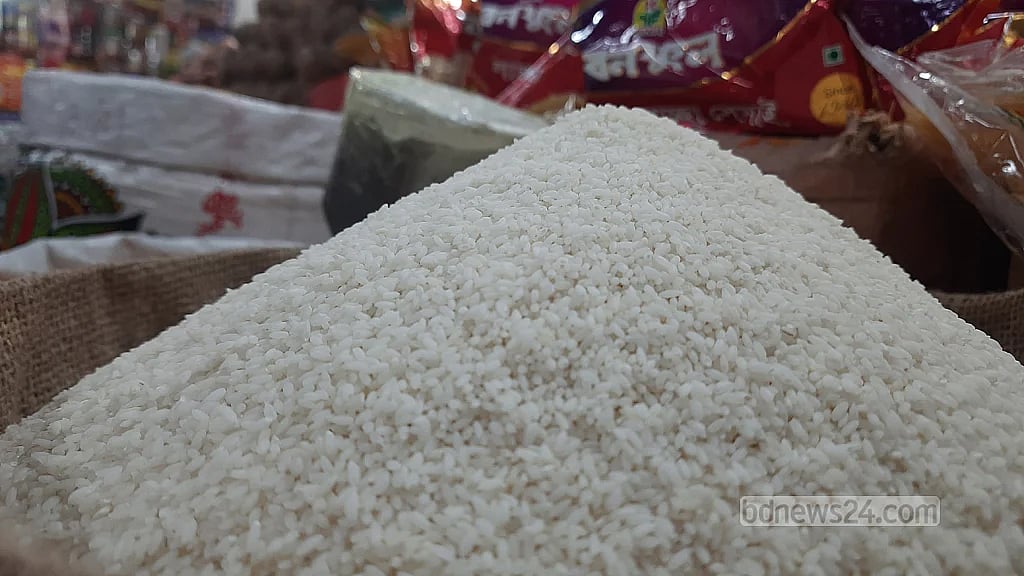
The government has tightened the reins on exports of aromatic rice as the demand and prices of aromatic rice in the domestic market have increased.
The Ministry of Commerce decided to review the export quota and reduce it by 50 percent.
In a press release on Tuesday, the ministry said that the government has reduced the approved quota for aromatic rice exports by 50 percent to maintain regular rice supply in the country's domestic market, ensure food security, and control potential price pressure in the market.
In a notification issued by the Export-2 branch of the Ministry of Commerce, the amount of aromatic rice exports previously allocated to 278 approved companies has been revised down by half.
The revised allocation will take immediate effect and will remain valid until Dec 31, 2026.
A meeting was held on the aromatic rice market situation at the Ministry of Commerce on Aug 2.
The meeting, presided over by Commerce Minister Khandaker Abdul Muktadir, reviewed rice production, domestic demand, the market situation and exports.
Based on the recommendation of the food ministry, the commerce ministry allowed 211 companies in the first phase on May 13, and 67 in the second phase to export 45,270 tonnes of aromatic rice.
It was reported in the meeting on Aug 2 that many companies that had been approved could not export rice up to their quota, but could fulfil them partially.
As a result, a large gap has emerged between the approved quota and actual exports. That is why the ministry is updating the actual export data on a company-by-company basis.
As of Aug 30, 129 organisations were able to export a total of 2,419 metric tonnes of aromatic rice.
Traders claim that the country's top 10 large mill owners have a huge amount of aromatic rice in stock.
They allege the upward trend I price is due to an artificial crisis manufactured by the owners not releasing rice sufficient to meet demand to the market.
On Aug 13, the commerce ministry announced its decision to tighten the reins on exports due to the increase in the price and demand for aromatic rice.
Now, the ministry has announced the extent of the curbs.
The notification said that, as a result of the government decision, large food processing companies, as well as medium and small-scale exporters, will not be able to export more than half of the previously approved amount of aromatic rice.
10 Mandatory Conditions Being Added to Exports
In addition to reducing the quota, the ministry has imposed 10 conditions to ensure surveillance, accountability and foreign exchange repatriation in export activities.
These are:
• The provisions of the Export Policy 2024-27 must be followed properly.
• The relevant approval will be valid until Dec 31, 2026.
• The customs authorities will verify the quality and authenticity of the product before exporting each consignment.
• After shipping each consignment, the relevant documents must be submitted to the Export-2 branch of the commerce ministry
• If applying for a new export approval in the future, complete information and proof of actual exports against the previously approved quota must be provided.
• Under no circumstances can rice be exported in excess of the revised approved quantity.
• The minimum FOB export price has been set at US$1.60 per kg to protect the price of the product in the international market.
• The approval is completely non-transferable; it cannot be exported through subcontracts or other organisations.
• The government can cancel the approval at any time in the public interest without providing any reason.
• Submission of Process Realization Certificate-PRC has been made mandatory as proof of repatriation of export proceeds to the country.
The government's policy position is that while earning foreign exchange from exports is important, priority should be given to the supply and price in the domestic market in the case of food products.
Accordingly, the permitted quota for aromatic rice exports has been reduced by 50 percent and strict conditions have been imposed on exports regarding price, quantity, documentation and foreign exchange repatriation.
Under the new system, exporters will have to operate within the permitted limits and provide a full account of previous export activities for future approvals.