Published : 22 Oct 2025, 07:58 AM
Updated : 21 Aug 2026, 02:37 PM


Days after the devastating fire at Dhaka’s Shahjalal International Airport, importers are still struggling to receive consignments as clearance drags and ad-hoc workarounds falter.
The worst hit are temperature-sensitive shipments -- vaccines and essential medicines -- that require uninterrupted cold-chain handling.
By 1pm on Tuesday, in front of Gate 9 at the airport’s northern end, groups of clearing and forwarding (C&F) staff had been waiting since morning with no delivery in hand.
A Bangladesh Biman team eventually pushed out a trolley of Sanofi pharmaceuticals, which C&F agents rushed into temperature-controlled vans.
Hafizur Rahman of Farko Syndicate said the consignment included vaccines requiring storage at 2 to 8°C -- yet they had been exposed for around 10 hours in 32–33°C heat.
“At this pace, there will be no business left in the country, nothing will remain,” he said.
Four days on, alternative arrangements remain patchy. Traders in urgent sectors, including pharmaceuticals and ready-made garments, report extra costs and blown timelines.
Since Saturday’s blaze, no dedicated cargo or freighter flights landed at Shahjalal until Tuesday evening, though some consignments arrived on passenger services. A charter from China organised by several businesses touched down Tuesday night.
A Biman ground-handling official said 107 tonnes arrived on a Cathay Pacific freighter -- the first dedicated cargo flight since the fire -- alongside about 40 tonnes on passenger aircraft.
Clearance has been further slowed by downed digital systems.
Shahjalal typically processes an average of 547 tonnes of imports and exports a day. With Cargo Village crippled, officials struggled to clear the 147 tonnes that did make it through on Tuesday.
Airport authorities maintain cargo operations have not been formally suspended since the fire. Traders, however, describe severe bottlenecks and uncertainty over when normal service will resume.
Ground-handling operators oversee documentation, verification, customs clearance and delivery under airline supervision.
Attempts to reach Biman’s Director of Cargo Shakil Meraj for comment were unsuccessful.
Officials say repairing the Cargo Village or constructing a new facility could take at least three months, particularly to build temperature-controlled sections for storing goods brought in through the cold chain system.
In this situation, Khairul Alam Bhuiya Mithu, vice-president of the C and F Agents Association, urged the use of separate cargo terminals built under the Third Terminal project for imports and exports during the emergency.
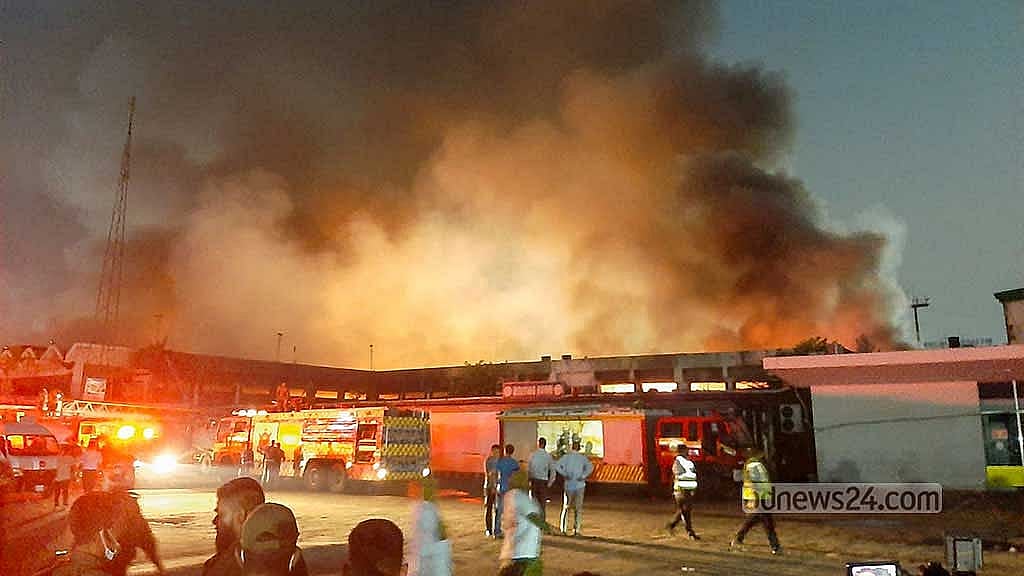
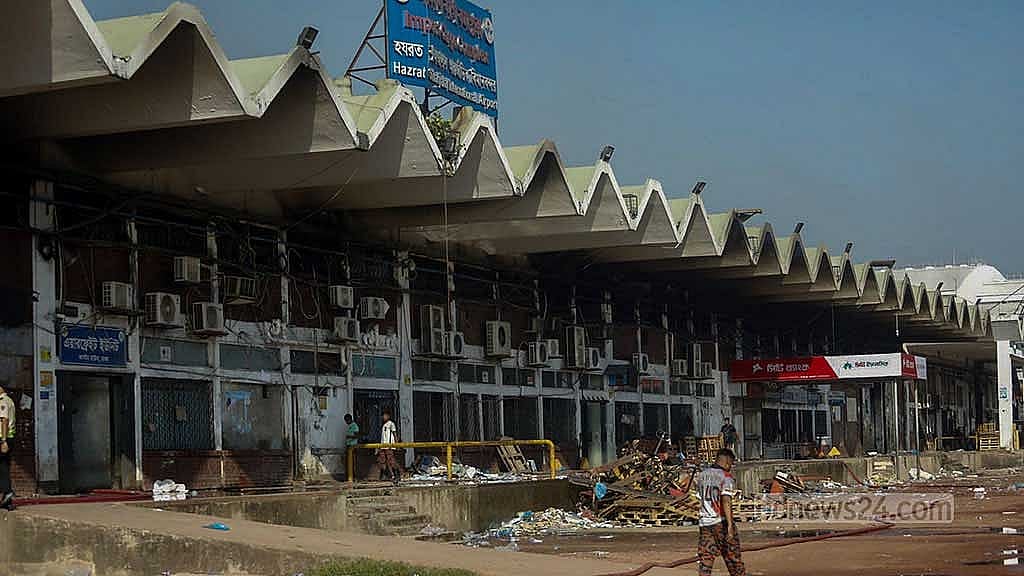
The fire at the import cargo complex of Shahjalal airport, which broke out on Saturday afternoon, was brought under control by 9pm that day.
It was fully extinguished 27 hours later on Sunday evening.
The Exporters Association of Bangladesh (EAB) estimates the damage could be around Tk 120 billion, while the Pharmaceutical Industries Association expressed concern over a potential loss of Tk 40 during a press conference on Tuesday.
Businesses involved in imports say that while clothing items can be stored in open areas, many perishable goods, including medicines, need cold storage or refrigeration at specified temperatures.
These goods risk spoiling before clearance if brought in under the current conditions.
On Tuesday morning, Suman Hossain of Arabi International, a C and F agent, was waiting at Gate No. 9 to receive consignments.
He said, “Before the fire, goods were delivered through four gates. Sometimes, due to pressure, Gate No. 8, the hangar gate, was also used. But now only one gate is being used.
“Once regular operations resume, one gate won’t be enough just to handle courier shipments.”
“This can't go on like this,” Suman said with frustration. “We mostly handle garment samples. Buyers send a few sample pieces to local buying houses here, and we handle the clearance.
“Some of my samples were burnt in the fire, and one of my clients has already cancelled their order. If these goods don’t arrive properly, businesses will fail.”
Md Siddiqur of Shama Enterprise, involved with the import of equipment for the Rooppur Nuclear Power Plant, claimed that many of the project’s items waiting for clearance were burned.
“Three consignments arrived on the 15th of October. We couldn’t clear them. Two pieces of equipment inside were burnt. I came today in the morning to receive one shipment. They’ve informed me it’s on the way, so I’m still waiting here,” he said.
Khairul said there is now a shortage of handling equipment. “The locations for processing, storing, and delivering goods are quite far from each other. It’s taking time to locate items, which is causing a backlog and delaying delivery.”
He explained, “Even with four delivery gates, it was difficult to manage earlier. Perishable goods, coffins, and other emergency items had to go through Gate No. 8. Now we have only Gate No. 9, which is in a remote corner of the airport.
“Once full-scale operations resume, the congestion will make it impossible for vehicles to move. Without restoring regular delivery processes, national business operations cannot return to normal.”
He added, “No airlines are currently accepting cargo bookings from Dhaka. A flight is arriving today, and businesses are bringing in goods from China on it. But unless clearance and distribution normalise, no one will accept bookings.”
WHAT CAAB CHIEF SAYS
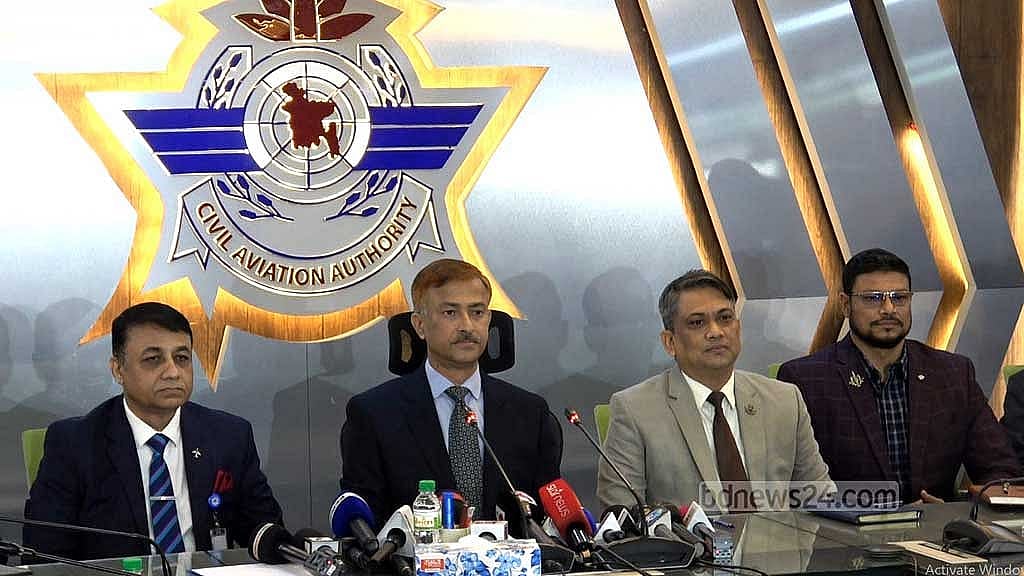
Civil Aviation Authority Chairman Air Vice Marshal Mostafa Mahmood Siddiq said, “We did not halt cargo operations for a single day. Since the import Cargo Village was damaged, goods are now being cleared through Gate No. 9 temporarily. Some temporary sheds are planned, and we have activated them as quickly as possible.”
Regarding the two new cargo complexes built for import and export, completed around a year ago, the chairman said: “Several meetings have been held for the takeover of the new complexes. Financial matters have not been resolved yet. There is a gap of around Tk 10 billion between their claims and our accounts.
“We are trying to bridge this gap through a third party,” he added. “Since it involves government funds, a board has been formed based on both parties. Once this gap is resolved between us and the contractor, we will be able to take over the complexes.”