Home
+
Published : 16 Feb 2026, 01:01 AM
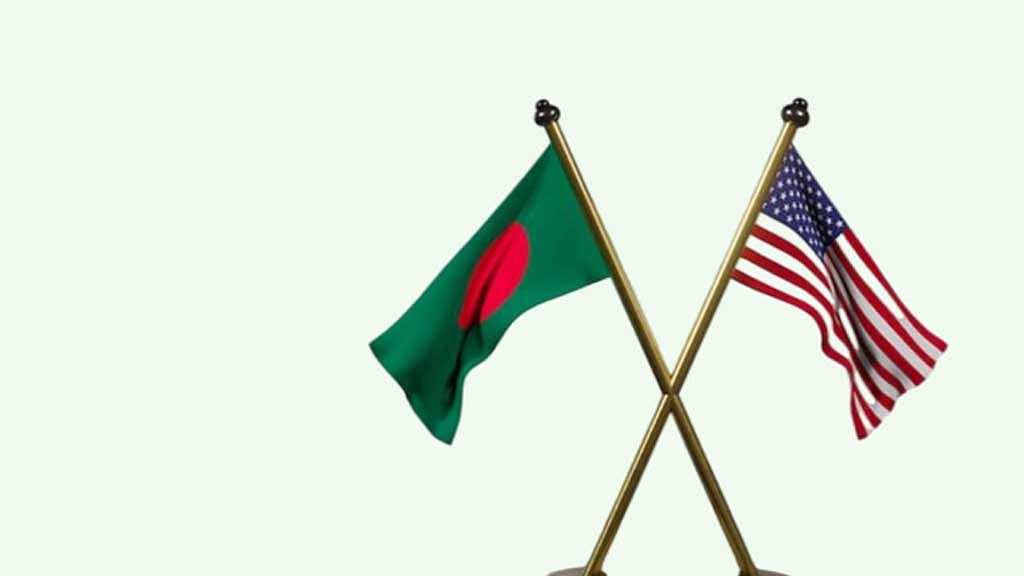
The interim government has issued a media statement asserting that the agreement between Dhaka and Washington will expand investment and trade.
The statement, released on Sunday, said the agreement, titled Agreement on Reciprocal Trade (ART), signed on Feb 9, offers “special privileges” for the textile and ready-made garments (RMG) sector.
The agreement reduced US supplementary duty on Bangladeshi products from 20 percent to 19 percent.
The government, however, had remained silent about what the pact actually has to offer Bangladesh.
The statement claimed credit for reducing the US-imposed supplementary duty by one percent after nearly nine months of continuous negotiations and bargaining.
It said the agreement encompasses trade in goods and services, customs procedures, trade facilitation, rules of origin, sanitary and phytosanitary (SPS) measures, technical barriers to trade, investment, e-commerce, government procurement, labour, environment, competition, transparency, and cooperation.
The agreement imposes no additional conditions since Bangladesh is already a signatory to various international treaties, including WTO TRIPS and the ILO.
"Rather, consent has been given regarding the implementation of existing commitments," the statement said.
The government noted that special privileges have been included for the textile and RMG sector.
Zero-duty access has been granted for exporting garments to the US that are manufactured using cotton and synthetic fibres imported from the country, the interim government said.
The agreement allows 2,500 Bangladeshi products duty-free benefits against 7,132 US products, enjoying the same privilege in phases.
The zero-duty exports for Bangladesh include various types of medicines, agricultural products, plastics, and wood products.
The US, on the other hand, gains zero-duty access to the Bangladeshi market for 7,132 American products, including 4,922 products that have been duty-free since the agreement took effect.
For 1,538 products, the duty will be phased out to zero within five years, and for 672 products, it will be gradually reduced to zero over a decade.
No duty-free benefits were granted for 326 products.
The statement noted that Bangladesh was allowed to reduce the duty in phases, which was not allowed in pacts signed with other countries.
The interim government also said the agreement includes various aids, such as paperless trade, IPR (Intellectual Property Rights) enforcement, support for the e-commerce permanent moratorium, reduction of non-tariff barriers, conformity assessment, and the implementation of environmental and labour standards.
The media statement added that the agreement includes provisions for digital trade, technological cooperation, and the liberalisation of equity limits for US investment in certain sectors.
It also outlines plans to increase imports of Boeing aircraft, liquefied natural gas (LNG), liquefied petroleum gas (LPG), soybeans, wheat, cotton, and military equipment from the US.
According to the government, the pact includes an exit clause, which allows for withdrawal from the agreement under specific conditions.
The CAO expressed hope that the bilateral trade deal between Bangladesh and the US will not only maintain the "competitiveness" of Bangladeshi products in the US market but also serve as a "catalyst" for expanding trade and investment.
After winning the US presidency for the second time, Donald Trump announced high tariffs on over a hundred countries on Apr 2, 2025. This included the announcement of an additional 37 percent tariff on Bangladeshi goods.
Negotiations brought this rate down to 20 percent, which took effect on Aug 1.
Combined with the existing 15 percent tariff on Bangladeshi products, the total duty reached 35 percent.
The duty finally dropped to 34 percent after its 1 percent reduction.