Published : 04 Dec 2025, 12:31 AM
Updated : 21 Aug 2026, 02:50 PM


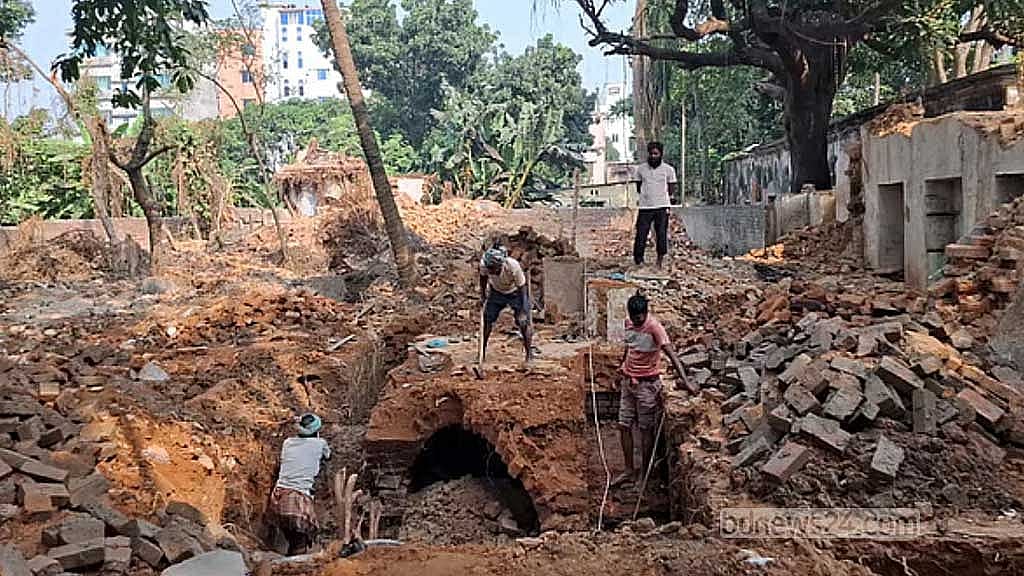
An underground tunnel has been uncovered beneath an old house belonging to the Dighapatia Zamindar family, once part of the region’s hereditary landlord class, in Rajshahi.
The structure was being demolished when the passage was discovered on Tuesday, according to Mahabub Siddiqui, founder of the heritage organisation “Heritage Rajshahi”.
The house was built by Sandeep Kumar Roy, son of Raja Hemendra Kumar Roy of Dighapatia. The compound includes two single-storey buildings on either side, a two-storey structure at the rear, and a tree at the front.
Additional Deputy Commissioner (Revenue) Mohinul Islam said the property is officially listed as "vested". As it had fallen into disrepair, the district administration auctioned it for Tk 1,52,000. Once the buyer began to tear it down, the underground tunnel was revealed.
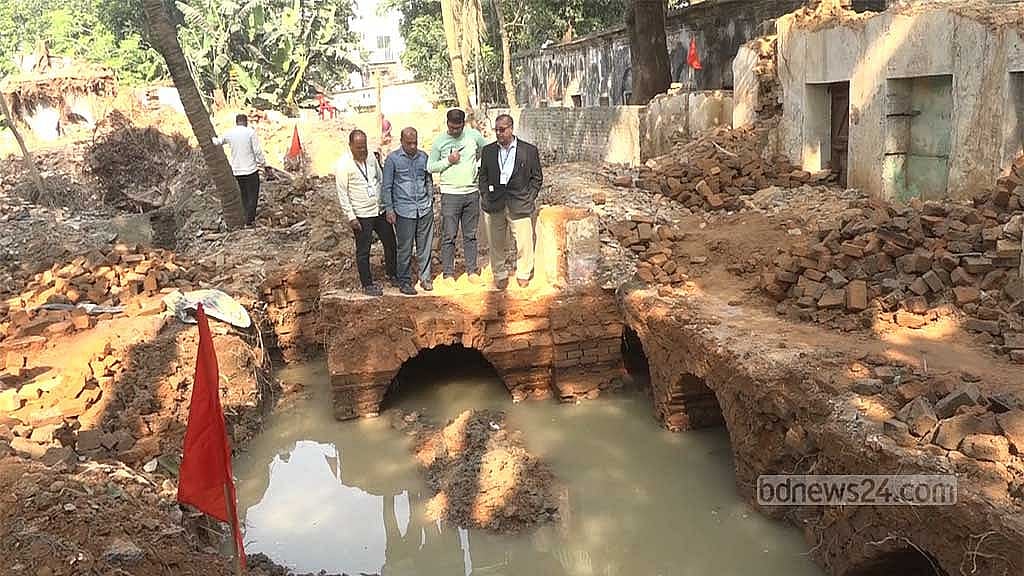
Water trapped inside the passage has been drained out, and a pumping system has been installed to speed up the process. The tunnel appears to have a connecting branch leading to another passage.
Poet and researcher Tasikul Islam criticised the decision to auction the property without assessing its archaeological value.
He said, “After independence, the government had leased the site to language movement veteran Monwara Rahman, who ran a women’s crafting centre there. Her husband, M Ataur Rahman, who is an organiser of the anti-British movement, the Tebhaga movement and the Liberation War lived in the house, as did educationist ANM Saleh.
Mahabub described the demolition as “deeply regrettable”, noting the lasting contributions of the Dighapatia Zamindar family to the region.
“There should have been consultation with historians before making such a decision,” he said.
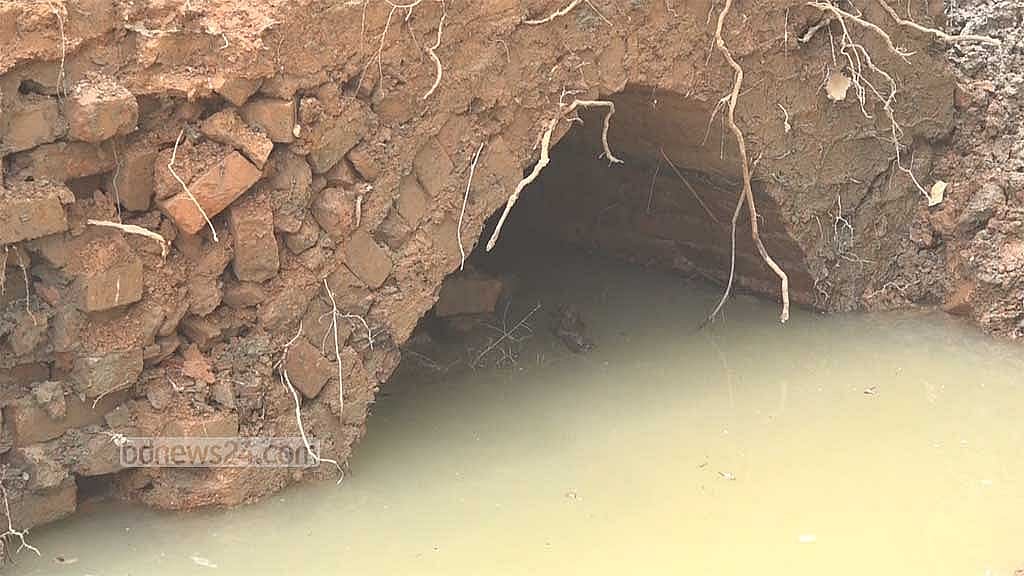
ADC Mohinul said the structure had become unsafe, prompting the decision to dismantle it.
He added that letters have been sent to the assistant commissioner and the Department of Archaeology regarding the tunnel, and the site will be preserved if any archaeological evidence is confirmed.
A five-member team inspected the tunnel following the district administration’s request, said Khondaker Shamsul Arifin, deputy registrar of the Varendra Museum.
“We have taken several photographs and will now brief our officials. They will decide whether the site is eligible for preservation,” he said.
Arifin added that he believes the tunnel dates back to the British era and may have been constructed to keep the house cool. Similar underground passages have been found in the region before, he said.