Published : 22 Jul 2026, 06:59 AM
Updated : 08 Sep 2026, 09:26 AM


Bangladesh is stepping up efforts to boost gas exploration and production at home as mounting import costs and growing geopolitical risks expose the country's energy vulnerability.
The government sees domestic gas as the most viable long-term answer to widening supply shortages, although analysts say state-owned explorer BAPEX must significantly strengthen its technical capacity to meet that goal.
According to the Ministry of Power, Energy and Mineral Resources, Bangladesh had 7.63 trillion cubic feet of recoverable gas reserves as of Jan 1, 2026.
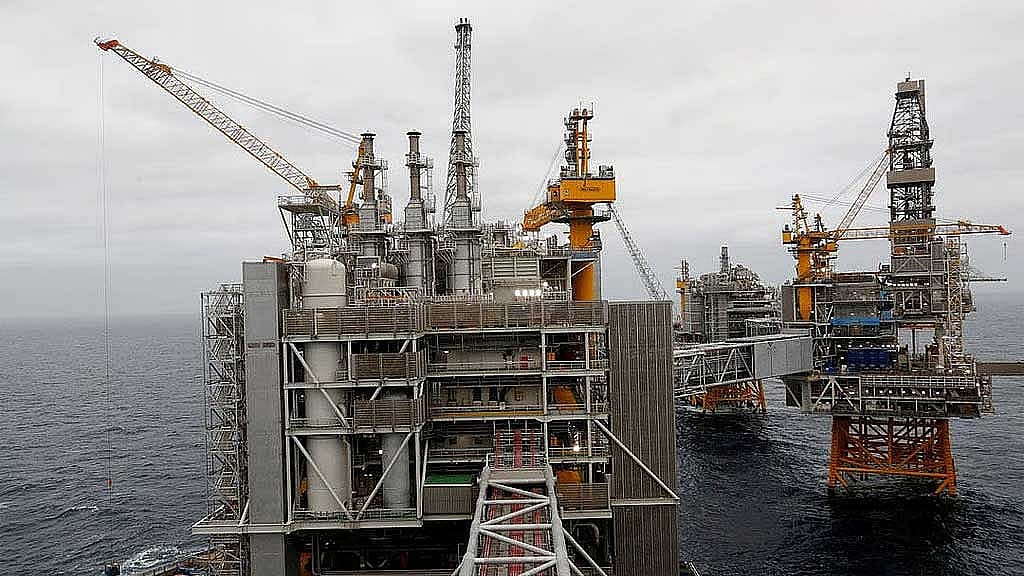
Daily demand stands at about 3.8 billion cubic feet, while average supply reached only 2.65 billion cubic feet through April of the 2025-26 fiscal year, leaving a shortfall of roughly 1.15 billion cubic feet -- nearly 30 percent of demand.
To bridge the gap, Bangladesh imports around 900 million to 1 billion cubic feet of LNG each day. The country also imports 92 percent of its petroleum products.
Recent instability in West Asia following US and Israeli strikes on Iran and concerns over disruption in the Strait of Hormuz have renewed focus on Bangladesh's energy security.
Government plans presented to parliament and a parliamentary committee include drilling new wells, expanding seismic surveys, bringing Bhola gas into the national grid, strengthening BAPEX, launching onshore and offshore bidding rounds and expanding energy infrastructure.
The government aims to drill or carry out workovers on 150 wells by 2031. So far, work has been completed on 28.
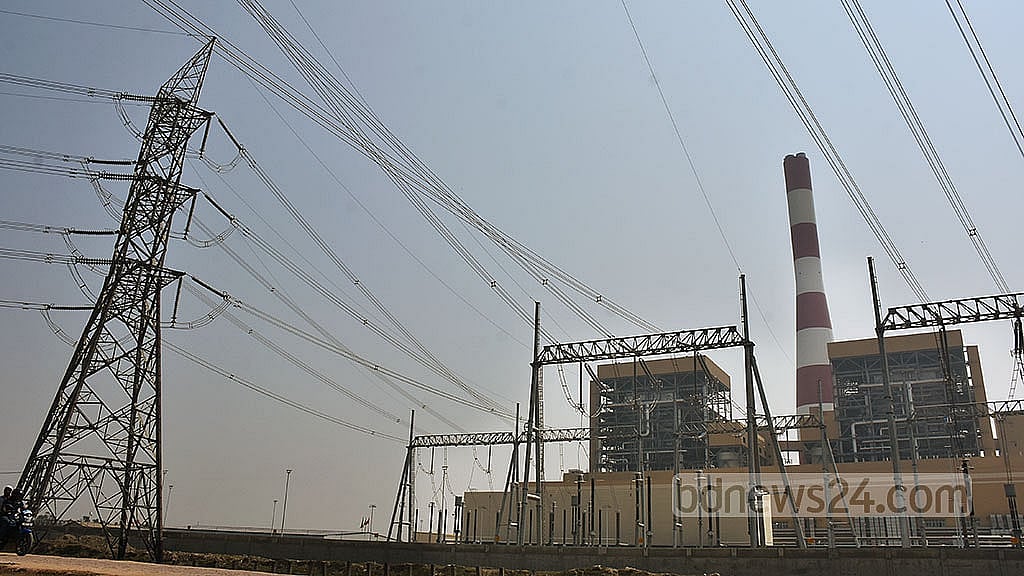
Parliament was told those completed wells have confirmed 250 million cubic feet of gas against an expected 330 million cubic feet, with around 125 million cubic feet already added to the national grid.
Once all 150 wells are completed, authorities expect another 1.84 billion cubic feet to be supplied daily.
The government is also expanding seismic surveys to identify new drilling prospects, including 4,500 line kilometres of two-dimensional surveys in Blocks 7 and 9 and several three-dimensional surveys in major gas-producing regions.
To strengthen BAPEX, the government plans to procure two new drilling rigs with capacities of 2,000 and 1,500 horsepower.
Petrobangla Chairman Md Abdul Mannan told bdnews24.com that drilling efforts would continue to increase domestic production.
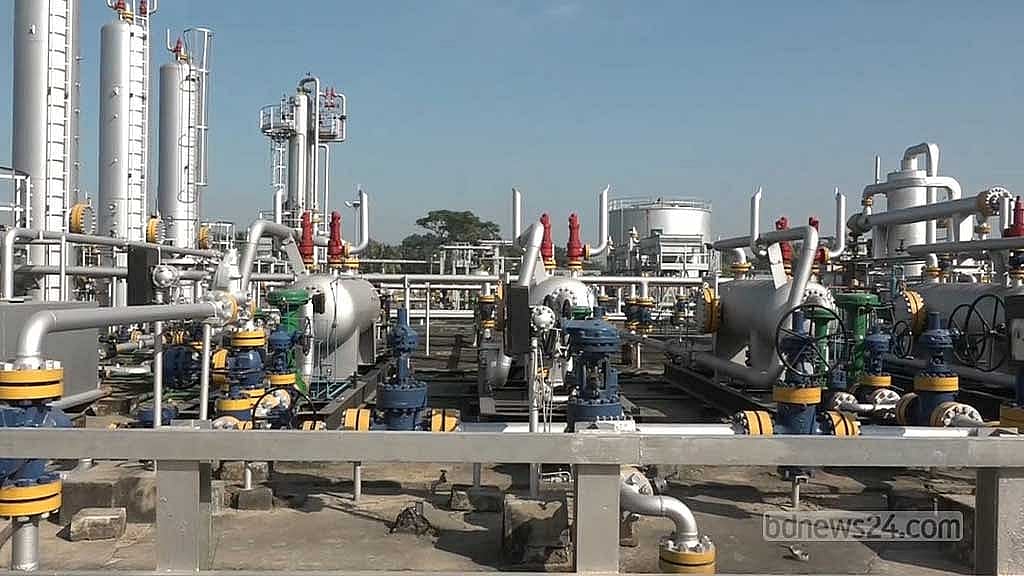
"Initiatives have been taken to procure two drilling rigs with capacities of 2,000 and 1,500 horsepower to strengthen BAPEX," he said.
He said financing was not the main obstacle, pointing instead to technology and experience.
"It would not be accurate to say financing is the problem. There is some technology gap. BAPEX has not yet gained sufficient experience, and this work cannot be completed quickly."
The government has also decided in principle to construct a Bhola-Barishal-Jajira-Mawa-Aminbazar pipeline to connect Bhola's gas fields to the national grid.
A 96-kilometre subsea pipeline between Bhola and Barishal alone is expected to take at least three and a half years and cost around Tk 25 billion.
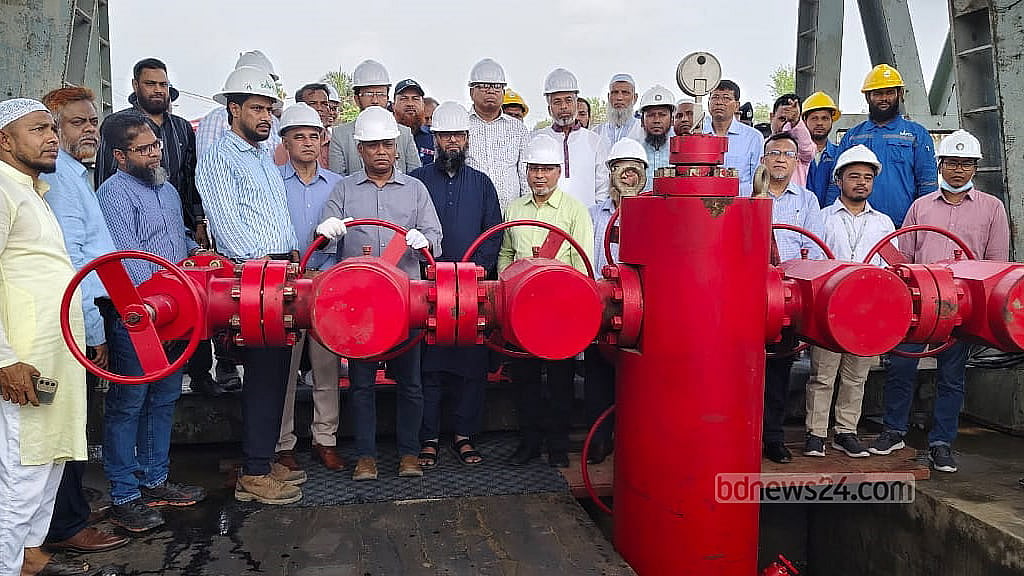
Bangladesh has also invited bids for oil and gas exploration in 26 offshore blocks and is preparing an onshore bidding round.
Energy analyst Shafiqul Alam of the Institute for Energy Economics and Financial Analysis said Bangladesh should expand renewable energy while accelerating domestic gas exploration to reduce dependence on costly LNG and imported fuel.