Published : 22 Mar 2026, 07:17 AM
Updated : 28 Aug 2026, 01:33 AM


It was 1957. A handful of Baum families left behind their old settlement and walked into the deep hills, beyond roads and beyond reach -- into a forest that would become both their refuge and their responsibility.
From Darjeeling Para at the foot of Keokradong, the country’s second-highest peak, it took more than three hours of treacherous trek to reach their new home.
At the foothills of Keokradong, in Ruma Sadar Union, the terrain is a mix of soft, slightly salty rock and scattered stones. At a particular time of year, the mineral-rich rock produces a crust on which grass and vines sprout. Wild deer, boar, and other creatures are drawn to these natural growths.
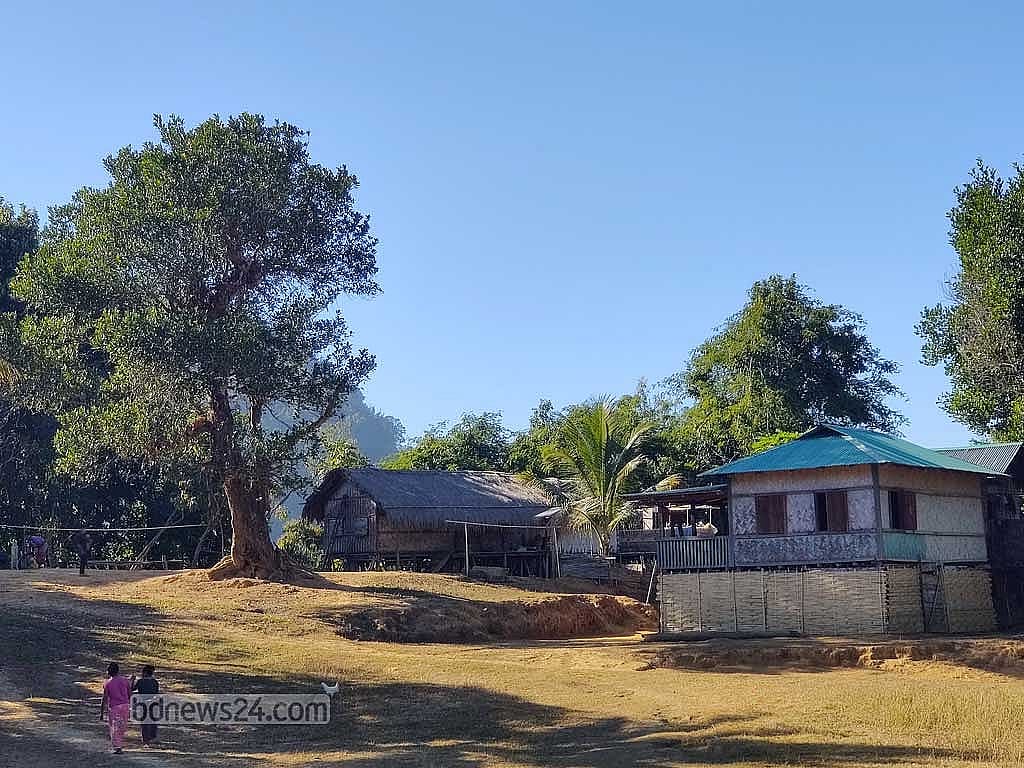
In the Baum language, the salty soft rocks are called “Lungthausi”, giving the settlement its name: Lungthausi Para. The village is led by Lalminangak Baum, known locally as the Karbari.
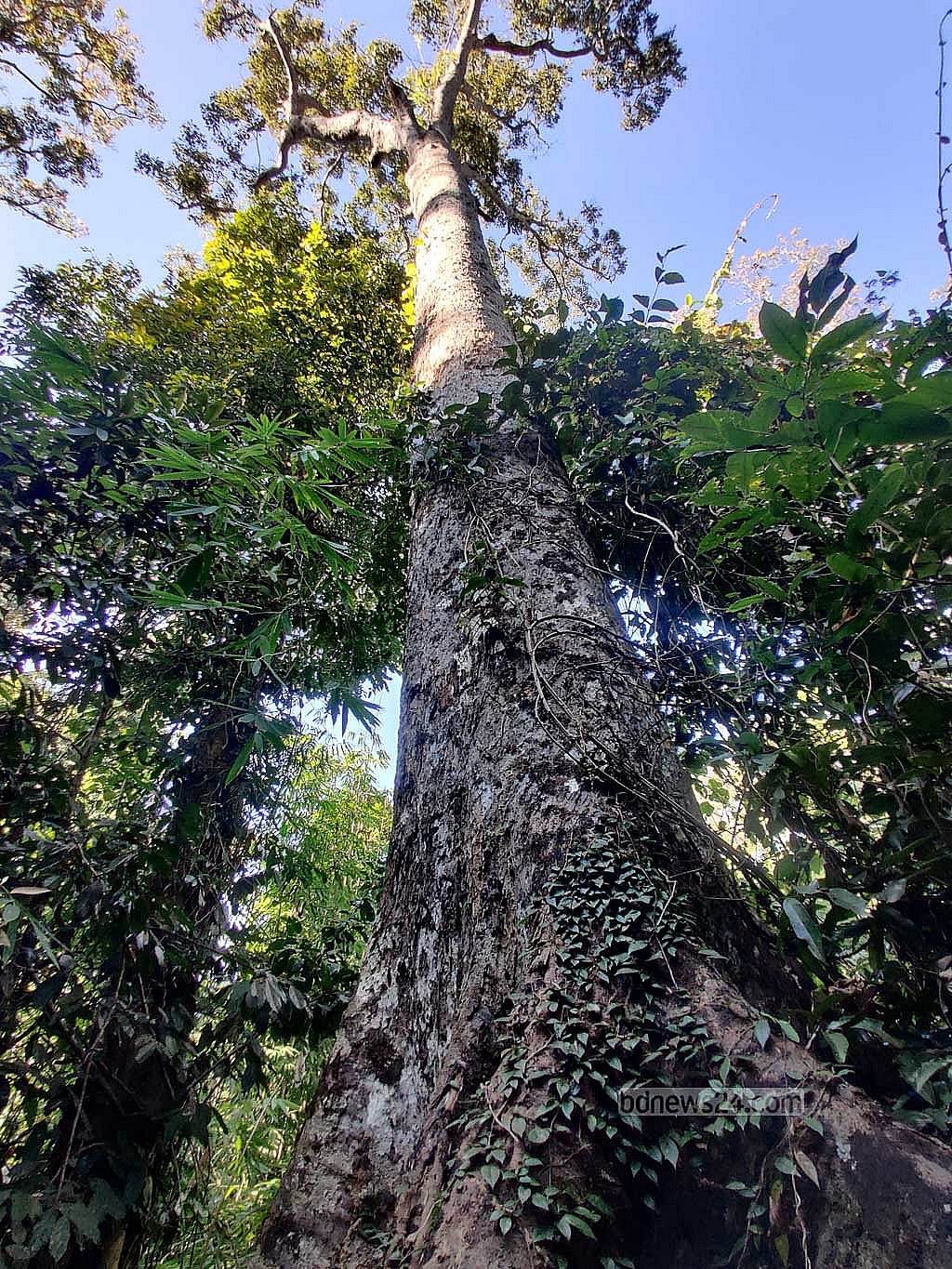
“From the village’s founding, a natural forest was set aside to meet the community’s needs, following indigenous practices,” Lalminangak said.
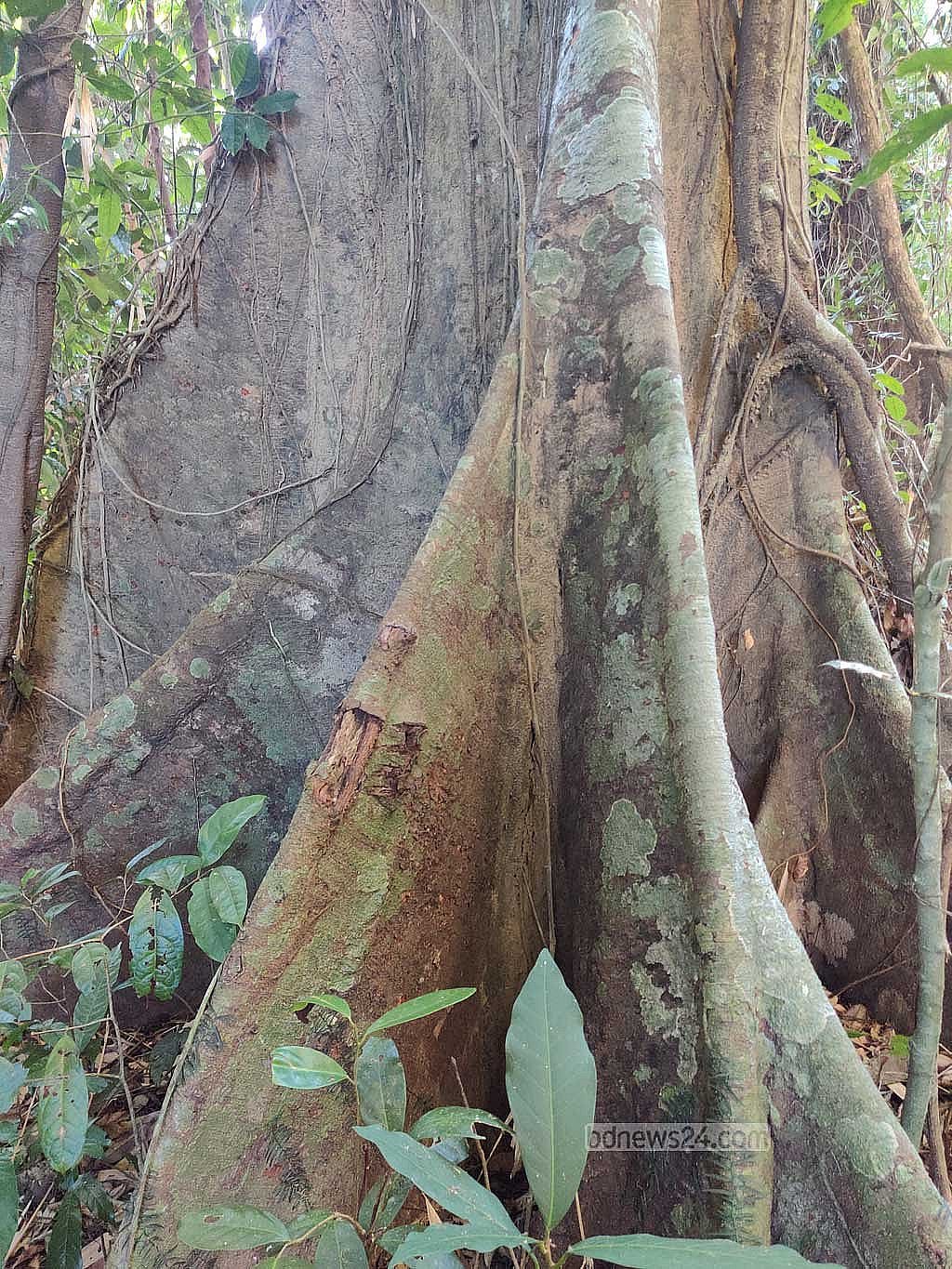
“For nearly 70 years, this forest has been nurtured and preserved by successive generations. It is now known as Lungthausi Parabon.”
The International Day of Forests was observed across the world on Saturday, Mar 21. One of Bandarban’s oldest village forests, the Lungthausi Parabon covers an estimated 81 hectares, according to Lalminangak. Its social ownership belongs to the 24 Baum families of the locality. Today, the parabon provides a refuge for villagers, wildlife, and biodiversity alike.
Unlike other settlements, the village has not expanded, largely because families migrate elsewhere for shifting cultivation, known locally as Jhum.
All the houses are made of bamboo and wood. Water is piped from a nearby stream, and every household is a Jhum cultivator.
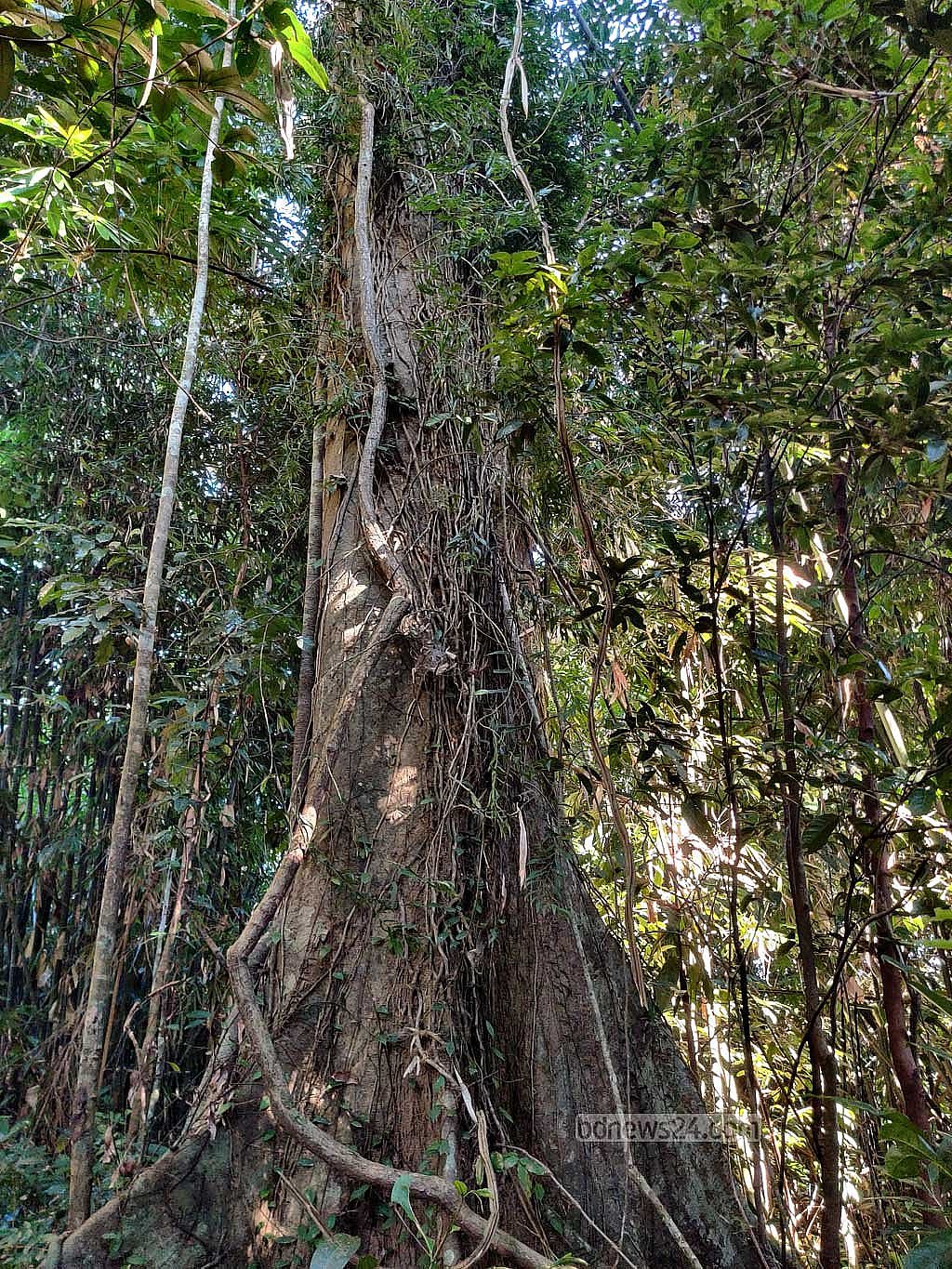
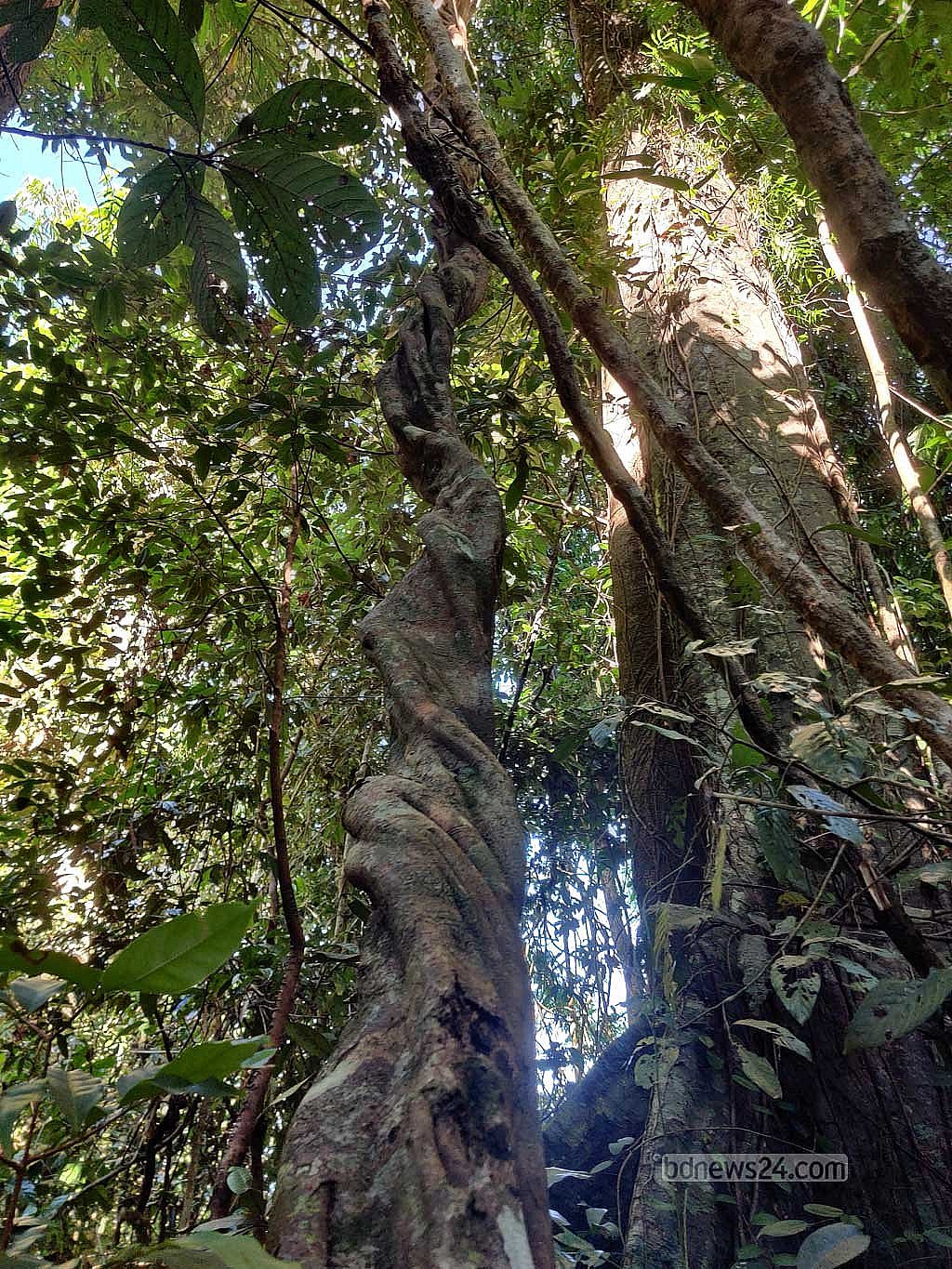
The forest begins at the village’s east-southeast edge. Dense and mature, it hosts trees over a century old, some fallen or dead. Local residents do not always know the exact species.
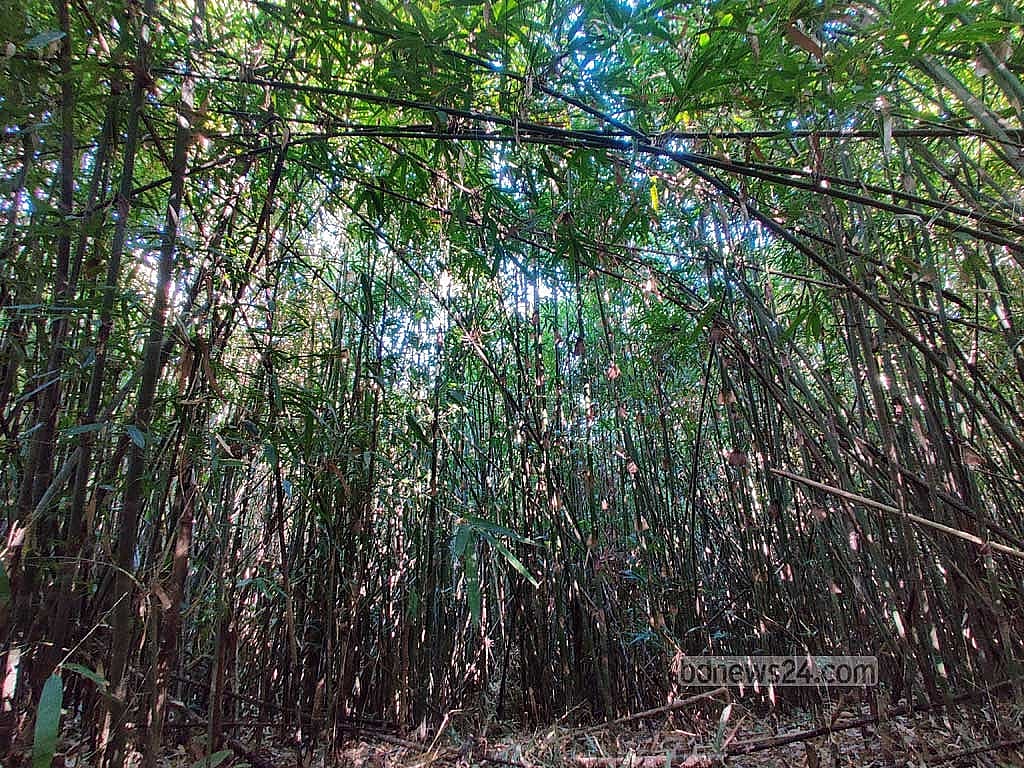
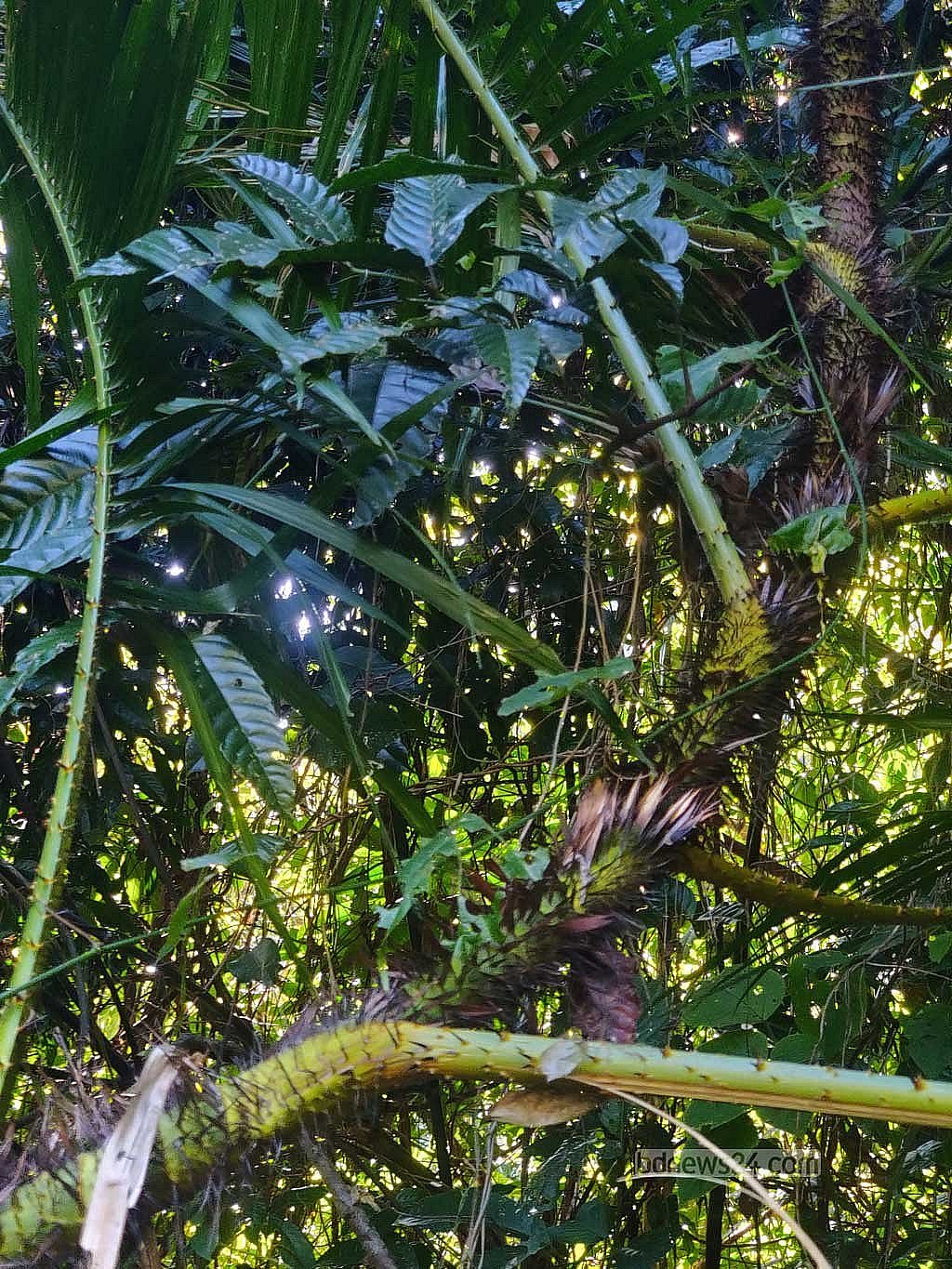
Thick bamboo thickets and large cane plants are scattered throughout. Only common birds are often seen, while larger species remain elusive.
Customs of Protection
Karbari Lalminangak recounted, “When the para was established in 1957, the forest was created alongside it. From birth to death, water, bamboo, and firewood are essential. That’s why a designated area is preserved, from which no one may freely harvest timber or bamboo.”
He added, “No large tree may be cut. Bamboo and fuelwood can only be collected from areas approved by the forest committee. This is a traditional practice of the Baum community: from the moment a settlement is founded, a specific area is set aside for forest preservation.”
The parabon, or village forest, sustains the local community amid multiple pressures while maintaining ecological balance in the hills. Yet, the forest’s isolation is ending. The Bangladesh Army’s engineering battalion is carving steep hills to accommodate vehicles and motorcycles, opening access to a once-isolated landscape.
Parabon: Social Ownership in Practice
In indigenous villages, a designated area of unclassified forest is traditionally reserved and maintained by the community, recognised by the headman (mouza headman) and the Karbari. The forest is also referred to as “Parabaum” or “reserve forest”.
The parabon’s natural resources are used socially. Villagers draw timber, bamboo, fuelwood, and water to meet daily needs. Hunting is strictly prohibited.
Shifting cultivation around the forest is also forbidden. Anyone violating these rules faces fines and punishment.
The concept gained broader recognition after the 1997 Chittagong Hill Tracts Peace Accord, when UNDP and other NGOs helped formalise the idea of a village common forest.
Currently, 11 indigenous communities across the three hill districts maintain parabons, each with slight variations but similar principles of conservation and regulated use.
Size, Scope, and Biodiversity
Such forests generally span 8.09 to 404.69 hectares. They preserve century-old trees, wildlife, aquatic life, mammals, diverse plants, vines, and water sources.
The VCFs (Village Common Forests) network oversees parabon conservation in three hill districts.
Rangamati has 162, Bandarban 161, and Khagrachhari 62 registered VCFS. In Bandarban, four of seven Upazilas -- Ruma, Rowangchhari, Naikhongchhari, and Alikadam -- maintain committees to coordinate and monitor parabon management.
Rules and Enforcement
According to Lalminangak:
● Wild boar, deer, junglefowl, monkeys, and eagles inhabit the forest. Bears appear occasionally. Hunting is forbidden.
● All families of the village are members of the committee. Forest use decisions are collective. Firewood and bamboo can only be collected from designated areas. Anyone violating these rules pays a fine of Tk 5,000.
● The parabon meets household needs without forcing villagers to source materials from afar or purchase them privately.
Research and Conservation Initiatives
Arannayk Foundation has long studied parabons and is implementing the “Hill Forest Neighbourhood Restoration Project”.
Project manager Kamrul Islam said, “More than 300 plant species and over 250 bird species have been recorded. Wildlife includes wild boar, muntjac, monkeys, and bears.
“The dhonesh bird, called ‘farmer of the forest’, contributes to forest growth. Endangered species like the Sampan tree retain significant water, yet only 10 Sampan trees remain in the three hill districts.
“Only 26 Gorjon and Baiyam trees have survived. Their preservation is crucial for water retention and biodiversity. With training and sustainable management, parabon forests can flourish further.”
Preservation Challenges
Despite social ownership, challenges remain:
● Ownership is orally recognised; no formal documentation exists.
● Boundary markers are often missing, so precise extents are unclear.
● Many committees are inactive beyond NGO project durations.
● Century-old trees are poorly documented by the community.
● Road construction in remote areas may lead to tree felling for sale.
Juwamlian Amlai, president of the Bandarban Forest and Land Rights Protection Committee, said: “When natural forests are destroyed, parabons provide essential timber, bamboo, and water, while restoring ecological balance.
“Local initiatives for forest management must be strengthened.”
Bandarban Forest Department official Md Towfiqul Islam added, “VCFs we inspected vary in condition. Forest health depends entirely on community vigilance. Resources, biodiversity, and ecology all hinge on how the parabon is managed locally.”
Lungthausi Parabon exemplifies a living tradition: a socially owned forest preserved for nearly seven decades, balancing the needs of humans and nature. It protects biodiversity, secures water resources, and maintains a fragile ecological equilibrium in Bandarban’s hills.
In a region where forests are steadily receding, Lungthausi Parabon endures -- not by law, but by tradition -- offering a rare model of how communities can protect what they depend on most.