Published : 28 Apr 2023, 02:15 PM
Updated : 28 Apr 2023, 02:15 PM


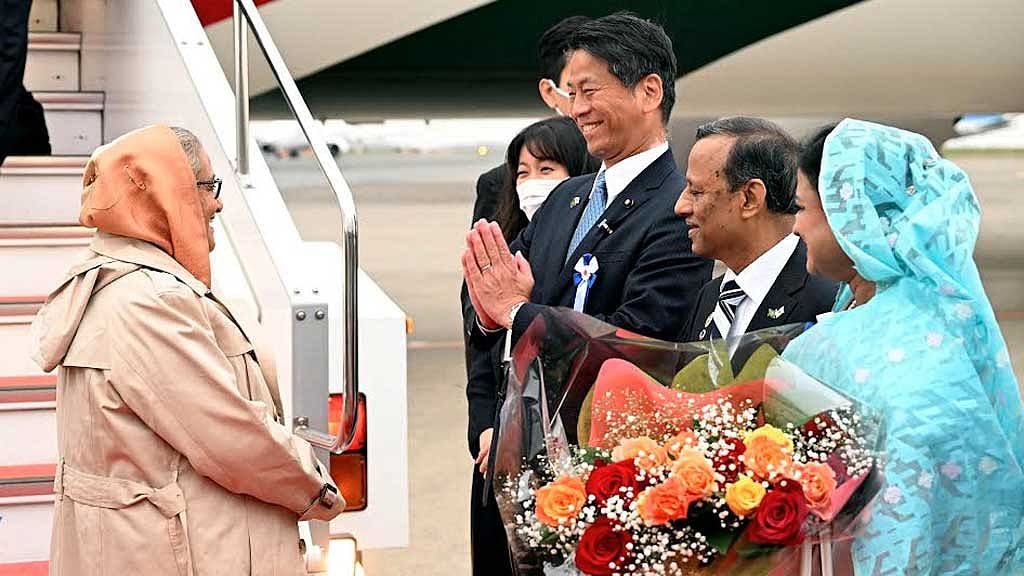
Prime Minister Sheikh Hasina has said Japan is “very close to her heart” as one of the few countries that recognised Bangladesh early into its independence and the friendship between the nations stood the test of time.
She mentioned it in an article titled “Japan holds special place in our hearts” published in the country’s largest and oldest English daily newspaper The Japan Times on Apr 25, the second day of her four-day visit to Tokyo.
"Japan is our trusted development partner. Bangladesh has received steadfast support for its development and has remained the recipient of the largest amount of official development assistance from Japan since our independence," she wrote.
"I'm again in Tokyo to embolden the existing bilateral ties between my country, Bangladesh, and Japan as our countries celebrate the 51st anniversary of the establishment of diplomatic relations."
The premier mentioned that Japan was among those few countries that gave early recognition to Bangladesh on Feb 10, 1972, less than two months after it achieved independence.
She brought up how Japan provided much-needed aid during the Liberation War and underlined the charitable gesture of Japanese schoolchildren who saved and donated their snack money to help the victims of the 1970 Bhola Cyclone and the war that ravaged our country as “unforgettable.”
"Since then, Japan has remained our time-tested friend. Japan is a country very close to my heart, just as it is to my family and our people," she said, speaking about her great respect for the country’s “miraculous development.”
“Time and again, I come to Japan to learn from its invaluable experiences. These encourage me to apply and devote myself in body and spirit to building Bangladesh in the image of this great country.”
Hasina pointed out that Bangabandhu Sheikh Mujibur Rahman, who also held much respect for the East Asian nation, was inspired by the design of the Japanese flag.
Hasina also spoke about the growing Japanese investment in Bangladesh, mentioning the recent ODA loan package where Japan provided $2.67 billion in soft loans, more than any other country.
“Our two-way bilateral trade surpassed $4 billion for the first time in the 2021-2022 fiscal year,” she wrote. Hasina also mentioned Japan’s involvement in some of the major infrastructure projects, including the metro rail and deep-sea port at Matarbari.
Hasina also extended her condolences to families over the tragic deaths of some Japanese technical experts working on the MRT line in the Holey Artisan incident in July 2016, calling it one of the “darkest episodes” in the country’s history.
“In spite of this tragic occurrence, our Japanese friends did not withdraw from the project, but instead diligently carried on with their work. With Japanese financial and technical assistance, the Dhaka MRT Line-6, the first of its kind in the country, was inaugurated in December,” she wrote in the article.
Hasina also highlighted Bangladesh’s growth in the article, mentioning that the country’s per capita income grew more than five times in a decade and a half.
Speaking about the hurdles Bangladesh is facing, Hasina wrote about the inception of the Russia-Ukraine war while recovering from the pandemic put the country’s development gains to the sword.
Moreover, she said, the adverse impacts of climate change were also hindering Bangladesh in reaching its desired goals.
Despite all hazards, Bangladesh's economy has been resilient and remained an attractive destination for foreign direct investment because of the country’s liberal policies and laws, which are favourable and encouraging to investment, she said.