Published : 30 Jul 2026, 11:59 PM
Updated : 08 Sep 2026, 09:28 AM


The release of a rescued tigress back into the Sundarbans is being celebrated as a landmark conservation achievement. But experts say it also serves as a reminder of the mounting pressures threatening Bangladesh's Royal Bengal tigers.
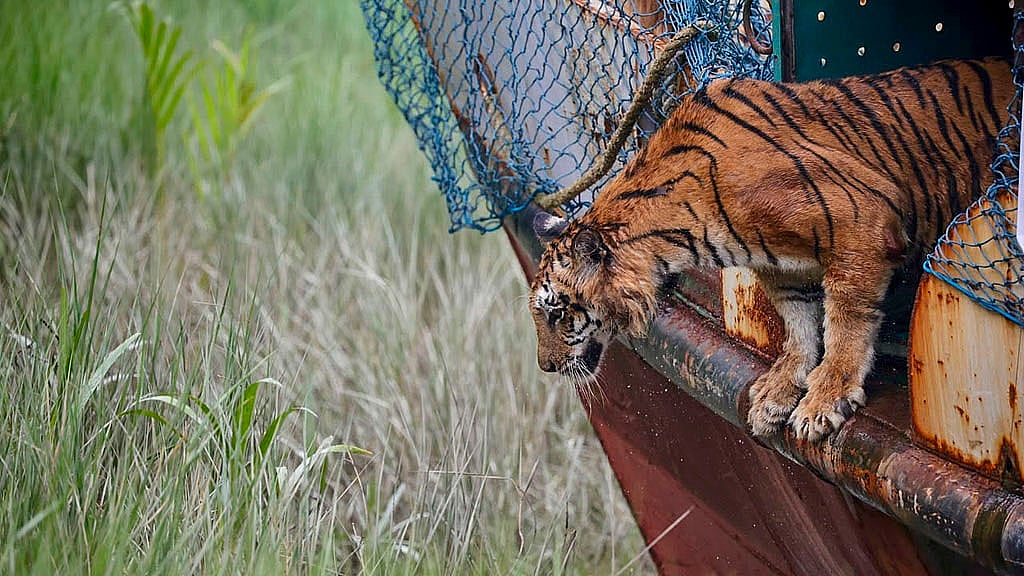
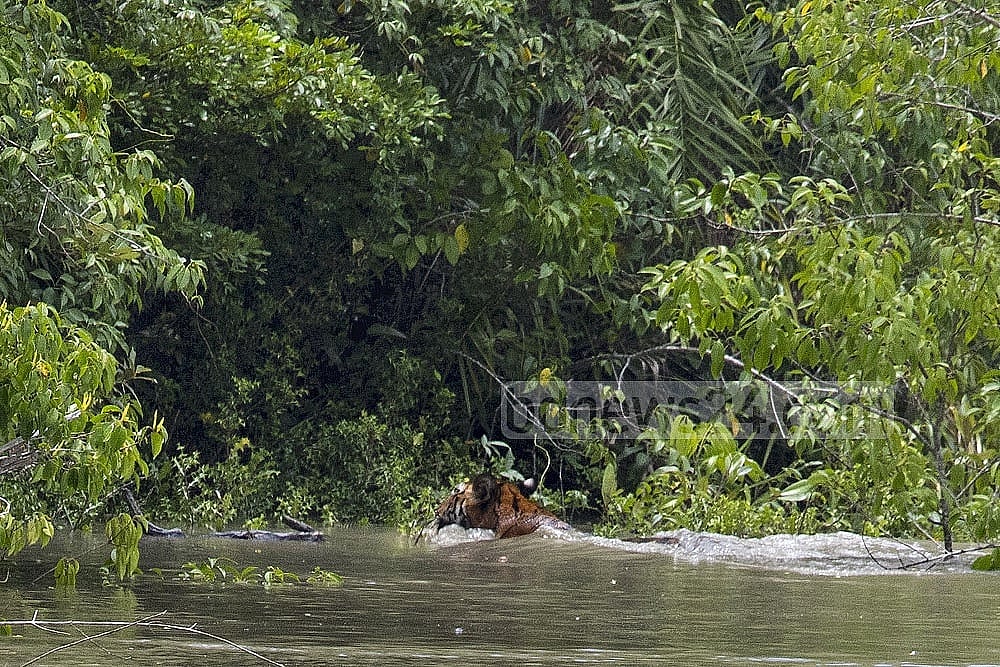
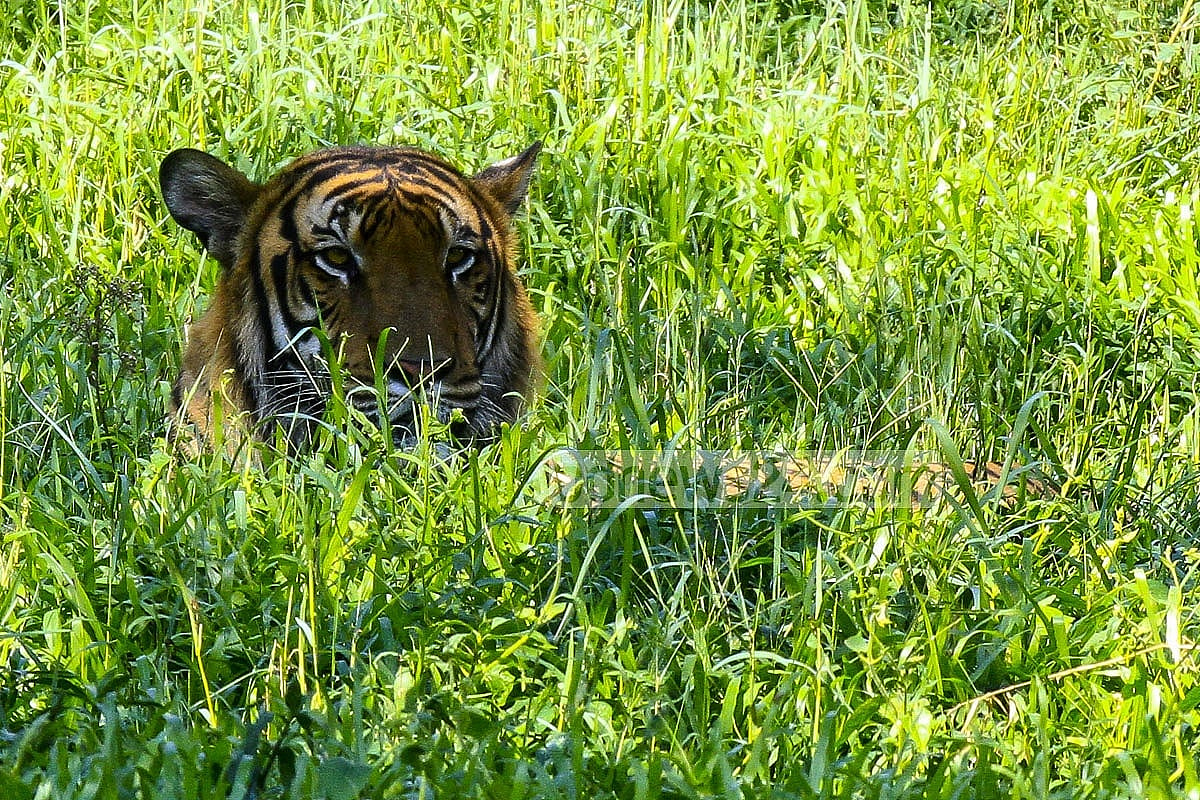
Earlier this month, the tigress took her first tentative steps back into the forest after six months of treatment and rehabilitation, marking a first for Bangladesh's wildlife conservation efforts.
Forest officials say the release reflects Bangladesh's growing ability to protect its endangered Royal Bengal tigers.
Yet conservationists argue that the moment also tells a more troubling story.
Behind the successful rescue, they warn, lies a forest where poaching, dwindling prey, habitat degradation and climate change are making survival increasingly difficult for Bangladesh's iconic predator.
Saved from the Snare
The tigress, estimated to be 9 or 10 years old, was found trapped in a deer poacher's wire snare in Chandpai Range on Jan 3.
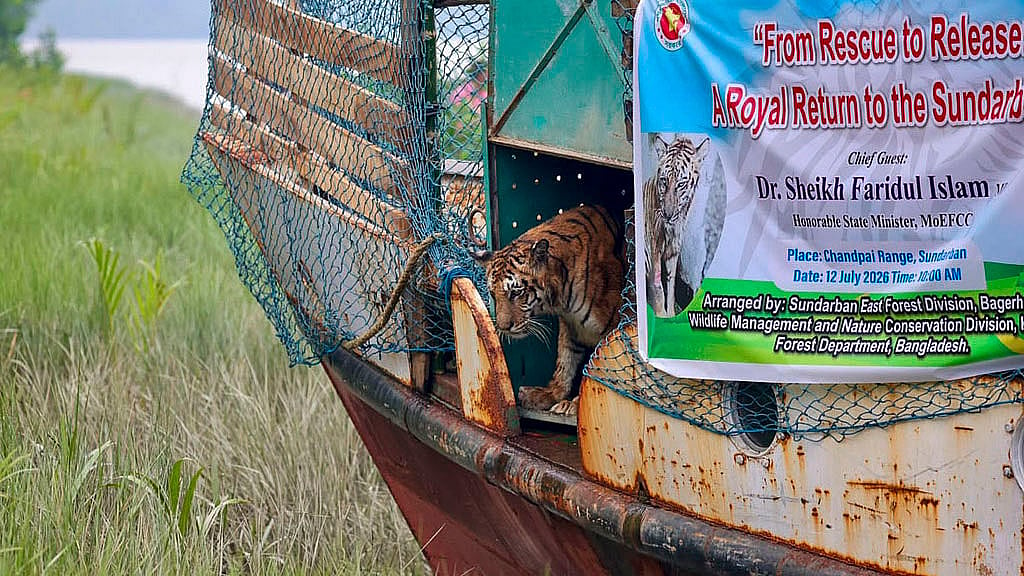
Wildlife officials rescued the animal the following day using a tranquilliser dart before transferring it to a rehabilitation centre in Khulna. After six months of treatment, it was released into the Andharmanik forest area of the eastern Sundarbans on Jul 12.
Anwarul Islam, former professor of zoology at Dhaka University and chief executive of conservation organisation WildTeam, described the release as a milestone for wildlife conservation in Bangladesh.
"The fact that an injured tiger could be treated and returned to the wild shows our conservation capacity has improved," he said.
Anwarul noted that areas where tigers were once killed now see local communities helping to protect them.
But he cautioned that major threats remain.
"Poaching of the tiger's prey has not stopped, and poisoned bait continues to damage the ecosystem," the WildTeam CEO added. "The food chain must be protected, and local forest-dependent communities need to be brought into conservation efforts."
'What About the Rest'
Environmental campaigners working in the Sundarbans dispute the Forest Department's optimistic assessment.
Nur Alam Sheikh of the Mongla-based organisation “Dhara” said tiger conservation cannot be judged by a single successful rescue while the broader ecosystem remains under pressure.
He said deer -- the tiger's main prey -- continue to decline because of illegal hunting, while organised wildlife trafficking remains active.
Post-mortems on dead tigers have also found evidence of poisoning linked to the use of toxic chemicals for illegal fishing inside the forest, he said.
Nur Alam added that law enforcement weakened after the political upheaval following Aug 5, 2024, allowing criminal activities inside the Sundarbans to increase.
"One tigress has been rescued and released, but the deer poaching that trapped her has not stopped. Were those responsible ever caught? Protecting one tiger is not enough unless the forest itself is protected," he said.
A Changing Forest
Researchers say climate change has become another long-term threat.
Rising sea levels, increasing salinity, and changing environmental conditions are forcing tigers to adapt by altering their feeding behaviour, shifting territories and, in some cases, venturing closer to human settlements.
Questions over the Release
Footage of the tigress's release prompted concern on social media after the animal appeared weak and unsteady as it emerged from its transport crate.
Professor MA Aziz of Jahangirnagar University, who was present during the release, rejected suggestions that the animal was unfit.
He said the tigress had undergone extensive medical, behavioural and hunting assessments before being certified for release.
During rehabilitation, she was initially fed meat before later being given live goats and wild boar to restore her natural hunting instincts.
Aziz attributed the animal's slow movements to the effects of anaesthesia, the lengthy road journey from Khulna, high humidity, poor ventilation inside the transport crate and the presence of large crowds, drones and boats at the release site.
"There were no health concerns. Physically she was fully fit. The conditions on the day simply made the release more difficult," he said.
Forest officials are now tracking the tigress using infrared camera traps installed around the release site.
Rezaul Karim Chowdhury, divisional forest officer for the eastern Sundarbans, said the cameras will automatically capture video and still images to monitor her movements.
Initial observations indicate that the tigress has settled safely into suitable habitat and is moving normally, he said.
Back from the Brink
The Forest Department says tiger conservation has improved significantly in recent years.
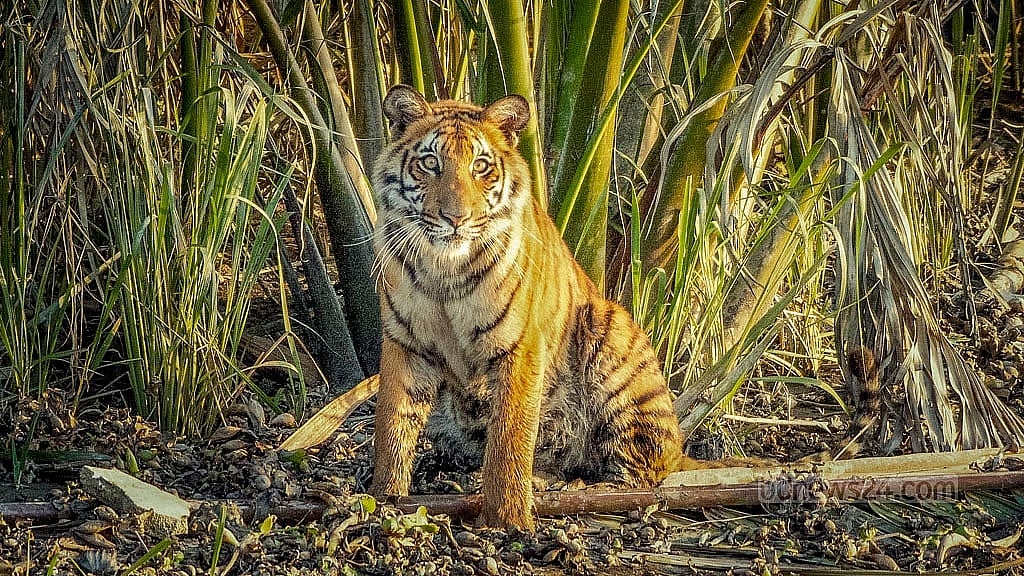
A nationwide camera-trap survey conducted between January 2023 and March 2024 estimated Bangladesh's Sundarbans now support 125 tigers, including at least 19 cubs.
Officials attribute the increase to stronger anti-poaching patrols, habitat protection, digital smart patrol systems, drone surveillance and Village Tiger Response Teams.
Authorities say enforcement has intensified, with hundreds of snares removed, nearly 1,500kg of venison seized in the eastern Sundarbans over the past three years and 149 suspects arrested in 96 wildlife cases. Similar operations have also expanded in the western part.
The government has also allocated food support to more than 8,200 fishing families during seasonal fishing bans in an effort to reduce pressure on forest resources.
Not Out of Danger
Professor Niaz Ahmed Khan, former country representative of IUCN Bangladesh, said tiger numbers had risen from 106 to 125 and international wildlife trafficking routes had become better controlled.
He pointed to India's success in almost tripling its tiger population over the past two decades as evidence that Bangladesh could achieve similar progress.
But he urged sustained public awareness, continuity in forest management and stronger protection of the Sundarbans, while cautioning against allowing luxury tourism inside the fragile ecosystem.
[Edited and adapted by the English Desk]