Published : 26 May 2026, 04:53 PM
Updated : 21 Aug 2026, 03:47 PM


Ambush in Alinagar
Coordinated siege: Armed mobs cut off road access before storming the site from three sides with firearms and heavy machinery
Terror in the dark: Workers faced a hunt for their lives, hiding in drains and bathrooms as bullets ripped through darkness and rain
A criminal empire: The assault exposes the grip of the elusive Yasin group, challenging state control over the lawless hills
The men had spent weeks building a new camp for Bangladesh’s joint security forces in the hills of Jungle Salimpur. By Sunday night, they were hiding in drains, bathrooms and darkened rooms, listening to gunfire rip through the rain.
For the 27 labourers working at the under-construction camp in Alinagar, on the fringes of Chattogram, the assault felt less like an attack and more like a hunt.
“If they had seen us, they would definitely have killed us,” said a worker named Mohammad Nirob, his face still frozen in fear on Monday morning.
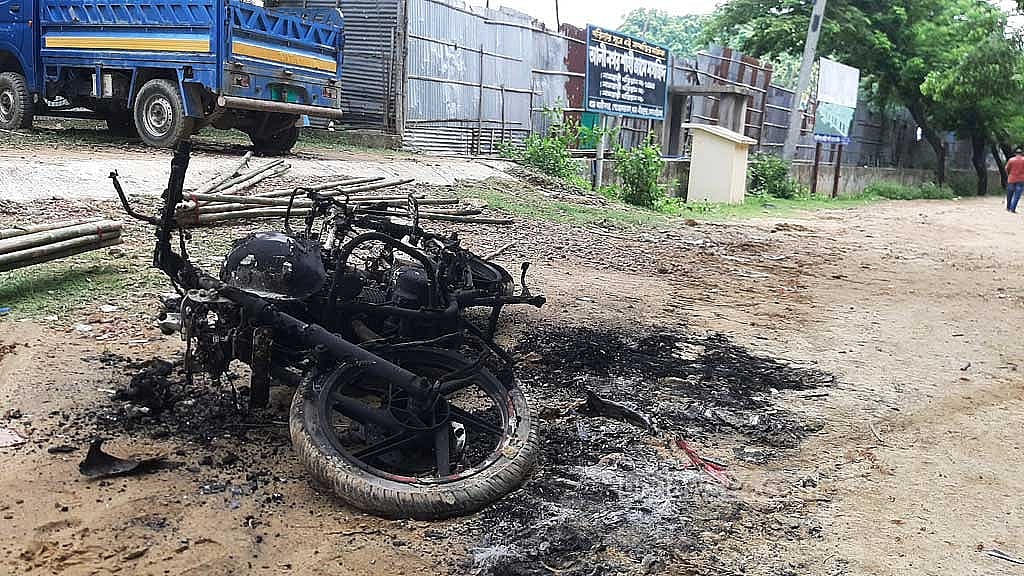
“They were angry because we were working here. It feels like I saw Azrael [angel of death] with my own eyes. We returned alive from the hands of death.”
Hours earlier, armed attackers had cut roads at several points before launching a coordinated assault on the joint forces camp from three directions deep into the night, triggering hours of gunfire.
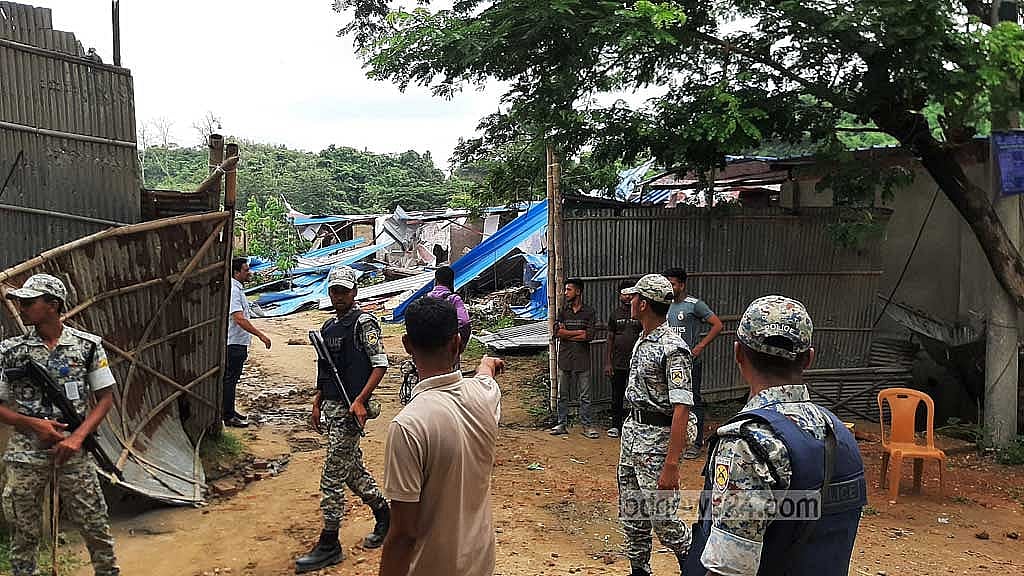
By dawn, parts of the camp lay shattered.
Authorities blamed the attack on the elusive Yasin group, a criminal network long accused of controlling large parts of Jungle Salimpur and nearby Alinagar from the shadows.
Lt Col Hafizur Rahman, RAB-7 commander, said between 200 and 300 armed men linked to the group had carried out the operation.
Swallowed by Darkness
The workers had been at the site since May 1, racing to finish construction before a planned post-Eid visit by the home minister.
Most of the work was already complete.
“We had dinner and went to sleep in the construction shed around 1am,” said labourer Maksudul Alam. “Suddenly we heard gunfire. We came outside and saw police members stationed at the camp running towards Alinagar School. Gunshots were coming heavily from that direction.”
Then came the truck.
Maksudul said he saw it approaching from the eastern side, followed by hundreds of men carrying sticks and weapons.
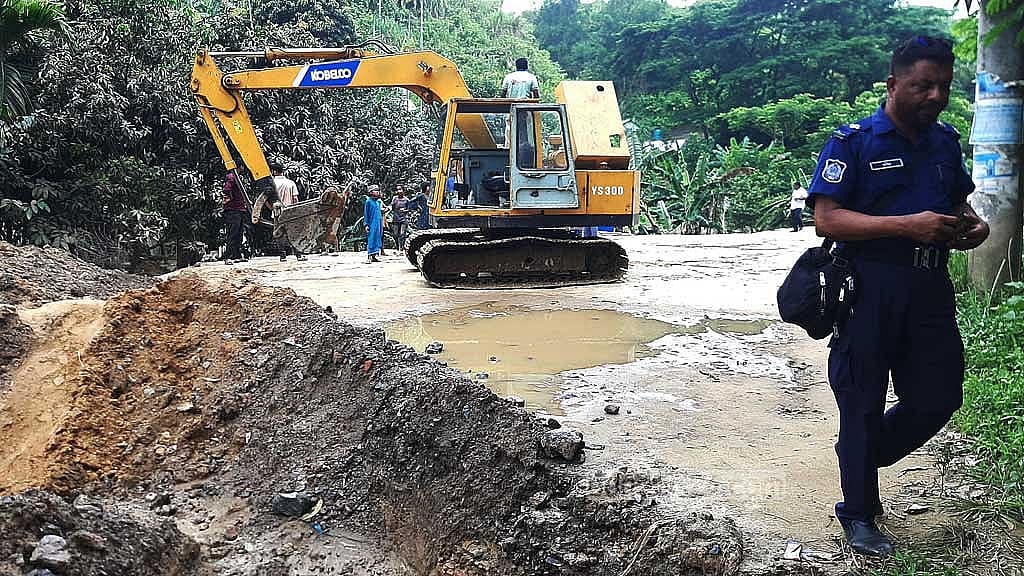
“The attackers brought an excavator on the truck. Others arrived on motorcycles. As soon as they came, they started attacking the camp under construction. They threw bricks and stones and fired huge amounts of bullets.”
Some carried “small weapons”, he said. Others held larger firearms.
“They started smashing the lights on the poles with stones and bullets. Then the whole area went dark. After that, heavy rain began.”
Three workers, including Maksudul, fled into a roadside drain to hide.
Four others ran into their quarters opposite the construction site.
Among them was Shahin Alam.
“We heard gunfire from the west side near Alinagar School,” he said. “Then we saw two to three hundred people running from the east. A truck was in front, motorcycles behind. Everyone had weapons, sticks and sharp objects.”
He said gunmen opened fire from motorcycles as they advanced.
“When they passed in front of our room, they found me and beat me badly,” Shahin said. “The others hid in the bathroom. They looted our money, mobile phones -- everything.”
Signs of Siege
The workers now believe preparations had been under way long before the assault.
Nirob recalled that on Saturday afternoon, a man aged around 25 or 26 entered the construction shed filming them on his phone and threatening them.
Sunday night also felt unusually tense.
Shops in the area normally stay open until midnight. But by 10pm, they had all shut.
“I went to buy cigarettes at the autorickshaw stand,” Nirob said. “A police member went with us. I saw five or six unfamiliar men staring at us. Their behaviour looked suspicious.”
By Monday morning, signs of the attack stretched across the area.
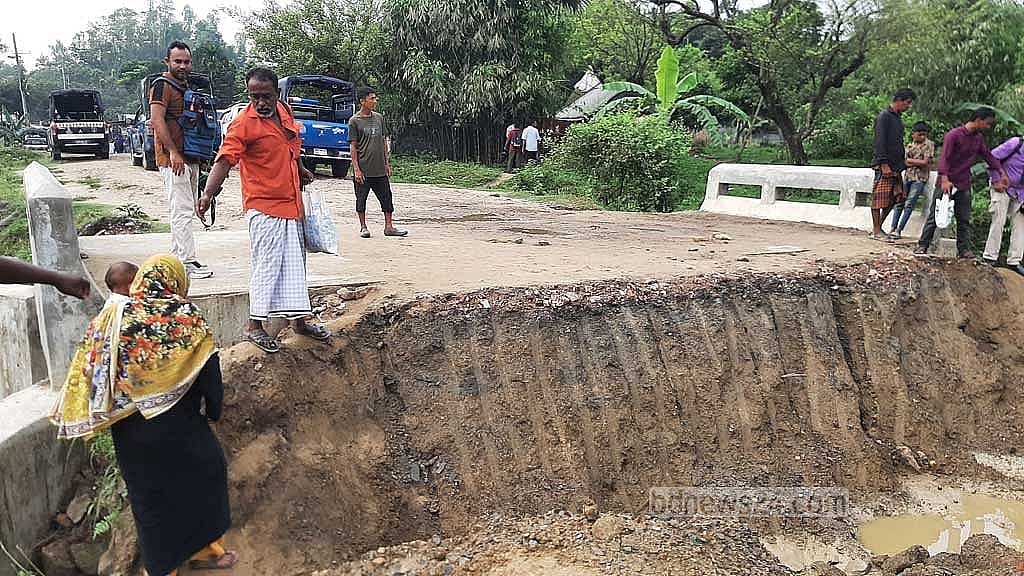
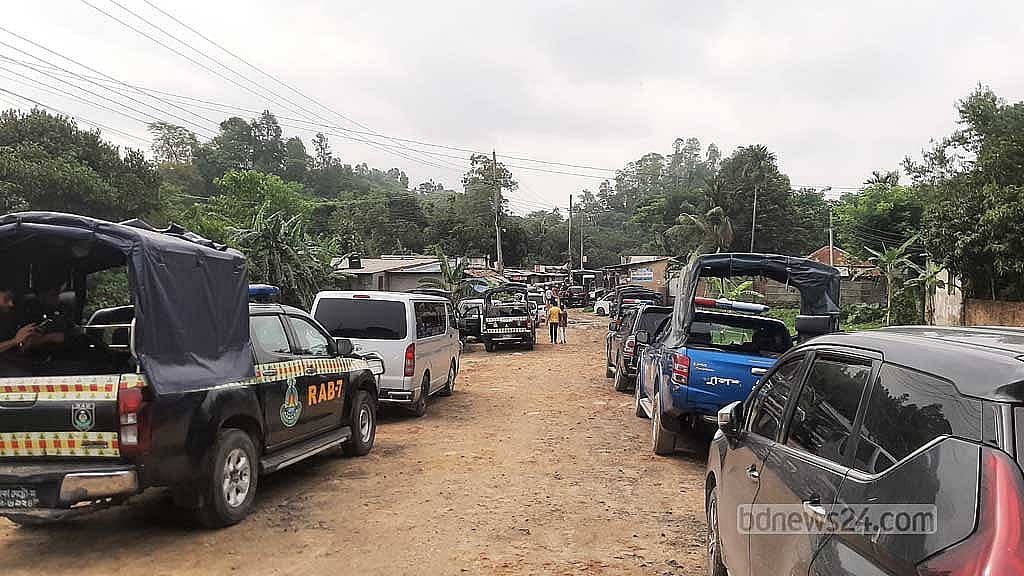
Roads had been carved open with excavators at four separate points along the route from Bayezid Link Road towards Jungle Salimpur, preventing Army, police, RAB and Border Guard Bangladesh (BGB) vehicles from entering.
Security personnel were forced to walk several kilometres to reach the site.
Officials and residents said the attackers had approached from the east, west and south of Alinagar School, hurling stones and firing heavily.
Lt Col Hafizur Rahman said the attackers carried locally made weapons, sticks, machetes, AK-47 rifles and Chinese firearms.
“There was extensive exchange of fire,” he said. “Most of our tear shells and shotgun rounds were used. At the last moment, when they fired AK-47s, joint force members also fired some rifle rounds.”
No injuries among security personnel were reported.
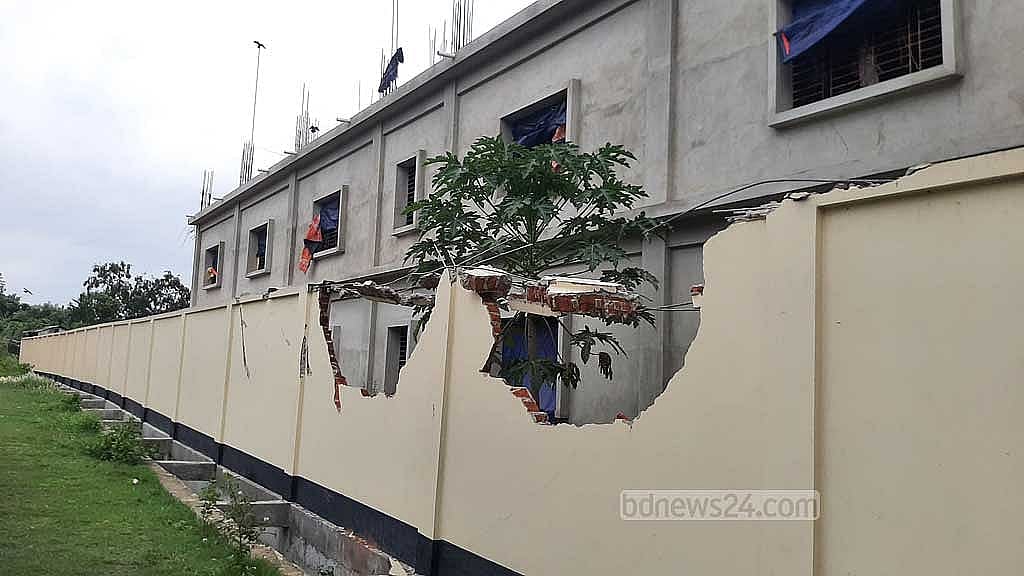
The attackers also used the excavator to smash parts of the school’s rear boundary wall before damaging the nearly completed camp.
“About 90 percent of the camp was already finished,” the RAB commander said. “They vandalised it and caused extensive destruction.”
Who controls Jungle Salimpur?
The attack has again raised questions over control of Jungle Salimpur -- a sprawling hill settlement long viewed as beyond the full reach of the state.
In January, RAB officer Motaleb Hossain Bhuiyan was beaten to death there after locals surrounded a security team during a raid.
In March, more than 3,000 members of law enforcement launched a major operation involving helicopters, drones, armoured personnel carriers and dog squads.
Afterwards, officials declared that control had been established.
But residents say the real power structure never disappeared.
According to locals, Yasin -- once a textile mill worker -- gradually consolidated control over Alinagar before expanding influence across Jungle Salimpur after Bangladesh’s political transition in 2024.
“Without Yasin, there is no king in Alinagar,” one resident said.
Police Superintendent Masud Alam admitted the area had long functioned as a criminal empire.
“They were waiting for an opportunity to strike back,” he said. “This has been their territory for many years. It will take time.”
For now, Yasin remains missing.
Officials say poor roads and weak communications allow him to vanish into the hills whenever forces arrive.
“If proper roads existed, we could reach here in five minutes,” Hafizur said. “Then he would have no chance to escape.”
For now, even after raids, checkpoints and armed patrols, the hills of Jungle Salimpur remain a contested landscape where authority is still far from settled.