Published : 13 Aug 2026, 06:34 AM
Updated : 08 Sep 2026, 09:32 AM


Diplomatic Discord: Tensions and Ties
Mending fractured ties: Both capitals signal a clear desire to rebuild relations despite recent diplomatic strain
Silencing Hasina in Delhi: Dhaka demands restrictions on the deposed leader’s political speech as a core condition
High-stakes summit talks: An invitation to the BRICS summit presents a delicate test for future bilateral visits
For Bangladesh and India, the question is no longer whether their strained relationship can be repaired, but what it will take to get there.
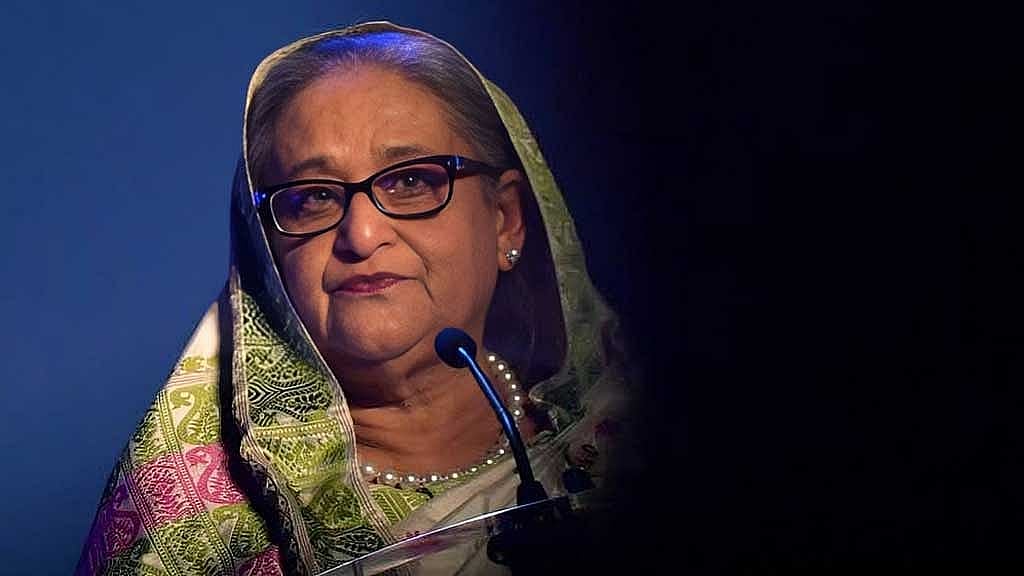
Just days after Sheikh Hasina’s press conference sent relations between Dhaka and New Delhi into another bout of friction, both sides are now talking about finding a way forward. But Bangladesh says the ground must first be made “conducive” for that to happen.
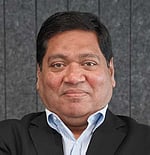
That could mean restrictions on Hasina, the former prime minister now living in India and facing death verdict in Bangladesh, from making political statements or holding news conferences, according to international relations analyst Prof Sk Tawfique M Haque.
“Bangladesh’s definition of a conducive environment is that Hasina will not be given any such opportunity in future, that she will not be able to hold a news conference there or make political statements.
“If that happens, Bangladesh will consider that a favourable environment has been created. Then a decision will be made on talks or the prime minister’s visit to India.”
Former ambassador Humayun Kabir, however, says political dialogue is essential to easing tensions.
Referring to a possible visit by Prime Minister Tarique Rahman, he said, “Political-level talks can happen only when the two [prime ministers] get an opportunity to meet somewhere.”
Delhi Invitation
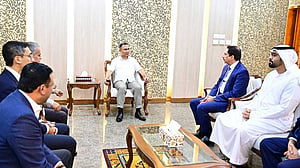
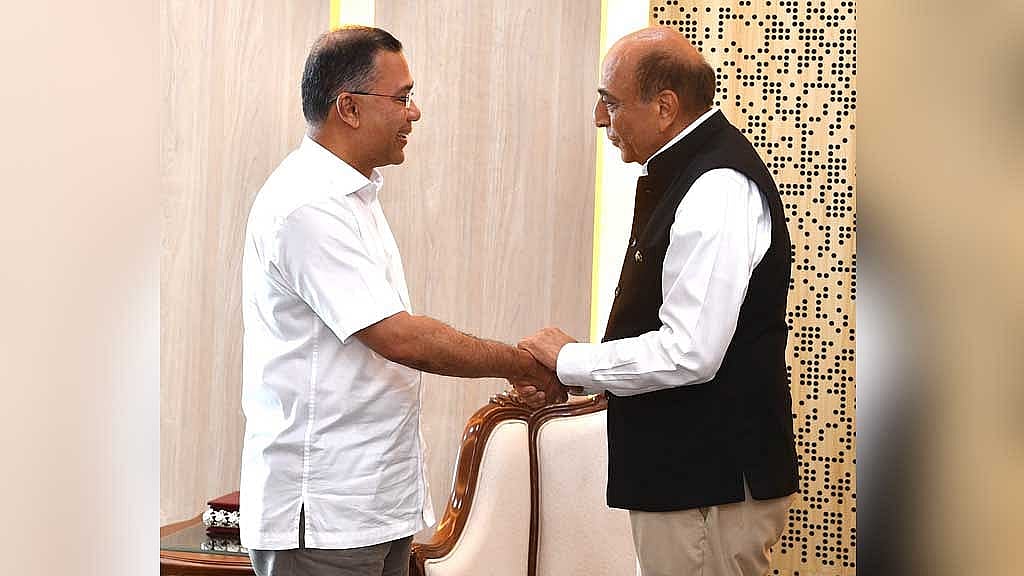
On Aug 10, India’s new High Commissioner to Bangladesh Dinesh Trivedi met Tarique for the first time. He also held talks with Foreign Minister Khalilur Rahman and Home Minister Salahuddin Ahmed.
Trivedi has repeatedly said outstanding problems can be resolved if the two prime ministers sit down together.
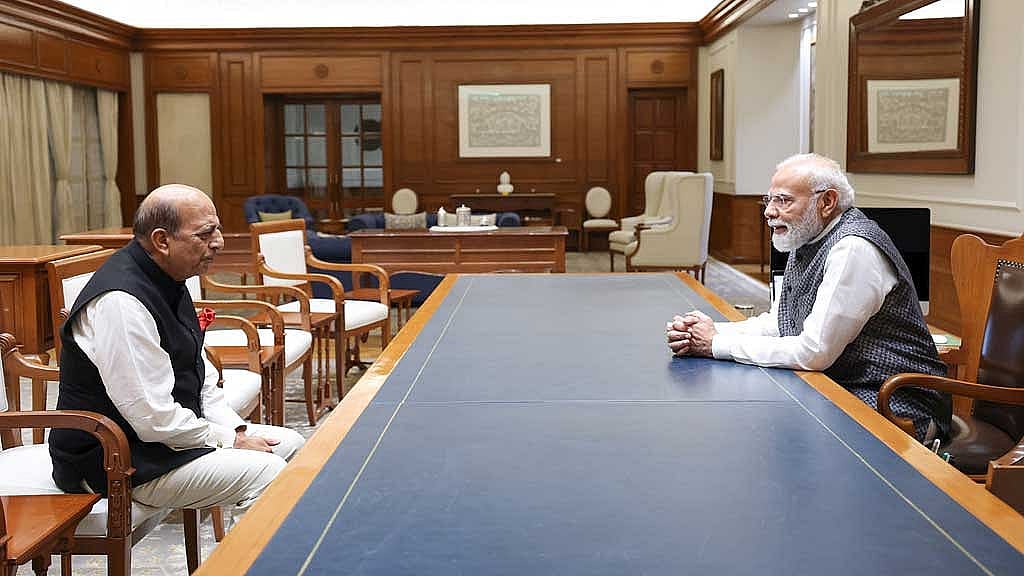
After his meetings in Dhaka, he travelled to New Delhi and met Indian Prime Minister Narendra Modi, briefing him on the discussions. Meanwhile, Parag Jain, chief of India’s external intelligence agency Research and Analysis Wing (RAW) visited Bangladesh with a four-member delegation.
That has sharpened a central question: will Tarique visit India?
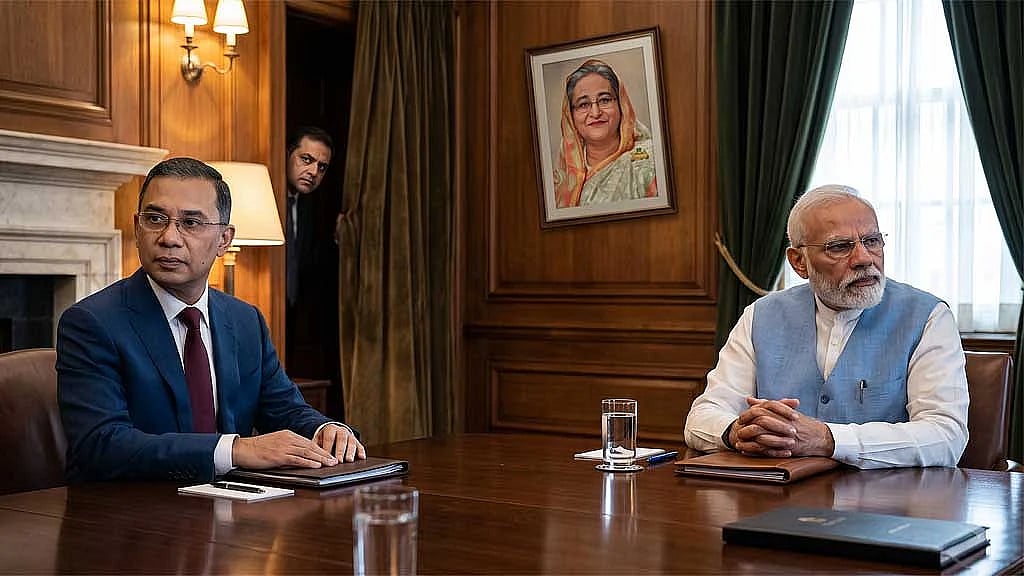
He has two invitations from Modi. One is for a bilateral visit; the other is to attend the outreach session of the BRICS summit in September as chair of BIMSTEC.
India will host the 18th BRICS summit in New Delhi on Sept 12 and 13. Bangladesh is not a BRICS member, but Tarique has been invited as a special guest in his capacity as BIMSTEC chair.
The government says no decision has been taken. Yet Khalilur’s comments suggest Dhaka may attach greater importance to a bilateral visit.
“The prime minister was not invited to BRICS. The chairperson of BIMSTEC was invited. Try to understand this distinction,” he said.
“Earlier, Indian Prime Minister Narendra Modi wrote a letter to our prime minister and that letter was handed over on the day our government was formed, where he invited him. The date has not been fixed, but there is an invitation. We will see when that happens.”
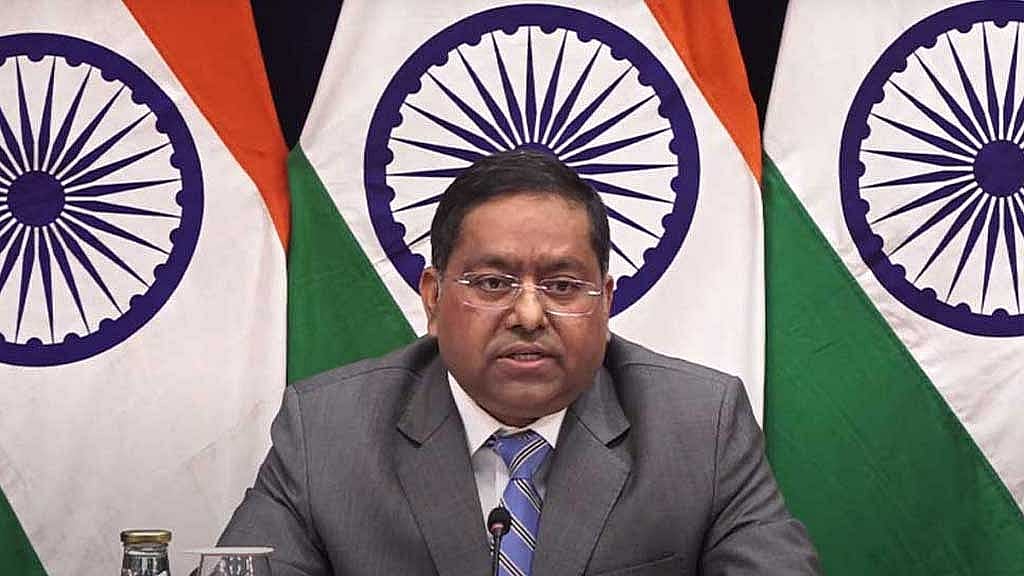
At India’s foreign ministry briefing on Tuesday, spokesman Randhir Jaiswal was asked about Tarique’s visit.
“Our high commissioner [Monday] had a meeting with the prime minister of Bangladesh, where both sides discussed matters of mutual interest. As for the invitation, India has extended an invitation for a bilateral visit as well as for the BRICS outreach session to be held in New Delhi. Updates will be provided on this matter.”
A Visit Still Possible?
Analysts are divided over a September visit. Some see the prospect as “very low”; others say it remains possible if dialogue progresses.
After meeting Tarique, Trivedi said Indians and Modi were waiting for his visit.
“There will be our issues, there will be Bangladesh’s issues. But the people have one issue, and that is good relations. And if there are good relations, it is a win-win situation.
He said the two countries’ shared history and geography could not be changed, making it necessary to resolve differences through dialogue.
He added, “I always say that we do not just share a border, we also share dreams. We share dreams, don’t we?
“I feel the days ahead will be very good. The issues have to be sorted out, from both sides. I am very confident. It was very good to meet him [Tarique].”
Kabir sees New Delhi’s recent moves as evidence of interest in repairing ties.
“I think they want our prime minister to go to this BRICS conference,” he said. “And then their RAW chief came and met the prime minister’s advisor. Even if you call it routine, I think it shows they are interested. Now it is our decision.”
He urged Dhaka to use the opportunity, saying the neighbours’ interests are “very closely intertwined”.
“If there is an opportunity to arrange good bilateral talks alongside this visit, that can be considered.”
Prof Tawfique is less optimistic. He believes the Trivedi-Tarique meeting was primarily an exchange of messages after the controversy over Hasina’s news conference.
“It seemed Bangladesh conveyed its position very strongly. After learning that position, the Indian side informed Delhi, or its main policymaking circles.”
He sees little chance of Tarique attending BRICS.
“I think the opportunity to attend the BRICS summit has gone down considerably. Nothing has officially been said yet, but I think it has gone down considerably.”
Dhaka could instead pursue the bilateral invitation, but only after securing assurances over Hasina.
“Bangladesh will want to be sure that before or after the prime minister’s visit, India will not give [Sheikh Hasina] any such opportunity. Once this environment is assured, the rest will move forward.”
Prof Tawfique believes India could accept that condition.
“There is no reason not to accept this. Relations between states cannot be damaged for one such person. I think Indian policymakers will also take this positively, and I see the possibility of relations moving forward in this way.”
Kabir says even the BRICS format can be negotiated.
“I think both sides want to discuss the format, and that can be discussed. It would not be bad to explore this as creatively as possible.”
He added, “I think there are both problems and interests here. From our side, we have to see whether we get an opportunity to find something that solves problems. If that happens, going can be considered positively.
“But if it is seen that no problem will be solved, then certainly there can be a different line of thinking.”
From Rapprochement to Renewed Tension
Relations deteriorated after Hasina’s government fell amid a student-led uprising in August 2024. After the BNP returned to power in February 2026, both sides began signalling a desire to normalise ties.
Then came Aug 5.
At a news conference organised by the Foreign Correspondents’ Club of South Asia in New Delhi, Hasina joined by audio and answered journalists’ questions.
Reuters reported that she called for the ban on the Awami League to be lifted and expressed a desire to return to Bangladesh.
Dhaka had already sought India’s cooperation in preventing Hasina, whom Bangladeshi courts have convicted in a crimes-against-humanity case and whom the government describes as a fugitive convict, from conducting political activities from India.
Before the event, Jaiswal said it was organised by a private organisation and had no Indian government involvement.
Dhaka nevertheless reacted furiously, describing the opportunity given to the “convicted fugitive” as an assault on Bangladesh’s sovereignty.
The foreign ministry said, ““Regrettably, Bangladesh’s repeated requests to the Government of India for returning convicted criminal Hasina to Bangladesh under the Extradition Treaty signed between Bangladesh and India in 2013, has not yet elicited a response.
“On the contrary, allowing her the opportunity to openly interact with the media under any pretext is deeply hurtful to our people’s sentiment and detrimental to the development of harmonious bilateral relations between Bangladesh and India.”
Jaiswal reiterated Friday that India had no role in the event and did not endorse its statements.
After Trivedi met Tarique on Aug 10, Khalilur said Bangladesh had asked India both to extradite Hasina and to prevent her from making political statements.
Asked about the extradition request on Tuesday, Jaiswal said: “...the position is clear that India is examining the matter under its established procedures, and updates will be shared when available.”