Published : 11 Aug 2025, 08:13 AM
Updated : 28 Aug 2026, 01:24 AM


In the coastal Upazila of Kalapara in Patuakhali district, the once vibrant Rakhine village of Chayanipara has vanished without trace, swallowed up during the construction of deep-sea Payra Port.
It is a fate that has befallen scores of other Rakhine settlements which, for more than two centuries, thrived along the coastal belt.
Some communities were swallowed by coastal erosion, their homes and fields claimed by rising tides. Others were lost to powerful interests seizing land with little regard for historic ownership. In recent years, state-backed infrastructure schemes have cleared entire villages in the name of progress.
Villages such as Rojpara, Khechapara, Punomapara, Dokasipara, Asalat Kha Para, Tajepara, Donkupaar, Fanchipara, Anantapara and Jojitongmbu have now slipped into memory, their names preserved only in oral histories.
What remains is a fractured map of Rakhine presence in Bangladesh: small, scattered enclaves struggling to hold onto their identity as the tide of change rolls in.
HOW THEY VANISHED
Mong Cho Thin Talukder, president of the Barishal regional unit of the Bangladesh Indigenous Peoples Forum and a member of the Rakhine community, traces their history through his own collection of books.
He said around 1784, after the Burmese king captured the Arakan kingdom, some 150 families travelled across the sea in 50 sailing boats to the southern coastal areas of present-day Barishal, settling first in Rangabali in Patuakhali.
Over time, with the support of the East India Company, they turned the wild, predator-infested coastal forests into farmland.
In 1908, the British government appointed a colonisation officer at Khepupara for the entire “Bakerganj-Sundarbans Colonisation” area, where around 237 Rakhine villages had developed.
From Jun 29 to Jul 31, visits to four localities in Patuakhali and Barguna revealed three main causes for the decline of the Rakhine population -- natural disasters, land grabbing, and the burden of legal disputes.
Local residents recall a devastating flood in 1965 that submerged the two Rakhine-dominated districts overnight, killing many and washing away entire villages.
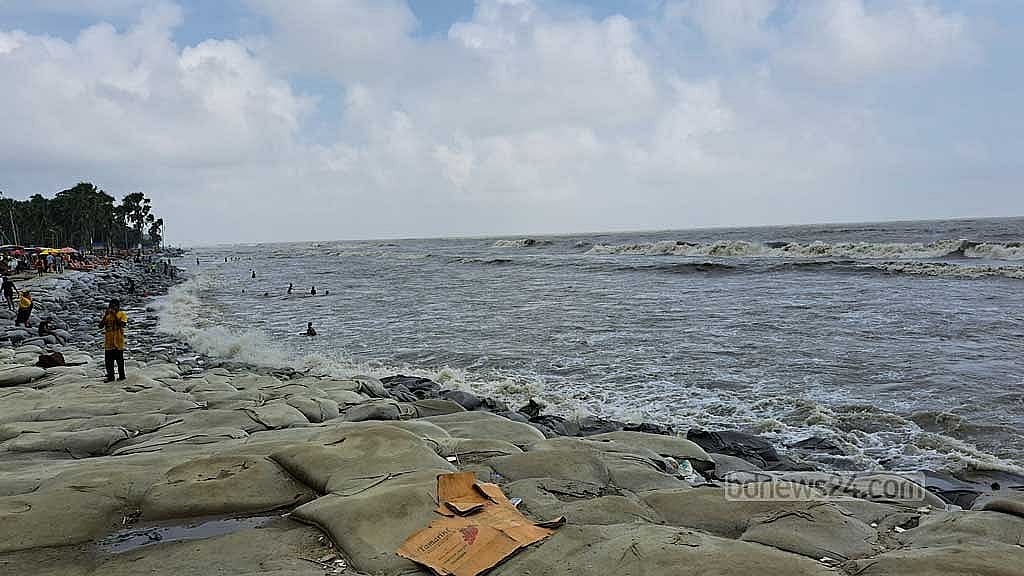
A July 2024 study in the Switzerland-based journal Frontiers in Marine Science found that between 1989 and 2020, Kuakata’s coastline shifted inland by 0.32 sq km annually.
“My birthplace was Tulatoli Para. There were 125 families. After the 1965 flood, only two families with six people survived. Many Rakhine died, many villages disappeared,” said Indrabonsho Thera, head monk of Kuakata’s Shrimangal Buddhist Monastery.
He said many land documents were lost in that disaster, giving outsiders an opportunity to take over property. “Gradually the Rakhine population declined. Those who remained eventually left, thinking -- what is the point of living where cyclones and tidal surges destroy our food every year?
“Later, when embankments were built, Bengalis settled here.”
Indrabonsho fears further displacement. “The way things are going, they might eventually try to drive us away completely,” he said, urging the settlement of pending land cases.
Talukder recalls his elders describing how some villages were left with no houses at all after the 1965 flood. “Dishonest officials forged land registry books and took our land. Sometimes a family sold one acre out of need but lost two or three acres instead.
“Many didn’t even know the language at the time. Day by day, the Rakhine numbers fell.”
With the Payra Port and power plants driving up land prices, opportunists took whatever they could, including cemeteries, reserve ponds, and Buddhist monasteries.
The second cause of vanishing villages is financial ruin from fighting court cases.
Mong Mya, a central committee member of the Indigenous Peoples Forum, said almost every Rakhine family still living in the region is fighting one or more land-related lawsuits. These civil cases take years -- often decades -- to resolve, forcing many to return to Myanmar’s Rakhine state.
In Laupara village of Barguna’s Taltali Upazila, several abandoned homesteads bear testimony to such migration. Village headman Ching Ten Mong confirmed that some moved to Myanmar’s Rosang, unable to bear the costs of litigation.
Beyond disaster and lawsuits, the most recent threat is outright occupation. Farmland was taken long ago, but now even homesteads are being seized.
Once there were 220 Rakhine villages, Mya said, but only 44 remain -- 27 in Patuakhali, 13 in Kalapara, and four in Rangabali. “We had over 50,000 people. Now there are about 2,500.
“Civil cases take 30 to 40 years. The community is not financially strong, so they can do little.”
A NOMADIC LIFE
Field visits and multiple sources confirm that nearly 90 percent of the Rakhine villages built along the coast over the past 200 years have turned into Bengali villages.
The Rakhine population has dropped by more than 90 percent.
Today, only around 2,500 Rakhine people remain across the 44 surviving villages.
In Chayanipara, Payra Port’s construction erased the last six families in November 2024.
Now, Ching Damo Rakhine, son of the former village head, rents a house in Kalapara while four other families live elsewhere like nomads.
“Our life has become that of wanderers,” he said. “When the land was acquired, they promised subsistence payments until resettlement. We got Tk 5,000 a month for five months. For the past three years, nothing.”
Ching Damo added that the port authority told them to find khas (state-owned) land themselves. “Later they pointed to recorded land -- just 40 decimals for six families. Our cremation ground alone was once an acre.
“We need at least one acre to keep our reserve pond, cremation ground, and place of worship.”
Meinthin Promila, an Adivasi rights activist from a Rakhine family in Kalapara, lost her ancestral village in Rangabali to the sea. “Many villages had already disappeared. Chayanipara went during the Payra Port project. Another village also vanished. Our existence is at stake.
“No matter which government comes, the face of the occupier changes, but the occupation does not,” she said.
CRUSHED UNDER LAWSUITS
Caritas data shows that 90-95 percent of Rakhines are now landless.
From 2007 to 2024, 112 land cases were resolved, some in their favour, others only on paper.
Over 100 cases are ongoing in Taltali alone, and around 130-140 in Kalapara.
Mong Ma suggested that the local administration create a dedicated desk for Rakhine affairs and hold monthly meetings to monitor their land situation. “That way, at least what land we still have could be protected.”
NAMES GONE
As the villages vanish, their names change too. Huichhanpara became Hossainpara, even in the official records of the Department of Archaeology.
Indrabonsho said the most striking example is Kuakata. “Originally the name was Gadla, meaning a place where fishing boats dock. Later, as roads were built and tourists came to see the sunrise and sunset, local leaders decided the name Gadla wasn’t attractive.
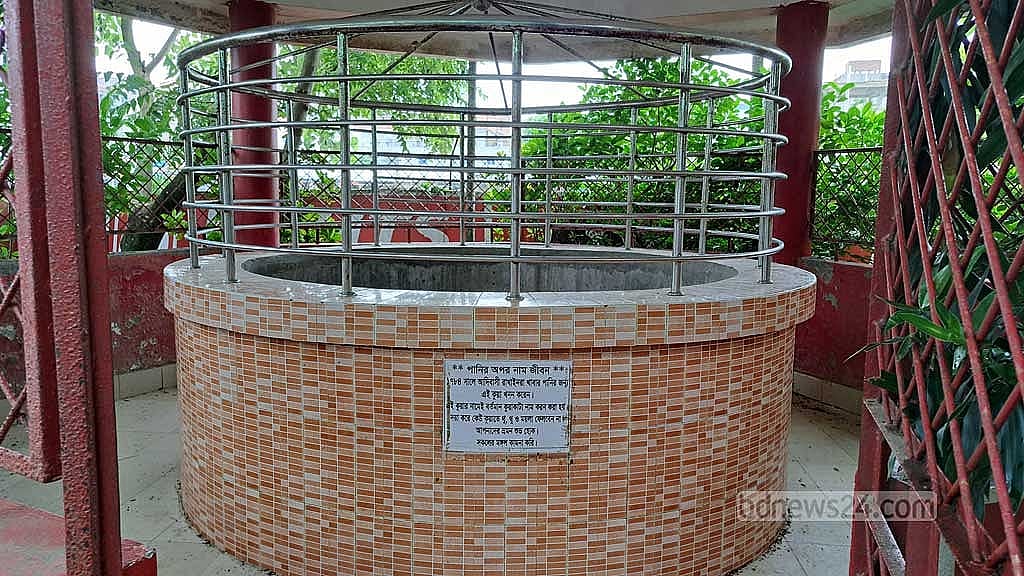
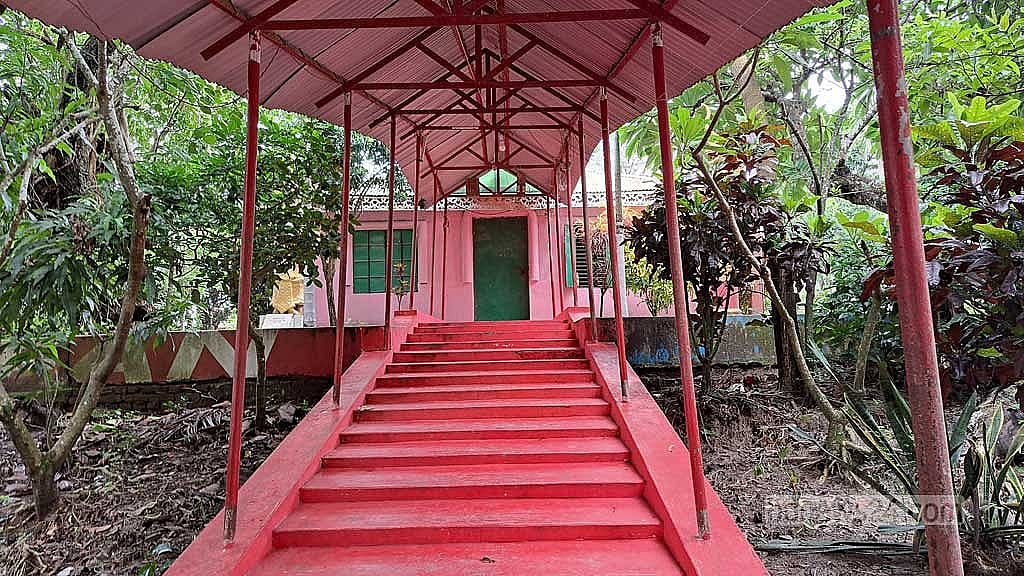
“Freshwater was scarce here, so many wells were dug. A sweet-water well beside this monastery sustained locals for years. People queued with ropes to draw water. That well gave Kuakata its name,” he added.
Mong Ma said many other names have changed -- Dokasipara became Dovashipara, Achalat Kha Para became Adalat Khan, Thonjupara became Anjupora, and Ongthenpara became Anantapara.
“Even if the names change, let the last few villages remain,” he added.