Published : 09 Aug 2026, 03:41 PM
Updated : 08 Sep 2026, 09:31 AM


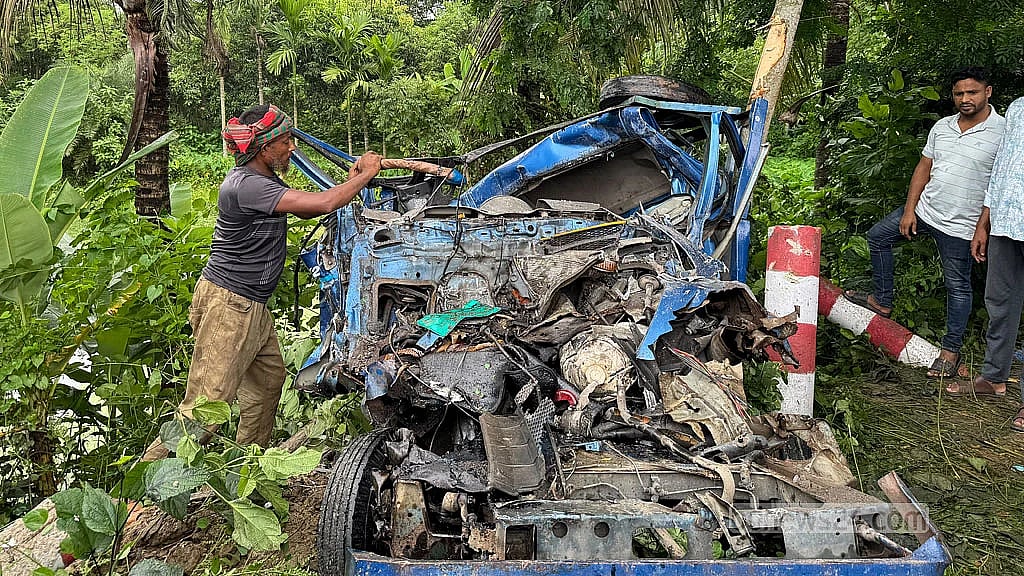
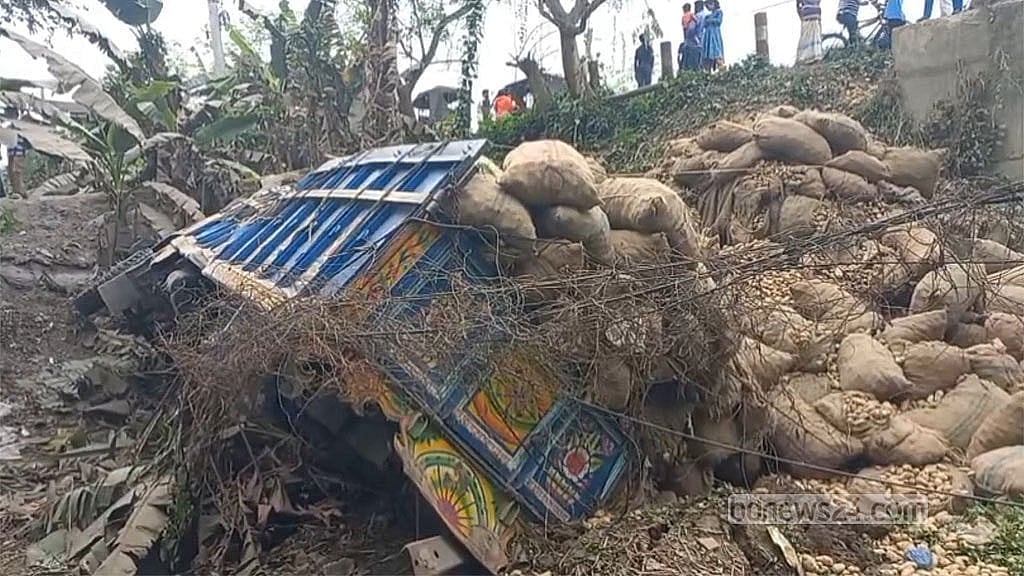
The Rajbari-Kushtia regional highway has become a dangerous stretch of road, with 35 people killed and 115 injured in 62 accidents over the past one and a half years.
The crashes occurred along a 31km section of the highway from Rajbari town to Shialdangi in Pangsha Upazila, according to Pangsha Highway Police chief Syed Al Mamun.
Authorities and local residents have blamed the frequent movement of three-wheelers, unfit vehicles, speeding and violations of traffic rules for the accidents.
At least seven accidents occurred on the road between Jun 12 and Aug 3, leaving five people dead and 20 injured.
On Jun 12, a child was killed and five people were injured when a private car collided head-on with a battery-powered rickshaw in Kalukhali.
On Jun 22, a young man was killed in a head-on collision between a truck and a private car in Kalukhali. Three people were injured in a separate collision between a bus and a truck in Pangsha on the same day.
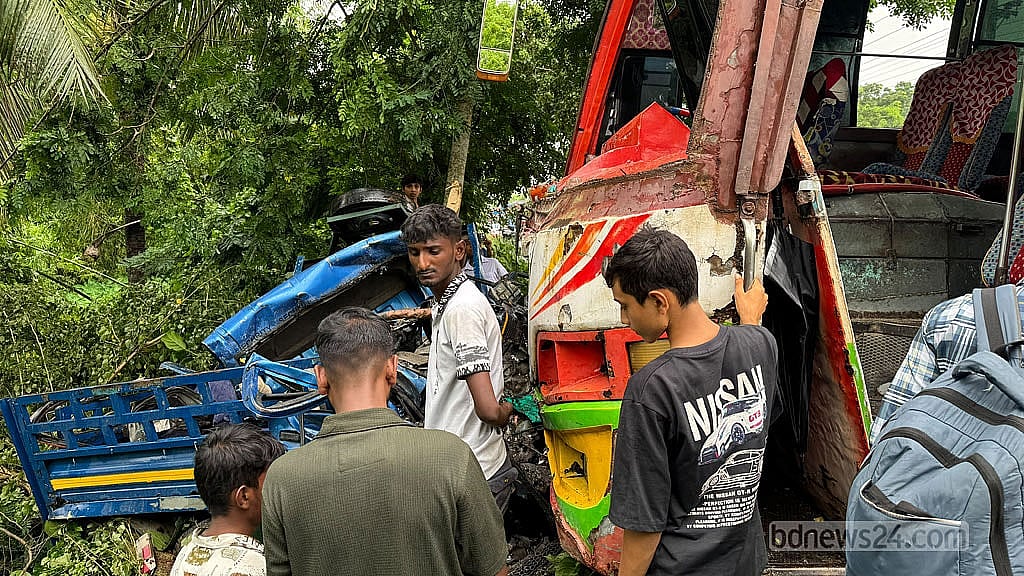
On Jun 29, six people, including an agriculture official, were injured when a truck collided with a private car in Kalukhali.
A bus and a pickup collided head-on in Kalukhali on Jul 1, killing one person.
The following day, a person was killed and another injured when a poultry-carrying pickup collided head-on with a motorcycle in the Chandni area.
The latest accident occurred on Aug 3, when a Golden Line bus collided head-on with a three-wheeler in Kalukhali. The driver of the three-wheeler was killed and five others were injured.
A visit to the highway found thousands of vehicles using the road, including battery-powered rickshaws, easy bikes, Nasimons, Karimons and other three-wheelers.
Passenger buses and goods trucks were also seen overtaking other vehicles without following traffic rules. Many were also speeding recklessly.
Local resident Khairul Islam said three-wheelers were not supposed to operate on the highway.
He also alleged that many vehicles using the highway were not roadworthy.
“Most of the vehicles do not have fitness certificates. When they brake, they suddenly move to the right or left. Then there is their reckless speeding. That is why accidents happen from time to time,” he said.
Drivers of three-wheelers and larger, faster vehicles, however, blamed each other for the crashes.
Arif Hossain, a driver of Anik Paribahan, blamed three-wheelers.
“The reason for accidents on the highway is three-wheelers. They do not know signals or traffic rules. Even when we honk, they do not want to move aside, which causes accidents,” he said.
Another bus driver, Md Razzak, said three-wheelers often tried to keep pace with buses and trucks.
“They do not follow any traffic laws. They suddenly brake and stop, making it difficult for us to control our vehicles,” he said.
He also cited slippery roads during rain as another risk.
“The road becomes so slippery because of rain that when we brake, the vehicle can slide into a ditch,” he said.
Three-wheeler driver Abdul Halim rejected the allegations.
“Drivers of large vehicles always blame small vehicles for accidents. That is completely untrue. We drive slowly on our side of the road,” he said.
“Large vehicles travel at reckless speeds and do not want to give way to smaller vehicles. If accidents are to be reduced, large vehicles must be brought under control first.”
Another three-wheeler driver, Ramzan Sheikh, said they had no alternative route.
“Where are we supposed to drive? We do not have a separate road. Yet they call our vehicles illegal. Catch the people who manufacture these vehicles. The administration cannot go there; it can only take action against us,” he said.
Local residents Bashir Molla and Jamal Pramanik said reducing vehicle speeds should be the first priority in efforts to curb accidents.
They also called for illegal three-wheelers and unfit vehicles to be removed from the highway.
They demanded that the road be upgraded to a four-lane highway to improve safety and reduce accidents.
Pangsha Highway Police chief Mamun said most accidents were linked to the movement of three-wheelers, unfit vehicles and excessive speed.
However, he said highway police face resistance when conducting drives against illegal vehicles because of what he described as “mob culture”.
“Even so, highway police regularly conduct drives and take action against illegal vehicles,” he said.