Published : 27 Mar 2026, 07:10 AM
Updated : 21 Aug 2026, 03:31 PM


The war stories of 55 years ago still burn vividly in the memory of octogenarian freedom fighter Mahfuz Alam Beg. Reflecting on that legacy of glory, he often finds himself pondering how far, and in what way, the country has progressed.
Looking back on more than five decades of Bangladesh, born out of the bravery of freedom fighters, he says the journey evokes a mix of hope and disappointment. For that reason, he likens the country’s trajectory to a childhood arithmetic problem about “a monkey climbing up and slipping down a greased bamboo pole”.
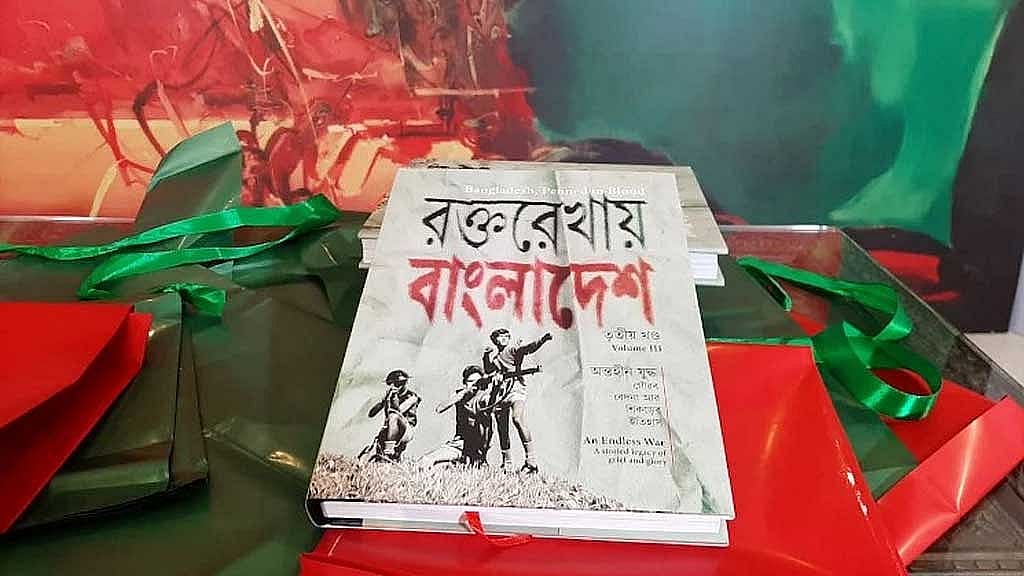
At an event making the release of the third volume of “Bangladesh, Penned in Blood”, a Liberation War-focused compilation by bdnews24.com on Thursday, the veteran fighter, better known as “Captain Beg”, was asked how he views Bangladesh’s journey when he looks back.
He said, “As children, we used to solve math problems about a monkey climbing and descending a pole. That’s what our country’s 55-year journey feels like -- a series of climbs and falls.”
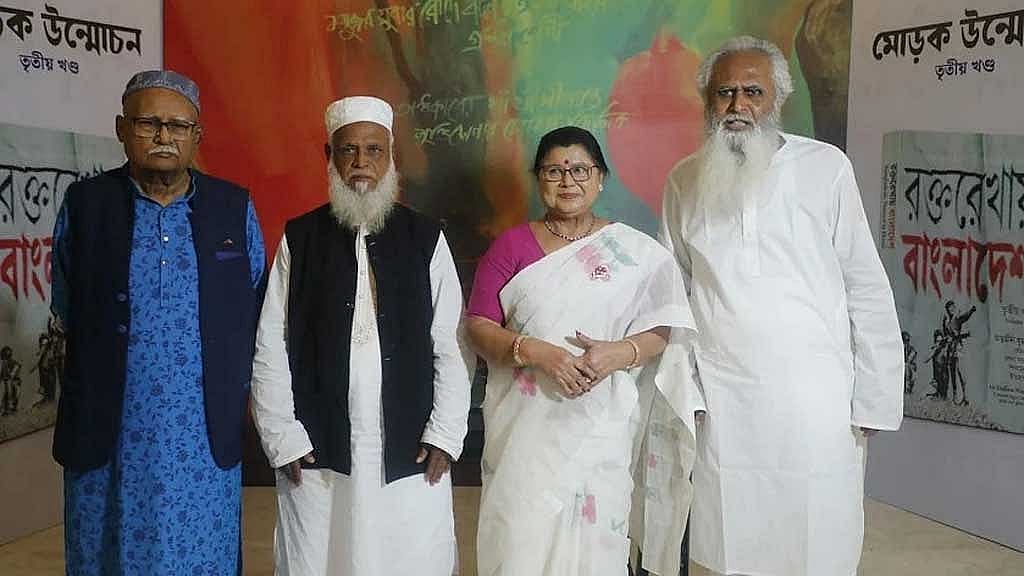
Expanding on the analogy, he said: “Our ideals shift with the times. If you hold power, I might rush to flatter you or make a deal. If another comes to power, we turn there.
“This is a flaw in our character: though we gained independence, we have yet to fully safeguard or utilise it. There is no guarantee we ever will.”
A member of Pakistan’s special forces at the war’s outset, he escaped to join Bangladesh’s Liberation War.
He initially served as operational commander of Sector 9, later taking full command of the Shamshernagar sub-sector.
He also formed the “Hardcore of Sergeants”, a youth commando unit, leading guerrilla, frontline, and naval operations across Satkhira, and compelling Pakistani soldiers to surrender in Barishal’s Dowarikathi.
Captain Beg highlighted the enduring value of Bangladesh’s core symbols -- language, flag, and national anthem -- saying: “These are fundamental. We cannot compromise on any of them.”
While expressing disappointment over societal ills, he found reason for hope in public dissent and constructive initiatives.
“People still protest, encourage sports and education, even as another group indulges children in drugs or accumulates wealth without accountability. Such behaviour corrodes society.”
On religious extremism, he emphasised a return to earlier values: “Fifty years ago, religious practice was harmonious. Hindus, Muslims, Christians coexisted. Today’s extremism is unprecedented.”
Recalling his father, Barishal BM College’s first Muslim professor, Captain Beg said: “I saw him attend Hindu and Christian ceremonies alongside his own faith. That respect shaped me.”
Finally, on protecting the legacy of real freedom fighters, he proposed a multi-party committee to authenticate lists, ensuring that those who truly fought are honoured, not merely those with youthful looks or polished appearances.
“The neglect of genuine freedom fighters began right after the war,” he warned.