Published : 15 Aug 2024, 12:56 AM
Updated : 21 Aug 2026, 11:32 AM


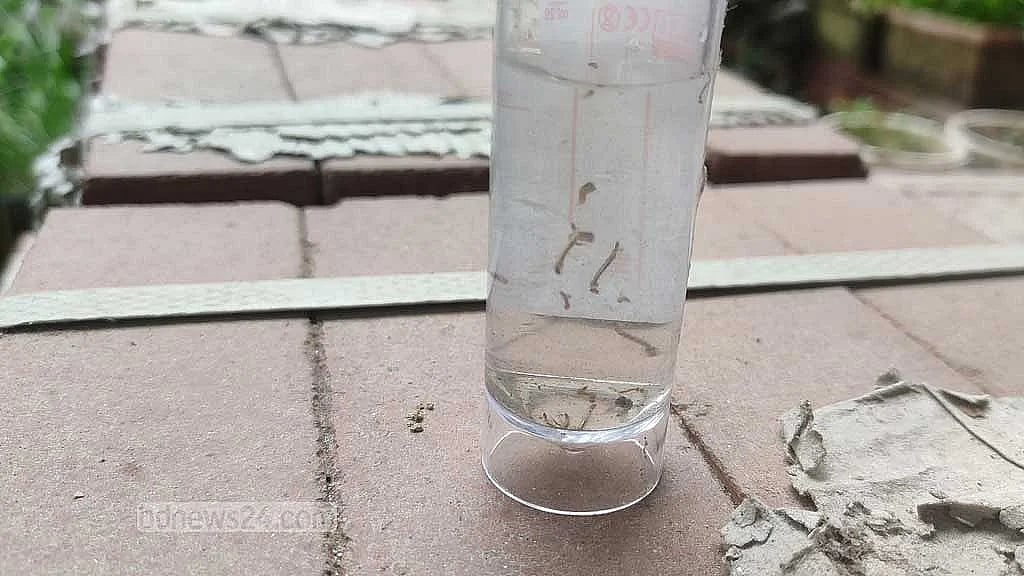
The larvae of the Aedes aegypti mosquito have been found in around 15 percent of houses under the two city corporations in Dhaka, according to a survey.
The Directorate General of Health Services, or DGHS, expressed its concerns over the presence of the Aedes mosquito larvae ahead of the monsoon.
The presence of mosquitoes found in this year’s pre-monsoon survey is higher than in 2023, the DGHS said at a press conference organised to publish the study at its office in Dhaka’s Mohakhali on Tuesday.
The survey was conducted from Apr 17-26 in the 99 wards of the two city corporations by the disease control section of the DGHS under a scheme to eradicate malaria and Aedes mosquito-borne diseases.
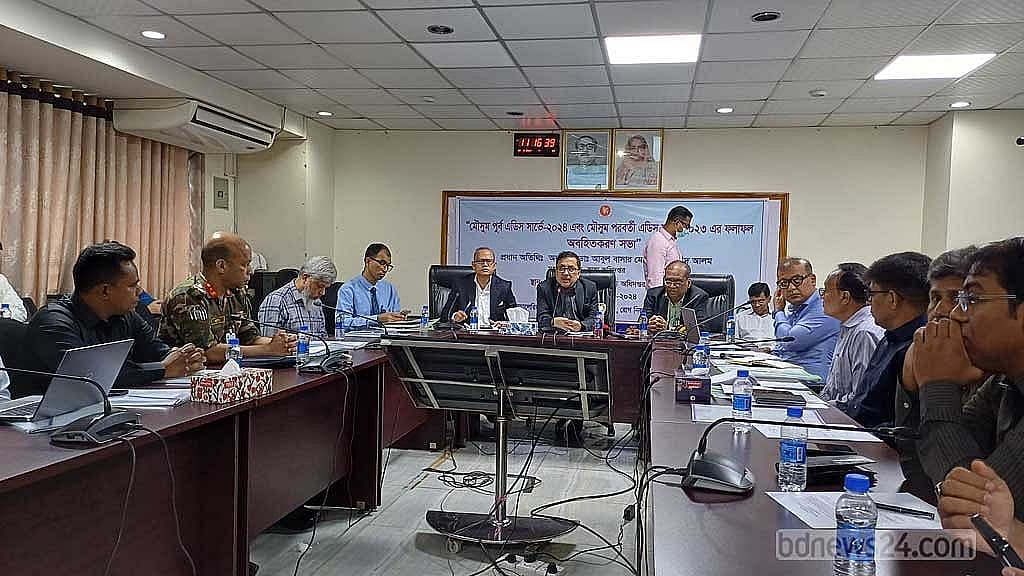
Dr Sheikh Daud Adnan, director of the DGHS' Disease Control Division, presented the survey findings at the press conference.
The DGHS team inspected as many as 3,152 households across the 99 wards as part of the survey and detected Aedes mosquito larvae and pupae in 463 spots, around 14.69 percent of total households.
Dr Adnan said the presence of over 10 percent of mosquitoes in the house index is considered risky. “Taking this into consideration, the presence of over 14 percent is hazardous. It is more alarming ahead of the monsoon.”
In 2023, the authorities visited 4,149 households in two city corporations and found larvae of the Aedes mosquito in 549 spots, which was 13.23 percent of the total houses.
The survey in 2023 was conducted during the rainy season when the presence of mosquitoes usually remains high. This year’s survey was done in April.
Professor Kabirul Bashar, an entomologist at Jahangirnagar University's zoology department, said the dengue outbreak may intensify further this year compared to previous years.
“This year’s survey was conducted in April. The density of mosquitoes is usually low in the dry season. The survey in 2023 was conducted in June, but the number of mosquitoes was comparatively lower than this year even though it was the monsoon season. As such, the number of mosquitoes will increase further if preventive measures are not taken. The dengue situation is likely to be even worse.”
According to the survey, around 42.33 percent of houses with mosquito larvae were multi-storey buildings, 21.6 percent were independent buildings, 21.6 percent were under-construction buildings, 12.74 percent were semi-brick buildings and 1.73 percent were open spaces.
The study said, the Breteau Index returns a high score above 20 in eight wards in the Dhaka North City Corporation and 10 wards in Dhaka South City Corporation. As such, the presence of mosquito larvae is risky in these wards.
The highest count of the Breteau Index, or BI, was 73.33 percent in Dhaka South City Corporation’s ward No. 13, consisting of Chamelibagh, Rajarbagh, Bijoynagar, Purana Paltan and Shantibagh areas. The B1 count was over 20 in several other wards in the DSCC.
The BI count was 43.33 percent in the Dhaka North City Corporation ward No. 12, consisting of Shah Alibag, Tolarbag, Paikpara and South Bishil areas.
Any areas with a BI count over 20 are considered unsafe.