Published : 26 Aug 2026, 02:39 PM
Updated : 08 Sep 2026, 09:35 AM


Weight of Absence: No Rest, No Reckoning
Unanswered grief: 182 missing, none officially declared dead, families left without closure
Bureaucratic entrapment: No death certificates mean unpaid debts, blocked inheritance and unregistered births
Untested bones, denied answers: 15 recovered bone fragments remain as DNA testing stays stalled
For two years, the families have searched everywhere they were told to look: police stations, government offices, politicians and the local lawmaker. They have collected promises, but no answers.
The authorities say they have found none of the 182 people listed as missing after the devastating fire at Gazi Tyres in Rupganj, Narayanganj, in August 2024. Officials believe they died in the blaze. Yet without an official declaration of death, their families remain trapped in a legal and bureaucratic maze.
Death certificates and inheritance documents remain out of reach. In some cases, even children born after the fire cannot be registered because their missing fathers have never legally been declared dead.
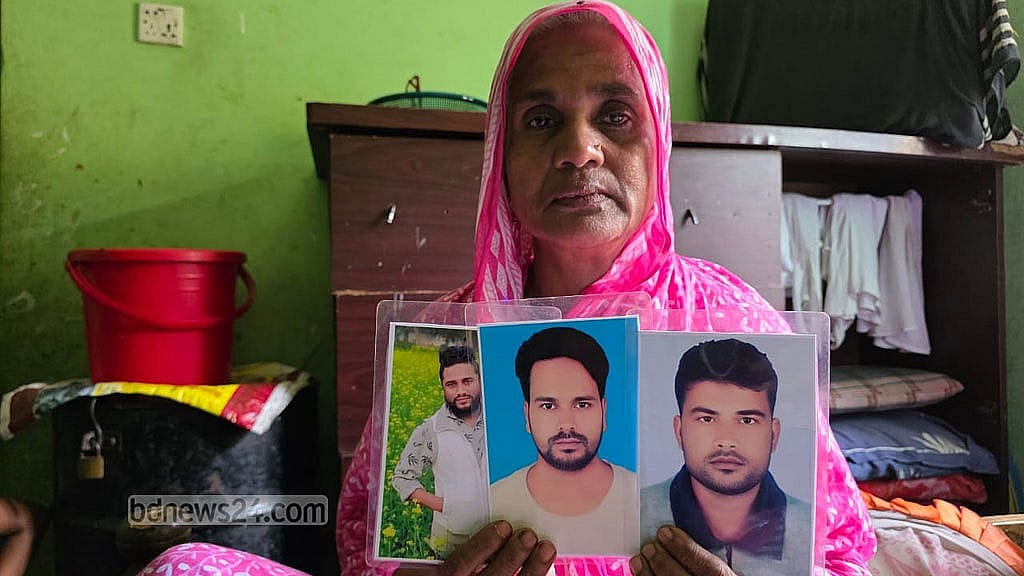
Shahadat Shikdar, 30, an electrician, his brother Sabbir Shikdar, 26, and their brother-in-law Jamir Ali, 36, disappeared after entering the factory during the violence. Three months later, Shahadat’s son Abdullah was born. Seventeen months on, his family still cannot obtain the child’s birth certificate.
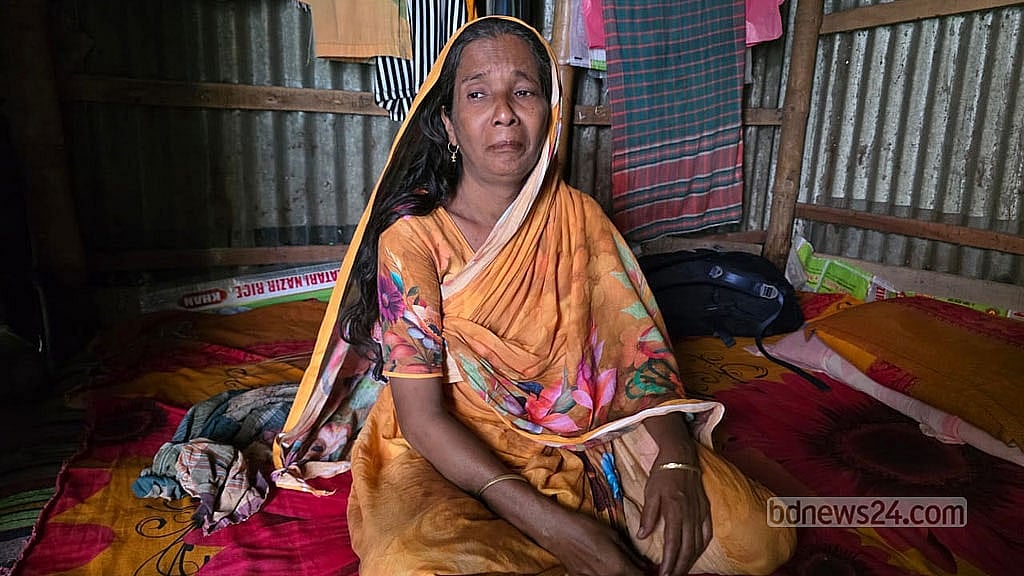
Shahadat’s sister Cynthia Akter said, “After all this time, since none of them has returned, we understand that they are no longer alive. But without a death certificate, we cannot obtain a birth registration or an inheritance certificate.
“My brother still had loan payments outstanding, and because his death has not been officially confirmed, those payments cannot be waived. The collection agents come to our home every day and humiliate us over it.”
She said she had spent the past two years knocking on countless doors in search of her three missing relatives.
“We have no anger or resentment. We are poor people -- what difference would our anger make anyway?”
As Cynthia spoke, tears streamed uncontrollably down her face.
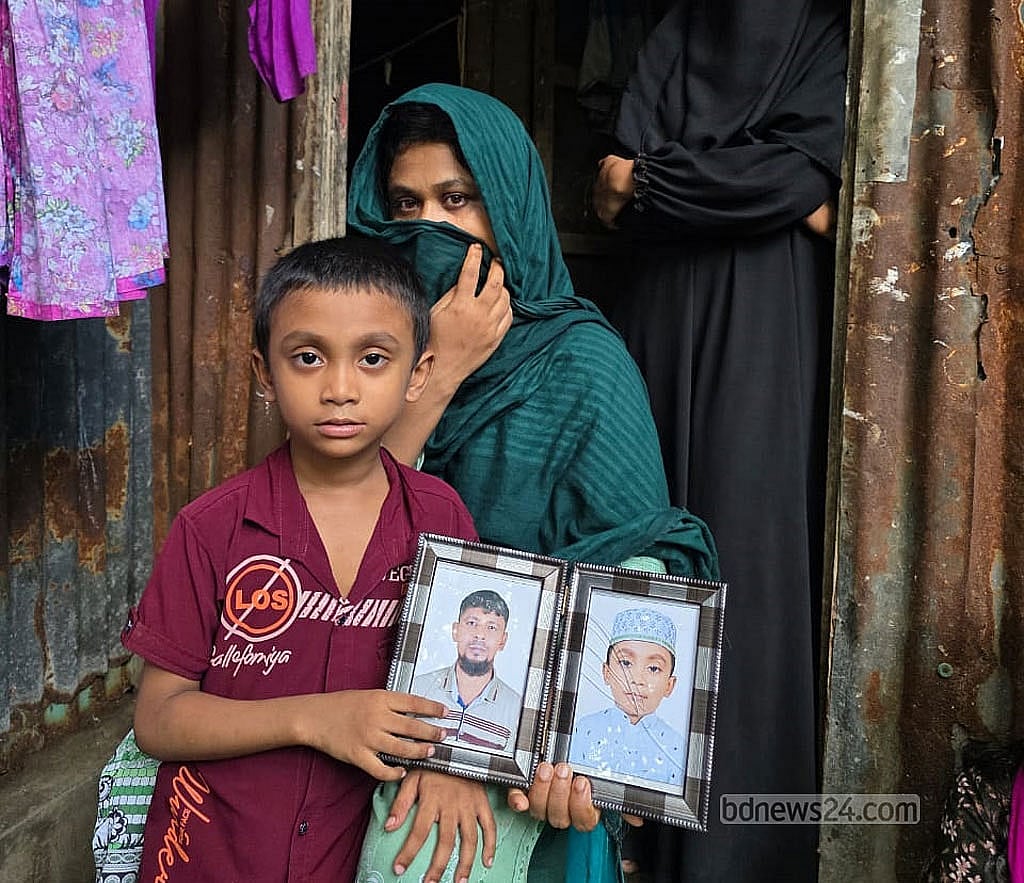
With three earning members of the family gone, she has been forced to shoulder its responsibilities alone. She now works at a local soap factory to keep the household afloat.
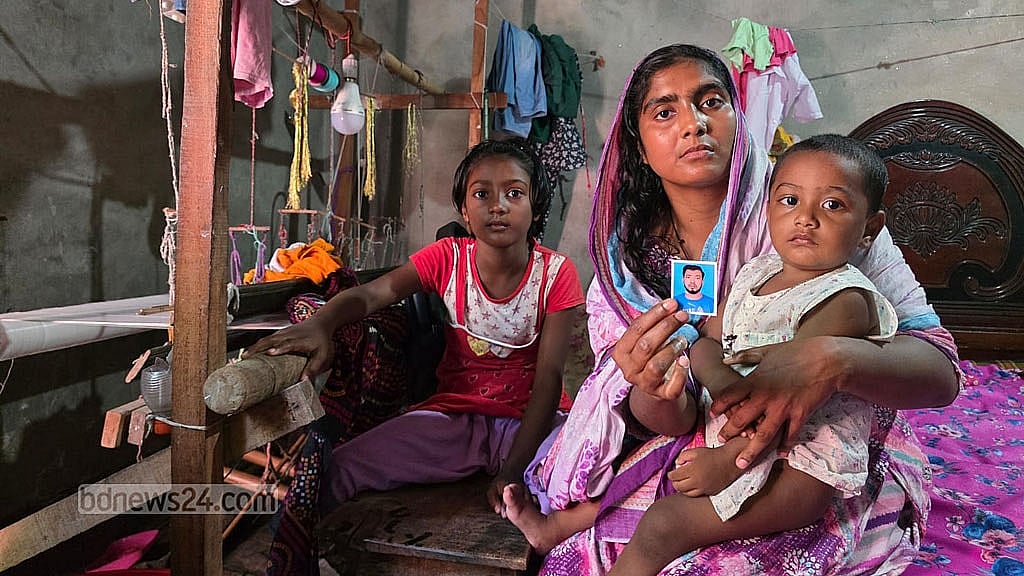
For Farzana, the wife of missing textile worker Mohammad Arif, 27, survival has meant sacrificing nearly everything while raising their two children alone.
She said, “We used to live in a rented house. When the rent arrears kept piling up, I moved back to my mother’s home. My son was studying at a kindergarten school, but I had to withdraw him. He now goes to a government school. My other child is still very young, and I cannot leave the baby behind to go out for work.
“Life is moving on for everyone else, but ours has simply stopped.”
What Happened that Day
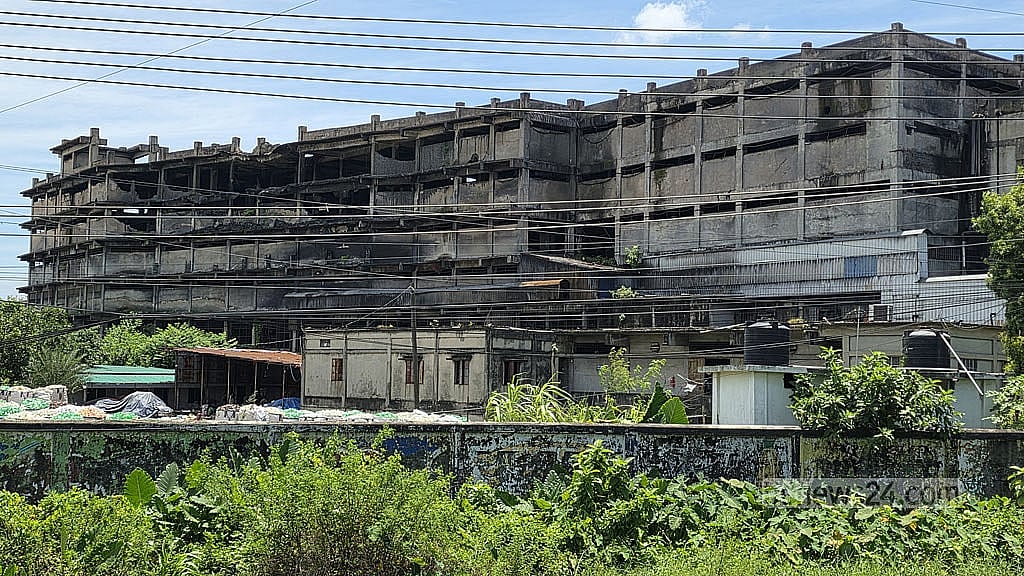
Gazi Tyres, located beside the Dhaka-Sylhet Highway at Rupganj’s Rupshi, belonged to former textiles and jute minister and Awami League lawmaker Golam Dastagir Gazi.
After the Awami League government collapsed on Aug 5, 2024, amid the July Uprising, the factory was attacked, looted and set ablaze twice.
A district administration investigation found that the first wave of looting began on Aug 5 and continued until Aug 8, during which several sections of the factory were deliberately set on fire. Electricity and gas supplies to the building were later disconnected.
Golam Dastagir Gazi was arrested at dawn on Aug 25. That same night, the tyre manufacturing factory was attacked again, looted and deliberately set ablaze for a second time.
By the following morning, hundreds of residents from nearby communities had gathered outside the factory gates, saying family members who had entered the premises during the looting and fire had never come back.
The administration began collecting photographs and national identity cards from relatives before compiling an official list of 182 missing people.
Twelve Fire Service units battled the inferno continuously for 22 hours before bringing it under control. The blaze was fully extinguished only after five days.
Because the building remained structurally dangerous after burning for such a prolonged period, rescuers were unable to conduct a comprehensive search operation.
Once the fire was extinguished, firefighters carried out a preliminary search in the basement but found no victims. No further rescue mission was ever conducted inside the building.
A Report, 15 Pieces of Bone—and No Answers
On Aug 27 that year, an eight-member investigation committee headed by then Additional District Magistrate Hamidur Rahman was formed. The committee submitted its 32-page report to the district commissioner on Sept 12.
The report concluded that had law-enforcing agencies and intelligence services ensured adequate security following the Aug 5 violence, the catastrophic fire nearly three weeks later might have been prevented.
Investigators said a group of intruders looting copper and chemicals from the fourth and fifth floors of the six-storey factory locked the ground-floor gates before setting the building on fire and fleeing. The presence of highly flammable materials allowed the flames to engulf the structure with extraordinary speed.
Five days after the fire, on Sept 1, the district administration organised a public hearing outside the factory.
Relatives from 80 families with missing members attended. After the hearing, despite restrictions, the grieving relatives entered the building themselves and recovered 15 fragments of human bone, which were later handed over to police.
Police had said at the time that the remains would be sent to the Criminal Investigation Department for forensic examination.
Additional Superintendent of Police (Crime) Tarek Al Mehedi told bdnews24.com last Saturday, “Following the list prepared in the investigation report, we searched for every missing person. We could not find a single one of them. We believe they have died.”
He said the bone fragments recovered from the building still remain at the CID forensic division.
“If DNA testing had been carried out, it might have established whether those bones belonged to the missing people. But because no instruction came from the higher authorities, no further action was taken.”
District Commissioner Md Raihan Kabir said several families had visited his office only days earlier seeking answers.
“A few families came to see me recently, but the police are supposed to investigate the matter and submit a report. We will look into it and provide an update.”
He also assured the families that the administration would assist them if they encountered difficulties obtaining official documents.
Meanwhile, Gazi Tyres authorities filed two complaints over vandalism and looting, but neither mentions the disappearance of the 182 people.
Senior Assistant Superintendent of Police Mehedi Islam said the investigations into those complaints were nearing completion.
“The factory authorities filed two cases over looting. Police are investigating both, and the investigations are almost complete. But there is nothing in those cases regarding the missing people.”
Asked why no separate police complaint had been filed over the disappearances, he said, “At the time, police could have filed a case themselves concerning the missing persons. Why they did not do so can only be answered by the officials responsible then.
“We searched for all 182 missing people using the official list. We found none of them.”
He said a report had already been forwarded to the district commissioner through the office of the superintendent of police.
Some relatives from three missing families said they had wanted to file complaints immediately after the tragedy. But frightened by suggestions that their loved ones had “died while looting” and warnings that filing a complaint would bring them even greater trouble, they chose not to proceed.
After conditions gradually returned to normal, several families eventually filed general diaries reporting the disappearance of their relatives.
Yet for mothers waiting outside government offices, widows raising children in cramped rented rooms, and sisters unable to register their nephews’ births, the passage of two years has delivered neither justice nor certainty.
What they now seek is painfully modest -- not compensation, not revenge, but a single official document acknowledging what they have already come to believe: their missing loved ones are never coming home.