Published : 17 May 2026, 07:40 AM
Updated : 21 Aug 2026, 03:44 PM


Key Highlights
Project finally approved after decades
ECNEC cleared the Tk 500 billion Padma Barrage after over 60 years of studies.
Major irrigation plan
It aims to store 29 billion cubic metres of water and boost farming across 2.88 million hectares.
Energy and infrastructure push
The plan includes 113MW hydropower plus roads, pipelines and river works.
Upstream water concern
Experts say success depends on India’s water flow under the Ganges treaty.
Split expert opinion
Supporters see development gains, critics warn of environmental and political risks.
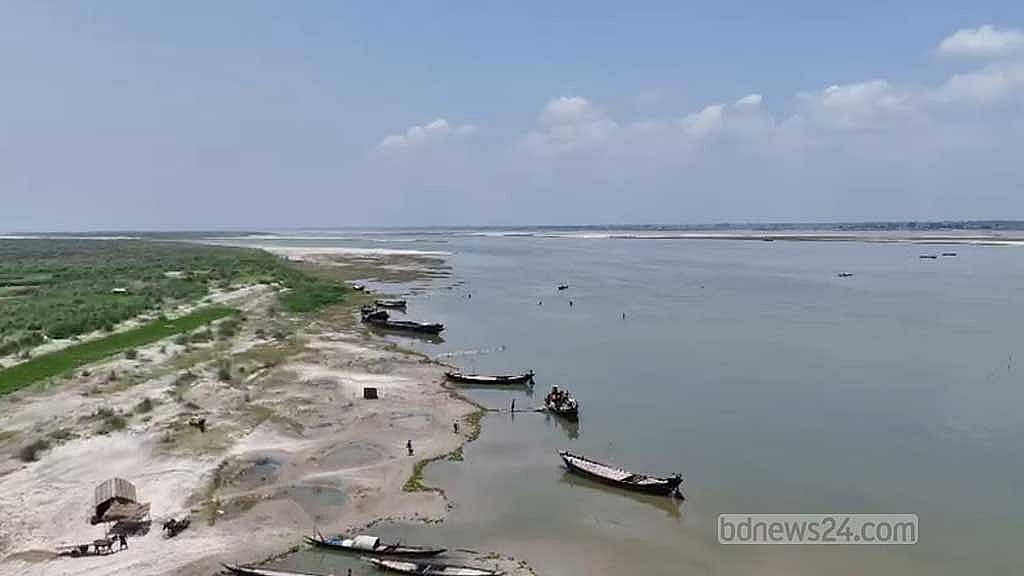
After more than six decades of studies, revisions and debate, the proposed Padma Barrage has been approved by the Executive Committee of the National Economic Council (ECNEC), pushing forward one of Bangladesh’s most ambitious river projects.
The decision has immediately reignited a national conversation over its effectiveness, environmental risks and dependence on upstream water flows from India.
Some experts say the success of the project largely depends on India’s role, as the Padma is an international river.
They argue that the matter should be addressed before the expiry of the Ganges water-sharing treaty.
The government says the project will help preserve water in the Padma during the dry season, revive five river systems dependent on the river, reduce salinity in the south-western region, restore the Sundarbans ecosystem by ensuring freshwater supply, ease waterlogging in areas including Bhabodah in Jashore, expand irrigation facilities and improve drainage systems in Padma-dependent areas.
The first phase of the nearly Tk 500 billion project is estimated to cost Tk 334.74 billion.
It will be implemented by the Bangladesh Water Development Board (BWDB) between July next year and June 2033 with government funding.
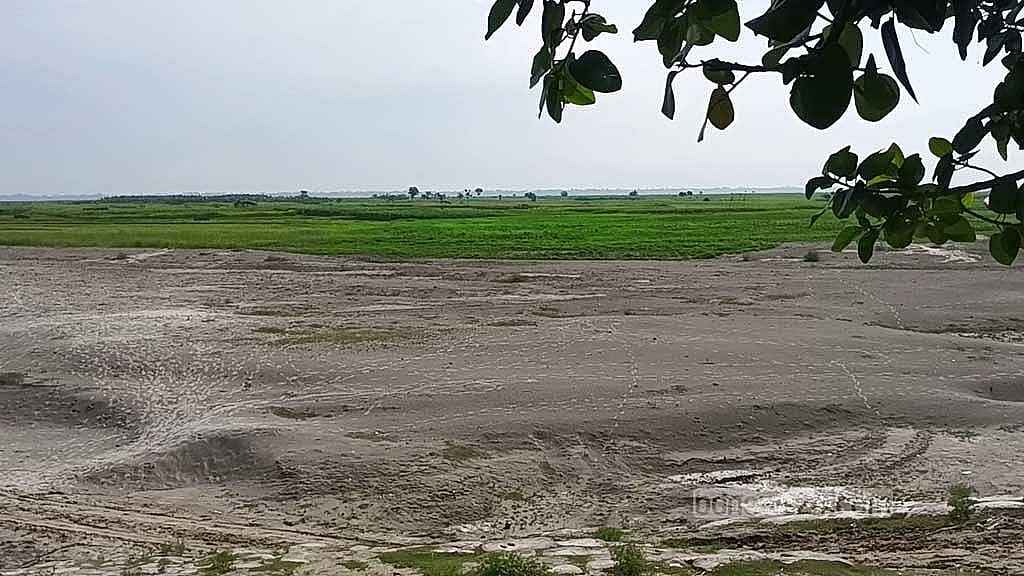
According to the water resources ministry, India built the Farakka Barrage in West Bengal in the 1970s to divert 35,000-40,000 cusecs of water from the Padma to the Bhagirathi-Hooghly River during the dry season and improve navigability at Kolkata Port connected to the Bay of Bengal.
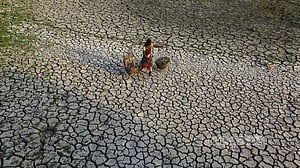
The ministry says upstream withdrawal of water at Farakka has drastically reduced the flow of the Padma in Bangladesh, causing river systems including the Hishna-Mathabhanga, Gorai-Madhumati, Chandana-Barashia, Ichhamati and Baral to dry up.
As a result, agriculture, fisheries, forestry, navigation, domestic water availability and ecosystems in these regions have been severely affected.
Reduced freshwater flow has also damaged the biodiversity of the Sundarbans, while rising salinity in rivers and canals in the southern region has threatened people’s lives and livelihoods.
Highlighting the project’s rationale, the ministry said the Padma is the only source of potable surface water for vast areas of Rajshahi, Pabna, Kushtia, Jashore, Khulna, Faridpur and Barishal districts.
It said sustainable water resource management is essential to boost agricultural, forestry and fisheries productivity, protect biodiversity and ensure balanced economic growth in these regions.
“To address challenging water management in the project area, construction of a barrage at a suitable location on the Padma has been considered the main solution,” the ministry said.
Environmental activists and several experts, including Bangladesh Poribesh Andolon (BAPA), have expressed concern over the project.
The organisation says the project proposal does not mention or discuss possible negative impacts.
“Yet the project will have significant adverse effects both upstream and downstream,” BAPA said.
Six Decades of Planning Behind Padma Barrage Project
Discussions on constructing a barrage on the Padma, one of the country’s longest rivers, began in the 1960s, followed by successive studies to identify a suitable site.
By 2000, four surveys had been completed to determine the optimal location. In 2005, a feasibility study was launched under a project involving a consortium of four local and three foreign consultancy firms, along with five local partner organisations.
The study was completed in 2013.
Unlike a dam, which blocks the flow of water, a barrage is designed to regulate or divert the flow in a controlled manner.
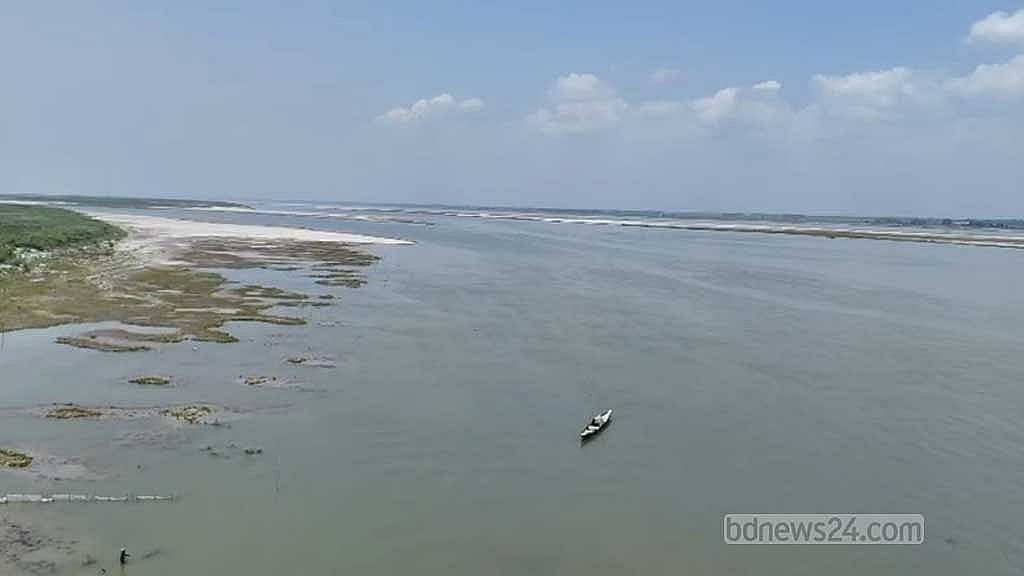
A barrage structure contains a large number of gates, whereas a dam typically has only a limited number of spillway gates for releasing water.
While dams create significantly higher water levels and pressure upstream, a barrage causes only a slight rise in upstream water levels. Barrages are generally constructed to support irrigation and water management.
Project documents say the study recommended measures to address complex water management challenges in the Padma-dependent region, boost national and regional economic growth, reduce poverty, and strengthen food security.
These included a barrage at Pangsa in Rajbari, three off-take structures for planned water distribution, revitalisation of five river systems, and other river management works.
Officials at the water resources ministry said the design, based on the study, was reviewed through field verification by the design circle of the BWDB between 2013 and 2016.
It was later refined following scrutiny by high-level technical committees before finalisation.
In October 2025, during preparation of the Development Project Proposal (DPP), the BWDB carried out satellite image analysis covering 14 years (2011–25), along with field inspections.
“The analysis indicates no significant shift in the bank line at the proposed site. Rather, char formation has been observed, which is considered favourable for construction,” says the project document submitted to the ECNEC.
Before the general election, BNP Chairman Tarique Rahman pledged construction of a barrage on the Padma at a rally in Rajshahi on Jan 29.
Referring to the pledge, Water Resources Minister Shahid Uddin Chowdhury Anee said after the ECNEC meeting that the project was approved considering all aspects.
“We are calling this a master plan project. It was part of our electoral commitment and manifesto. Before the election, Tarique Rahman addressed the people in Rajshahi and made this promise. To implement that commitment, the project has been approved by ECNEC,” he said.
The project is expected to ease water scarcity in 24 districts and benefit around 70 million people once implemented, he added.
What the Project Includes
According to documents presented at the ECNEC meeting, the Padma Barrage project proposes constructing a barrage at Pangsa with a water storage capacity of 29 billion cubic metres.
The 2.1km-long structure will be located between Pangsa in Rajbari and Satbaria in Pabna’s Sujanagar.
During the dry season (January–May), the project plans to supply water to multiple river systems, including at least 239 cubic metres per second (cumecs) to the Hishna–Mathabhanga system, 230 cumecs to the Gorai–Modhumoti system, 80 cumecs to the Chandra–Barasia system, 22 cumecs to the Ichamati system, and 25 cumecs to the Boral river system.
Additional allocations include 64 cumecs for the Godagari pump house, 136 cumecs for the Ganges–Kobadak (G-K) Irrigation Project, and 3 cumecs for the Rooppur nuclear power plant.
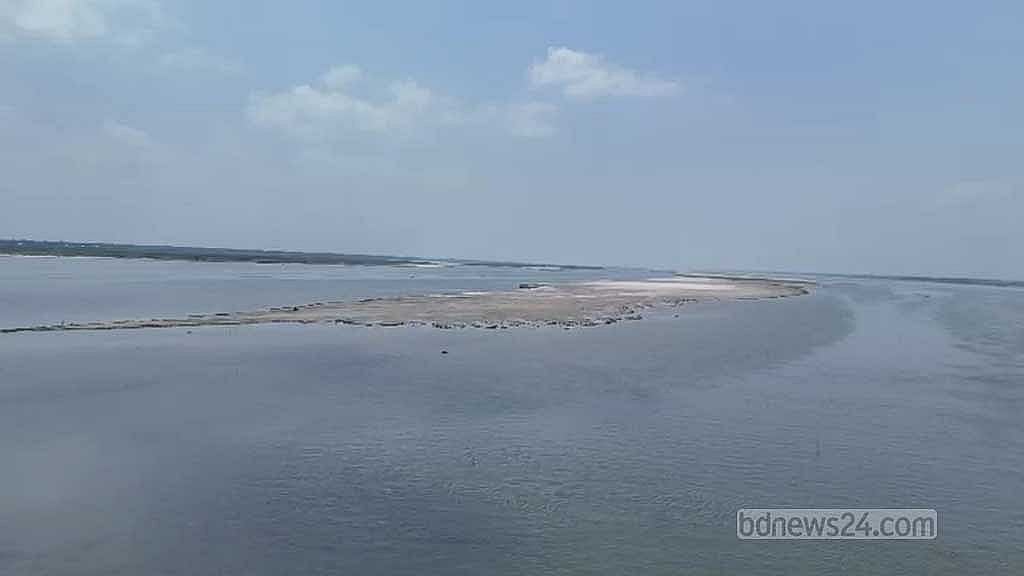
The project aims to support irrigation across 2.88 million hectares in greater Kushtia, Faridpur, Jashore, Khulna, Barishal, Pabna and Rajshahi regions, with projected increases of 2.39 million tonnes of rice and 234,000 tonnes of fish production.
The main barrage will include 78 spillway gates, 18 under-sluice gates, fish passes, a navigation lock, and riverbank protection structures.
Three off-take structures are also planned for the Gorai, Chandra and Hishna rivers.
A hydropower component of 113MW is included, with 76.4MW at the main barrage and 36.6MW at the Gorai off-take.
River management works will involve dredging 135.6km of the Gorai-Modhumoti system and re-dredging 246.46km of the Hishna system, along with construction of 180km of embankments.
The proposal also outlines a multi-use corridor over the barrage, including roads, power transmission lines and gas pipelines, as well as plans for land development to support seven satellite towns.
Covering around 37 percent of the country’s area, the project spans 163 Upazilas in 26 districts.
In its first phase, it is expected to benefit 120 Upazilas across 19 districts, including Kushtia, Meherpur, Chuadanga, Jhenaidah, Magura, Jashore, Narail, Bagerhat, Khulna, Satkhira, Rajbari, Faridpur, Gopalganj, Pabna, Rajshahi, Natore, Naogaon and Chapainawabganj.
How Effective Will the Barrage Be?
Experts remain divided over the potential benefits and risks of the proposed Padma Barrage, with opinions ranging from strong support to serious caution.
Dependence on upstream water flow
Environmental expert and Bangladesh Environmental Network (BEN) global coordinator Md Khalequzzaman argues that the project’s effectiveness will be limited without cooperation from India.
In an open letter to the government, he urged prioritising a revised water-sharing approach instead of building the barrage.
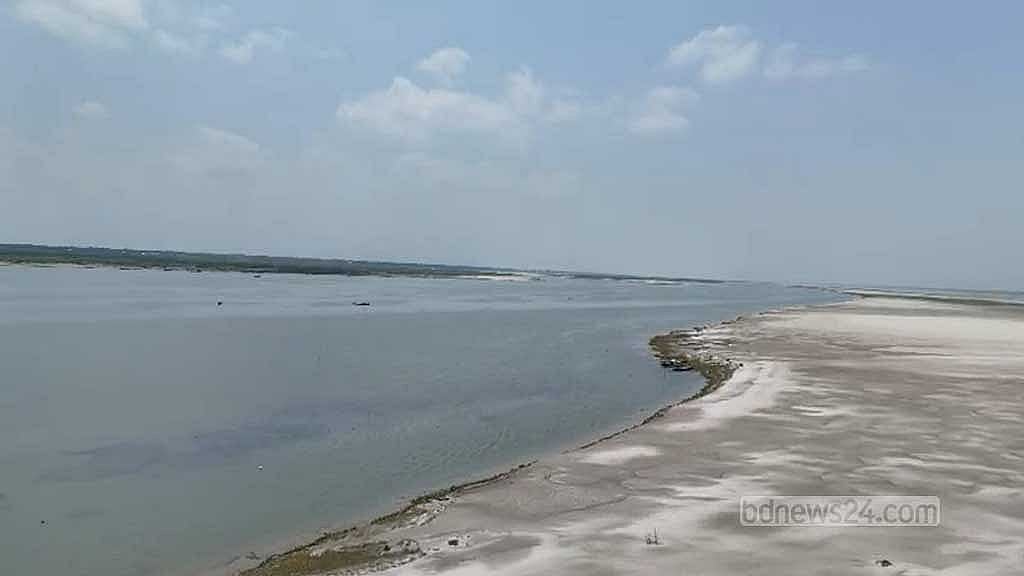
“Without water from upstream, the Padma Barrage will be nothing more than a dry sandbank,” he said, adding that Bangladesh should focus on securing stronger guarantees under the Ganges water-sharing framework and international water law rather than relying on infrastructure alone.
He warned that in the absence of assured upstream flow, the country may struggle to secure water during the dry season, weakening the project’s core objective.
Legal and regional water concerns
Khalequzzaman also urged ratification of the UN watercourses convention, arguing it would strengthen Bangladesh’s negotiating position.
He cautioned that relying solely on a barrage could reduce diplomatic leverage if upstream flow is restricted, drawing lessons from the Teesta irrigation experience.
He also warned that the project could worsen salinity in the southern region and disrupt sediment flow, potentially altering the natural dynamics of the Bengal delta.
Technical risks and river behaviour
Water resources expert Prof AKM Saiful Islam of Bangladesh University of Engineering and Technology (BUET) also raised concerns about long-term feasibility, stressing that the project’s success depends heavily on future water availability under the Ganges treaty framework.
He said if dry-season flows are not secured after the treaty expires, the project could face major operational uncertainty.
Comparing it with the Teesta basin, he noted how lack of a comprehensive agreement has already complicated water management.
Prof Saiful also highlighted risks to river morphology, warning that reduced downstream flow could increase salinity and trigger erosion in the central river systems, particularly the Arial Khan River.
He added that sediment accumulation behind the barrage could require frequent dredging if modern flushing technologies are not ensured, significantly raising long-term costs.
“Without proper design, dredging may be needed every five years,” he warned.
Environmental and ecosystem impacts
He also cautioned that trapped sediment could raise riverbeds upstream, increasing flood risk, while sediment-starved water downstream may accelerate bank erosion.
Citing examples such as the Farakka and Koshi barrages, he said such structures can have long-term impacts on fisheries and river ecosystems.
Support for the project’s necessity
However, water resources specialist and Bangladesh Center for Environmental and Geographic Information Services (CEGIS) Executive Director Malik Fida A Khan sees the project as essential for the south-western region.
He said dry-season flows in rivers such as the Gorai and Mathabhanga have declined significantly, making irrigation and Sundarbans protection increasingly difficult.
“There is no alternative to a structural intervention like a barrage,” he said.
He argued that the project could improve irrigation for boro cultivation, reduce salinity intrusion in the Sundarbans, boost fish production, and generate hydropower.
On international concerns, he maintained that the project is an internal matter and does not harm India’s interests, noting that technical issues raised earlier have already been addressed.
Implementation challenges ahead
Despite supporting its necessity, he flagged several challenges, including the need to modernise outdated designs, lack of domestic contractors with experience in mega river structures, and funding constraints for a project estimated at over Tk 345 billion.
He suggested concessional climate finance from international agencies and recommended creating an autonomous body, similar to the Padma Bridge Authority, to manage implementation and maintenance effectively.
‘BWDB Should Learn from Experience’
Gonotantrik Odhikar Committee (Democratic Rights Committee) member Prof Anu Muhammad has raised serious concerns over the technical and environmental implications of the proposed Padma Barrage, warning that it may worsen river flow problems instead of resolving them.
Referring to India’s Farakka Barrage, the former Jahangirnagar University economics professor said upstream water control has already caused major downstream impacts.
“Through this barrage, attempts will be made to hold water in one place, disrupting natural flow. Instead of solving the Farakka problem, it may multiply the crisis several times,” he said.
He also questioned the transparency of the project, arguing that large infrastructure schemes often serve vested interests linked to consultants, contractors and implementing agencies.
Anu Muhammad called for public disclosure of feasibility and environmental assessment reports, saying decisions of this scale must be based on open national debate.
BAPA and BEN also raised similar concerns, questioning whether the project’s benefits have been conclusively proven and why key studies are not publicly available.
In a joint statement, they warned that sediment buildup upstream of the barrage could increase flooding and riverbank erosion along a 145km stretch from Pangsa to Rajshahi.
They also cautioned that diverting dry-season flow to the south-west could reduce water availability in central regions and the Meghna estuary, potentially increasing salinity intrusion inland.
The organisations also argued that the project could weaken Bangladesh’s position in securing equitable share of the Padma’s water from India, as future negotiations may be undermined by claims that domestic solutions already exist.
Calling the project a “hasty move”, they urged the government to instead focus on the UN Watercourses Convention and the renewal of the Ganges water-sharing treaty.
They also cited past experience from the Baral River, where reopening of a sluice gate restored flow after decades, arguing that river connectivity should be prioritised over large barrages.
Ministry and Officials Respond
A water resources ministry official said the Development Project Proposal (DPP) has already been approved by ECNEC, and the next steps include tendering and implementation procedures.
Water Resources Planning Organisation (WARPO) Director General Mohammad Lutfur Rahman said implementation responsibility lies primarily with the BWDB, adding that expert opinions will be sought during execution if required.
However, BWDB senior officials said the project is still at the early implementation stage following approval, with further administrative steps such as appointing a project director yet to begin.
Responding to concerns, an additional director general of the board said the barrage is primarily intended for dry-season water management.
He argued that the structure would help retain monsoon water for use during dry months, improving irrigation and river flow across multiple regions.
He dismissed fears of negative impacts as largely “assumptions”, saying improved water availability would revive rivers, enhance ecosystems and benefit biodiversity, agriculture and climate resilience.