Published : 01 Jul 2026, 07:16 PM
Updated : 08 Sep 2026, 09:20 AM


A decade on from the Holey Artisan attack that stunned the world, uncertainty persists over the timeline for its final legal resolution.
More than a year after the High Court published its full verdict, hearings have yet to begin in the Appellate Division, with lawyers pointing to financial hardship among the convicts and a mounting backlog at the top court.
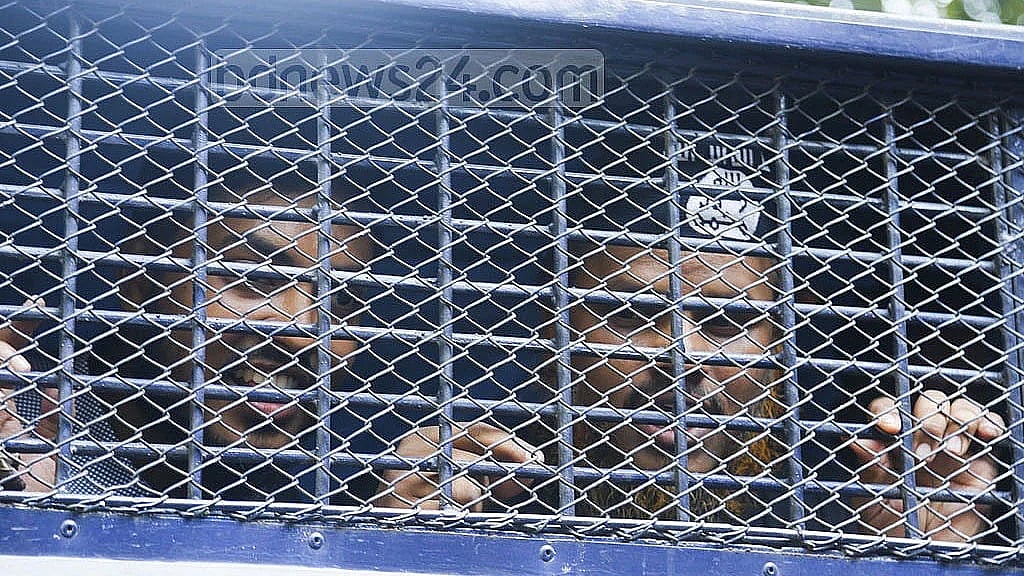
Six convicts, whose death sentences were reduced to imprisonment until death by the High Court in 2023, filed separate leaves-to-appeal petitions in May 2025 seeking acquittal.
But there has been no progress so far.
Attorney General Md Ruhul Quddus Kazal said on Tuesday that the case remains pending before the Appellate Division, where five judges are now handling cases from across the country.
He said every litigant sees their own case as the most urgent, but the Holy Artisan case carries added weight because of its international significance beyond Bangladesh.
Kazal said despite the state’s willingness to move ahead, it was not possible to set any timeframe for disposal because of practical limitations.
Asked about the latest status of the appeals, defence lawyer Md Ariful Islam told bdnews24.com that the convicts had not contacted him after the High Court verdict.
"As far as I know they have filed the leave to appeal, but I don't think it has been granted for hearing yet," he said, adding that in criminal cases clients rarely contact lawyers before hearings are scheduled.
He suggested the government may feel no urgency since the maximum available punishment had already been handed down.
Describing the apex court's backlog, Ariful likened the situation to a monkey trying to climb a greasy pole, noting that cases listed in the top 20 on the daily cause list frequently drop below 100 within a week, making a bench expansion vital to manage the strain.
Another defence counsel Md Nahidul Islam said similar leaves-to-appeal petitions filed in 2019 are still being heard, suggesting the Dhaka cafe attack appeals may take several more years.
He also pointed to the convicts’ financial struggles as another reason for the delay.
The defence has already filed the leave petitions seeking acquittal, he said, but no further steps have been taken because the convicts cannot afford to engage senior counsel for proceedings before the Appellate Division.
Explaining the legal challenge, Nahidul argued that the provision of the Anti-Terrorism Act under which the sentences were imposed did not apply to the case.
He questioned the High Court's decision to impose imprisonment until death, claiming the punishment was not explicitly provided for in the law.
He raised allegations over confessional statements recorded under Section 164, claiming some were obtained by “pressuring family members”.
Nahidul said the family of convict Hadisur Rahman had been held hostage, while the father of Nurul Islam Marjan had allegedly been kept at the Detective Branch office for a long period.
He also claimed “Marjan’s wife and [Major Jahidul Islam’s] wife were detained for hours and used to threaten their husbands into giving confessional statements”.
Questioning the prosecution’s main witness, Nahidul said the 14-year-old son of slain Tanvir Qadri had been made a witness in the case.
He said the boy had been held at the Tongi juvenile correction centre in Gazipur in another case at the time.
According to him, the boy had lost his father and brother, while his mother was in jail, and relying on the testimony of such a child without guardians did not amount to a sound legal decision.
Nahidul also alleged that one of the convicts, Mamunur Rashid Ripon, had been secretly detained in Directorate General of Forces Intelligence (DGFI) custody for at least three years after being handed over by India.
The Supreme Court published the 229-page full verdict in the case on Jun 17 last year.
Before that, on Oct 10, 2023, a High Court bench of Justice Shahidul Karim and Justice Md Mostafizur Rahman commuted the death sentences of seven convicts to imprisonment until death and fined each Tk 50,000.
In its observations, the High Court said prosecution witnesses had proved beyond doubt that the five militants who directly carried out the attack killed 22 people before being killed in the commando raid.
The court said if they had remained alive, they could have been convicted under Section 6(1)(a) of the Anti-Terrorism Act and sentenced to death under Section 6(2)(a).
The trial court had earlier handed death sentences to seven other accused on grounds of common intention, but the High Court found that flawed because they were not present at the scene.
It, however, said the prosecution had proved their involvement in planning the assault, conspiracy, collecting funds and weapons, recruitment and incitement to murder.
Taking into account the brutality of the killings and the damage caused to Bangladesh’s image abroad, the High Court converted their life terms into imprisonment until death.
The first trial verdict came on Nov 27, 2019, when Dhaka’s Anti-Terrorism Special Tribunal sentenced seven members of Neo-JMB, a breakaway faction of banned militant outfit Jama'atul Mujahideen Bangladesh, to death.
The trial had formally begun on Nov 26, 2018 after charges were framed against eight suspects, and testimony started on Dec 3 with the deposition of the complainant, Sub-Inspector Ripon Kumar Das.
During the proceedings, the prosecution examined 113 out of 211 witnesses, including the investigating officer, before closing arguments ended on Nov 17, 2019.
Those convicted are Jahangir Hossain alias Rajib Gandhi, Rakibul Hasan Regan, Aslam Hossain alias Rash, Abdus Sobur Khan alias Soheil Mahfuz, Hadisur, Shariful Islam alias Khalid and Mamunur Rashid.
Among them, Aslam was shot dead by prison guards at Kashimpur High Security Prison on Aug 6, 2024.
On Jul 1, 2016, around 8:45pm, five young militants armed with firearms, machetes and grenades stormed the Holey Artisan Bakery restaurant in Dhaka’s Gulshan.
The attackers were Nibraj Islam, Shafiqul Islam alias Ujjal, Mir Sameh Mobasher, Rohan Ibne Imtiaz and Khairul Islam alias Payel.
During the nearly 12-hour hostage siege, they slit throats and shot dead 20 civilians, including nine Italians, seven Japanese, one Indian and three Bangladeshis.
Two police officers -- Detective Branch assistant commissioner Rabiul Islam and Banani Police chief Salahuddin Khan — were also killed by militant explosives while trying to rescue the hostages.
The siege ended the next morning when the army launched Operation Thunderbolt, killing all five militants and rescuing 13 hostages alive.
Police filed the case on Jul 2 under the Anti-Terrorism Act.
After more than two years of investigation, the Counter Terrorism and Transnational Crime (CTTC) unit submitted its chargesheet on Jul 23, 2018.
Investigators said Neo-JMB had spent six months planning the assault with the aim of destabilising Bangladesh and turning it into a “militant state”.